
Study OAS ·
India, Canada Agree on Security Work Plan
What's the News?
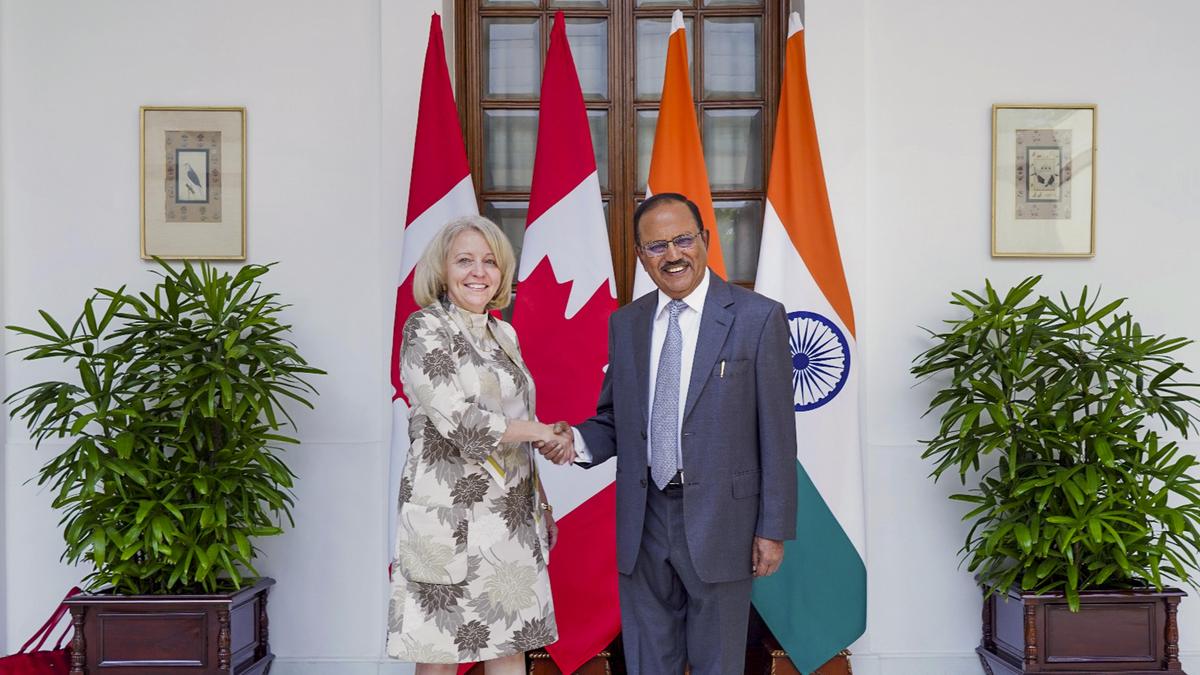
- National Security Adviser Ajit Doval conducted a two-day visit to Ottawa (February 6–7, 2026), meeting his Canadian counterpart Nathalie Drouin and Public Safety Minister Gary Anandasangaree to reset strained bilateral ties.
- Both sides agreed to a "shared work plan" for cooperation on national security, law enforcement, and cybersecurity, including establishment of security liaison officers in each country for streamlined information sharing.
- The visit; the first bilateral NSA-level engagement since the 2023 diplomatic crisis over the killing of Khalistani separatist Hardeep Singh Nijjar signals a thaw ahead of Canadian Prime Minister Mark Carney's expected visit to India in March 2026.
- Key focus areas include countering fentanyl trafficking, transnational organized crime, cybersecurity threats, and addressing Khalistani extremist activities on Canadian soil.
Shared Work Plan: Key Components
Security and Law Enforcement Cooperation
- Liaison Officer Mechanism: Each country to establish dedicated security and law-enforcement liaison officers to facilitate real-time intelligence sharing and operational coordination.
- Priority Areas:
- Illegal drug flows: Particularly fentanyl precursors- a critical concern for Canada amid North America's opioid crisis.
- Transnational organized criminal networks: Human trafficking, financial crimes, and cross-border smuggling operations.
- Fraud and immigration enforcement: Joint efforts against document fraud and illegal migration networks.
Cybersecurity Collaboration
- Formalized cooperation framework on cybersecurity policy and information sharing on cyber threats.
- Focus on critical infrastructure protection and countering state-sponsored cyber intrusions.
- Alignment with domestic laws and international obligations under UN Group of Governmental Experts (GGE) norms.
Counter-Terrorism and Extremism
- Khalistani networks: Doval strongly conveyed that violent extremist groups should not enjoy any form of support from Canadian state or non-state actors.
- Shift in Canadian stance: Canadian authorities reportedly accepted that Khalistani extremism directed at India constitutes organized crime, not protected free speech marking a significant policy evolution from previous administrations.
Diplomatic Context: From Crisis to Normalization
The 2023–2024 Diplomatic Rupture
| Event | Date | Impact |
|---|---|---|
| Hardeep Singh Nijjar killing | June 2023 | Khalistani separatist shot in Vancouver; India designated him terrorist in 2020 |
| Trudeau's Parliament statement | September 18, 2023 | Alleged "potential link" between Indian agents and killing; triggered crisis |
| Mutual diplomat expulsions | September–October 2023 | Tit-for-tat withdrawals; India suspended visa services for Canadians |
| October 2024 escalation | October 2024 | Canada expelled Indian High Commissioner Sanjay Kumar Verma + 5 diplomats; India retaliated with 6 expulsions |
| G7 Summit thaw | June 2025 | PM Modi met PM Carney at Kananaskis G7; agreed to re-engage |
Path to Normalization
- Mark Carney's premiership (April 2025): Liberal Party leader replaced Justin Trudeau, enabling diplomatic reset.
- Twin-track approach: Canada pursuing active law enforcement dialogue alongside expanded trade, technology, and energy cooperation.
- High Commissioner reappointment: Both countries have restored ambassadorial-level representation in respective capitals.
Additional Info
Legal Instruments and Mechanisms
| Agreement/Mechanism | Year | Purpose |
|---|---|---|
| Mutual Legal Assistance Treaty (MLAT) | 1994 (operationalized 1998) | Legal cooperation in criminal matters |
| Canada-India Strategic Dialogue | 1997 | Annual high-level political consultations |
| Canada-India Working Group on Counter-Terrorism | 1997 | Operational counter-terror cooperation |
| Extradition Treaty | 1987 | Surrender of fugitive offenders (rarely used for Khalistani cases) |
Khalistani Extremism: Historical Context
- Air India Kanishka bombing (1985): 329 fatalities - worst aviation terror attack until 9/11; perpetrated by Canada-based Khalistani militants; most accused acquitted in controversial trials.
- Talwinder Singh Parmar (1982): Canada rejected India's extradition request on Commonwealth protocol technicalities despite terrorism charges.
- Designated terrorist entities: Babbar Khalsa International (BKI) and International Sikh Youth Federation (ISYF) listed by Canada in 2003; Khalistan Tiger Force (KTF) and Sikhs for Justice (SFJ) subsequently designated.