
Study OAS ·
Lok Sabha Passes Tribunals Reforms Bill, 2026
What’s the News?
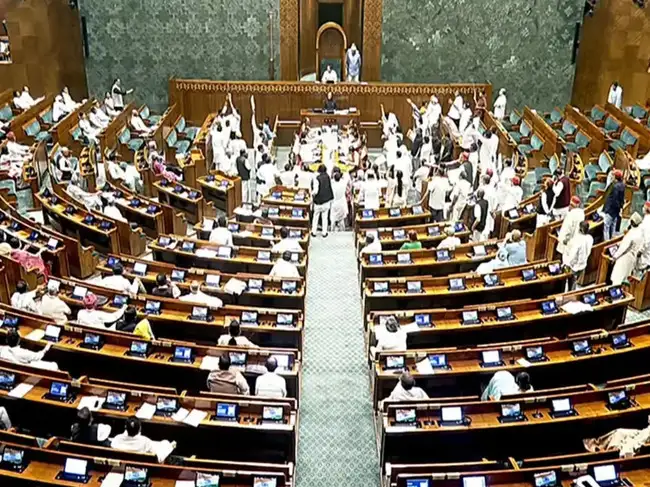
- The Lok Sabha has passed the Tribunals Reforms Bill, 2026, which seeks to repeal the Tribunals Reforms Act, 2021 and introduce a new framework for appointments, tenure, service conditions and administration of major tribunals.
- Its central feature is the establishment of a National Tribunals Commission (NTC) to provide institutional oversight over 16 tribunals.
- The legislation follows the Supreme Court’s ruling in Madras Bar Association v. Union of India, which struck down key provisions of the 2021 Act for violating principles of judicial independence and separation of powers and reiterated the need for an independent tribunals commission.
- Current status: The Bill has cleared the Lok Sabha but has not yet been passed by the Rajya Sabha; hence, it is not yet an Act.
National Tribunals Commission
- Headquarters: New Delhi.
- Composition: 5 members — a Chairperson, 2 Judicial Members and 2 Technical Members.
- Chairperson: A person who has been a Supreme Court judge or Chief Justice of a High Court.
- Judicial Members: Former Chief Justices/Judges of High Courts.
- Technical Members: Minimum 25 years' experience in areas such as public administration, finance, law, accountancy, banking, management or technology.
- The Central Government appoints Commission members; the Chief Justice of India must be consulted for appointment of the Chairperson and Judicial Members.
- Commission members have a 5-year tenure or until 70 years of age, whichever is earlier.
Major functions of the NTC include:
- conducting selection processes for tribunal vacancies;
- reviewing tribunal performance;
- overseeing inquiries into complaints against tribunal Chairpersons/Members; and
- developing and maintaining a National Tribunals Data Grid, containing tribunal case-related information.
The Commission will have a Secretariat headed by an officer of the rank of Secretary to the Government of India. Its accounts will be audited by the Comptroller and Auditor General of India (CAG), while its annual report and audited accounts are to be placed before Parliament.
What Changes from the 2021 Act?
| Provision | 2021 Act | 2026 Bill |
|---|---|---|
| Institutional oversight | No NTC | National Tribunals Commission |
| Tribunal tenure | 4 years | 5 years |
| Upper age | 70 years—Chairperson; 67 years—Member | Same |
| Minimum appointment age | 50 years | Minimum-age restriction removed |
| Names recommended per vacancy | Panel of 2 | 1 candidate + 1 name on waiting list |
| Government appointment timeline | Preferably within 3 months | Mandatory within 3 months |
| Accountability | Existing removal grounds | Adds incompetence/inefficiency and paid assignment as removal grounds |
The Search-cum-Selection Committees will now operate under the NTC framework and involve Commission members, retired High Court judges, a government secretary and subject experts. The Bill does not revive tribunals/appellate bodies abolished under the 2021 rationalisation exercise.
Tribunals Covered
The First Schedule covers 16 tribunals/authorities, including:
- Central and State Administrative Tribunals;
- National Green Tribunal;
- Armed Forces Tribunal;
- Securities Appellate Tribunal;
- Debts Recovery Tribunal and Debts Recovery Appellate Tribunal;
- Telecom Disputes Settlement and Appellate Tribunal;
- Appellate Tribunal for Electricity;
- National Company Law Appellate Tribunal;
- National Consumer Disputes Redressal Commission;
- Income-tax Appellate Tribunal;
- Railway Claims Tribunal; and
- Customs, Excise and Service Tax Appellate Tribunal, among others.
Financial Outlay
The proposed NTC and its Secretariat involve an estimated expenditure of ₹27.14 crore, comprising:
- ₹24.79 crore recurring expenditure; and
- ₹2.35 crore non-recurring expenditure.
The expenditure will be met from the Consolidated Fund of India. The Secretariat also envisages two additional Level-14 (Joint Secretary-level) posts.
Additional Info
- Constitutional basis of tribunals
- Tribunals are specialised quasi-judicial bodies dealing with subject-specific disputes.
- Part XIV-A of the Constitution deals with tribunals and was inserted through the 42nd Constitutional Amendment Act, 1976.
- Article 323A: Administrative tribunals, particularly for public-service matters.
- Article 323B: Tribunals for specified matters such as taxation and other areas authorised by the Constitution.
- L. Chandra Kumar v. Union of India (1997)
- The Supreme Court held that judicial review by the High Courts under Articles 226 and 227 and by the Supreme Court under Article 32 forms part of the Constitution's basic structure.
- Decisions of tribunals under Articles 323A and 323B remain subject to scrutiny by the jurisdictional High Court.
- Madras Bar Association case
- The Supreme Court invalidated important parts of the 2021 tribunal regime relating to appointment, eligibility, tenure and related service conditions.
- It regarded an independent National Tribunals Commission as a structural safeguard for independence, transparency and uniformity in tribunal administration and directed the Union to establish such a body.