
Study OAS ·
Meghalaya Assembly Unanimously Opposes Uranium Mining
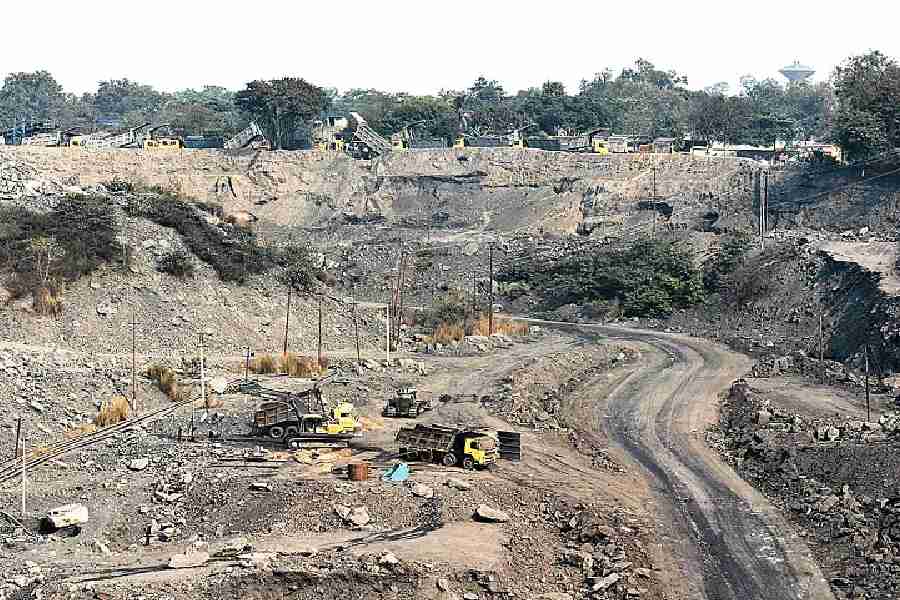
What’s the News?
- The Meghalaya Legislative Assembly unanimously adopted a resolution opposing uranium exploration, mining and uranium ore-processing facilities in the State.
- The resolution was moved by Chief Minister Conrad K. Sangma and supported by all 60 MLAs.
- It urges the Union Government, Department of Atomic Energy (DAE) and Uranium Corporation of India Limited (UCIL) not to permit or undertake uranium-mining activities in Meghalaya.
- It specifically opposes the proposed Kylleng-Pyndengsohiong-Mawthabah (KPM) Uranium Mining Project in the Khasi Hills region.
- The State government will communicate the Assembly's resolution to the Union Government.
Why is Meghalaya Opposing Uranium Mining?
- Uranium deposits occur in parts of the Khasi Hills, including the Domiasiat–Mawthabah region.
- Local communities, traditional institutions, student organisations and civil-society groups have opposed uranium mining for decades.
- Major concerns include:
- Radiation and public-health risks
- Contamination of streams and groundwater
- Ecological damage in a region characterised by high rainfall and steep terrain
- Displacement and loss of community-controlled land
- Meghalaya is estimated to possess around 9,500 tonnes of uranium oxide reserves.
KPM Uranium Mining Project
- KPM: Kylleng-Pyndengsohiong-Mawthabah.
- Located in the uranium-bearing Khasi Hills region of Meghalaya.
- The project was proposed by UCIL for uranium mining and ore processing.
- Earlier plans involved open-cast mining and establishment of an associated uranium ore-processing facility.
- Despite exploration and project planning, mining could not proceed because of sustained local opposition and unresolved land-related issues.
Uranium Corporation of India Limited (UCIL)
- A Central Public Sector Enterprise under the Department of Atomic Energy.
- Responsible for the mining and processing of uranium ore for India's nuclear programme.
- Uranium extracted by UCIL forms part of the domestic fuel supply chain for nuclear-energy production.
Sixth Schedule & Land Rights in Meghalaya
- Tribal areas of Meghalaya are administered under the Sixth Schedule of the Constitution.
- The Sixth Schedule operates under Articles 244(2) and 275(1) and provides for Autonomous District Councils (ADCs).
- Land in Meghalaya is extensively held under community, clan and individual customary ownership, making land acquisition and mining proposals particularly sensitive.
- The Supreme Court, in State of Meghalaya v. All Dimasa Students Union (2019), recognised that private/community landowners in Meghalaya can possess rights over both the surface and sub-soil minerals.
Uranium Regulation in India
- Uranium is a strategically important radioactive/atomic mineral.
- The Atomic Energy Act, 1962 gives the Central Government extensive powers over:
- Discovery of uranium and thorium
- Mining and concentration of uranium-bearing substances
- Acquisition and disposal of uranium
- Radiation and nuclear safety
- Department of Atomic Energy (DAE):
- Functions directly under the Prime Minister.
- Responsible for India's nuclear-energy and atomic-mineral programmes.
- Atomic Minerals Directorate for Exploration and Research (AMD):
- Constituent unit of DAE.
- Undertakes exploration and assessment of uranium and other atomic-mineral resources.
Resolution vs Legal Ban
- The Assembly resolution formally records the unanimous political position of Meghalaya against uranium mining.
- It calls upon the Centre, DAE and UCIL to halt or avoid such activities.
- An Assembly resolution itself is not equivalent to a separate statutory prohibition enacted through legislation, but it carries substantial political and institutional significance given Meghalaya's distinctive land-tenure system.