
Current Affairs
Stay updated with the latest national and international events.
02 July 2025
“RECLAIM & Restore” – Coal Ministry Launches Inclusive Mine Closure Framework
What’s New?
- Coal and Mines Minister G. Kishan Reddy unveiled the RECLAIM framework—a structured, community-centric initiative for inclusive mine closure and post-closure redevelopment.
- Developed by the Coal Controller Organisation alongside the Heartfulness Institute, RECLAIM emphasizes strong community engagement, gender inclusion, and collaboration with Panchayati Raj institutions.
Why It Matters
- Just & equitable transition: Ensures that miners, families, and local communities are not sidelined but actively involved in planning and implementation.
- Female and vulnerable representation: Women and other marginalized groups are provided space in decision-making, ensuring socially inclusive outcomes.
- Sustainable land reuse: Aims to repurpose mine lands for eco-parks, solar farms, agriculture, fisheries, tourism, and other revenue-generating uses.
Historical & Institutional Background
- For over a decade, MoC has prepared a nationwide mine closure plan under the Just Transition principle, consulted with bodies like World Bank and GIZ, and crafted guidelines for reclamation, land use, and community welfare.
- Previous efforts involved:
- Phase–1: Mapping coal regions, socio-environmental assessments, legal review.
- Phase–2: Implementation through Special Purpose Entities (SPEs) and multi-disciplinary teams, aiming to leave no one behind.
Local Empowerment
- RECLAIM integrates village communities, including PRIs, in shaping post-closure land use.
- Places strong emphasis on gender and vulnerable group inclusion, ensuring equitable benefits and representation.
Environmental & Economic Mixed Use
- Reclaimed land will be developed into eco-parks, forestry zones, solar/wind energy sites, tea/fruit orchards, fisheries, sports zones, tourist spots, and even warehouse/logistics hubs.
- These diversified uses are intended to generate local employment and support regional economies beyond the lifespan of mines.
Additional Info
- RECLAIM sits alongside the National Mineral Policy 2008 and its thrust on sustainable development and scientific mine closure.
- India pioneered formal mine closure rules in 2009 (revised 2013), yet legacy closed mines across states—especially Jharkhand and Chhattisgarh—await systematic reclamation.
- Existing Coal PSUs and state bodies have already created eco-parks and green zones on reclaimed land, testing repurposing models.
Simplified Summary
- RECLAIM is India’s first fully structured, socially inclusive framework for mine closure, ensuring environmental remediation, economic redevelopment, and community participation.
- It emphasizes local governance, gender inclusion, and sustainable repurposing to support post-mining livelihoods.
Exam Focus Points
| Theme | Key Highlights |
|---|---|
| What & When | RECLAIM framework set to launch on 4 July 2025 by Coal Ministry |
| Core Principles | Just transition, inclusive planning, gender and vulnerable inclusion |
| Implementation Design | Community engagement, SPEs, multi-disciplinary teams |
| Land Repurposing Vision | Eco-parks, renewable energy, agriculture, tourism—diversified use |
| Policy Continuity | Ties to 2008 Mineral Policy, MMDR Act, and 2009/13 mine closure rules |
“Innovation Infusion” – Cabinet Greenlights ₹1 Lakh Crore RDI Scheme to Propel Private Sector Research

What’s New?
- The Union Cabinet, on 1–2 July 2025, approved the expansive Research–Development–Innovation (RDI) Scheme with a ₹1 lakh crore corpus to amplify private-sector R&D in sunrise and strategic sectors.
- Structured as a 50-year interest-free loan to the Anusandhan National Research Foundation (ANRF), it channels long-term concessional finance to innovators through second-tier fund managers such as AIFs, DFIs, NBFCs.
Why It Matters
- Bridges the R&D funding gap (“valley of death”) hindering India’s tech potential; corporate R&D remains low (~0.64% of GDP).
- Encourages private-sector-led innovation in areas like AI, quantum computing, biotech, clean energy, space, robotics, and digital agriculture.
- Aims to de-risk transformative R&D, foster tech self-reliance, build a robust deep-tech ecosystem, and improve India's Global Innovation Index ranking.
Institutional Framework
- ANRF Governing Board (chaired by PM) for strategic oversight.
- ANRF Executive Council to set guidelines and select fund managers.
- Empowered Group of Secretaries (EGoS), led by Cabinet Secretary, will monitor & approve programme changes.
- DST acts as the nodal ministry for scheme implementation.
Financial Structure
- Special Purpose Fund (SPF) under ANRF holds the ₹1 lakh crore corpus.
- Second-tier fund managers deploy funds via:
- Long-term, low/no-interest loans.
- Equity investments for startups.
- Contributions to a Deep-Tech Fund of Funds for ecosystem building.
Strategic Coverage
- Targets high-TRL projects nearing market deployment.
- Sectors include semiconductors, defense tech, space, biotech, quantum, AI, green hydrogen, digital agriculture and critical technologies.
- Supports technology acquisition to close strategic dependency gaps.
Broader Ecosystem Impact
- Expected to stimulate IP creation, high-end job creation, and deep-tech venture expansions.
- Reinforces schemes like Atmanirbhar Bharat, Startup India, Make in India, and aligns with Viksit Bharat@2047 vision.
Additional Info
- A ₹20,000 crore DST allocation in Budget 2025 kick-started this initiative.
- India’s GERD has risen from ~₹60,196 cr (2011) to ₹127,381 cr (2021), yet remains a modest 0.64% of GDP.
- ANRF was established in 2022 to spearhead India’s National R&D strategy, increasingly integrating private and public spheres in innovation governance.
Simplified Summary
- The RDI Scheme marks a profound shift—empowering the private sector to lead in strategic, high-risk innovation.
- With state-backed patient capital, it addresses critical funding shortfalls and supports India’s aspirations to be a deep-tech powerhouse.
- This reinforces a wider innovation ecosystem—from R&D to commercialization—aligned with national goals and global competitiveness.
Exam Focus Points
| Theme | Key Highlights |
|---|---|
| What & When | RDI Scheme approved early July 2025; ₹1 lakh crore corpus |
| Who | Cabinet, ANRF (PM-led), DST (implementation), VC/NBFC/FI fund managers |
| How | 50-year interest-free loan to ANRF → concessional financing |
| Sector Coverage | Strategic and sunrise sectors: quantum, biotech, digital agriculture, etc. |
| Objective | AI/tech self-reliance, IP growth, job creation, tech transfer |
| Ecosystem Links | Aligns with Budget 2025, Startup India, Atmanirbhar Bharat, deep-tech FoF |
| Challenges Addressed | Low R&D spend, private-sector risk aversion, tech dependency |
“Unicorn Surge” – India Ranks 3rd in Hurun Global Unicorn Index 2025
What’s New?
- The Hurun Global Unicorn Index 2025, released in June 2025, identifies 1,523 unicorns worldwide—privately held startups worth at least $1 billion—together valued at approximately $5.6 trillion.
- India secures a strong 3rd position, housing 64 unicorns, trailing only the USA (758) and China (343).
Why It Matters
- Global startup leadership: Ranking third underscores India’s emergence as a robust innovation hub and growing magnet for venture capital.
- Economic significance: These unicorns span fintech, gaming, edtech, AI, and deep tech, signaling India’s deepening prowess in next‑gen technologies.
- City‑based clustering: Key innovation centres include Bengaluru (#7 globally), Mumbai (#22), and Gurugram (#27), showcasing the growing importance of multiple regional startup ecosystems.
Startup Hubs & Leading Unicorns
- Bengaluru leads India’s unicorn count with 36, followed by Mumbai (22) and first-time entry from Gurugram (27).
- Notable unicorns include Zerodha ($8.2 bn), Dream11 ($8 bn), and Razorpay ($7.5 bn), primarily in fintech and gaming.
Global & Sectoral Trends
- India's unicorn count rose modestly, maintaining 3rd rank amidst global expansion—US and China continue to dominate.
- The global unicorn ecosystem is spreading fast: now active in 52 countries and 307 cities, with 2025 witnessing 203 newly minted unicorns, averaging one every two days.
- Fast‑growing sectors: Fintech (197 unicorns globally), followed by SaaS and AI—India’s strengths align well with these global trends.
Additional Info
- The Hurun Global Unicorn Index has operated since 2017, documenting private unicorn growth and valuation changes annually.
- Globally, average unicorn age is around 10.6 years, with SpaceX, OpenAI, ByteDance dominating top ranks by valuation.
- Beyond unicorns, India ranks 3rd in tech startup funding, raising US $4.8 billion H1 2025, further cementing its financial and innovation credibility.
Simplified Summary
- India now stands as the world’s third-largest unicorn ecosystem, boasting 64 billion-dollar startups and prominent city-level hubs.
- This surge mirrors a global startup boom, particularly in fintech, AI, SaaS, accelerating across India’s digital economy landscape.
Exam Focus Points
| Theme | Key Insights |
|---|---|
| What & When | Hurun Global Unicorn Index 2025 (June 2025): 1,523 unicorns globally |
| India’s Stand | Ranked 3rd with 64 unicorns; Bengaluru (#7), Mumbai (#22), Gurugram (#27) |
| Leading Unicorns | Zerodha, Dream11, Razorpay—all in fintech/gaming |
| Global Context | USA (758), China (343); index covers 52 countries & 307 cities |
| Sectoral Strength | Fintech leads, followed by SaaS and AI |
| Ecosystem Growth | 203 new unicorns in 2025; average unicorn age ~10.6 years |
| Funding Landscape | India raised $4.8 bn in H1 2025, ranked 3rd globally |
“Safe Shots” – ICMR–AIIMS Reaffirm COVID Vaccines Do Not Cause Sudden Deaths
What’s New?
- Recent collaborative studies by ICMR and AIIMS New Delhi have found no causal link between COVID‑19 vaccination and sudden unexplained deaths among adults in India. These conclusions are backed by the Ministry of Health & Family Welfare (MoHFW), based on robust scientific analysis.
What Did The Studies Reveal?
- Multi-centre analysis: A case–control study across 47 hospitals in 19 states (Oct 2021–Mar 2023) reviewed 729 sudden death cases in adults aged 18–45.
- Dominant causes: Found sudden cardiac events due to heart attacks, genetic predisposition, lifestyle factors (smoking, binge drinking, heavy exercise), and post-COVID complications as primary contributors.
- The studies also suggest that receiving two vaccine doses may reduce the risk of unexplained sudden death, compared to unvaccinated or single-dose recipients.
Why It Matters
- Countering misinformation: The findings dispel myths linking vaccines to sudden deaths—a dangerous trend that fuels vaccine hesitancy.
- Public confidence in immunization: Reinforces the message that COVID-19 vaccines are safe, effective, and crucial in preventing severe disease outcomes.
- Policy implications: The MoHFW urges reliance on evidence-based analysis and discourages attributing natural medical events to vaccination without scientific proof.
Additional Info
- These findings align with global evidence, including a CDC study in the USA which found no rise in sudden cardiac deaths post-vaccination among young adults.
- Historical ICMR analysis during Lok Sabha responses also confirmed vaccination does not increase sudden death risk, and may even offer protective benefit.
- While rare issues like vaccine-induced thrombosis have been noted globally, extensive reviews show no increase in overall mortality due to vaccines.
Simplified Summary
- In-depth studies in India (ICMR + AIIMS) have clearly ruled out any link between COVID-19 vaccines and sudden unexplained deaths in adults.
- Actual causes of such deaths are mostly cardiac disease, genetics, lifestyle, or prior COVID infection—not vaccines.
- Vaccines remain safe and life-saving, with evidence even suggesting a protective effect against sudden death.
Exam Focus Points
| Theme | Key Takeaways |
|---|---|
| Study Details | 47 hospitals, 729 cases, adults aged 18–45, Oct 2021–Mar 2023 |
| Key Findings | No vaccine-death link; lifestyle & genetic factors involved |
| Preventive Value | Two doses may lower sudden death risk |
| Policy Reminder | Evidence-based public health communication is vital |
| Global Context | CDC study and EU data support these conclusions |
| Health Governance | Aligns with MoHFW’s vaccine trust-building efforts |
“Magnetic Duality” – Revolutionary Altermagnet Discovery in CrSb for Future Electronics
What’s New?
- Scientists at S N Bose National Centre for Basic Sciences, supported by the Department of Science & Technology, have discovered a unique direction-dependent conduction polarity (DDCP) in the altermagnetic material chromium antimonide (CrSb).
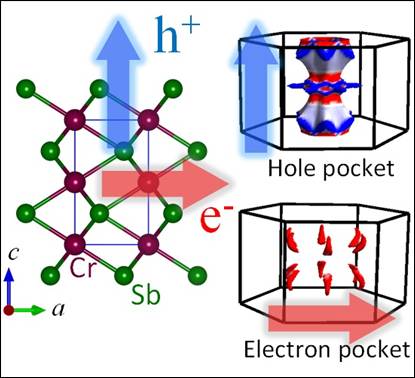
- This is the first documented case of an altermagnet exhibiting different charge carrier types—electrons in-plane and holes cross-plane—making it a single material with both p-type and n-type behavior.
Why It Matters
- Simplified device architecture: CrSb's dual conductivity could eliminate the need for separate p-type and n-type materials in semiconductor devices, reducing complexity and cost.
- Pioneering spintronic applications: As an altermagnet, CrSb combines the advantages of ferromagnets (spin control) and antiferromagnets (no external magnetic signature), ideal for next-gen electronics.
- Room-temperature viability: CrSb exhibits strong altermagnetic effects at temperatures twice that of room temperature, ideal for practical device settings.
Understanding Altermagnetism
- Altermagnets are a new class of materials with zero net magnetization externally yet unique internal spin structures combining ferromagnetic and antiferromagnetic traits.
- These materials are at the forefront of spintronics, promising faster, more energy-efficient memory and logic devices compared to traditional electronics.
DDCP in CrSb
- In in-plane conduction, electrons (n-type behavior) dominate.
- In cross-plane conduction, holes (p-type behavior) take precedence.
- This anisotropic duality is rare in solids and offers built-in p-n junction functionality without heterostructures or doping.
Material Advantages
- Composed of earth-abundant, non-toxic elements—favorable for sustainable electronics.
- High spin-splitting energy (~30× room temperature), ideal for practical application.
Additional Info
- Similar breakthroughs in 2D altermagnets (e.g., MnTe) were recently reported using X-ray microscopy in Sweden, confirming altermagnetism at nanoscale.
- Global interest: Over 200 research papers on altermagnetism in the past year—a sign of intense scientific focus.
- CrSb’s DDCP breakthrough could significantly influence spintronics, thermoelectrics, photovoltaics, and energy-efficient tech, aligning with research interests in GS-III (science & tech) and GS-II (innovation policy) contexts.
Simplified Summary
- CrSb behaves as both n-type and p-type depending on the direction of current flow, a rare and promising property for electronics.
- This dual nature, combined with altermagnetism and sustainable material composition, positions CrSb as a key candidate for next-gen compact, efficient spintronic devices.
Exam Focus Points
| Theme | Highlights |
|---|---|
| Material & Discovery | CrSb altermagnet, DDCP—electrons n-type in-plane, holes p-type cross-plane |
| Significance | Paves way for single-crystal p-n device functionality; ideal for spintronics |
| Operating Conditions | Works at >2× room temperature; made from earth-abundant, non-toxic elements |
| Spintronics Context | Altermagnetism offers fast, efficient memory & logic tech |
| Research Context | First DDCP example; aligns with global altermagnetism movement; >200 related studies |
July 2025
31 July 202530 July 202529 July 202528 July 202526 July 202525 July 202524 July 202523 July 202522 July 202521 July 202519 July 202518 July 202517 July 202516 July 202515 July 202512 July 202511 July 202510 July 202509 July 202507 July 202505 July 202504 July 202503 July 202502 July 202501 July 2025
Archive
November 2026
- 28 November 2026
- 27 November 2026
- 26 November 2026
- 25 November 2026
- 24 November 2026
- 23 November 2026
- 21 November 2026
- 20 November 2026
- 19 November 2026
- 18 November 2026
- 17 November 2026
- 16 November 2026
- 14 November 2026
- 13 November 2026
- 12 November 2026
- 11 November 2026
- 10 November 2026
- 09 November 2026
- 06 November 2026
- 05 November 2026
- 04 November 2026
- 03 November 2026
- 02 November 2026
October 2026
- 31 October 2026
- 30 October 2026
- 29 October 2026
- 28 October 2026
- 27 October 2026
- 26 October 2026
- 24 October 2026
- 23 October 2026
- 22 October 2026
- 21 October 2026
- 20 October 2026
- 19 October 2026
- 17 October 2026
- 16 October 2026
- 15 October 2026
- 14 October 2026
- 13 October 2026
- 12 October 2026
- 10 October 2026
- 09 October 2026
- 08 October 2026
- 07 October 2026
- 06 October 2026
- 05 October 2026
- 03 October 2026
- 02 October 2026
- 01 October 2026
September 2026
- 30 September 2026
- 29 September 2026
- 28 September 2026
- 26 September 2026
- 25 September 2026
- 24 September 2026
- 23 September 2026
- 22 September 2026
- 21 September 2026
- 19 September 2026
- 18 September 2026
- 17 September 2026
- 16 September 2026
- 15 September 2026
- 12 September 2026
- 11 September 2026
- 10 September 2026
- 09 September 2026
- 08 September 2026
- 07 September 2026
- 05 September 2026
- 04 September 2026
- 03 September 2026
- 02 September 2026
- 01 September 2026
August 2026
- 31 August 2026
- 29 August 2026
- 27 August 2026
- 26 August 2026
- 25 August 2026
- 24 August 2026
- 22 August 2026
- 21 August 2026
- 20 August 2026
- 19 August 2026
- 18 August 2026
- 17 August 2026
- 14 August 2026
- 13 August 2026
- 12 August 2026
- 11 August 2026
- 10 August 2026
- 08 August 2026
- 07 August 2026
- 06 August 2026
- 05 August 2026
- 04 August 2026
- 03 August 2026
- 01 August 2026
July 2026
- 31 July 2026
- 30 July 2026
- 29 July 2026
- 28 July 2026
- 27 July 2026
- 25 July 2026
- 23 July 2026
- 22 July 2026
- 21 July 2026
- 20 July 2026
- 18 July 2026
- 17 July 2026
- 15 July 2026
- 14 July 2026
- 13 July 2026
- 11 July 2026
- 10 July 2026
- 09 July 2026
- 08 July 2026
- 07 July 2026
- 06 July 2026
- 04 July 2026
- 03 July 2026
- 02 July 2026
- 01 July 2026
June 2026
May 2026
April 2026
March 2026
- 31 March 2026
- 30 March 2026
- 28 March 2026
- 27 March 2026
- 26 March 2026
- 25 March 2026
- 24 March 2026
- 23 March 2026
- 21 March 2026
- 20 March 2026
- 19 March 2026
- 18 March 2026
- 17 March 2026
- 16 March 2026
- 14 March 2026
- 13 March 2026
- 12 March 2026
- 11 March 2026
- 10 March 2026
- 09 March 2026
- 07 March 2026
- 06 March 2026
- 05 March 2026
- 03 March 2026
- 02 March 2026
February 2026
- 28 February 2026
- 27 February 2026
- 26 February 2026
- 25 February 2026
- 24 February 2026
- 23 February 2026
- 21 February 2026
- 20 February 2026
- 19 February 2026
- 18 February 2026
- 17 February 2026
- 16 February 2026
- 13 February 2026
- 12 February 2026
- 11 February 2026
- 10 February 2026
- 09 February 2026
- 07 February 2026
- 06 February 2026
- 05 February 2026
- 04 February 2026
- 03 February 2026
- 02 February 2026
January 2026
- 31 January 2026
- 30 January 2026
- 29 January 2026
- 28 January 2026
- 27 January 2026
- 26 January 2026
- 24 January 2026
- 23 January 2026
- 22 January 2026
- 21 January 2026
- 20 January 2026
- 19 January 2026
- 16 January 2026
- 15 January 2026
- 14 January 2026
- 13 January 2026
- 12 January 2026
- 10 January 2026
- 09 January 2026
- 08 January 2026
- 07 January 2026
- 06 January 2026
- 05 January 2026
- 03 January 2026
- 02 January 2026
- 01 January 2026
December 2025
- 31 December 2025
- 30 December 2025
- 29 December 2025
- 27 December 2025
- 26 December 2025
- 24 December 2025
- 23 December 2025
- 22 December 2025
- 20 December 2025
- 19 December 2025
- 18 December 2025
- 17 December 2025
- 16 December 2025
- 15 December 2025
- 13 December 2025
- 12 December 2025
- 11 December 2025
- 10 December 2025
- 09 December 2025
- 08 December 2025
- 05 December 2025
- 04 December 2025
- 03 December 2025
- 02 December 2025
November 2025
- 29 November 2025
- 28 November 2025
- 27 November 2025
- 26 November 2025
- 25 November 2025
- 24 November 2025
- 22 November 2025
- 21 November 2025
- 20 November 2025
- 19 November 2025
- 18 November 2025
- 17 November 2025
- 15 November 2025
- 14 November 2025
- 13 November 2025
- 12 November 2025
- 11 November 2025
- 10 November 2025
- 08 November 2025
- 07 November 2025
- 06 November 2025
- 05 November 2025
- 04 November 2025
- 03 November 2025
- 01 November 2025
October 2025
- 31 October 2025
- 30 October 2025
- 29 October 2025
- 28 October 2025
- 27 October 2025
- 25 October 2025
- 24 October 2025
- 23 October 2025
- 22 October 2025
- 21 October 2025
- 20 October 2025
- 18 October 2025
- 17 October 2025
- 16 October 2025
- 15 October 2025
- 14 October 2025
- 13 October 2025
- 11 October 2025
- 10 October 2025
- 09 October 2025
- 08 October 2025
- 07 October 2025
- 06 October 2025
- 04 October 2025
- 03 October 2025
- 02 October 2025
- 01 October 2025
September 2025
- 30 September 2025
- 29 September 2025
- 27 September 2025
- 26 September 2025
- 25 September 2025
- 24 September 2025
- 23 September 2025
- 22 September 2025
- 20 September 2025
- 19 September 2025
- 18 September 2025
- 17 September 2025
- 16 September 2025
- 15 September 2025
- 13 September 2025
- 12 September 2025
- 11 September 2025
- 10 September 2025
- 09 September 2025
- 08 September 2025
- 06 September 2025
- 05 September 2025
- 04 September 2025
- 03 September 2025
- 02 September 2025
- 01 September 2025
August 2025
- 30 August 2025
- 29 August 2025
- 28 August 2025
- 27 August 2025
- 26 August 2025
- 25 August 2025
- 23 August 2025
- 22 August 2025
- 21 August 2025
- 20 August 2025
- 19 August 2025
- 18 August 2025
- 16 August 2025
- 14 August 2025
- 13 August 2025
- 12 August 2025
- 11 August 2025
- 08 August 2025
- 07 August 2025
- 06 August 2025
- 05 August 2025
- 04 August 2025
- 02 August 2025
- 01 August 2025
July 2025
- 31 July 2025
- 30 July 2025
- 29 July 2025
- 28 July 2025
- 26 July 2025
- 25 July 2025
- 24 July 2025
- 23 July 2025
- 22 July 2025
- 21 July 2025
- 19 July 2025
- 18 July 2025
- 17 July 2025
- 16 July 2025
- 15 July 2025
- 12 July 2025
- 11 July 2025
- 10 July 2025
- 09 July 2025
- 07 July 2025
- 05 July 2025
- 04 July 2025
- 03 July 2025
- 02 July 2025
- 01 July 2025
June 2025
- 30 June 2025
- 28 June 2025
- 27 June 2025
- 26 June 2025
- 25 June 2025
- 24 June 2025
- 23 June 2025
- 21 June 2025
- 20 June 2025
- 19 June 2025
- 18 June 2025
- 17 June 2025
- 16 June 2025
- 14 June 2025
- 13 June 2025
- 12 June 2025
- 11 June 2025
- 10 June 2025
- 09 June 2025
- 07 June 2025
- 06 June 2025
- 05 June 2025
- 04 June 2025
- 03 June 2025
- 02 June 2025
May 2025
April 2025
- 30 April 2025
- 29 April 2025
- 28 April 2025
- 26 April 2025
- 25 April 2025
- 24 April 2025
- 23 April 2025
- 22 April 2025
- 21 April 2025
- 19 April 2025
- 18 April 2025
- 17 April 2025
- 16 April 2025
- 15 April 2025
- 14 April 2025
- 12 April 2025
- 11 April 2025
- 10 April 2025
- 09 April 2025
- 08 April 2025
- 07 April 2025
- 05 April 2025
- 04 April 2025
- 03 April 2025
- 02 April 2025
- 01 April 2025
March 2025
- 31 March 2025
- 29 March 2025
- 28 March 2025
- 27 March 2025
- 26 March 2025
- 25 March 2025
- 24 March 2025
- 22 March 2025
- 21 March 2025
- 20 March 2025
- 19 March 2025
- 18 March 2025
- 17 March 2025
- 15 March 2025
- 13 March 2025
- 12 March 2025
- 11 March 2025
- 10 March 2025
- 08 March 2025
- 07 March 2025
- 06 March 2025
- 05 March 2025
- 04 March 2025
- 03 March 2025
- 01 March 2025
February 2025
- 28 February 2025
- 27 February 2025
- 26 February 2025
- 25 February 2025
- 24 February 2025
- 22 February 2025
- 21 February 2025
- 20 February 2025
- 19 February 2025
- 18 February 2025
- 17 February 2025
- 15 February 2025
- 14 February 2025
- 13 February 2025
- 12 February 2025
- 11 February 2025
- 10 February 2025
- 08 February 2025
- 07 February 2025
- 06 February 2025
- 05 February 2025
- 04 February 2025
- 03 February 2025
- 01 February 2025
January 2025
- 31 January 2025
- 30 January 2025
- 29 January 2025
- 28 January 2025
- 27 January 2025
- 25 January 2025
- 24 January 2025
- 23 January 2025
- 22 January 2025
- 21 January 2025
- 20 January 2025
- 18 January 2025
- 17 January 2025
- 16 January 2025
- 15 January 2025
- 14 January 2025
- 13 January 2025
- 11 January 2025
- 10 January 2025
- 09 January 2025
- 08 January 2025
- 07 January 2025
- 06 January 2025
- 04 January 2025
- 03 January 2025
- 02 January 2025
- 01 January 2025