
Current Affairs
Stay updated with the latest national and international events.
04 August 2026
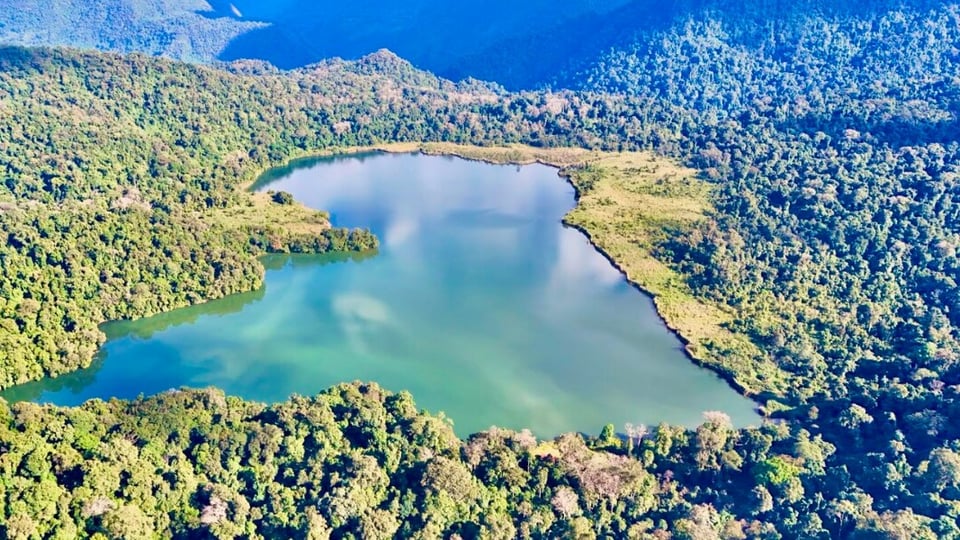
Glaw Lake Becomes Arunachal Pradesh’s First Ramsar Site
What’s the News?
Glaw Lake has been designated as India’s 101st Ramsar Site, becoming the first Ramsar-designated wetland in Arunachal Pradesh. The announcement was made by Union Environment, Forest and Climate Change Minister Bhupender Yadav.
The designation raises India’s Ramsar-site count from 26 in 2014 to 101 and provides international recognition to the lake’s ecological importance.
Glaw Lake
- Location: Lohit district, Arunachal Pradesh
- Protected landscape: Kamlang Tiger Reserve and Wildlife Sanctuary
- Region: Eastern Himalayas
- Wetland type: Freshwater lake
- Water source: Perennial mountain streams
- Ecological diversity:
- More than 150 tree species
- 49 orchid species recorded within the site and its catchment
The lake forms part of the Eastern Himalayan biodiversity hotspot. Its wetland and forest ecosystems contribute to freshwater security, biodiversity conservation, carbon storage and livelihood support.
Ramsar Convention
The Convention on Wetlands, commonly called the Ramsar Convention, is an intergovernmental treaty that provides a framework for the conservation and wise use of wetlands and their resources.
- Adopted at Ramsar, Iran, in 1971
- Entered into force in 1975
- India became a contracting party in 1982
- A wetland must satisfy at least one of nine international criteria, relating to factors such as biodiversity, threatened species, waterbirds, fish populations or representative wetland types, to qualify as a Ramsar Site.
Wetland Governance in India
- Wetlands (Conservation and Management) Rules, 2017
- Issued under the Environment (Protection) Act, 1986.
- Provide the principal regulatory framework for wetland identification, notification and management.
- National Plan for Conservation of Aquatic Ecosystems
- A centrally sponsored scheme implemented through cost-sharing between the Union and state or Union Territory governments.
- Amrit Dharohar
- Focuses on Ramsar Sites through:
- Species and habitat conservation
- Nature tourism
- Wetland-based livelihoods
- Wetland carbon assessment
- Focuses on Ramsar Sites through:
- Constitutional provisions
- Article 48A: Directs the State to protect and improve the environment and safeguard forests and wildlife.
- Article 51A(g): Makes environmental protection a Fundamental Duty of every citizen.
Additional Info
- Kamlang Tiger Reserve
- Located in Arunachal Pradesh’s Lohit district.
- Represents the tropical and montane ecosystems of the Eastern Himalayas.
- Glaw Lake’s location within an existing tiger reserve enables integrated conservation of aquatic, forest and wildlife habitats.
- Notes
- First Ramsar Site of Arunachal Pradesh: Glaw Lake
- India’s 101st Ramsar Site: Glaw Lake
- Location: Kamlang Tiger Reserve and Wildlife Sanctuary
- District: Lohit
- Convention secretariat: Gland, Switzerland
- World Wetlands Day: 2 February
Sources
Government Proposes Flexible MDR Framework for Select UPI Payments

What’s the News?
The Union government has introduced the Taxation and Other Laws (Amendment) Bill, 2026 in the Lok Sabha. Clause 2 of the Bill seeks to amend Section 10A of the Payment and Settlement Systems Act, 2007, allowing the Central Government to specify which electronic payment modes will continue to receive zero-charge protection.
The amendment does not immediately impose Merchant Discount Rate (MDR) on UPI, prescribe a rate or introduce a direct fee for consumers. Separate government notifications would be required to determine the payment modes, transactions and entities covered. The Bill is currently pending in Parliament.
What Will Change?
Existing provision
Section 10A currently prohibits banks and payment-system providers from directly or indirectly charging a person making or receiving payments through electronic modes prescribed under Section 269SU of the Income-tax Act, 1961.
These notified modes include:
- Unified Payments Interface or UPI
- BHIM-UPI
- UPI QR-based payments
- RuPay debit cards
Proposed provision
The Bill replaces the reference to payment modes prescribed under the Income-tax Act with:
One or more electronic modes of payment as the Central Government may, by notification, specify.
This would shift zero-MDR protection from a fixed statutory arrangement to a notification-based framework. The government could consequently retain zero MDR for certain modes or categories while allowing charges on others.
Merchant Discount Rate
MDR is the fee paid by a merchant to banks, payment aggregators and payment-service providers for processing a digital payment.
- It is generally calculated as a percentage of the transaction value.
- It helps cover expenditure on:
- Payment processing
- Technology infrastructure
- Cybersecurity
- Fraud prevention
- Settlement and dispute resolution
- MDR is normally a merchant-side charge, not a direct fee collected from the customer making the payment.
- Businesses may nevertheless absorb the cost or indirectly account for it in product prices.
Possible MDR Framework
No official MDR rate, transaction threshold or merchant category has been finalised. Reported models under consideration include:
- Applying MDR only to transactions above a specified value.
- Linking applicability to the merchant’s annual turnover.
- Protecting person-to-person transfers and small merchants.
- One reported option involves an MDR of approximately 0.3–0.5% on merchant payments exceeding ₹2,000, subject to merchant-turnover conditions.
Transactions above ₹2,000 constitute only around 4% of merchant-payment volume, but account for approximately 67–70% of transaction value. This makes large-value transactions a potential starting point for generating revenue without charging the majority of small-ticket payments. These figures represent reported proposals and industry estimates, not provisions contained in the Bill.
Why Is MDR Being Considered?
UPI has expanded into India’s dominant retail-payment platform. It processed approximately:
- 23.6 billion transactions in one recent month.
- Transactions worth nearly ₹29.9 lakh crore during the same period.
Banks and payment companies argue that a zero-revenue model makes it difficult to finance growing expenditure on payment infrastructure, cybersecurity and system capacity. A limited MDR could create a sustainable revenue stream while retaining free or subsidised access for ordinary users and small businesses.
Likely Impact
- Banks and fintech firms
- Could recover part of their processing and infrastructure costs.
- Industry estimates indicate a potential annual revenue pool of around ₹5,000–10,000 crore, depending on the final framework.
- Large merchants
- May face higher digital-payment acceptance costs.
- Could negotiate rates with payment intermediaries or absorb the charge.
- Small merchants and consumers
- Reported proposals seek to keep small-value payments and person-to-person transfers free.
- Their exemption is not yet legally final because the detailed notification has not been issued.
- Government
- Must balance payment-system sustainability against financial inclusion, merchant adoption and the risk of businesses returning to cash.
Additional Info
- Unified Payments Interface
- Developed by the National Payments Corporation of India.
- NPCI is regulated by the Reserve Bank of India.
- Built over the Immediate Payment Service infrastructure.
- Facilitates instant bank-to-bank transfers.
- Supports:
- P2P: Person-to-person payments
- P2M: Person-to-merchant payments
- Payment and Settlement Systems Act, 2007
- Provides the legal framework for regulation and supervision of payment systems.
- Designates the Reserve Bank of India as the regulatory authority.
- Section 10A: Deals with prohibition on charges for specified electronic-payment modes.
- Section 10A was inserted through the Finance Act, 2019, with the zero-MDR framework operating from 2020.
- Notes
- MDR: Fee paid by a merchant for payment-processing services.
- Convenience fee: Additional fee that a platform may charge for providing a particular service or payment channel.
- UPI transaction value: The underlying amount transferred; it is not itself MDR.
- The Bill creates an enabling legal framework—it does not itself impose a UPI charge.
Sources
Centre Proposes Safety Rules for Two-Wheeled Ambulances
What’s the News?
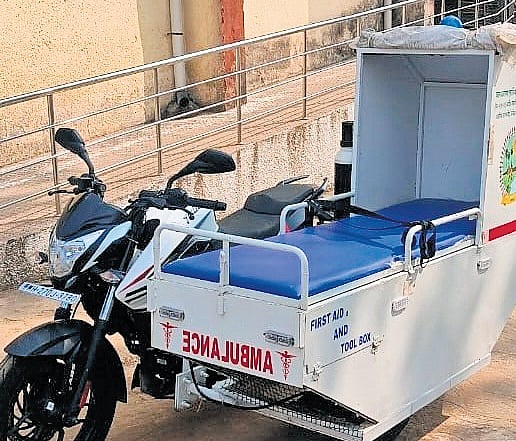
The Ministry of Road Transport and Highways (MoRTH) has proposed draft amendments to the Central Motor Vehicles Rules, 1989, creating a dedicated regulatory framework for two-wheeled road ambulances.
The proposal covers their construction, safety, type approval, registration, patient-handling systems and fitness inspection. These ambulances are intended to provide rapid emergency medical assistance in rural, remote, hilly and congested areas where conventional ambulances face access constraints. The rules remain in draft form and will be finalised after stakeholder consultation.
Two-Wheeled Road Ambulance
A two-wheeled road ambulance is proposed to be defined as an L2-category vehicle fitted or attached with:
- An ambulance accessory unit; or
- A patient-conveyance system.
It may function as a rapid-response medical vehicle or carry a patient using a specially designed attachment, depending on its approved configuration.
AIS-209 Safety Standard
The draft rules propose adopting Automotive Industry Standard AIS-209 (Part 1):2026, titled Construction and Functional Requirements for Life Support Two-Wheeled Road Ambulances.
L2-category ambulances manufactured from October 2027 would have to comply with the standard. Major safety requirements include:
- Vehicle stability and braking performance
- Parking-brake efficiency and gradeability
- Rear visibility
- Secure coupling of the patient-conveyance unit
- Emergency warning lights and conspicuity
- Safe patient loading and unloading
- Patient-restraint and stretcher-locking systems
- Protection of patients from environmental exposure
Registration and Fitness
- The ambulances will be registered as transport vehicles.
- Their certificate of fitness must be renewed every two years.
- Fitness inspection will examine:
- Tyres and rims
- Ambulance-unit mounting
- Emergency warning lights
- Stretcher and locking mechanism
- Patient restraints
- Loading and unloading systems
- Availability and validity of the fire extinguisher
- State governments will determine the geographical areas in which these ambulances may operate.
Why Are the Rules Needed?
Two-wheeled ambulances are not presently regulated as a distinct vehicle category under the Central Motor Vehicles Rules. Consequently, India lacks uniform national requirements for their design, patient safety, registration, approval and inspection.
The proposed framework seeks to:
- Reduce emergency-response time
- Improve last-mile healthcare access
- Standardise vehicle and equipment quality
- Ensure operator accountability
- Enable safer deployment in difficult terrain and narrow urban roads
Additional Info
- Central Motor Vehicles Rules, 1989
- Framed under the Motor Vehicles Act, 1988.
- Regulate vehicle registration, construction, safety, permits and fitness standards.
- Certificate of fitness
- Under Section 56 of the Motor Vehicles Act, 1988, a transport vehicle must possess a valid fitness certificate to be treated as validly registered.
- Automotive Industry Standards
- Technical standards relating to vehicle construction, safety, testing and performance.
- Developed through the Automotive Industry Standards Committee under the vehicle-regulation framework administered by MoRTH.
- Draft status
- The proposal is not yet a final rule.
- Comments will be examined after a 30-day consultation period, following which the amendments may be notified.
Sources
India Records Over 20,000 Organ Transplants for the First Time

What’s the News?
India performed a record 20,138 organ transplants in 2025, crossing the 20,000 mark for the first time. This represents a 6.5% increase over 18,911 transplants in 2024 and a fourfold rise from 4,990 procedures in 2013.
India now ranks third globally in total organ transplants, after the United States and China, while retaining the first position in living-donor organ transplants. However, the continued dependence on living donors and the shortage of deceased donors remain major concerns.
Transplant Performance
- Total transplants in 2025: 20,138
- Total transplants in 2024: 18,911
- Annual increase: 6.5%
- Total transplants in 2013: 4,990
- Deceased-donor transplants in 2025: 3,526
- Deceased-donor transplants in 2013: 837
Deceased-donor transplants increased more than fourfold over the period. Nevertheless, they constituted only about 17.5% of total transplants in 2025, indicating that nearly four-fifths of India’s transplant activity continues to depend on living donors.
State-wise Performance
Total organ transplants
- Delhi-NCR: 4,564
- Tamil Nadu: 2,796
- Maharashtra: 2,136
- Telangana: 1,523
- Kerala: 1,489
Deceased organ donors
- Tamil Nadu: 266
- Maharashtra: 205
- Telangana: 198
- Karnataka: 154
- Kerala: 152
Delhi-NCR recorded the highest number of transplant procedures, while Tamil Nadu led the country in deceased organ donation.
Critical Donation Gap
India’s transplant capacity has expanded rapidly, but the availability of organs remains substantially below demand. The principal weakness is the low level of deceased organ donation.
Key constraints include:
- Limited identification and certification of brain-stem death
- Lack of trained transplant coordinators in many hospitals
- Family refusal due to misconceptions or inadequate counselling
- Uneven transplant infrastructure among states
- Delays in organ retrieval, allocation and transportation
- Heavy dependence on living kidney and liver donors
More than 1,200 families consented to deceased organ donation in 2025. Although this represents progress, deceased-donor organs accounted for only around 18% of all transplants.
Organ-Donation Pledges
More than five lakh Aadhaar-verified organ-donation pledges have been recorded since the national digital pledge portal was launched in 2023. Over 2.58 lakh pledges were registered during 2025 alone.
A pledge expresses an individual’s intention to donate organs after death. Actual deceased donation generally requires medical eligibility, brain-stem-death certification and consent or cooperation from the donor’s family.
New Initiatives
- e-Pratyaropan
- Unified national digital platform for organ and tissue donation and transplantation.
- Integrates hospitals, doctors, donors, recipients and regulatory authorities.
- Supports registration, waiting-list management, organ allocation and monitoring.
- NOTTO Mobile Application
- Provides digital access to organ-donation and transplantation services.
- Supports awareness, registration and stakeholder coordination.
- Jug Jug Jiyo Abhiyaan
- Year-long national awareness campaign.
- Honours organ donors and their families.
- Seeks to increase voluntary organ-donation pledges.
- National Brain-Stem Death Certification Guidelines
- Seek uniform diagnosis and certification across hospitals.
- Important because legally certified brain-stem death enables deceased organ donation.
- National Guidelines on Swap Transplantation
- Standardise kidney-swap procedures.
- Permit incompatible donor-recipient pairs to exchange donors with another compatible pair.
Additional Info
- NOTTO
- Full form: National Organ and Tissue Transplant Organisation
- Functions under the Directorate General of Health Services, Ministry of Health and Family Welfare.
- Maintains the national registry and coordinates organ allocation across regions.
- Organ-transplantation network
- NOTTO: National level
- ROTTO: Regional Organ and Tissue Transplant Organisation
- SOTTO: State Organ and Tissue Transplant Organisation
- Legal framework
- Transplantation of Human Organs and Tissues Act, 1994
- Regulates the removal, storage and transplantation of human organs and tissues.
- Recognises brain-stem death.
- Prohibits commercial dealings in human organs.
- 2011 Amendment
- Expanded the definition of near relatives.
- Provided statutory recognition to swap transplantation.
- Transplantation of Human Organs and Tissues Rules, 2014
- Prescribe procedures for donor approval, brain-stem-death certification, registration and transplantation.
- Transplantation of Human Organs and Tissues Act, 1994
- Government support
- National Organ Transplant Programme: Supports transplant infrastructure, coordinators, training, organ transport and networking.
- Rashtriya Arogya Nidhi: Provides financial assistance for eligible patients from economically weaker sections.
- Days & Themes
- Indian Organ Donation Day: 3 August
- World Organ Donation Day: 13 August
Sources
India Achieves 99.92% Banking Coverage of Inhabited Villages
What’s the News?
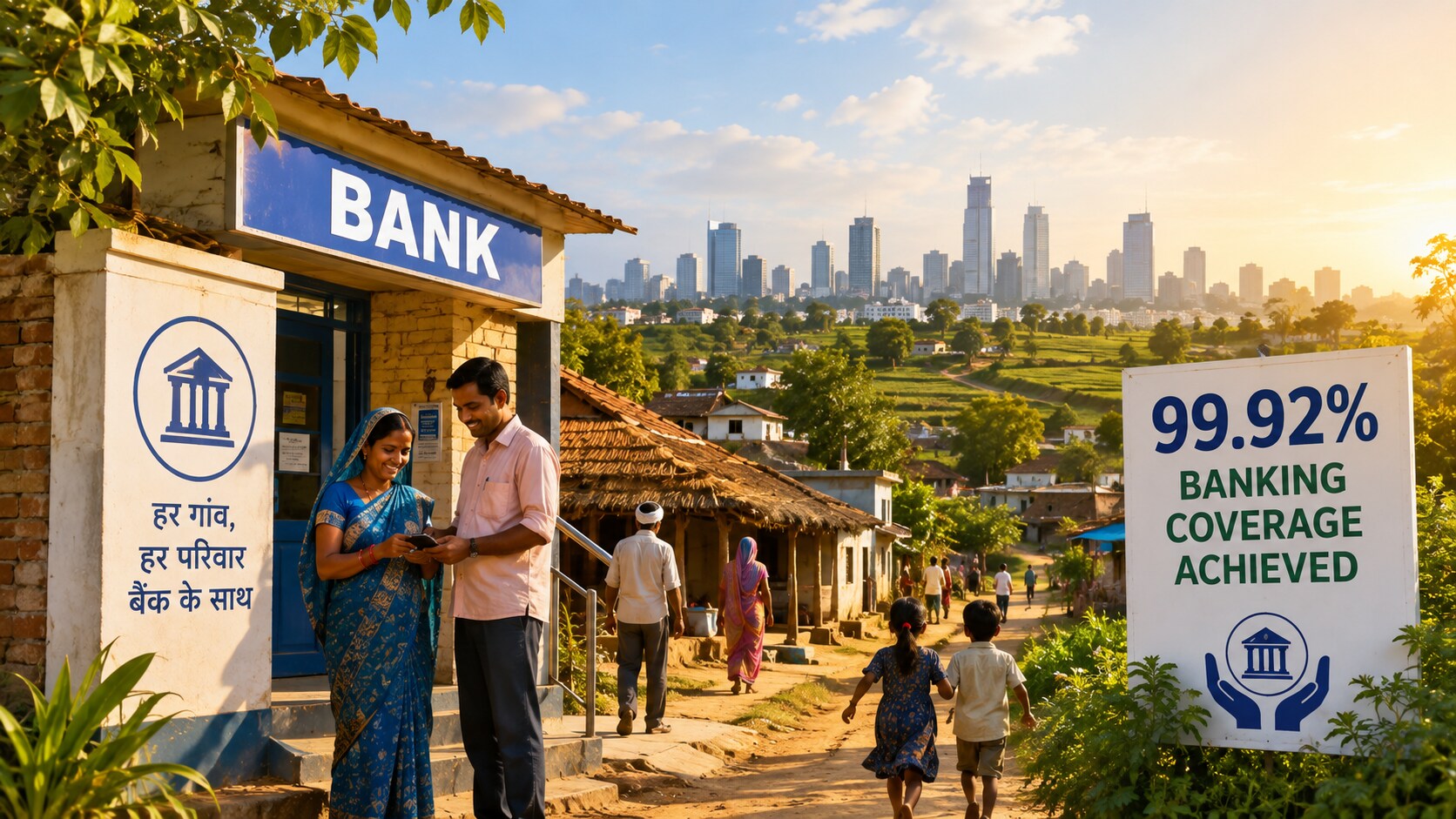
India has achieved near-universal banking coverage, with 6,00,868 out of 6,01,328 inhabited villages—or 99.92%—having access to a banking outlet within a 5-km radius.
Banking access is provided through bank branches, Business Correspondents (BCs) and India Post Payments Bank (IPPB) centres. Only 460 inhabited villages remain outside the prescribed coverage radius.
What Counts as Banking Coverage?
A village is considered covered when residents can access at least one of the following within 5 km:
- A bank branch
- A Business Correspondent outlet
- An India Post Payments Bank centre
The figures are based on data uploaded by banks to the Jan Dhan Darshak App.
Banking coverage does not mean that every village has a physical bank branch. It means that an approved banking access point is available within the stipulated distance.
Banking Network
India’s rural banking expansion is supported by:
- More than 1.81 lakh bank branches
- Around 17.36 lakh Business Correspondents
- Approximately 1.65 lakh IPPB centres
Business Correspondent
A Business Correspondent is an authorised agent who provides basic banking services on behalf of a bank, especially in locations where opening a full-scale branch may not be commercially viable.
Common services include:
- Opening basic bank accounts
- Cash deposits and withdrawals
- Fund transfers
- Balance enquiries
- Aadhaar-enabled payments
- Collection of loan repayments
- Delivery of government benefits
PM Jan-Dhan Yojana Link
The expansion of banking outlets complements the Pradhan Mantri Jan-Dhan Yojana, India’s flagship financial-inclusion programme.
- PMJDY accounts: 58.77 crore
- Total deposits: ₹3,12,414 crore
- Major objectives:
- Universal access to basic savings accounts
- Remittance facilities
- Access to need-based credit
- Insurance and pension coverage
- Direct transfer of government benefits
PMJDY forms the financial component of the JAM Trinity—Jan Dhan, Aadhaar and Mobile—which supports targeted and digitally authenticated delivery of welfare benefits.
Role of RBI and Banking Committees
The Reserve Bank of India permits eligible banks to open banking outlets without case-by-case prior approval, subject to rural-inclusion requirements.
- At least 25% of new banking outlets must generally be opened in unbanked rural centres.
- State Level Bankers’ Committees and Union Territory Level Bankers’ Committees identify uncovered locations and coordinate with governments and banks to expand services.
- Coverage of the remaining villages is treated as a continuous process based on accessibility, infrastructure and commercial viability.
Additional Info
- Jan Dhan Darshak App
- A location-based platform used to identify financial-service touchpoints.
- Helps map bank branches, BC outlets, ATMs and other banking facilities.
- Supports identification and monitoring of uncovered villages.
- India Post Payments Bank
- Operates through the Department of Posts’ network.
- Provides doorstep and last-mile banking services.
- As a payments bank, it can accept deposits and facilitate payments but cannot undertake conventional lending from its own balance sheet.
- Unbanked rural centre
- A rural centre without a qualifying Core Banking Solution-enabled banking outlet.
- RBI classifies rural centres broadly as those with populations of up to 9,999.
Sources
Centre Accelerates UPSC and SSC Recruitment Processes
What’s the News?
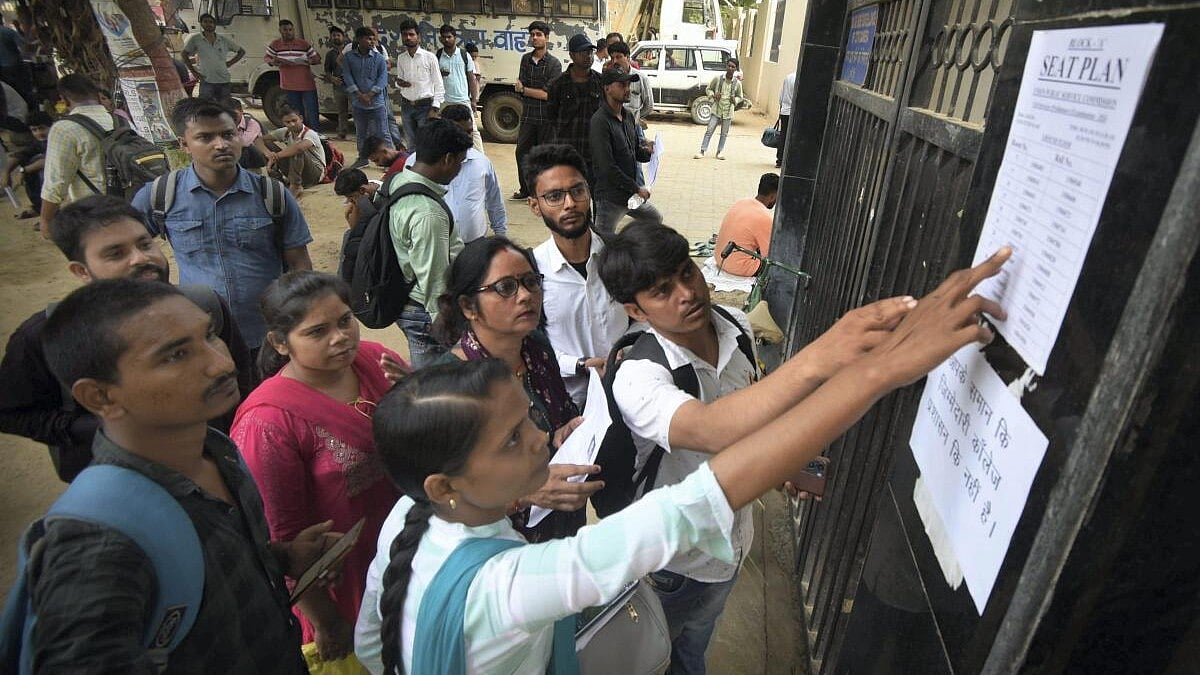
The Centre has outlined administrative and technology-based reforms to make recruitment through the Union Public Service Commission (UPSC) and Staff Selection Commission (SSC) faster, more transparent and secure.
UPSC’s recruitment cycle has been reduced from over 15 months to about 13 months, while SSC’s average recruitment cycle has fallen from 15–18 months to 6–8 months. The reforms were detailed by Minister of State for Personnel Dr Jitendra Singh in a written reply to the Rajya Sabha.
UPSC Reforms
Major measures introduced by UPSC include:
- Modular Online Application Portal
- Simplifies registration and application submission.
- Reduces repetitive entry of candidate information.
- AI-based attempt verification
- Verifies candidates’ previous Civil Services Examination attempts.
- Helps enforce prescribed attempt limits and detect data inconsistencies.
- Face authentication
- Strengthens identity verification at examination centres.
- Seeks to prevent impersonation and proxy candidates.
- Provisional answer keys
- Candidates can submit representations through a structured mechanism.
- Improves procedural transparency before finalisation.
- Candidate assistance
- Dedicated candidate helpdesk.
- Expansion of examination centres.
- Guaranteed choice of examination centre for Persons with Disabilities.
SSC Reforms
SSC has adopted several measures to reduce delays and improve examination integrity:
- Computer-Based Examinations
- Examination stages have been reduced and digitised.
- Recruitment time has declined to an average of 6–8 months.
- e-Dossier system
- Enables tamper-resistant digital transmission of candidate documents.
- Reduces paperwork and delays in document communication.
- Sliding Mechanism Framework
- Permits merit-based post upgradation when vacancies become available.
- Seeks to reduce posts remaining vacant after initial allocation.
- Transparent answer-key system
- Publication of tentative and final answer keys.
- Opportunity for candidates to raise objections.
- Reduction in the answer-key challenge fee.
- Online publication of marks and results.
Faster Appointments
The wider recruitment reforms also permit provisional appointment letters based on self-attested documents. Character and caste-certificate verification must ordinarily be completed within six months.
Interviews have been removed for recruitment to Group C and Group B non-gazetted posts, promoting objectivity and reducing procedural delays. Vacancies are also being filled in mission mode through initiatives such as the National Rozgar Mela.
Additional Info
- Union Public Service Commission
- A constitutional body.
- Article 315: Establishment of UPSC and State Public Service Commissions.
- Article 316: Appointment and term of commission members.
- Article 320: Functions relating to recruitment, examinations and service matters.
- Article 323: Submission of annual reports.
- Recruits mainly for All India Services, Central Civil Services and Group A and specified Group B posts.
- Staff Selection Commission
- An attached office under the Department of Personnel and Training.
- It is neither a constitutional body nor a statutory body.
- Conducts recruitment mainly for Group B non-gazetted and Group C posts in Union government ministries and organisations.
- Department of Personnel and Training
- Functions under the Ministry of Personnel, Public Grievances and Pensions.
- Acts as the Union government’s coordinating agency for personnel management, recruitment policy and administrative reforms.
- Public Examinations (Prevention of Unfair Means) Act, 2024
- Provides a separate legal framework against question-paper leaks, organised cheating, impersonation and other unfair practices in specified public examinations.
- The technological reforms complement this broader examination-security framework.
- Notes
- UPSC cycle: Over 15 months → about 13 months
- SSC cycle: 15–18 months → 6–8 months
- Document-verification period: Six months
- UPSC status: Constitutional body
- SSC status: Attached office of DoPT
Sources
India Launches Clouded Leopard Conservation Action Plan

What’s the News?
India has launched a dedicated Clouded Leopard Conservation Action Plan (CAP) to protect the species and its forest habitats across Northeast India. The plan was released during the 91st meeting of the Standing Committee of the National Board for Wild Life in Coimbatore.
Prepared by the Wildlife Institute of India (WII) under a Government of India–Global Environment Facility–United Nations Development Programme initiative, the CAP provides a science-based framework for habitat protection, ecological connectivity, population monitoring and community participation.
Conservation Action Plan
The CAP identifies 14 priority conservation landscapes across Northeast India. Its principal components include:
- Restoration of degraded forest habitats.
- Conservation of wildlife corridors between fragmented forests.
- Standardised monitoring through:
- Camera traps
- Occupancy surveys
- Genetic analysis
- Environmental DNA or eDNA
- Strengthening anti-poaching and wildlife-crime prevention.
- Training frontline forest personnel, including the use of M-STrIPES.
- Community-based conservation and sustainable livelihood support.
- Climate-resilient and adaptive habitat management.
- Transboundary cooperation with neighbouring range countries.
The species has also been included under the Species Recovery Programme of the Centrally Sponsored Scheme—Integrated Development of Wildlife Habitats—providing an institutional and funding framework for long-term conservation.
Clouded Leopard
- Scientific name: Neofelis nebulosa
- Family: Felidae
- Habitat: Tropical, subtropical and montane forests
- Indian distribution: Primarily Northeast India and the eastern Himalayan region
- Global distribution: Himalayan foothills and parts of South and Southeast Asia
- IUCN Red List: Vulnerable
- Wildlife (Protection) Act, 1972: Schedule I
- CITES: Appendix I
The clouded leopard belongs to the genus Neofelis and is distinct from the common leopard, Panthera pardus. Its survival depends heavily on contiguous forest cover because habitat fragmentation restricts movement, breeding and access to prey.
Major Threats
- Forest loss and fragmentation
- Infrastructure expansion
- Illegal hunting and wildlife trade
- Decline in prey populations
- Snares intended for other wildlife
- Limited population and ecological data
- Climate-related changes in forest habitats
Protecting the species can also conserve other forest-dependent wildlife because the clouded leopard functions as an umbrella species for biodiverse forest landscapes.
International Clouded Leopard Day
- Observed: 4 August every year
- First organised: 2018
- Initiated by: Howletts Wild Animal Park in Kent, United Kingdom
- Objective: To raise awareness about clouded leopards, their habitats and conservation threats.
Theme note: No single official 2026 theme could be verified from the initiating organisation’s observance page or the Government of India’s official conservation-plan release. Different secondary platforms have circulated different slogans; these should not be treated as an officially confirmed theme.
Additional Info
- Wildlife Institute of India
- Autonomous institution under the Ministry of Environment, Forest and Climate Change.
- Located in Dehradun.
- Conducts wildlife research, training and conservation planning.
- The complete CAP covers three priority felids:
- Caracal
- Fishing cat
- Clouded leopard
- National Board for Wild Life
- Constituted under the Wildlife (Protection) Act, 1972.
- Chaired by the Prime Minister.
- Its Standing Committee is chaired by the Union Environment Minister.
- Advises governments on wildlife conservation and protected-area matters.
- M-STrIPES
- Full form: Monitoring System for Tigers—Intensive Protection and Ecological Status.
- A technology-based system used for patrolling, ecological monitoring and recording wildlife-related information.
- Notes
- Priority landscapes identified: 14
- Nodal scientific institution: Wildlife Institute of India
- Focus region: Northeast India
- IUCN status: Vulnerable
- CITES listing: Appendix I
- International Clouded Leopard Day: 4 August
Sources
August 2026
Archive
November 2026
- 27 November 2026
- 26 November 2026
- 25 November 2026
- 24 November 2026
- 23 November 2026
- 21 November 2026
- 20 November 2026
- 19 November 2026
- 18 November 2026
- 17 November 2026
- 16 November 2026
- 14 November 2026
- 13 November 2026
- 12 November 2026
- 11 November 2026
- 10 November 2026
- 09 November 2026
- 06 November 2026
- 05 November 2026
- 04 November 2026
- 03 November 2026
- 02 November 2026
October 2026
- 31 October 2026
- 30 October 2026
- 29 October 2026
- 28 October 2026
- 27 October 2026
- 26 October 2026
- 24 October 2026
- 23 October 2026
- 22 October 2026
- 21 October 2026
- 20 October 2026
- 19 October 2026
- 17 October 2026
- 16 October 2026
- 15 October 2026
- 14 October 2026
- 13 October 2026
- 12 October 2026
- 10 October 2026
- 09 October 2026
- 08 October 2026
- 07 October 2026
- 06 October 2026
- 05 October 2026
- 03 October 2026
- 02 October 2026
- 01 October 2026
September 2026
- 30 September 2026
- 29 September 2026
- 28 September 2026
- 26 September 2026
- 25 September 2026
- 24 September 2026
- 23 September 2026
- 22 September 2026
- 21 September 2026
- 19 September 2026
- 18 September 2026
- 17 September 2026
- 16 September 2026
- 15 September 2026
- 12 September 2026
- 11 September 2026
- 10 September 2026
- 09 September 2026
- 08 September 2026
- 07 September 2026
- 05 September 2026
- 04 September 2026
- 03 September 2026
- 02 September 2026
- 01 September 2026
August 2026
- 31 August 2026
- 29 August 2026
- 27 August 2026
- 26 August 2026
- 25 August 2026
- 24 August 2026
- 22 August 2026
- 21 August 2026
- 20 August 2026
- 19 August 2026
- 18 August 2026
- 17 August 2026
- 14 August 2026
- 13 August 2026
- 12 August 2026
- 11 August 2026
- 10 August 2026
- 08 August 2026
- 07 August 2026
- 06 August 2026
- 05 August 2026
- 04 August 2026
- 03 August 2026
- 01 August 2026
July 2026
- 31 July 2026
- 30 July 2026
- 29 July 2026
- 28 July 2026
- 27 July 2026
- 25 July 2026
- 23 July 2026
- 22 July 2026
- 21 July 2026
- 20 July 2026
- 18 July 2026
- 17 July 2026
- 15 July 2026
- 14 July 2026
- 13 July 2026
- 11 July 2026
- 10 July 2026
- 09 July 2026
- 08 July 2026
- 07 July 2026
- 06 July 2026
- 04 July 2026
- 03 July 2026
- 02 July 2026
- 01 July 2026
June 2026
May 2026
April 2026
March 2026
- 31 March 2026
- 30 March 2026
- 28 March 2026
- 27 March 2026
- 26 March 2026
- 25 March 2026
- 24 March 2026
- 23 March 2026
- 21 March 2026
- 20 March 2026
- 19 March 2026
- 18 March 2026
- 17 March 2026
- 16 March 2026
- 14 March 2026
- 13 March 2026
- 12 March 2026
- 11 March 2026
- 10 March 2026
- 09 March 2026
- 07 March 2026
- 06 March 2026
- 05 March 2026
- 03 March 2026
- 02 March 2026
February 2026
- 28 February 2026
- 27 February 2026
- 26 February 2026
- 25 February 2026
- 24 February 2026
- 23 February 2026
- 21 February 2026
- 20 February 2026
- 19 February 2026
- 18 February 2026
- 17 February 2026
- 16 February 2026
- 13 February 2026
- 12 February 2026
- 11 February 2026
- 10 February 2026
- 09 February 2026
- 07 February 2026
- 06 February 2026
- 05 February 2026
- 04 February 2026
- 03 February 2026
- 02 February 2026
January 2026
- 31 January 2026
- 30 January 2026
- 29 January 2026
- 28 January 2026
- 27 January 2026
- 26 January 2026
- 24 January 2026
- 23 January 2026
- 22 January 2026
- 21 January 2026
- 20 January 2026
- 19 January 2026
- 16 January 2026
- 15 January 2026
- 14 January 2026
- 13 January 2026
- 12 January 2026
- 10 January 2026
- 09 January 2026
- 08 January 2026
- 07 January 2026
- 06 January 2026
- 05 January 2026
- 03 January 2026
- 02 January 2026
- 01 January 2026
December 2025
- 31 December 2025
- 30 December 2025
- 29 December 2025
- 27 December 2025
- 26 December 2025
- 24 December 2025
- 23 December 2025
- 22 December 2025
- 20 December 2025
- 19 December 2025
- 18 December 2025
- 17 December 2025
- 16 December 2025
- 15 December 2025
- 13 December 2025
- 12 December 2025
- 11 December 2025
- 10 December 2025
- 09 December 2025
- 08 December 2025
- 05 December 2025
- 04 December 2025
- 03 December 2025
- 02 December 2025
November 2025
- 29 November 2025
- 28 November 2025
- 27 November 2025
- 26 November 2025
- 25 November 2025
- 24 November 2025
- 22 November 2025
- 21 November 2025
- 20 November 2025
- 19 November 2025
- 18 November 2025
- 17 November 2025
- 15 November 2025
- 14 November 2025
- 13 November 2025
- 12 November 2025
- 11 November 2025
- 10 November 2025
- 08 November 2025
- 07 November 2025
- 06 November 2025
- 05 November 2025
- 04 November 2025
- 03 November 2025
- 01 November 2025
October 2025
- 31 October 2025
- 30 October 2025
- 29 October 2025
- 28 October 2025
- 27 October 2025
- 25 October 2025
- 24 October 2025
- 23 October 2025
- 22 October 2025
- 21 October 2025
- 20 October 2025
- 18 October 2025
- 17 October 2025
- 16 October 2025
- 15 October 2025
- 14 October 2025
- 13 October 2025
- 11 October 2025
- 10 October 2025
- 09 October 2025
- 08 October 2025
- 07 October 2025
- 06 October 2025
- 04 October 2025
- 03 October 2025
- 02 October 2025
- 01 October 2025
September 2025
- 30 September 2025
- 29 September 2025
- 27 September 2025
- 26 September 2025
- 25 September 2025
- 24 September 2025
- 23 September 2025
- 22 September 2025
- 20 September 2025
- 19 September 2025
- 18 September 2025
- 17 September 2025
- 16 September 2025
- 15 September 2025
- 13 September 2025
- 12 September 2025
- 11 September 2025
- 10 September 2025
- 09 September 2025
- 08 September 2025
- 06 September 2025
- 05 September 2025
- 04 September 2025
- 03 September 2025
- 02 September 2025
- 01 September 2025
August 2025
- 30 August 2025
- 29 August 2025
- 28 August 2025
- 27 August 2025
- 26 August 2025
- 25 August 2025
- 23 August 2025
- 22 August 2025
- 21 August 2025
- 20 August 2025
- 19 August 2025
- 18 August 2025
- 16 August 2025
- 14 August 2025
- 13 August 2025
- 12 August 2025
- 11 August 2025
- 08 August 2025
- 07 August 2025
- 06 August 2025
- 05 August 2025
- 04 August 2025
- 02 August 2025
- 01 August 2025
July 2025
- 31 July 2025
- 30 July 2025
- 29 July 2025
- 28 July 2025
- 26 July 2025
- 25 July 2025
- 24 July 2025
- 23 July 2025
- 22 July 2025
- 21 July 2025
- 19 July 2025
- 18 July 2025
- 17 July 2025
- 16 July 2025
- 15 July 2025
- 12 July 2025
- 11 July 2025
- 10 July 2025
- 09 July 2025
- 07 July 2025
- 05 July 2025
- 04 July 2025
- 03 July 2025
- 02 July 2025
- 01 July 2025
June 2025
- 30 June 2025
- 28 June 2025
- 27 June 2025
- 26 June 2025
- 25 June 2025
- 24 June 2025
- 23 June 2025
- 21 June 2025
- 20 June 2025
- 19 June 2025
- 18 June 2025
- 17 June 2025
- 16 June 2025
- 14 June 2025
- 13 June 2025
- 12 June 2025
- 11 June 2025
- 10 June 2025
- 09 June 2025
- 07 June 2025
- 06 June 2025
- 05 June 2025
- 04 June 2025
- 03 June 2025
- 02 June 2025
May 2025
April 2025
- 30 April 2025
- 29 April 2025
- 28 April 2025
- 26 April 2025
- 25 April 2025
- 24 April 2025
- 23 April 2025
- 22 April 2025
- 21 April 2025
- 19 April 2025
- 18 April 2025
- 17 April 2025
- 16 April 2025
- 15 April 2025
- 14 April 2025
- 12 April 2025
- 11 April 2025
- 10 April 2025
- 09 April 2025
- 08 April 2025
- 07 April 2025
- 05 April 2025
- 04 April 2025
- 03 April 2025
- 02 April 2025
- 01 April 2025
March 2025
- 31 March 2025
- 29 March 2025
- 28 March 2025
- 27 March 2025
- 26 March 2025
- 25 March 2025
- 24 March 2025
- 22 March 2025
- 21 March 2025
- 20 March 2025
- 19 March 2025
- 18 March 2025
- 17 March 2025
- 15 March 2025
- 13 March 2025
- 12 March 2025
- 11 March 2025
- 10 March 2025
- 08 March 2025
- 07 March 2025
- 06 March 2025
- 05 March 2025
- 04 March 2025
- 03 March 2025
- 01 March 2025
February 2025
- 28 February 2025
- 27 February 2025
- 26 February 2025
- 25 February 2025
- 24 February 2025
- 22 February 2025
- 21 February 2025
- 20 February 2025
- 19 February 2025
- 18 February 2025
- 17 February 2025
- 15 February 2025
- 14 February 2025
- 13 February 2025
- 12 February 2025
- 11 February 2025
- 10 February 2025
- 08 February 2025
- 07 February 2025
- 06 February 2025
- 05 February 2025
- 04 February 2025
- 03 February 2025
- 01 February 2025
January 2025
- 31 January 2025
- 30 January 2025
- 29 January 2025
- 28 January 2025
- 27 January 2025
- 25 January 2025
- 24 January 2025
- 23 January 2025
- 22 January 2025
- 21 January 2025
- 20 January 2025
- 18 January 2025
- 17 January 2025
- 16 January 2025
- 15 January 2025
- 14 January 2025
- 13 January 2025
- 11 January 2025
- 10 January 2025
- 09 January 2025
- 08 January 2025
- 07 January 2025
- 06 January 2025
- 04 January 2025
- 03 January 2025
- 02 January 2025
- 01 January 2025