
Current Affairs
Stay updated with the latest national and international events.
05 September 2026
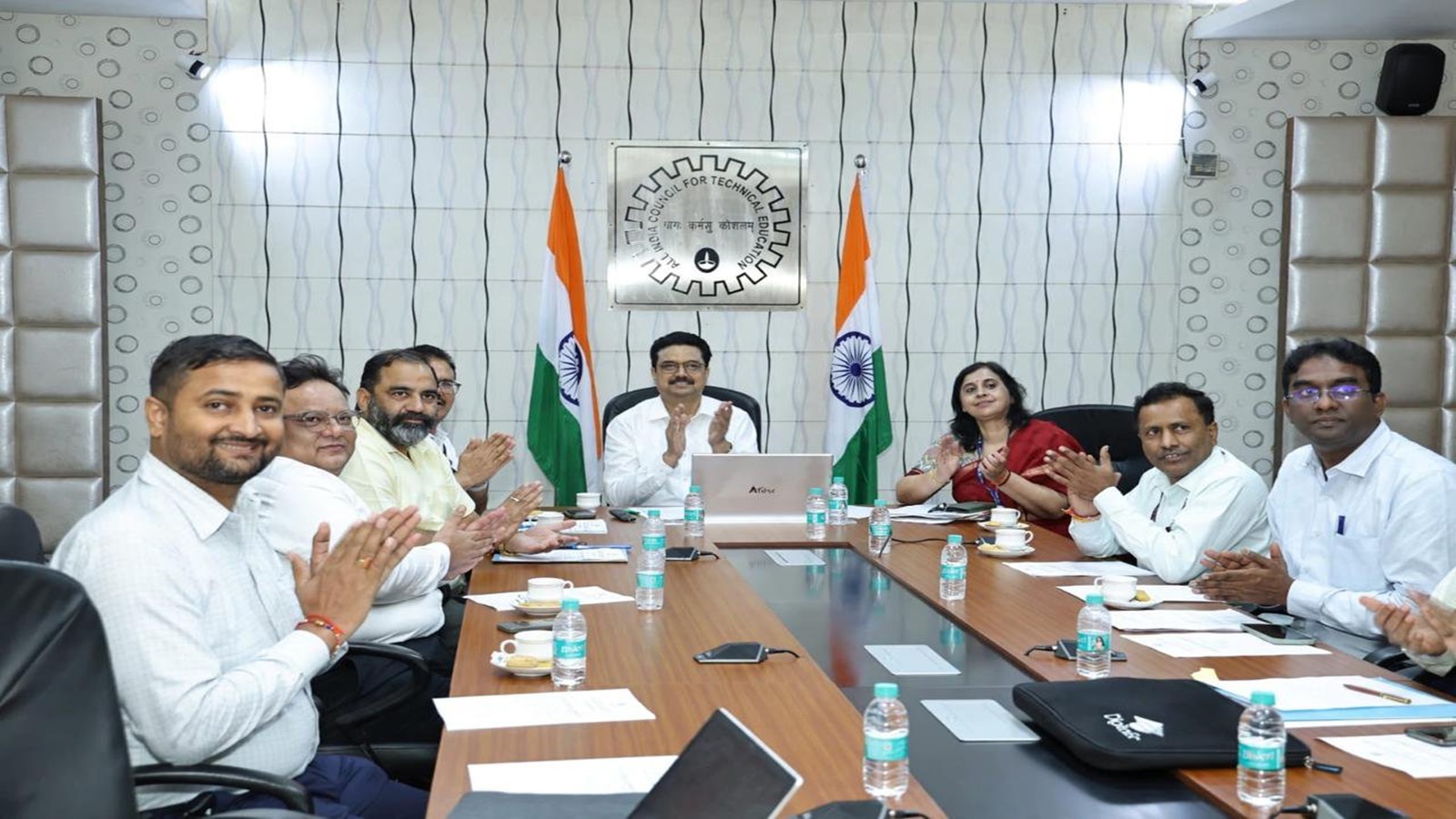
AICTE Launches ₹245-Crore Doctoral Fellowship for Innovation and Entrepreneurship
What’s the News?
- The All India Council for Technical Education (AICTE) has launched the AICTE Innovation and Entrepreneurship Doctoral Fellowship Programme (AIEDFP).
- The programme has a projected financial outlay of ₹245 crore over five years and will support 150 PhD fellowships.
- It was launched by AICTE Chairman Prof. Yogesh Singh and Member Secretary Prof. Shyama Rath.
- AIEDFP seeks to shift doctoral research towards problem-driven and application-oriented outcomes, including prototypes, intellectual property, technology transfer, commercialisation, startups and solutions with societal impact.
AIEDFP?
- Full form: AICTE Innovation and Entrepreneurship Doctoral Fellowship Programme.
- Objective: Strengthen the linkage between academic research, industry, startups and the innovation ecosystem.
- It covers both:
- Technological innovation, and
- Non-technological innovation, including policy and social innovation.
- It promotes multidisciplinary and transdisciplinary research addressing national and global priorities.
Financial Support
- Duration: Up to 5 years, subject to eligibility and satisfactory research progress.
- Fellowship:
- First 3 years: ₹60,000 per month + applicable HRA.
- Fourth and fifth years: ₹70,000 per month + applicable HRA.
- Innovation Grant: Up to ₹10 lakh per scholar for activities such as:
- Prototype development
- Testing and validation
- Field trials
- Data collection
- Research-related travel
- The programme therefore combines conventional research funding with dedicated support for converting research into deployable solutions.
Industry & Startup Linkages
- Scholars may engage with industries, startups, research organisations and incubators.
- Industry partners can provide:
- Problem statements
- Infrastructure and resources
- Datasets
- Technical mentorship
- Researchers may undertake optional industrial exposure of 6–12 months.
- The intended research-to-market pathway includes patents → prototypes → technology transfer → commercialisation/startups.
Additional Info
- AICTE
- Full form: All India Council for Technical Education.
- It is a statutory body under the Ministry of Education.
- Statutory status was provided through the AICTE Act, 1987 (Act No. 52 of 1987).
- Its mandate includes coordinated development, regulation and maintenance of standards in India's technical education system.
Sources
India Wins 9 Medals at 19th International Earth Science Olympiad 2026
What’s the News?
- Team India won 9 medals at the 19th International Earth Science Olympiad (IESO) 2026 held in Turin, Italy.
- Medal tally: 4 Gold, 3 Silver and 2 Bronze.
- Students from 39 countries participated in the competition.
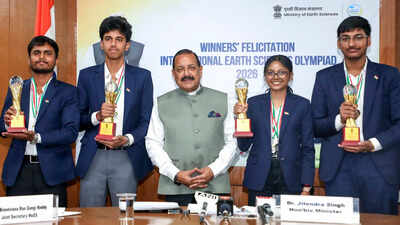
- Union Minister of State (Independent Charge) for Earth Sciences Dr Jitendra Singh felicitated the Indian contingent at Prithvi Bhawan, New Delhi.
Indian Medal Winners
- Soumik Mandal – 2 Gold + 1 Silver
- Also stood 3rd in the overall global ranking.
- Aaron Maiti – 1 Gold + 1 Bronze
- Riddhi Ranjan – 1 Gold + 1 Silver
- Md Ehtesham Rizwi – 1 Silver + 1 Bronze.
International Earth Science Olympiad (IESO)?
- An international competition for school students in Earth Sciences.
- The 2026 event was the 19th edition.
- Major competition components include:
- Written and Practical examinations
- International Team Field Investigation (ITFI)
- Earth Science Project (ESP)
- It assesses knowledge and application across areas such as geology, geophysics, meteorology, oceanography and environmental science.
India’s Selection & Training
- India's participation is supported by the Ministry of Earth Sciences (MoES) under its Outreach and Awareness programme.
- The national Earth Science Olympiad examination was facilitated by the Geological Society of India (GSI).
- Around 17,800 students appeared at about 500 centres across India.
- The top 25 students were selected for an intensive three-week training camp at Maharaja Sayajirao University, Vadodara.
- Four students were subsequently selected to represent India internationally.
Additional Info
- Ministry of Earth Sciences (MoES)
- Nodal Union ministry dealing with Earth system sciences, including atmosphere, oceans, weather, climate, seismology and related geosciences.
- The Ministry linked the IESO outreach effort with broader initiatives such as:
- Deep Ocean Mission
- Mission Mausam
- PRITHVI
Sources
Sikkim Identifies 40 High-Hazard Glacial Lakes

What’s the News?
- Sikkim has identified 40 high-hazard glacial lakes that require detailed investigation because of their potential Glacial Lake Outburst Flood (GLOF) risk.
- Of these, 16 are in Category A, representing the highest-risk group.
- The assessment is part of efforts to protect downstream settlements and infrastructure from glacial hazards as Himalayan glaciers retreat and glacial lakes expand.
- Sikkim is also developing what could become India’s first dedicated GLOF Risk Mitigation Protocol.
Risk Classification
Of the 40 identified high-hazard lakes:
- Category A: 16 — highest risk
- Category B: 2 — high risk
- Category C: 9 — moderate to low risk
- Unclassified: 13 — require further scientific assessment
Sikkim has more than 400 glacial lakes, while national-level assessments have identified 189 vulnerable glacial lakes across India.
GLOF?
- Glacial Lake Outburst Flood (GLOF) is the sudden release of a large volume of water from a glacial lake.
- It can result from:
- Failure or breach of a natural moraine/ice dam
- Avalanches or landslides entering the lake
- Ice collapse
- Excessive water accumulation
- Earthquakes or other destabilising events
- GLOFs can generate flash floods, debris flows and severe downstream erosion, threatening settlements, roads, bridges and hydropower infrastructure.
Monitoring & Mitigation
- Sikkim Department of Science and Technology (DST) is the nodal department for GLOF hazard assessment and mitigation.
- Monitoring and field investigations use:
- Satellite imagery and remote sensing
- Water-level and discharge monitoring
- Bathymetric surveys
- Electrical Resistivity Tomography
- Geophysical and differential GPS surveys
- Flood modelling
- The main mitigation approaches include:
- Reducing lake volume
- Stabilising natural lake dams
- Constructing flood-retention structures
- Installing Early Warning Systems (EWS).
High-Risk Lakes & Proposed Measures
- Shako Chho
- Identified as Sikkim’s most vulnerable glacial lake.
- A DPR has been submitted to the National Disaster Management Authority (NDMA).
- Solar-powered pumping has been proposed to lower its water level.
- Lhonak Complex
- A flood-retention structure is proposed at Dolma Sampa near Muguthang.
- The Central Water Commission (CWC) and Sikkim government are working on its DPR.
- Gurudongmar Complex
- A moraine plug wall has been proposed at the outlet.
- The project involves the Sikkim DST and Brahmaputra Board.
Additional Info
- South Lhonak Lake
- A GLOF originating from the South Lhonak system caused a major disaster in Sikkim in 2023.
- It caused at least 60 deaths, affected Mangan, Gangtok, Pakyong and Namchi districts, and destroyed the Chungthang dam.
- GLOF Risk Mitigation Protocol
- Sikkim is working on a dedicated protocol to standardise hazard assessment, preparedness and mitigation.
- It could serve as a framework for other vulnerable Himalayan states and regions.
Sources
Ig Nobel Prizes 2026 Honour Unusual Scientific Research
What’s the News?
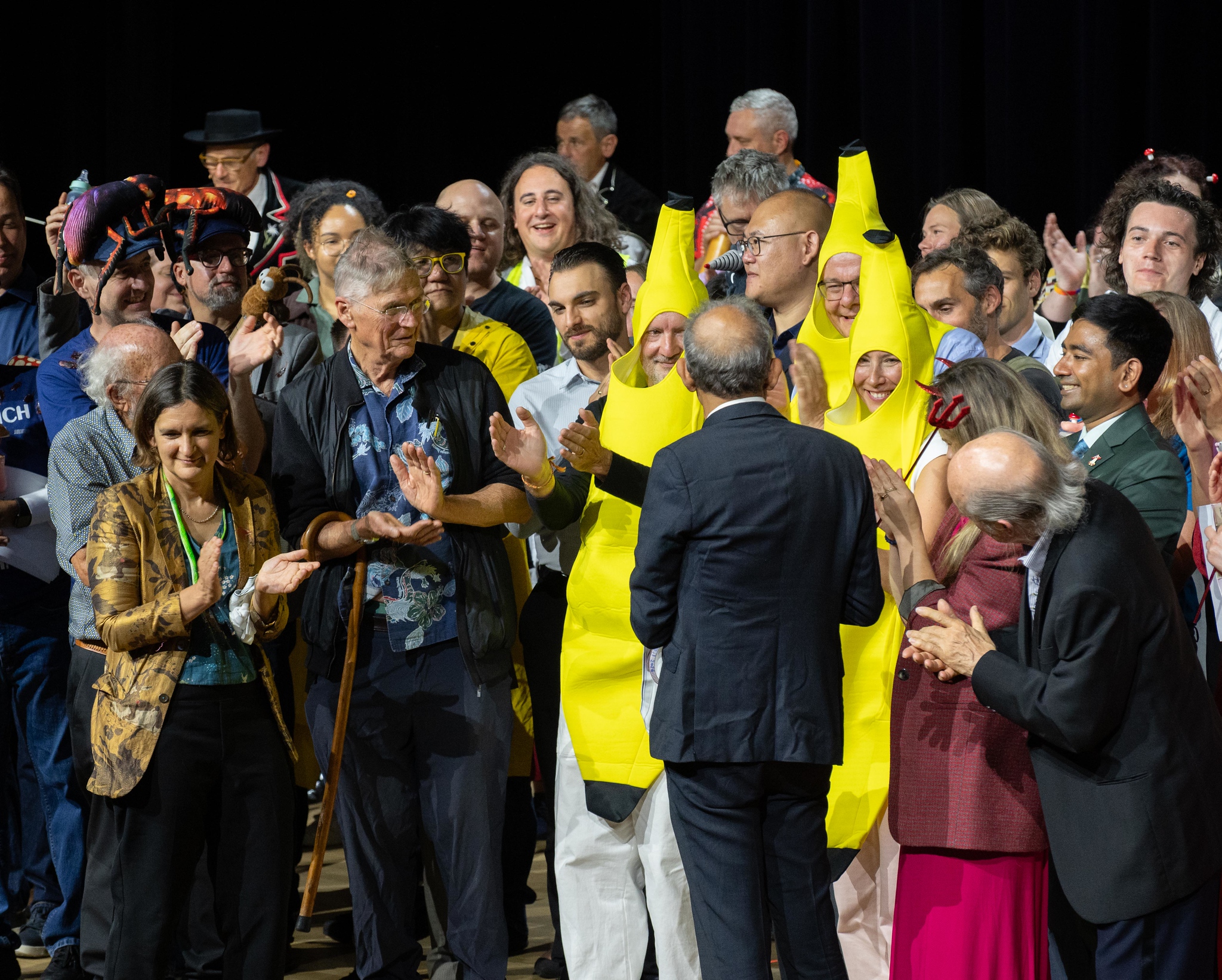
- The 36th Ig Nobel Prize ceremony was held in Zurich, Switzerland, marking the first time the ceremony was hosted outside the United States.
- Ten prizes were awarded for unconventional research across fields such as Chemistry, Medicine, Biology, Physics, Economics and Technology.
- The Ig Nobel Prizes recognise achievements that “first make people laugh, then make them think”, highlighting unusual research that can still raise meaningful scientific questions.
- The 2026 ceremony had “fungi” as its theme.
2026 Ig Nobel Prize Winners
- Biomechanics Prize – Matilda Brindle, Catherine Talbot and Stuart West
- Developed a more precise scientific definition of kissing by comparing oral contact behaviour in ants, birds, polar bears and humans.
- Economics Prize – Paul Piff, Daniel Stancato, Stéphane Côté, Rodolfo Mendoza-Denton and Dacher Keltner
- Studied the relationship between higher social class and unethical behaviour.
- Chemistry Prize – Sanchari Banerjee and team
- Found that milk proteins from the viviparous cockroach Diploptera punctata contain about three times as much energy as cow-milk proteins.
- Medicine Prize – Tokuji Unno (posthumously)
- Honoured for an aerodynamic study on how to blow the nose.
- Biology Prize – João Miguel Alves-Nunes and team
- Studied what conditions make venomous snakes more likely to bite humans.
- Physics Prize – Randy Hurd, Zhao Pan, Tadd Truscott and Kaveeshan Thurairajah
- Conducted theoretical and experimental research to design a splash-free urinal.
- Technology Prize – Justin Puma and team
- Developed “necroprinting”, using mosquito proboscises as ultra-fine 3D-printing nozzles.
- Olfaction Prize – Ilona Croy, Tomasz Frackowiak, Thomas Hummel and Agnieszka Sorokowska
- Studied how parents perceive their children’s body odour, finding more favourable perceptions of babies than teenagers.
- Peace Prize – Jaimie Arona Krems and team
- Studied why people may value friends who behave badly toward people they themselves dislike.
- Soil Science Prize – Franz Bender, Marcel van der Heijden, Atlant Bieri and Pia Viviani
- Buried 1,000 identical pairs of cotton underpants in more than 25 countries to examine soil biological activity through decomposition.
Indian Connection
- The Chemistry Prize involved researchers associated with India, France, Japan and the United States.
- The winning team included Sanchari Banerjee, Nitish Sathyanarayanan, Jandhyam Srikanth and Subramanian Ramaswamy, along with international collaborators.
- Their research examined protein crystals produced by the Pacific beetle cockroach (Diploptera punctata), a viviparous cockroach that nourishes developing offspring internally.
- The study found that these milk-protein crystals pack roughly three times as much energy as cow-milk proteins.
Ig Nobel Prize?
- The awards were started in 1991.
- They are organised by the science-humour magazine Annals of Improbable Research.
- Ten prizes are awarded annually.
- Their purpose is to recognise unusual and imaginative achievements that stimulate interest in science, medicine and technology.
- The ceremony was founded by Marc Abrahams.
- Before 2026, the ceremonies had been held in the United States, including venues associated with MIT, Harvard University and Boston University.
Sources
UN Declares November 27 as International Day to Eliminate Child Marriage
What’s the News?
- The United Nations General Assembly (UNGA) has designated November 27 as the International Day for the Elimination of Child, Early and Forced Marriage.
- The resolution was led by Sierra Leone, with India as a co-sponsor, and was adopted by consensus.
- The observance seeks to strengthen global political commitment, awareness and action to eliminate child, early and forced marriage by 2030.
Why November 27?
- The date has a strong India connection: the Union government launched the Bal Vivah Mukt Bharat (Child Marriage Free India) campaign on November 27, 2024.
- India therefore supported the adoption of the same date as an annual international observance against child marriage.
Bal Vivah Mukt Bharat
- Nodal Ministry: Ministry of Women and Child Development.
- Objective: Eliminate child marriage through prevention, awareness, community participation and stronger enforcement.
- National target: Reduce the prevalence of child marriage by 10% by 2026 and work towards a child-marriage-free India by 2030.
- It complements India's commitment under Sustainable Development Goal (SDG) 5.3, which calls for eliminating harmful practices such as child, early and forced marriage by 2030.
Child Marriage in India: Data
- NFHS-5 (2019–21): 23.3% of women aged 20–24 were married before attaining 18 years.
- NFHS-6 (2023–24): The figure declined to 20.1%.
- This represents a decline of 3.2 percentage points, although roughly one in five women in this age group had still been married before 18.
Legal Framework
Prohibition of Child Marriage Act (PCMA), 2006
- Principal central legislation dealing with child marriage in India.
- Defines a child as:
- Female: below 18 years.
- Male: below 21 years.
- Provides the legal framework for preventing child marriages and taking action against those facilitating them.
Additional Info
- UNGA
- Main deliberative and representative organ of the United Nations.
- All UN member states are represented in the General Assembly.
- Relevant SDG
- SDG 5: Achieve gender equality and empower all women and girls.
- Target 5.3: Eliminate harmful practices, including child, early and forced marriage and female genital mutilation.
- Key Personality
- Bhuwan Ribhu: Founder of Just Rights for Children (JRC) and a prominent advocate for establishing a dedicated international day against child marriage.
- Dr Fatima Maada Bio, First Lady of Sierra Leone, supported the international initiative, while Sierra Leone spearheaded the resolution at the UNGA.
Sources
September 2026
30 September 202629 September 202628 September 202626 September 202625 September 202624 September 202623 September 202622 September 202621 September 202619 September 202618 September 202617 September 202616 September 202615 September 202612 September 202611 September 202610 September 202609 September 202608 September 202607 September 202605 September 202604 September 202603 September 202602 September 202601 September 2026
Archive
November 2026
- 28 November 2026
- 27 November 2026
- 26 November 2026
- 25 November 2026
- 24 November 2026
- 23 November 2026
- 21 November 2026
- 20 November 2026
- 19 November 2026
- 18 November 2026
- 17 November 2026
- 16 November 2026
- 14 November 2026
- 13 November 2026
- 12 November 2026
- 11 November 2026
- 10 November 2026
- 09 November 2026
- 06 November 2026
- 05 November 2026
- 04 November 2026
- 03 November 2026
- 02 November 2026
October 2026
- 31 October 2026
- 30 October 2026
- 29 October 2026
- 28 October 2026
- 27 October 2026
- 26 October 2026
- 24 October 2026
- 23 October 2026
- 22 October 2026
- 21 October 2026
- 20 October 2026
- 19 October 2026
- 17 October 2026
- 16 October 2026
- 15 October 2026
- 14 October 2026
- 13 October 2026
- 12 October 2026
- 10 October 2026
- 09 October 2026
- 08 October 2026
- 07 October 2026
- 06 October 2026
- 05 October 2026
- 03 October 2026
- 02 October 2026
- 01 October 2026
September 2026
- 30 September 2026
- 29 September 2026
- 28 September 2026
- 26 September 2026
- 25 September 2026
- 24 September 2026
- 23 September 2026
- 22 September 2026
- 21 September 2026
- 19 September 2026
- 18 September 2026
- 17 September 2026
- 16 September 2026
- 15 September 2026
- 12 September 2026
- 11 September 2026
- 10 September 2026
- 09 September 2026
- 08 September 2026
- 07 September 2026
- 05 September 2026
- 04 September 2026
- 03 September 2026
- 02 September 2026
- 01 September 2026
August 2026
- 31 August 2026
- 29 August 2026
- 27 August 2026
- 26 August 2026
- 25 August 2026
- 24 August 2026
- 22 August 2026
- 21 August 2026
- 20 August 2026
- 19 August 2026
- 18 August 2026
- 17 August 2026
- 14 August 2026
- 13 August 2026
- 12 August 2026
- 11 August 2026
- 10 August 2026
- 08 August 2026
- 07 August 2026
- 06 August 2026
- 05 August 2026
- 04 August 2026
- 03 August 2026
- 01 August 2026
July 2026
- 31 July 2026
- 30 July 2026
- 29 July 2026
- 28 July 2026
- 27 July 2026
- 25 July 2026
- 23 July 2026
- 22 July 2026
- 21 July 2026
- 20 July 2026
- 18 July 2026
- 17 July 2026
- 15 July 2026
- 14 July 2026
- 13 July 2026
- 11 July 2026
- 10 July 2026
- 09 July 2026
- 08 July 2026
- 07 July 2026
- 06 July 2026
- 04 July 2026
- 03 July 2026
- 02 July 2026
- 01 July 2026
June 2026
May 2026
April 2026
March 2026
- 31 March 2026
- 30 March 2026
- 28 March 2026
- 27 March 2026
- 26 March 2026
- 25 March 2026
- 24 March 2026
- 23 March 2026
- 21 March 2026
- 20 March 2026
- 19 March 2026
- 18 March 2026
- 17 March 2026
- 16 March 2026
- 14 March 2026
- 13 March 2026
- 12 March 2026
- 11 March 2026
- 10 March 2026
- 09 March 2026
- 07 March 2026
- 06 March 2026
- 05 March 2026
- 03 March 2026
- 02 March 2026
February 2026
- 28 February 2026
- 27 February 2026
- 26 February 2026
- 25 February 2026
- 24 February 2026
- 23 February 2026
- 21 February 2026
- 20 February 2026
- 19 February 2026
- 18 February 2026
- 17 February 2026
- 16 February 2026
- 13 February 2026
- 12 February 2026
- 11 February 2026
- 10 February 2026
- 09 February 2026
- 07 February 2026
- 06 February 2026
- 05 February 2026
- 04 February 2026
- 03 February 2026
- 02 February 2026
January 2026
- 31 January 2026
- 30 January 2026
- 29 January 2026
- 28 January 2026
- 27 January 2026
- 26 January 2026
- 24 January 2026
- 23 January 2026
- 22 January 2026
- 21 January 2026
- 20 January 2026
- 19 January 2026
- 16 January 2026
- 15 January 2026
- 14 January 2026
- 13 January 2026
- 12 January 2026
- 10 January 2026
- 09 January 2026
- 08 January 2026
- 07 January 2026
- 06 January 2026
- 05 January 2026
- 03 January 2026
- 02 January 2026
- 01 January 2026
December 2025
- 31 December 2025
- 30 December 2025
- 29 December 2025
- 27 December 2025
- 26 December 2025
- 24 December 2025
- 23 December 2025
- 22 December 2025
- 20 December 2025
- 19 December 2025
- 18 December 2025
- 17 December 2025
- 16 December 2025
- 15 December 2025
- 13 December 2025
- 12 December 2025
- 11 December 2025
- 10 December 2025
- 09 December 2025
- 08 December 2025
- 05 December 2025
- 04 December 2025
- 03 December 2025
- 02 December 2025
November 2025
- 29 November 2025
- 28 November 2025
- 27 November 2025
- 26 November 2025
- 25 November 2025
- 24 November 2025
- 22 November 2025
- 21 November 2025
- 20 November 2025
- 19 November 2025
- 18 November 2025
- 17 November 2025
- 15 November 2025
- 14 November 2025
- 13 November 2025
- 12 November 2025
- 11 November 2025
- 10 November 2025
- 08 November 2025
- 07 November 2025
- 06 November 2025
- 05 November 2025
- 04 November 2025
- 03 November 2025
- 01 November 2025
October 2025
- 31 October 2025
- 30 October 2025
- 29 October 2025
- 28 October 2025
- 27 October 2025
- 25 October 2025
- 24 October 2025
- 23 October 2025
- 22 October 2025
- 21 October 2025
- 20 October 2025
- 18 October 2025
- 17 October 2025
- 16 October 2025
- 15 October 2025
- 14 October 2025
- 13 October 2025
- 11 October 2025
- 10 October 2025
- 09 October 2025
- 08 October 2025
- 07 October 2025
- 06 October 2025
- 04 October 2025
- 03 October 2025
- 02 October 2025
- 01 October 2025
September 2025
- 30 September 2025
- 29 September 2025
- 27 September 2025
- 26 September 2025
- 25 September 2025
- 24 September 2025
- 23 September 2025
- 22 September 2025
- 20 September 2025
- 19 September 2025
- 18 September 2025
- 17 September 2025
- 16 September 2025
- 15 September 2025
- 13 September 2025
- 12 September 2025
- 11 September 2025
- 10 September 2025
- 09 September 2025
- 08 September 2025
- 06 September 2025
- 05 September 2025
- 04 September 2025
- 03 September 2025
- 02 September 2025
- 01 September 2025
August 2025
- 30 August 2025
- 29 August 2025
- 28 August 2025
- 27 August 2025
- 26 August 2025
- 25 August 2025
- 23 August 2025
- 22 August 2025
- 21 August 2025
- 20 August 2025
- 19 August 2025
- 18 August 2025
- 16 August 2025
- 14 August 2025
- 13 August 2025
- 12 August 2025
- 11 August 2025
- 08 August 2025
- 07 August 2025
- 06 August 2025
- 05 August 2025
- 04 August 2025
- 02 August 2025
- 01 August 2025
July 2025
- 31 July 2025
- 30 July 2025
- 29 July 2025
- 28 July 2025
- 26 July 2025
- 25 July 2025
- 24 July 2025
- 23 July 2025
- 22 July 2025
- 21 July 2025
- 19 July 2025
- 18 July 2025
- 17 July 2025
- 16 July 2025
- 15 July 2025
- 12 July 2025
- 11 July 2025
- 10 July 2025
- 09 July 2025
- 07 July 2025
- 05 July 2025
- 04 July 2025
- 03 July 2025
- 02 July 2025
- 01 July 2025
June 2025
- 30 June 2025
- 28 June 2025
- 27 June 2025
- 26 June 2025
- 25 June 2025
- 24 June 2025
- 23 June 2025
- 21 June 2025
- 20 June 2025
- 19 June 2025
- 18 June 2025
- 17 June 2025
- 16 June 2025
- 14 June 2025
- 13 June 2025
- 12 June 2025
- 11 June 2025
- 10 June 2025
- 09 June 2025
- 07 June 2025
- 06 June 2025
- 05 June 2025
- 04 June 2025
- 03 June 2025
- 02 June 2025
May 2025
April 2025
- 30 April 2025
- 29 April 2025
- 28 April 2025
- 26 April 2025
- 25 April 2025
- 24 April 2025
- 23 April 2025
- 22 April 2025
- 21 April 2025
- 19 April 2025
- 18 April 2025
- 17 April 2025
- 16 April 2025
- 15 April 2025
- 14 April 2025
- 12 April 2025
- 11 April 2025
- 10 April 2025
- 09 April 2025
- 08 April 2025
- 07 April 2025
- 05 April 2025
- 04 April 2025
- 03 April 2025
- 02 April 2025
- 01 April 2025
March 2025
- 31 March 2025
- 29 March 2025
- 28 March 2025
- 27 March 2025
- 26 March 2025
- 25 March 2025
- 24 March 2025
- 22 March 2025
- 21 March 2025
- 20 March 2025
- 19 March 2025
- 18 March 2025
- 17 March 2025
- 15 March 2025
- 13 March 2025
- 12 March 2025
- 11 March 2025
- 10 March 2025
- 08 March 2025
- 07 March 2025
- 06 March 2025
- 05 March 2025
- 04 March 2025
- 03 March 2025
- 01 March 2025
February 2025
- 28 February 2025
- 27 February 2025
- 26 February 2025
- 25 February 2025
- 24 February 2025
- 22 February 2025
- 21 February 2025
- 20 February 2025
- 19 February 2025
- 18 February 2025
- 17 February 2025
- 15 February 2025
- 14 February 2025
- 13 February 2025
- 12 February 2025
- 11 February 2025
- 10 February 2025
- 08 February 2025
- 07 February 2025
- 06 February 2025
- 05 February 2025
- 04 February 2025
- 03 February 2025
- 01 February 2025
January 2025
- 31 January 2025
- 30 January 2025
- 29 January 2025
- 28 January 2025
- 27 January 2025
- 25 January 2025
- 24 January 2025
- 23 January 2025
- 22 January 2025
- 21 January 2025
- 20 January 2025
- 18 January 2025
- 17 January 2025
- 16 January 2025
- 15 January 2025
- 14 January 2025
- 13 January 2025
- 11 January 2025
- 10 January 2025
- 09 January 2025
- 08 January 2025
- 07 January 2025
- 06 January 2025
- 04 January 2025
- 03 January 2025
- 02 January 2025
- 01 January 2025