
Current Affairs
Stay updated with the latest national and international events.
06 August 2025
Indian Nutrition Study on TB Influences WHO Global Policy
What’s the News?
- An Indian study, the RATIONS trial, has provided crucial evidence on the link between nutrition and Tuberculosis (TB), prompting the World Health Organization (WHO) to update its global guidelines.
- The WHO now recommends systematic nutritional assessment and support for all individuals with TB, a policy shift directly influenced by India's research findings.
The RATIONS Trial
The RATIONS (Reducing Activation of Tuberculosis by Improvement of Nutritional Status) trial was a landmark study conducted by the Indian Council of Medical Research (ICMR) - National Institute for Research in Tuberculosis (NIRT) in Chennai.
- Objective: To assess the impact of nutritional support on preventing TB infection from progressing to active disease among household contacts of TB patients.
- Methodology: The trial provided food baskets (including rice, pulses, milk powder, and oil) and multivitamins to families of TB patients.
- Key Findings:
- Nutritional support led to a nearly 40% reduction in TB incidence among all household members.
- The reduction was even more significant, at almost 50%, among close family contacts.
- The intervention also reduced mortality and helped prevent weight loss in existing TB patients.
Additional Info
National Tuberculosis Elimination Programme (NTEP)
- Goal: To eliminate TB in India by 2025, five years ahead of the global Sustainable Development Goal (SDG) target of 2030.
- Strategy: A multi-pronged approach including early diagnosis through Active Case Finding (ACF) campaigns, free treatment, and robust patient support systems.
- Key Initiatives:
- Ni-kshay Portal: A web-based patient management system for monitoring TB patients.
- Nikshay Poshan Yojana (NPY): A direct benefit transfer (DBT) scheme providing financial assistance for nutrition.
Nikshay Poshan Yojana (NPY)
- Objective: To provide nutritional support to TB patients to improve treatment outcomes and address undernutrition, a major co-morbidity.
- Mechanism: A Direct Benefit Transfer (DBT) of ₹500 per month is provided to each notified TB patient for the entire duration of their treatment.
Sources
RBI Monetary Policy Committee Holds Repo Rate at 5.5%
What’s the News?
- The Reserve Bank of India’s (RBI) Monetary Policy Committee (MPC) has unanimously decided to keep the benchmark policy repo rate unchanged at 5.5%.
- The committee also maintained its policy stance as “neutral”, signaling a wait-and-watch approach amid evolving inflation and growth dynamics.
Key Policy Rates and Economic Projections
The MPC has held key rates and retained its economic forecasts for the fiscal year 2025-26.
- Policy Repo Rate: Unchanged at 5.50%.
- Standing Deposit Facility (SDF) Rate: Remains at 5.25%.
- Marginal Standing Facility (MSF) Rate and Bank Rate: Unchanged at 5.75%.
- Real GDP Growth Projection (FY26): Retained at 7.3%.
- CPI Inflation Projection (FY26): Maintained at 4.5%, with the committee remaining focused on aligning inflation with the 4% target.
Economic Implications
Maintaining the repo rate and a "neutral" stance carries significant implications for the economy.
- Neutral Stance: This indicates that the MPC retains flexibility to either increase or decrease the policy rate in future meetings, depending on how macroeconomic conditions, particularly inflation and growth, evolve. It signals that the central bank is not locked into a specific direction for interest rates.
- Impact on Economy: The decision to hold rates steady provides stability to the financial system. For consumers and businesses, this means that lending rates for loans (like home and auto loans) are likely to remain stable in the short term, supporting consumption and investment. The RBI's priority remains the durable alignment of inflation with its target, ensuring price stability without prematurely hindering economic momentum.
Additional Info
Monetary Policy Committee (MPC)
- Function: The MPC is a statutory body tasked with setting India's key policy interest rates, including the repo rate, to achieve its inflation target.
- Composition: It is a six-member committee chaired by the RBI Governor. It includes three members from the RBI and three external members appointed by the Government of India.
- Mandate: The primary objective of the MPC is to maintain price stability while keeping in mind the objective of growth. Under the flexible inflation targeting framework, the government has mandated the RBI to maintain Consumer Price Index (CPI) inflation at 4% with a tolerance band of +/- 2% (i.e., a range of 2% to 6%).
- Legal Basis: The MPC was established under Section 45ZB of the amended RBI Act, 1934.
Key Monetary Policy Instruments
- Repo Rate: The rate at which the RBI lends money to commercial banks against government securities. It is the principal tool for managing liquidity and signaling the monetary policy stance.
- Standing Deposit Facility (SDF): An instrument that allows the RBI to absorb liquidity from commercial banks without needing to provide government securities as collateral. The SDF rate acts as the floor of the policy rate corridor.
- Marginal Standing Facility (MSF): A facility through which scheduled commercial banks can borrow additional overnight money from the RBI at a penal rate. The MSF rate acts as the ceiling of the policy rate corridor.
Sources
Supreme Court Upholds Power of Pollution Boards to Impose Environmental Damages
What’s the News?
- The Supreme Court of India, in a landmark judgment, has affirmed that the Central Pollution Control Board (CPCB) and State Pollution Control Boards (SPCBs) have the authority to impose environmental compensation on entities that cause pollution.
- The ruling clarifies that this power is an inherent part of their function to prevent and control pollution, based on the "polluter pays" principle.
- This decision sets aside a previous ruling by the National Green Tribunal (NGT) which had denied this power to the boards.
Key Aspects of the Judgment
A three-judge bench led by Chief Justice D Y Chandrachud outlined the rationale for empowering the pollution control boards.
- Basis of Power: The Court held that the authority to levy environmental compensation is implicitly granted under the Water (Prevention and Control of Pollution) Act, 1974 and the Environment (Protection) Act, 1986.
- Nature of Compensation: The judgment distinguished this power from imposing a penalty or fine. It clarified that the compensation is remedial and compensatory in nature, intended to cover the costs of environmental restoration and restitution, not to punish the polluter.
- Ensuring Effectiveness: The Court observed that making the boards wait for a judicial body to pass an order for every instance of pollution would render them "toothless" and undermine their statutory purpose of preventing environmental degradation.
- Civil Liability: The imposition of such damages falls under civil liability, making it a necessary tool for the boards to fulfill their mandate effectively without going through complex criminal proceedings for every violation.
Additional Info
Central Pollution Control Board (CPCB)
- The CPCB is a statutory organisation constituted in September 1974 under the Water (Prevention and Control of Pollution) Act, 1974.
- It was later entrusted with powers and functions under the Air (Prevention and Control of Pollution) Act, 1981.
- It provides technical services to the Ministry of Environment, Forest and Climate Change and coordinates the activities of SPCBs.
The 'Polluter Pays' Principle
- This principle is a cornerstone of environmental law, stipulating that those who produce pollution should bear the costs of managing it to prevent damage to human health or the environment.
- The Supreme Court of India has previously incorporated this principle as part of the country's legal framework in landmark cases like Vellore Citizens' Welfare Forum v. Union of India (1996). It holds the polluter liable for compensating the victims of pollution and covering the costs of environmental restoration.
Sources
Army Chief Inaugurates 'Agnishodh' Research Cell at IIT Madras
What’s the News?
- The Chief of the Army Staff, General Upendra Dwivedi, has inaugurated 'Agnishodh', a dedicated research and development cell at the Indian Institute of Technology Madras (IIT Madras).
About 'Agnishodh' - Centre of Excellence
'Agnishodh' (a combination of 'Agni' for fire and 'Shodh' for research) is established as a Centre of Excellence to drive indigenous military innovation.
- Objective: To serve as a dedicated research facility to develop cutting-edge and tailored technological solutions for the Indian Army.
- Collaboration Model: It establishes a formal partnership between the Army and IIT Madras, enabling seamless interaction between military personnel, faculty, and researchers.
- Focus Areas: The cell will concentrate on pioneering research in emerging technologies, advanced materials, and novel propulsion systems to address the Army's specific operational challenges.
- Goal: The primary aim is to translate state-of-the-art academic research into practical, field-deployable defence equipment, thereby strengthening the domestic defence industrial base.
Additional Info
Innovations for Defence Excellence (iDEX)
- Objective: The iDEX scheme, launched by the Department of Defence Production, aims to foster innovation and technology development in the Defence and Aerospace sectors.
- Mechanism: It engages and provides funding to MSMEs, startups, individual innovators, R&D institutes, and academia to develop innovative products with potential for adoption by the Indian military.
- Relevance: The creation of dedicated research cells like 'Agnishodh' complements the broader iDEX framework by building specialized, long-term institutional partnerships to tackle specific and complex technological challenges for the armed forces.
Sources
Largest Asian Tortoise Species Reintroduced into Nagaland Community Reserve
What’s the News?
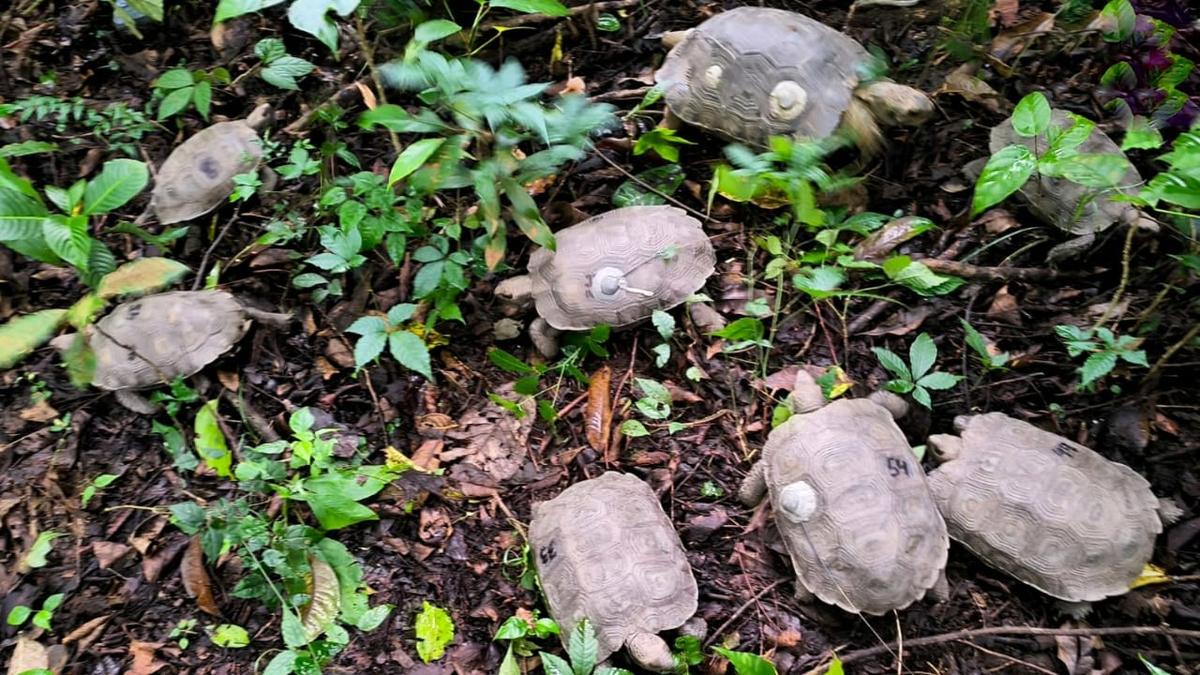
- Ten critically endangered Asian Giant Tortoises (Manouria emys) have been reintroduced into the Zeliang Community Reserve in Nagaland's Peren district.
- This initiative is a collaboration between the Nagaland Forest Department and the India Turtle Conservation Programme (ITCP).
- The released tortoises were bred in captivity at the Nagaland Zoological Park, which holds India's largest population of this species.
The Asian Giant Tortoise
- Description: The largest tortoise in mainland Asia, often called the "small elephant of the forest." It plays a crucial role in seed dispersal and forest regeneration.
- Habitat: Found in tropical and subtropical forests across Southeast Asia, including Northeast India.
- Conservation Status: Listed as Critically Endangered on the IUCN Red List and under Schedule IV of India's Wildlife Protection Act, 1972. The primary threats are hunting for meat and habitat loss.
- Reintroduction Process: The tortoises were soft-released into a fenced enclosure to help them acclimate before their full release. They are fitted with VHF tags for monitoring their survival and dispersal.
Additional Info
- India Turtle Conservation Programme (ITCP): A joint program of the Turtle Survival Alliance (TSA) and the Wildlife Conservation Society (WCS) - India, working to conserve freshwater turtles and tortoises in India.
- Zeliang Community Reserve: A community-managed forest in Nagaland that has been identified as a suitable habitat for the Asian Giant Tortoise. Community reserves are a type of protected area in India where local communities are involved in conservation efforts.
Sources
Using Radioactive Isotopes to Combat Rhino Poaching
What’s the News?
- Scientists in South Africa have launched the Rhisotope Project, a novel anti-poaching initiative that involves injecting a small, harmless quantity of radioactive material into rhinoceros horns.
- This technique aims to make the horns undesirable for consumers and easily detectable by radiation monitors at international borders, thereby disrupting illegal trafficking networks.

The Rhisotope Project
- Objective: To devalue rhino horns and enhance their traceability to curb poaching and illegal trade.
- Methodology:
- A small hole is drilled into the rhino's horn, and a carefully calculated, non-lethal dose of a stable, radioactive isotope (like Carbon-14 or Gallium-68) is inserted.
- The dose is too low to harm the rhino or humans but is strong enough to be detected by radiation detection equipment, such as the thousands of monitors already installed at ports and airports globally.
- The presence of radioactive material is intended to create a stigma and fear among end-users regarding health risks, reducing demand.
- Key Institutions: The project is a collaboration between South Africa's University of the Witwatersrand (WITS) and Russian state nuclear corporation Rosatom, along with other global nuclear organizations.
- Significance: This innovative approach complements existing anti-poaching strategies like dehorning, GPS tracking, and dye infusion. By making the horns a liability for traffickers, it targets the entire supply chain.
Additional Info
- Rhino Horn Composition: Rhino horns are made of keratin, the same protein found in human hair and fingernails, and have no proven medicinal value.
- Conservation Status:
- White Rhino: Near Threatened (IUCN Red List).
- Black Rhino: Critically Endangered.
- Greater One-Horned Rhino (Indian Rhino): Vulnerable.
- Javan & Sumatran Rhinos: Critically Endangered.
- Indian Rhino Conservation:
- Indian Rhino Vision 2020 (IRV 2020): Launched in 2005, it aimed to attain a wild population of at least 3,000 Greater one-horned rhinos spread over seven protected areas in Assam. The goal was achieved.
- National Rhino Conservation Strategy (2019): Launched to conserve the Greater one-horned rhinoceros, it includes provisions for research, monitoring, and strengthening protection.
- Protected Areas: Major rhino habitats in India include Kaziranga National Park, Pobitora Wildlife Sanctuary, and Orang National Park in Assam, and Jaldapara National Park in West Bengal.
Sources
Russia Formally Withdraws from INF Nuclear Arms Treaty
What’s the News?
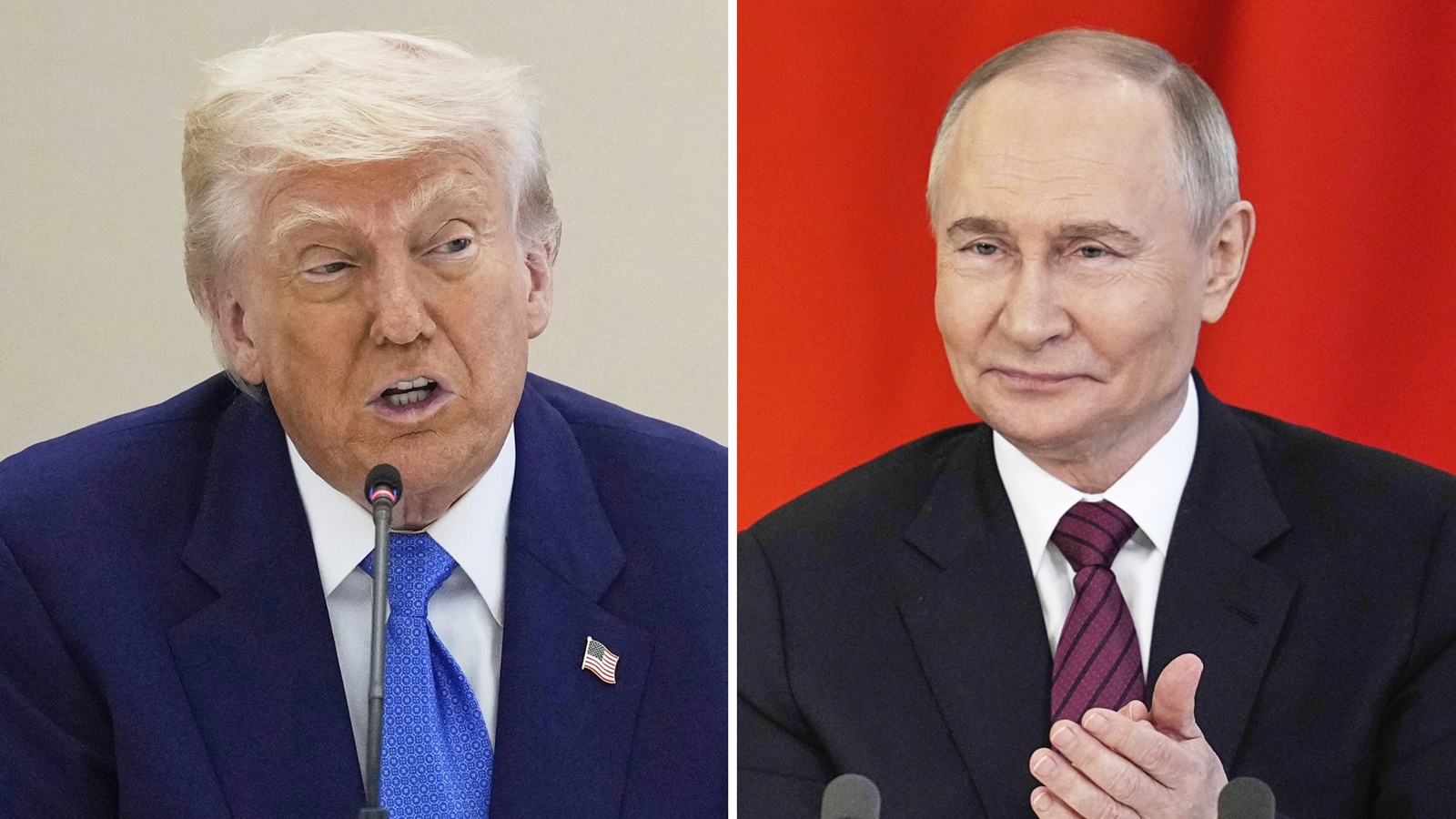
- Russia has officially ended its commitment to the Intermediate-Range Nuclear Forces (INF) Treaty, a landmark Cold War-era arms control agreement.
- This move finalizes the collapse of the treaty, following a similar withdrawal by the United States, which cited alleged Russian violations.
What was the INF Treaty?
The INF Treaty, signed in 1987 by U.S. President Ronald Reagan and Soviet leader Mikhail Gorbachev, was a cornerstone of nuclear disarmament efforts.
- Objective: It aimed to eliminate and permanently ban all land-based ballistic and cruise missiles, both nuclear and conventional, with ranges between 500 and 5,500 kilometers.
- Impact: The treaty led to the destruction of approximately 2,700 short- and medium-range missiles by both superpowers, significantly reducing the risk of a swift nuclear strike in Europe.
- Verification: It included robust on-site inspection and verification protocols, which was unprecedented at the time.
- Context of Collapse: The US suspended its obligations, accusing Russia of developing the 9M729 (SSC-8) missile, which it claimed violated the treaty's range limits. Russia denied the allegations and made counterclaims regarding US missile defense systems in Europe.
Geopolitical Significance
The dissolution of the INF Treaty carries significant implications for global security and strategic stability.
- End of an Arms Control Era: It marks the formal end of a critical pillar of the post-Cold War arms control architecture, eroding decades of trust-building measures.
- Risk of a New Arms Race: The absence of range limitations could trigger a new and destabilizing arms race in intermediate-range missiles among major powers, including the US, Russia, and China (which was never a party to the treaty).
- European Security: European nations face heightened security risks as they fall directly within the range of the now-unrestricted missiles, potentially leading to the redeployment of such weapons on the continent.
- Pressure on Other Agreements: It places greater strain on the remaining arms control frameworks, particularly the New START Treaty, which limits long-range strategic nuclear weapons.
Additional Info
- New START Treaty: The last remaining major nuclear arms control pact between the US and Russia. It limits the number of deployed strategic nuclear warheads and bombs. Although it was extended, its long-term future remains uncertain amid deteriorating bilateral relations. Russia has currently suspended its participation in the treaty's verification mechanisms.
Sources
Australia and Japan Sign Landmark Defence Deal for Advanced Frigates
What’s the News?
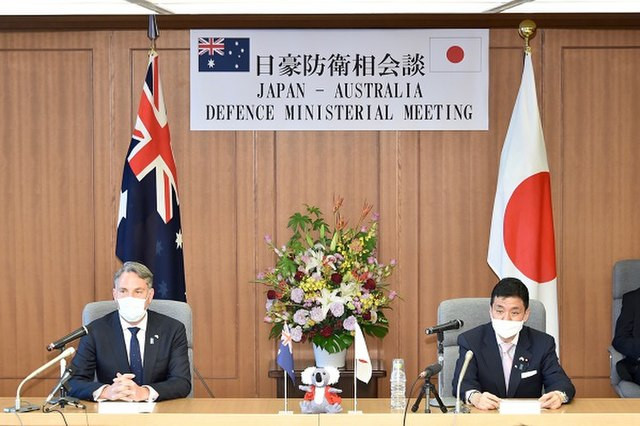
- Australia and Japan have signed their largest-ever defence deal, under which Australia will acquire 11 advanced stealth frigates.
- The agreement, valued at approximately 6.5billion(A10 billion), marks a significant milestone in the bilateral security partnership between the two nations.
- The warships will be supplied by Japan’s Mitsubishi Heavy Industries (MHI).
Details of the Frigate Deal
- Technology: The new frigates will be based on the advanced design of Japan’s Mogami-class multi-mission stealth frigates, known for their modern combat systems and reduced radar signature.
- Objective: The acquisition is part of Australia's broader military modernization program aimed at enhancing its naval capabilities and replacing its aging Anzac-class frigates.
- Economic Impact: This is Japan's most significant defense export since it eased its post-World War II arms export restrictions, positioning it as a key player in the global defense industry.
Geopolitical Significance
This deal significantly deepens the "Special Strategic Partnership" between Australia and Japan, two key allies of the United States in the Indo-Pacific.
- Regional Security: The collaboration is viewed as a strategic move to enhance interoperability and present a united front to counter the growing military assertiveness of China in the region.
- Japan's Evolving Defence Posture: The deal underscores a major shift in Japan's foreign and security policy. After easing its self-imposed ban on military exports in 2014, Japan is now actively pursuing a more robust role in global security and defense trade.
- Strengthening Alliances: This bilateral agreement complements wider regional security frameworks like the Quadrilateral Security Dialogue (Quad) and AUKUS, reinforcing a network of alliances aimed at maintaining a stable and open Indo-Pacific.
Additional Info
- Quadrilateral Security Dialogue (Quad): An informal strategic forum comprising Australia, Japan, India, and the United States. It focuses on enhancing cooperation on various fronts, including maritime security, to ensure a "free and open Indo-Pacific."
- AUKUS: A trilateral security pact between Australia, the United Kingdom, and the United States. Its primary objective is to help Australia acquire nuclear-powered submarine technology, representing another pillar of Australia's defense modernization efforts.
Sources
August 2025
Archive
November 2026
- 28 November 2026
- 27 November 2026
- 26 November 2026
- 25 November 2026
- 24 November 2026
- 23 November 2026
- 21 November 2026
- 20 November 2026
- 19 November 2026
- 18 November 2026
- 17 November 2026
- 16 November 2026
- 14 November 2026
- 13 November 2026
- 12 November 2026
- 11 November 2026
- 10 November 2026
- 09 November 2026
- 06 November 2026
- 05 November 2026
- 04 November 2026
- 03 November 2026
- 02 November 2026
October 2026
- 31 October 2026
- 30 October 2026
- 29 October 2026
- 28 October 2026
- 27 October 2026
- 26 October 2026
- 24 October 2026
- 23 October 2026
- 22 October 2026
- 21 October 2026
- 20 October 2026
- 19 October 2026
- 17 October 2026
- 16 October 2026
- 15 October 2026
- 14 October 2026
- 13 October 2026
- 12 October 2026
- 10 October 2026
- 09 October 2026
- 08 October 2026
- 07 October 2026
- 06 October 2026
- 05 October 2026
- 03 October 2026
- 02 October 2026
- 01 October 2026
September 2026
- 30 September 2026
- 29 September 2026
- 28 September 2026
- 26 September 2026
- 25 September 2026
- 24 September 2026
- 23 September 2026
- 22 September 2026
- 21 September 2026
- 19 September 2026
- 18 September 2026
- 17 September 2026
- 16 September 2026
- 15 September 2026
- 12 September 2026
- 11 September 2026
- 10 September 2026
- 09 September 2026
- 08 September 2026
- 07 September 2026
- 05 September 2026
- 04 September 2026
- 03 September 2026
- 02 September 2026
- 01 September 2026
August 2026
- 31 August 2026
- 29 August 2026
- 27 August 2026
- 26 August 2026
- 25 August 2026
- 24 August 2026
- 22 August 2026
- 21 August 2026
- 20 August 2026
- 19 August 2026
- 18 August 2026
- 17 August 2026
- 14 August 2026
- 13 August 2026
- 12 August 2026
- 11 August 2026
- 10 August 2026
- 08 August 2026
- 07 August 2026
- 06 August 2026
- 05 August 2026
- 04 August 2026
- 03 August 2026
- 01 August 2026
July 2026
- 31 July 2026
- 30 July 2026
- 29 July 2026
- 28 July 2026
- 27 July 2026
- 25 July 2026
- 23 July 2026
- 22 July 2026
- 21 July 2026
- 20 July 2026
- 18 July 2026
- 17 July 2026
- 15 July 2026
- 14 July 2026
- 13 July 2026
- 11 July 2026
- 10 July 2026
- 09 July 2026
- 08 July 2026
- 07 July 2026
- 06 July 2026
- 04 July 2026
- 03 July 2026
- 02 July 2026
- 01 July 2026
June 2026
May 2026
April 2026
March 2026
- 31 March 2026
- 30 March 2026
- 28 March 2026
- 27 March 2026
- 26 March 2026
- 25 March 2026
- 24 March 2026
- 23 March 2026
- 21 March 2026
- 20 March 2026
- 19 March 2026
- 18 March 2026
- 17 March 2026
- 16 March 2026
- 14 March 2026
- 13 March 2026
- 12 March 2026
- 11 March 2026
- 10 March 2026
- 09 March 2026
- 07 March 2026
- 06 March 2026
- 05 March 2026
- 03 March 2026
- 02 March 2026
February 2026
- 28 February 2026
- 27 February 2026
- 26 February 2026
- 25 February 2026
- 24 February 2026
- 23 February 2026
- 21 February 2026
- 20 February 2026
- 19 February 2026
- 18 February 2026
- 17 February 2026
- 16 February 2026
- 13 February 2026
- 12 February 2026
- 11 February 2026
- 10 February 2026
- 09 February 2026
- 07 February 2026
- 06 February 2026
- 05 February 2026
- 04 February 2026
- 03 February 2026
- 02 February 2026
January 2026
- 31 January 2026
- 30 January 2026
- 29 January 2026
- 28 January 2026
- 27 January 2026
- 26 January 2026
- 24 January 2026
- 23 January 2026
- 22 January 2026
- 21 January 2026
- 20 January 2026
- 19 January 2026
- 16 January 2026
- 15 January 2026
- 14 January 2026
- 13 January 2026
- 12 January 2026
- 10 January 2026
- 09 January 2026
- 08 January 2026
- 07 January 2026
- 06 January 2026
- 05 January 2026
- 03 January 2026
- 02 January 2026
- 01 January 2026
December 2025
- 31 December 2025
- 30 December 2025
- 29 December 2025
- 27 December 2025
- 26 December 2025
- 24 December 2025
- 23 December 2025
- 22 December 2025
- 20 December 2025
- 19 December 2025
- 18 December 2025
- 17 December 2025
- 16 December 2025
- 15 December 2025
- 13 December 2025
- 12 December 2025
- 11 December 2025
- 10 December 2025
- 09 December 2025
- 08 December 2025
- 05 December 2025
- 04 December 2025
- 03 December 2025
- 02 December 2025
November 2025
- 29 November 2025
- 28 November 2025
- 27 November 2025
- 26 November 2025
- 25 November 2025
- 24 November 2025
- 22 November 2025
- 21 November 2025
- 20 November 2025
- 19 November 2025
- 18 November 2025
- 17 November 2025
- 15 November 2025
- 14 November 2025
- 13 November 2025
- 12 November 2025
- 11 November 2025
- 10 November 2025
- 08 November 2025
- 07 November 2025
- 06 November 2025
- 05 November 2025
- 04 November 2025
- 03 November 2025
- 01 November 2025
October 2025
- 31 October 2025
- 30 October 2025
- 29 October 2025
- 28 October 2025
- 27 October 2025
- 25 October 2025
- 24 October 2025
- 23 October 2025
- 22 October 2025
- 21 October 2025
- 20 October 2025
- 18 October 2025
- 17 October 2025
- 16 October 2025
- 15 October 2025
- 14 October 2025
- 13 October 2025
- 11 October 2025
- 10 October 2025
- 09 October 2025
- 08 October 2025
- 07 October 2025
- 06 October 2025
- 04 October 2025
- 03 October 2025
- 02 October 2025
- 01 October 2025
September 2025
- 30 September 2025
- 29 September 2025
- 27 September 2025
- 26 September 2025
- 25 September 2025
- 24 September 2025
- 23 September 2025
- 22 September 2025
- 20 September 2025
- 19 September 2025
- 18 September 2025
- 17 September 2025
- 16 September 2025
- 15 September 2025
- 13 September 2025
- 12 September 2025
- 11 September 2025
- 10 September 2025
- 09 September 2025
- 08 September 2025
- 06 September 2025
- 05 September 2025
- 04 September 2025
- 03 September 2025
- 02 September 2025
- 01 September 2025
August 2025
- 30 August 2025
- 29 August 2025
- 28 August 2025
- 27 August 2025
- 26 August 2025
- 25 August 2025
- 23 August 2025
- 22 August 2025
- 21 August 2025
- 20 August 2025
- 19 August 2025
- 18 August 2025
- 16 August 2025
- 14 August 2025
- 13 August 2025
- 12 August 2025
- 11 August 2025
- 08 August 2025
- 07 August 2025
- 06 August 2025
- 05 August 2025
- 04 August 2025
- 02 August 2025
- 01 August 2025
July 2025
- 31 July 2025
- 30 July 2025
- 29 July 2025
- 28 July 2025
- 26 July 2025
- 25 July 2025
- 24 July 2025
- 23 July 2025
- 22 July 2025
- 21 July 2025
- 19 July 2025
- 18 July 2025
- 17 July 2025
- 16 July 2025
- 15 July 2025
- 12 July 2025
- 11 July 2025
- 10 July 2025
- 09 July 2025
- 07 July 2025
- 05 July 2025
- 04 July 2025
- 03 July 2025
- 02 July 2025
- 01 July 2025
June 2025
- 30 June 2025
- 28 June 2025
- 27 June 2025
- 26 June 2025
- 25 June 2025
- 24 June 2025
- 23 June 2025
- 21 June 2025
- 20 June 2025
- 19 June 2025
- 18 June 2025
- 17 June 2025
- 16 June 2025
- 14 June 2025
- 13 June 2025
- 12 June 2025
- 11 June 2025
- 10 June 2025
- 09 June 2025
- 07 June 2025
- 06 June 2025
- 05 June 2025
- 04 June 2025
- 03 June 2025
- 02 June 2025
May 2025
April 2025
- 30 April 2025
- 29 April 2025
- 28 April 2025
- 26 April 2025
- 25 April 2025
- 24 April 2025
- 23 April 2025
- 22 April 2025
- 21 April 2025
- 19 April 2025
- 18 April 2025
- 17 April 2025
- 16 April 2025
- 15 April 2025
- 14 April 2025
- 12 April 2025
- 11 April 2025
- 10 April 2025
- 09 April 2025
- 08 April 2025
- 07 April 2025
- 05 April 2025
- 04 April 2025
- 03 April 2025
- 02 April 2025
- 01 April 2025
March 2025
- 31 March 2025
- 29 March 2025
- 28 March 2025
- 27 March 2025
- 26 March 2025
- 25 March 2025
- 24 March 2025
- 22 March 2025
- 21 March 2025
- 20 March 2025
- 19 March 2025
- 18 March 2025
- 17 March 2025
- 15 March 2025
- 13 March 2025
- 12 March 2025
- 11 March 2025
- 10 March 2025
- 08 March 2025
- 07 March 2025
- 06 March 2025
- 05 March 2025
- 04 March 2025
- 03 March 2025
- 01 March 2025
February 2025
- 28 February 2025
- 27 February 2025
- 26 February 2025
- 25 February 2025
- 24 February 2025
- 22 February 2025
- 21 February 2025
- 20 February 2025
- 19 February 2025
- 18 February 2025
- 17 February 2025
- 15 February 2025
- 14 February 2025
- 13 February 2025
- 12 February 2025
- 11 February 2025
- 10 February 2025
- 08 February 2025
- 07 February 2025
- 06 February 2025
- 05 February 2025
- 04 February 2025
- 03 February 2025
- 01 February 2025
January 2025
- 31 January 2025
- 30 January 2025
- 29 January 2025
- 28 January 2025
- 27 January 2025
- 25 January 2025
- 24 January 2025
- 23 January 2025
- 22 January 2025
- 21 January 2025
- 20 January 2025
- 18 January 2025
- 17 January 2025
- 16 January 2025
- 15 January 2025
- 14 January 2025
- 13 January 2025
- 11 January 2025
- 10 January 2025
- 09 January 2025
- 08 January 2025
- 07 January 2025
- 06 January 2025
- 04 January 2025
- 03 January 2025
- 02 January 2025
- 01 January 2025