
Current Affairs
Stay updated with the latest national and international events.
07 February 2026
Denotified Tribes Demand Separate Census Column and Constitutional Recognition
What's the News?
- Denotified, Nomadic and Semi-Nomadic Tribes (DNTs) across India are demanding a separate column and code in the upcoming 2027 caste Census, arguing that current classification within SC, ST, and OBC categories obscures their distinct identity and needs.
- The Ministry of Social Justice and Empowerment has recommended their inclusion to the Office of the Registrar General of India, which has agreed in principle to include them in the caste enumeration exercise.
- Community leaders emphasize that without a distinct Census category, DNTs risk being "statistically erased" and unable to access targeted welfare schemes.
Who Are Denotified Tribes?
- Historical Context: Communities branded as "criminal tribes" under the colonial Criminal Tribes Act, 1871, which notified entire groups as addicted to crime by birth. The Act was repealed in 1952, and communities were officially "denotified".
- Current Status: Known as Denotified, Nomadic and Semi-Nomadic Tribes (DNTs), comprising approximately 1,200 communities identified by the Idate Commission (2017).
- Livelihoods: Historically dependent on pastoralism, salt trading, acrobatics, snake charming, transport services, and artisanal work.
- Population: No reliable national data exists; estimates suggest 7 crore in Uttar Pradesh alone, with 267 communities remaining unclassified under any constitutional category.
Challenges Faced
- Administrative Invisibility:
- Many lack caste certificates, domicile records, or land titles, limiting access to welfare schemes.
- SEED scheme (Scheme for Economic Empowerment of DNTs) saw only ₹69.3 crore spent against a ₹200 crore allocation (2020–2025) due to states not issuing DNT certificates.
- Social Exclusion:
- Persistent stigma of "criminality" continues in policing through the Habitual Offenders framework.
- Extreme educational deprivation—some communities report zero members completing Class 10.
- Political Misclassification:
- Most DNTs absorbed into SC, ST, or OBC lists where they cannot compete with relatively advanced groups.
- Communities trapped in categories that do not reflect their cultural identity or level of deprivation.
Demands and Significance
- Separate Constitutional Schedule: Demand for recognition on par with SCs and STs, acknowledging unique historical injustice distinct from caste-based discrimination.
- Sub-classification Within DNTs: Recognition of "graded backwardness" between settled and nomadic DNTs, drawing from the Supreme Court's August 2024 judgment allowing sub-classification within reserved categories.
- Accurate Enumeration: First-time reliable population data to strengthen basis for targeted welfare, budgetary allocation, and political representation.
Additional Info
- Historical Legislation:
- Criminal Tribes Act, 1871: Enacted for "registration, surveillance and control of certain criminal tribes and eunuchs"; amended in 1924.
- Repeal: Officially repealed on August 31, 1952; replaced by the Habitual Offenders Act, perpetuating surveillance.
- Idate Commission (2017):
- Identified 1,200 denotified, nomadic and semi-nomadic communities.
- Found 267 communities not included in SC, ST, or OBC classifications.
- SEED Scheme:
- Launched by: Ministry of Social Justice and Empowerment.
- Covers: Education, health insurance, housing, and livelihood support.
- Implementation Gap: Low utilization due to absence of proper DNT certificates issued by States/UTs.
- Constitutional Context:
- Census 2027: First caste enumeration since 1931; preparatory exercise planned by July 2025.
- Article 341 & 342: Provide for specification of SCs and STs through Presidential Orders; DNTs seek similar constitutional mechanism.
Sources
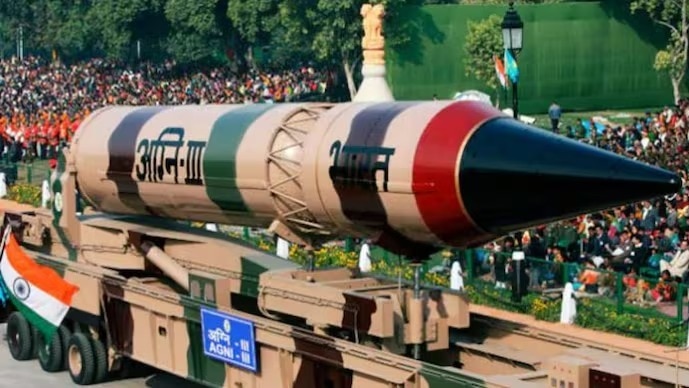
India Successfully Test-Fires Agni-III Intermediate-Range Ballistic Missile
What's the News?
- India successfully test-fired the Agni-III Intermediate-Range Ballistic Missile (IRBM) from the Integrated Test Range (ITR) at Chandipur, Odisha.
- The launch was conducted by the Strategic Forces Command (SFC) as part of a routine training exercise to validate operational and technical preparedness.
- Defence officials confirmed that all mission objectives were met and all parameters were successfully validated, reinforcing the missile's reliability within India's nuclear triad.
Agni-III Missile: Technical Specifications
- Type: Intermediate-Range Ballistic Missile (IRBM) — two-stage, solid-fuelled.
- Range: 3,000–3,500 km, enabling coverage of strategic targets across extended regional theatres.
- Payload Capacity: 1,500 kg — capable of carrying both conventional and nuclear warheads with estimated yields of 200–300 kilotons.
- Dimensions: 16.7 metres in length, 2 metres in diameter, with a launch weight of 48,300 kg.
- Guidance System: Strapdown Inertial Navigation System (INS) supported by GPS, achieving accuracy of approximately 40 metres Circular Error Probable (CEP).
- Propulsion:
- First stage: Maraging steel motor case with thrust vector control.
- Second stage: Carbon-fibre motor case with thrust vector control for improved stability and precision.
- Operational Status: Inducted into Strategic Forces Command (SFC) in 2011 and forms a key component of India's land-based nuclear deterrent.
Strategic Significance
- Credible Minimum Deterrence: Enhances India's second-strike capability and strengthens strategic depth beyond short- and medium-range systems.
- Operational Readiness: Validates reliability of nuclear delivery systems under operational command, ensuring force readiness for strategic deterrence.
- Missile Spectrum Coverage: Complements the broader Agni missile series:
- Agni-I: 700–1,200 km (short-range)
- Agni-II: 2,000–3,000 km (medium-range)
- Agni-III: 3,000–3,500 km (intermediate-range)
- Agni-IV: 3,500–4,000 km (intermediate-range)
- Agni-V: 5,000+ km (intercontinental-range)
Additional Info
- Strategic Forces Command (SFC):
- Established in 2003 as part of India's Nuclear Command Authority (NCA).
- Responsible for operational control and deployment of nuclear assets.
- Headed by a Commander-in-Chief (three-star rank) from the Indian Navy, with rotation among services.
- Integrated Test Range (ITR), Chandipur:
- Premier missile testing facility under DRDO located on the Odisha coast.
- Supports testing of ballistic missiles, anti-ballistic missile systems, and other strategic weapons.
- Nuclear Command Authority Structure:
- Political Council: Chaired by Prime Minister — sole authority for nuclear weapons use decisions.
- Executive Council: Chaired by National Security Advisor — advises Political Council and coordinates execution.
- SFC: Executes operational directives and maintains readiness of nuclear forces.
- No-First-Use Policy: India's declared nuclear doctrine commits to no-first-use of nuclear weapons, emphasizing credible minimum deterrence and second-strike capability.
Sources
VOC Port Becomes India’s First to Deploy Anti-Drone System

What’s the News?
- The V.O. Chidambaranar (VOC) Port Authority in Thoothukudi, Tamil Nadu, has become the first major port in India to initiate the implementation of an advanced Anti-Drone Security System.
- The port signed a formal agreement with Central Electronics Limited (CEL), a public sector enterprise under the Ministry of Science and Technology, to deploy the system.
- This move aims to secure critical maritime infrastructure against unauthorized aerial threats, ensuring the safety of cargo, personnel, and strategic assets.
- The project is scheduled for completion and full commissioning within three months.
The Anti-Drone Shield?
- Technology Integration: Combines Radio Frequency (RF) and radar-based detection systems tailored for complex port environments.
- Coverage: Provides 360-degree omnidirectional coverage with an effective operational range of up to 5 kilometres.
- Components:
- Drone Detector: Identifies unauthorised unmanned aerial vehicles (UAVs).
- Drone Detection Radar: Tracks and classifies aerial threats in real-time.
- Man-Pack Jammer: Portable electronic countermeasure device for neutralising threats.
- Operational Functions: Enables real-time detection, tracking, classification, and neutralisation of unauthorised drones.
- Deployment: Designed for quick deployment in sensitive operational zones, enhancing security flexibility.
Additional Info
- V.O. Chidambaranar Port:
- Formerly known as Tuticorin Port, it is one of the 13 major ports in India, located on the East Coast in Tamil Nadu.
- It is a multi-purpose port handling diverse cargo, including coal, containers, and fertilizers.
- Anti-Drone Technology Types:
- Soft-Kill: Uses jamming to disrupt the drone’s communication links or spoofing to provide false GPS coordinates.
- Hard-Kill: Involves the physical destruction of the drone using lasers, projectiles, or kinetic energy (e.g., DRDO’s D4 system).
- Policy Context:
- National Counter Rogue Drones Guidelines (2019): Provides a framework for the deployment of counter-UAV measures at critical national installations.
- Major Port Authorities Act, 2021: Grants greater autonomy to major ports to modernize and make strategic security investments.
Sources
Delhi Ranks Second Most Polluted City in January; Ghaziabad Tops List
What's the News?
- Delhi ranked as the second most polluted city in India in January, with a monthly average PM2.5 concentration of 169 micrograms per cubic metre, according to an analysis by the Centre for Research on Energy and Clean Air (CREA).
- Ghaziabad recorded the worst air quality with an average PM2.5 level of 184 micrograms per cubic metre, breaching the national daily standard on all 31 days of the month.
- The findings highlight persistent winter air pollution severity in north India and continued non-compliance with both national and global air quality standards.
Pollution Data and Trends
- National Standards Breach: Delhi's PM2.5 levels were nearly three times higher than India's National Ambient Air Quality Standards (NAAQS) annual limit of 60 micrograms per cubic metre.
- Daily Air Quality Distribution in Delhi:
- 24 'Very Poor' days (AQI 301–400)
- 3 'Severe' days (AQI 401–500)
- 2 'Poor' days (AQI 201–300)
- 2 'Moderate' days (AQI 101–200)
- National Scenario: 123 out of 248 cities monitored recorded monthly average PM2.5 concentrations above national standards.
- WHO Compliance: None of the 248 cities met the World Health Organization's daily safe guideline of 15 micrograms per cubic metre.
Top 10 Most Polluted Cities
Besides Ghaziabad and Delhi, the following cities featured among the ten most polluted:
- Noida
- Gurugram
- Greater Noida
- Dharuhera
- Gangtok
- Singrauli
- Bhiwadi
- Narnaul
Regional Distribution: Uttar Pradesh and Haryana accounted for three cities each in the top ten, underscoring the NCR airshed crisis.
National Clean Air Programme (NCAP) Performance
- Non-Attainment Cities: Of 97 NCAP cities with sufficient data:
- 46 cities exceeded India's daily PM2.5 standard
- All 97 cities breached WHO guidelines
- Policy Gaps: Analysis indicates that air quality remained largely non-compliant despite programme implementation since 2019.
Additional Info
- PM2.5 (Fine Particulate Matter):
- Definition: Particles with diameter of 2.5 micrometres or less (about 1/30th width of human hair).
- Health Impact: Penetrates deep into lungs and enters bloodstream, causing respiratory diseases, cardiovascular conditions, and premature mortality.
- Air Quality Index (AQI) Categories (CPCB):
- 0–50: Good
- 51–100: Satisfactory
- 101–200: Moderate
- 201–300: Poor
- 301–400: Very Poor
- 401–500: Severe
- National Clean Air Programme (NCAP):
- Launched: 2019 by Ministry of Environment, Forest and Climate Change.
- Target: Reduce PM2.5 and PM10 concentrations by 20–30% by 2024 (baseline 2017) in 131 non-attainment cities.
- Current Status: Extended to 2024–25 with increased funding through XV Finance Commission grants.
- Commission for Air Quality Management (CAQM):
- Established: 2021 for NCR and adjoining areas.
- Mandate: Coordinate air quality management across Delhi, Haryana, Punjab, Rajasthan, and Uttar Pradesh.
- Powers: Enforce Graded Response Action Plan (GRAP) measures during pollution episodes.
Sources
Gas Leak at Valsad Pharmaceutical Unit Highlights Industrial Safety Gaps
What's the News?
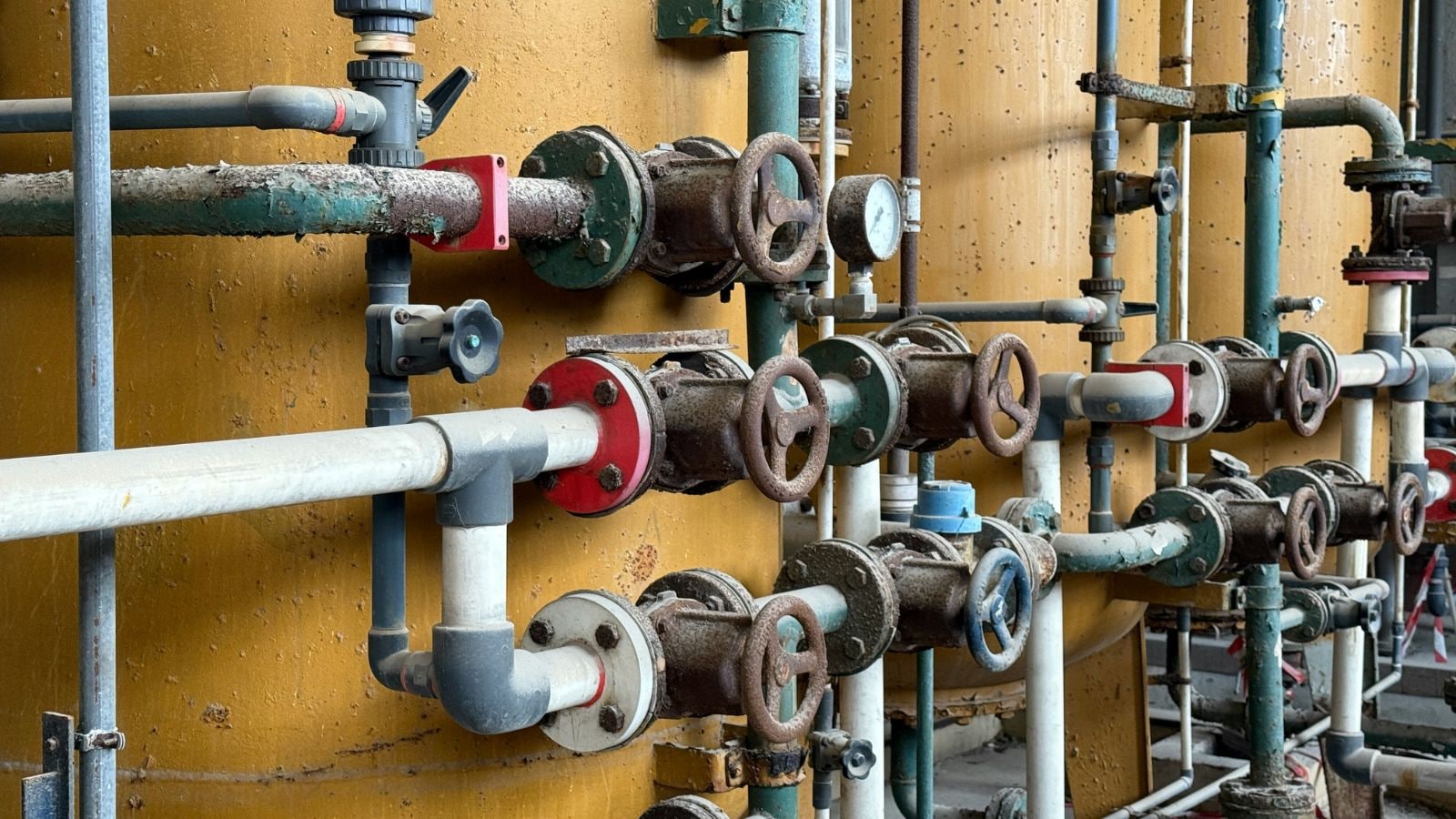
- A gas leak at Sainex Met Chem Pharma in Sarigam GIDC, Valsad district, Gujarat resulted in four persons hospitalized, including the unit owner Vinod Patel and three workers.
- The incident occurred when liquid overflowed from a reactor during a chemical process, evaporating to form gas that caused eye irritation, breathing problems, and tear gas-like effects.
- All victims are now stable and recovering; the Gujarat Pollution Control Board (GPCB) has launched an inquiry to determine the exact chemical compound involved and causative factors.
Incident Details and Response
- Location: Sarigam GIDC (Gujarat Industrial Development Corporation estate), an Industrial Notified Area near Vapi, Valsad district.
- Immediate Impact:
- Four individuals exposed — owner supervising the process and three contractual labourers aged 21–22 years.
- Gas affected passersby outside the premises, causing teary eyes.
- Road adjoining the unit temporarily closed to prevent wider exposure.
- Emergency Measures:
- Fire teams deployed for rescue and restoration operations.
- Sand and sodium bicarbonate used to control and neutralize the leak.
- Factory doors and windows sealed to prevent gas-air mixing.
- Water sprinkled on concentrated chemical substance to mitigate effects.
Systemic Industrial Safety Challenges
- Reactor Integrity: Preliminary reports suggest compromised reactor integrity despite continued operation — highlighting inadequate pressure vessel testing and maintenance protocols.
- Regulatory Enforcement: Factory operational for six years with "okay" documentation, yet basic process safety management failed during routine operations.
- Workforce Vulnerability:
- Contractual labourers often lack training in Stop-Work authority and Personal Protective Equipment (PPE) usage.
- Owner presence during incident indicates inadequate safety delegation and process hazard analysis.
- Infrastructure Ageing: Many reactors in Gujarat's older GIDCs have exceeded 20-year safety lifespans, with corrosion-related failures increasingly reported.
National Context: Chemical Accident Risk in India
- Major Accident Hazard (MAH) Units: India operates over 1,861 MAH units across 300 districts, with Gujarat accounting for 35% of national chemical production.
- Accident Frequency: 15–20 significant chemical accidents reported annually between 2021–2024, concentrated in Gujarat and Maharashtra chemical belts.
- Casualty Statistics: Over the last decade, chemical accidents have caused 250+ deaths and 500+ major injuries.
- SME Vulnerability: 60% of chemical mishaps occur in Small and Medium Enterprises where safety audits are less rigorous than in large MNCs.
Notable Chemical Disasters in India
| Incident | Year | Chemical | Impact |
|---|---|---|---|
| Bhopal Gas Tragedy | 1984 | Methyl Isocyanate (MIC) | World's worst industrial disaster; thousands killed |
| Vizag Gas Leak | 2020 | Styrene Gas | 12 deaths; thousands hospitalized |
| Surat Gas Leak | 2022 | Hazardous Waste Gas | 6 workers died from tanker fumes |
| Ludhiana Gas Leak | 2023 | Hydrogen Sulfide | 11 deaths from sewer gas exposure |
| Vapi Chemical Blast | 2024 | Multiple Reactants | Large-scale fire and toxic evacuation |
Regulatory Framework
- Gujarat Pollution Control Board (GPCB):
- Responsible for environmental compliance and hazardous substance regulation in industrial estates.
- Mandated to conduct surprise inspections and enforce Manufacture, Storage and Import of Hazardous Chemicals (MSIHC) Rules, 1989.
- National Disaster Management Authority (NDMA) Guidelines:
- Risk Mapping: Zone of Impact identification for MAH units.
- Buffer Zones: Mandatory no-construction areas around hazardous storage.
- Emergency Response Centers (ERCs): 24/7 facilities with Hazmat capabilities.
- Quarterly Mock Drills: Joint exercises between factories, fire departments, and hospitals.
- Antidote Banks: Medical preparedness with specific antidotes for local industrial chemicals.
Sources
RCB Clinches Second WPL Title with Record-Breaking Chase

What’s the News?
- Royal Challengers Bengaluru (RCB) were crowned champions of the Women’s Premier League (WPL) 2026 after defeating Delhi Capitals (DC) by six wickets in the final.
- The final was held at the Baroda Cricket Association (BCA) Stadium in Vadodara, Gujarat.
- RCB successfully chased down a target of 204, marking the highest successful run chase in WPL history.
- This victory marks RCB’s second WPL title (following their win in 2024), while Delhi Capitals suffered their fourth consecutive heartbreak in a WPL final.
Match Summary
- Venue: Kotambi Stadium (BCA Stadium), Vadodara — hosted the WPL final for the first time.
- Toss: RCB won and elected to field first.
- Delhi Capitals Innings: Posted 203/5 in 20 overs.
- Chinelle Henry: Unbeaten 35 off 15 balls (late acceleration).
- Strong contributions from top order to set a competitive target.
- Royal Challengers Bengaluru Innings: Successfully chased 204 runs with wickets in hand.
- Smriti Mandhana (c): 87 off 41 balls — captain's knock anchoring the chase.
- Georgia Voll: 79 runs — key partnership of 165 runs for the second wicket with Mandhana.
- Richa Ghosh and Nadine de Klerk: Finished the match under pressure.
- Result: RCB won by 6 wickets, securing back-to-back titles.
WPL 2026 Award Winners?
- Orange Cap (Most Runs): Smriti Mandhana (RCB), who finished the season with 377 runs in nine matches.
- Purple Cap (Most Wickets): Sophie Devine (Gujarat Giants), with 17 wickets at a superior economy rate of 8.28.
- Most Valuable Player (MVP): Sophie Devine (Gujarat Giants) for her all-round performance.
- Emerging Player of the Season: Nandini Sharma (DC), who took 17 wickets, the most by any Indian bowler in a single WPL edition.
- Player of the Match (Final): Smriti Mandhana for her match-winning 87.
Sources
February 2026
28 February 202627 February 202626 February 202625 February 202624 February 202623 February 202621 February 202620 February 202619 February 202618 February 202617 February 202616 February 202613 February 202612 February 202611 February 202610 February 202609 February 202607 February 202606 February 202605 February 202604 February 202603 February 202602 February 2026
Archive
November 2026
- 27 November 2026
- 26 November 2026
- 25 November 2026
- 24 November 2026
- 23 November 2026
- 21 November 2026
- 20 November 2026
- 19 November 2026
- 18 November 2026
- 17 November 2026
- 16 November 2026
- 14 November 2026
- 13 November 2026
- 12 November 2026
- 11 November 2026
- 10 November 2026
- 09 November 2026
- 06 November 2026
- 05 November 2026
- 04 November 2026
- 03 November 2026
- 02 November 2026
October 2026
- 31 October 2026
- 30 October 2026
- 29 October 2026
- 28 October 2026
- 27 October 2026
- 26 October 2026
- 24 October 2026
- 23 October 2026
- 22 October 2026
- 21 October 2026
- 20 October 2026
- 19 October 2026
- 17 October 2026
- 16 October 2026
- 15 October 2026
- 14 October 2026
- 13 October 2026
- 12 October 2026
- 10 October 2026
- 09 October 2026
- 08 October 2026
- 07 October 2026
- 06 October 2026
- 05 October 2026
- 03 October 2026
- 02 October 2026
- 01 October 2026
September 2026
- 30 September 2026
- 29 September 2026
- 28 September 2026
- 26 September 2026
- 25 September 2026
- 24 September 2026
- 23 September 2026
- 22 September 2026
- 21 September 2026
- 19 September 2026
- 18 September 2026
- 17 September 2026
- 16 September 2026
- 15 September 2026
- 12 September 2026
- 11 September 2026
- 10 September 2026
- 09 September 2026
- 08 September 2026
- 07 September 2026
- 05 September 2026
- 04 September 2026
- 03 September 2026
- 02 September 2026
- 01 September 2026
August 2026
- 31 August 2026
- 29 August 2026
- 27 August 2026
- 26 August 2026
- 25 August 2026
- 24 August 2026
- 22 August 2026
- 21 August 2026
- 20 August 2026
- 19 August 2026
- 18 August 2026
- 17 August 2026
- 14 August 2026
- 13 August 2026
- 12 August 2026
- 11 August 2026
- 10 August 2026
- 08 August 2026
- 07 August 2026
- 06 August 2026
- 05 August 2026
- 04 August 2026
- 03 August 2026
- 01 August 2026
July 2026
- 31 July 2026
- 30 July 2026
- 29 July 2026
- 28 July 2026
- 27 July 2026
- 25 July 2026
- 23 July 2026
- 22 July 2026
- 21 July 2026
- 20 July 2026
- 18 July 2026
- 17 July 2026
- 15 July 2026
- 14 July 2026
- 13 July 2026
- 11 July 2026
- 10 July 2026
- 09 July 2026
- 08 July 2026
- 07 July 2026
- 06 July 2026
- 04 July 2026
- 03 July 2026
- 02 July 2026
- 01 July 2026
June 2026
May 2026
April 2026
March 2026
- 31 March 2026
- 30 March 2026
- 28 March 2026
- 27 March 2026
- 26 March 2026
- 25 March 2026
- 24 March 2026
- 23 March 2026
- 21 March 2026
- 20 March 2026
- 19 March 2026
- 18 March 2026
- 17 March 2026
- 16 March 2026
- 14 March 2026
- 13 March 2026
- 12 March 2026
- 11 March 2026
- 10 March 2026
- 09 March 2026
- 07 March 2026
- 06 March 2026
- 05 March 2026
- 03 March 2026
- 02 March 2026
February 2026
- 28 February 2026
- 27 February 2026
- 26 February 2026
- 25 February 2026
- 24 February 2026
- 23 February 2026
- 21 February 2026
- 20 February 2026
- 19 February 2026
- 18 February 2026
- 17 February 2026
- 16 February 2026
- 13 February 2026
- 12 February 2026
- 11 February 2026
- 10 February 2026
- 09 February 2026
- 07 February 2026
- 06 February 2026
- 05 February 2026
- 04 February 2026
- 03 February 2026
- 02 February 2026
January 2026
- 31 January 2026
- 30 January 2026
- 29 January 2026
- 28 January 2026
- 27 January 2026
- 26 January 2026
- 24 January 2026
- 23 January 2026
- 22 January 2026
- 21 January 2026
- 20 January 2026
- 19 January 2026
- 16 January 2026
- 15 January 2026
- 14 January 2026
- 13 January 2026
- 12 January 2026
- 10 January 2026
- 09 January 2026
- 08 January 2026
- 07 January 2026
- 06 January 2026
- 05 January 2026
- 03 January 2026
- 02 January 2026
- 01 January 2026
December 2025
- 31 December 2025
- 30 December 2025
- 29 December 2025
- 27 December 2025
- 26 December 2025
- 24 December 2025
- 23 December 2025
- 22 December 2025
- 20 December 2025
- 19 December 2025
- 18 December 2025
- 17 December 2025
- 16 December 2025
- 15 December 2025
- 13 December 2025
- 12 December 2025
- 11 December 2025
- 10 December 2025
- 09 December 2025
- 08 December 2025
- 05 December 2025
- 04 December 2025
- 03 December 2025
- 02 December 2025
November 2025
- 29 November 2025
- 28 November 2025
- 27 November 2025
- 26 November 2025
- 25 November 2025
- 24 November 2025
- 22 November 2025
- 21 November 2025
- 20 November 2025
- 19 November 2025
- 18 November 2025
- 17 November 2025
- 15 November 2025
- 14 November 2025
- 13 November 2025
- 12 November 2025
- 11 November 2025
- 10 November 2025
- 08 November 2025
- 07 November 2025
- 06 November 2025
- 05 November 2025
- 04 November 2025
- 03 November 2025
- 01 November 2025
October 2025
- 31 October 2025
- 30 October 2025
- 29 October 2025
- 28 October 2025
- 27 October 2025
- 25 October 2025
- 24 October 2025
- 23 October 2025
- 22 October 2025
- 21 October 2025
- 20 October 2025
- 18 October 2025
- 17 October 2025
- 16 October 2025
- 15 October 2025
- 14 October 2025
- 13 October 2025
- 11 October 2025
- 10 October 2025
- 09 October 2025
- 08 October 2025
- 07 October 2025
- 06 October 2025
- 04 October 2025
- 03 October 2025
- 02 October 2025
- 01 October 2025
September 2025
- 30 September 2025
- 29 September 2025
- 27 September 2025
- 26 September 2025
- 25 September 2025
- 24 September 2025
- 23 September 2025
- 22 September 2025
- 20 September 2025
- 19 September 2025
- 18 September 2025
- 17 September 2025
- 16 September 2025
- 15 September 2025
- 13 September 2025
- 12 September 2025
- 11 September 2025
- 10 September 2025
- 09 September 2025
- 08 September 2025
- 06 September 2025
- 05 September 2025
- 04 September 2025
- 03 September 2025
- 02 September 2025
- 01 September 2025
August 2025
- 30 August 2025
- 29 August 2025
- 28 August 2025
- 27 August 2025
- 26 August 2025
- 25 August 2025
- 23 August 2025
- 22 August 2025
- 21 August 2025
- 20 August 2025
- 19 August 2025
- 18 August 2025
- 16 August 2025
- 14 August 2025
- 13 August 2025
- 12 August 2025
- 11 August 2025
- 08 August 2025
- 07 August 2025
- 06 August 2025
- 05 August 2025
- 04 August 2025
- 02 August 2025
- 01 August 2025
July 2025
- 31 July 2025
- 30 July 2025
- 29 July 2025
- 28 July 2025
- 26 July 2025
- 25 July 2025
- 24 July 2025
- 23 July 2025
- 22 July 2025
- 21 July 2025
- 19 July 2025
- 18 July 2025
- 17 July 2025
- 16 July 2025
- 15 July 2025
- 12 July 2025
- 11 July 2025
- 10 July 2025
- 09 July 2025
- 07 July 2025
- 05 July 2025
- 04 July 2025
- 03 July 2025
- 02 July 2025
- 01 July 2025
June 2025
- 30 June 2025
- 28 June 2025
- 27 June 2025
- 26 June 2025
- 25 June 2025
- 24 June 2025
- 23 June 2025
- 21 June 2025
- 20 June 2025
- 19 June 2025
- 18 June 2025
- 17 June 2025
- 16 June 2025
- 14 June 2025
- 13 June 2025
- 12 June 2025
- 11 June 2025
- 10 June 2025
- 09 June 2025
- 07 June 2025
- 06 June 2025
- 05 June 2025
- 04 June 2025
- 03 June 2025
- 02 June 2025
May 2025
April 2025
- 30 April 2025
- 29 April 2025
- 28 April 2025
- 26 April 2025
- 25 April 2025
- 24 April 2025
- 23 April 2025
- 22 April 2025
- 21 April 2025
- 19 April 2025
- 18 April 2025
- 17 April 2025
- 16 April 2025
- 15 April 2025
- 14 April 2025
- 12 April 2025
- 11 April 2025
- 10 April 2025
- 09 April 2025
- 08 April 2025
- 07 April 2025
- 05 April 2025
- 04 April 2025
- 03 April 2025
- 02 April 2025
- 01 April 2025
March 2025
- 31 March 2025
- 29 March 2025
- 28 March 2025
- 27 March 2025
- 26 March 2025
- 25 March 2025
- 24 March 2025
- 22 March 2025
- 21 March 2025
- 20 March 2025
- 19 March 2025
- 18 March 2025
- 17 March 2025
- 15 March 2025
- 13 March 2025
- 12 March 2025
- 11 March 2025
- 10 March 2025
- 08 March 2025
- 07 March 2025
- 06 March 2025
- 05 March 2025
- 04 March 2025
- 03 March 2025
- 01 March 2025
February 2025
- 28 February 2025
- 27 February 2025
- 26 February 2025
- 25 February 2025
- 24 February 2025
- 22 February 2025
- 21 February 2025
- 20 February 2025
- 19 February 2025
- 18 February 2025
- 17 February 2025
- 15 February 2025
- 14 February 2025
- 13 February 2025
- 12 February 2025
- 11 February 2025
- 10 February 2025
- 08 February 2025
- 07 February 2025
- 06 February 2025
- 05 February 2025
- 04 February 2025
- 03 February 2025
- 01 February 2025
January 2025
- 31 January 2025
- 30 January 2025
- 29 January 2025
- 28 January 2025
- 27 January 2025
- 25 January 2025
- 24 January 2025
- 23 January 2025
- 22 January 2025
- 21 January 2025
- 20 January 2025
- 18 January 2025
- 17 January 2025
- 16 January 2025
- 15 January 2025
- 14 January 2025
- 13 January 2025
- 11 January 2025
- 10 January 2025
- 09 January 2025
- 08 January 2025
- 07 January 2025
- 06 January 2025
- 04 January 2025
- 03 January 2025
- 02 January 2025
- 01 January 2025