
Current Affairs
Stay updated with the latest national and international events.
07 September 2026
Indian Army Establishes AASHVAST Lab for Drone and Defence Electronics Security
What’s the News?
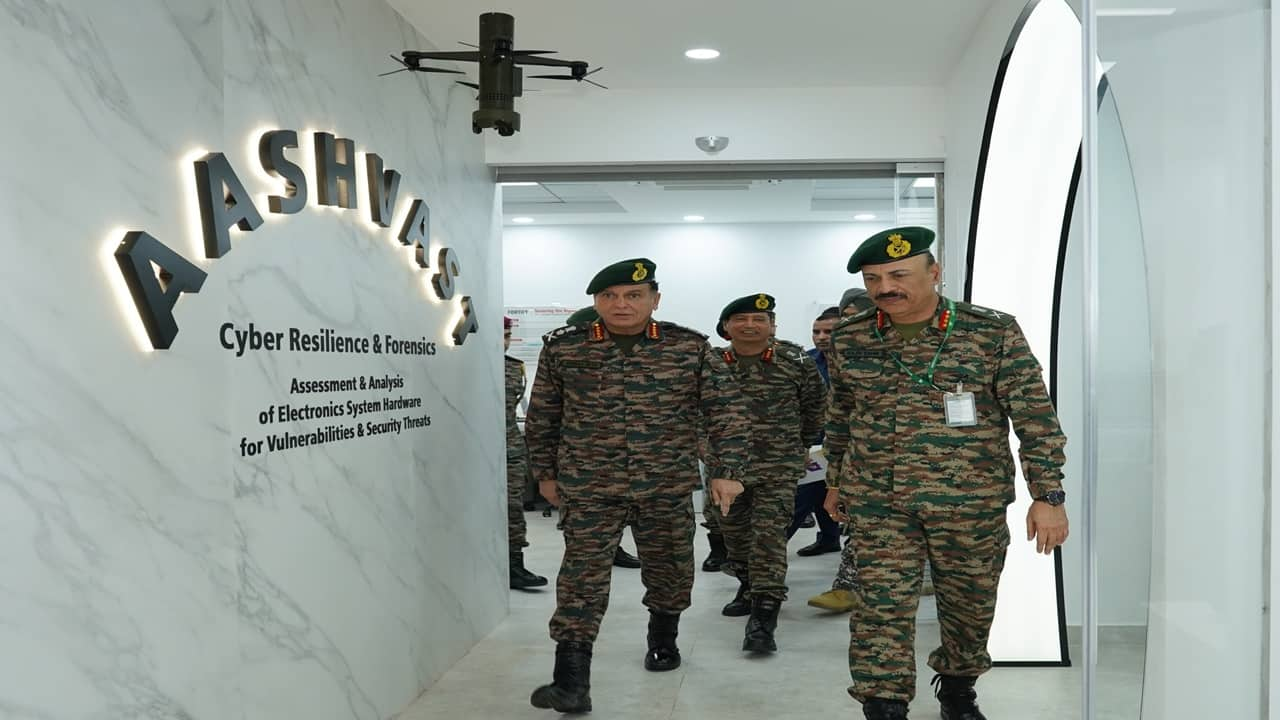
- The Indian Army has established AASHVAST, a specialised software analysis and validation facility in New Delhi, under the Directorate General of Electronics and Mechanical Engineering (DG EME).
- It will examine military drones and other electronic defence systems for hidden hardware, software and firmware vulnerabilities, including unauthorised or potentially risky foreign components.
- The facility was inaugurated by Chief of the Army Staff General Dhiraj Seth and is intended to strengthen cyber resilience, operational readiness and supply-chain security of critical military platforms.
What is AASHVAST?
- AASHVAST: Assessment and Analysis of Electronic Systems Hardware for Vulnerabilities and Security Threats.
- It is designed to conduct deeper security validation beyond conventional physical inspection of defence equipment.
- A drone may appear authentic externally, while its firmware or embedded software could contain altered operating parameters, hidden access mechanisms or unauthorised code.
How Does AASHVAST Work?
- Air-gapped system: Operates offline and remains isolated from external networks.
- Read-only analysis: Examines equipment without writing or modifying data on the system being tested.
- It can extract and analyse software from a drone's flight controller, camera payload or stored software image.
- It checks for:
- Hidden passwords and embedded credentials.
- Encryption keys and undisclosed command pathways.
- Remote-access tools or software backdoors.
- Unauthorised hardware/software modifications.
- Whether software updates originate only from the authorised manufacturer.
- Vulnerabilities can be classified by severity and incorporated into a consolidated security assessment for technical personnel and equipment-acceptance authorities.
Focus on Drone Supply-Chain Security
- A key concern is the possible presence of unauthorised Chinese-origin components or software in sensitive defence equipment.
- AASHVAST can help identify whether components or software differ from the platform's approved configuration.
- This strengthens defence supply-chain assurance, where hardware provenance, embedded code and communication pathways must be verified before operational deployment.
Protection Against Electronic Warfare Threats
- AASHVAST can assess drone navigation-security controls against threats such as:
- GPS jamming: Deliberate interference that blocks or overwhelms genuine navigation signals.
- GPS spoofing: Transmission of counterfeit navigation signals to mislead a system about its location, time or direction.
- Such capabilities are significant because modern unmanned platforms depend heavily on navigation, communications and embedded electronic systems.
Additional Info
- DG EME
- Technical organisation of the Indian Army responsible for electronics and mechanical engineering support.
- Its functions include maintenance, repair and technical evaluation of military equipment and electronic systems.
- Firmware
- Embedded software stored within electronic hardware that controls the device's basic functions.
- In drones, it can influence flight behaviour, command acceptance and operational restrictions.
Sources
Amit Shah Chairs 28th Western Zonal Council Meeting in Goa

What’s the News?
- Union Home Minister Amit Shah chaired the 28th Western Zonal Council (WZC) meeting in Panaji, Goa.
- The meeting brought together representatives of Goa, Gujarat, Maharashtra, and the Union Territory of Dadra and Nagar Haveli and Daman and Diu.
- Major deliberations focused on cooperative federalism, welfare-scheme implementation, cybercrime, health, banking access, nutrition, education, infrastructure and inter-State coordination.
- The meeting was organised by the Inter-State Council Secretariat (ISCS) under the Ministry of Home Affairs.
Western Zonal Council
- The Western Zonal Council is a statutory and advisory body established under the States Reorganisation Act, 1956.
- Members: Goa, Gujarat, Maharashtra and Dadra and Nagar Haveli and Daman and Diu.
- Chairman: Union Home Minister.
- Vice-Chairman: Chief Minister of a member State by annual rotation; Goa Chief Minister Pramod Sawant was Vice-Chairman for the meeting.
- Other participants included Gujarat Chief Minister Bhupendra Patel, Maharashtra Chief Minister Devendra Fadnavis and UT Administrator Praful K. Patel.
Issues Discussed
- Law & Security
- Fast Track Special Courts for cases of rape against women and children.
- Emergency Response Support System (ERSS-112).
- Cybercrime and digital infrastructure.
- Implementation of the new criminal laws and measures against drug trafficking.
- Health & Social Sector
- Ayushman Bharat–PM-JAY coverage.
- Food safety standards.
- Reduction of child malnutrition, underweight and stunting under POSHAN Abhiyaan.
- Reduction in school dropout rates.
- Economy & Infrastructure
- Brick-and-mortar banking facilities within the prescribed radius of villages.
- Railway development and environmental clearances.
- Urban master planning and electricity supply.
- Strengthening and computerisation of Primary Agricultural Credit Societies (PACS).
Zonal Councils: Performance
- 2004–14: 25 meetings of Zonal Councils and their Standing Committees.
- Since 2014: 71 meetings.
- Issues discussed: 1,893.
- Issues resolved: 1,445 — about 76%.
- PACS computerisation reached about:
- Maharashtra: 98%.
- Gujarat: 92%.
- Zonal Councils are increasingly being used not only for dispute resolution but also to monitor implementation of public welfare programmes.
Additional Info
- Legal Basis
- Five Zonal Councils were established under Sections 15–22 of the States Reorganisation Act, 1956:
- Northern Zonal Council.
- Central Zonal Council.
- Eastern Zonal Council.
- Western Zonal Council.
- Southern Zonal Council.
- Five Zonal Councils were established under Sections 15–22 of the States Reorganisation Act, 1956:
- Nature
- Zonal Councils are statutory, not constitutional bodies.
- Their recommendations are advisory, not binding.
- They promote cooperative federalism and provide a forum for Centre-State and inter-State consultation.
- Functions
- Section 21 permits discussion and recommendations on matters of common interest, including:
- Economic and social planning.
- Border disputes.
- Linguistic minorities.
- Inter-State transport.
- Issues arising from State reorganisation.
- Section 21 permits discussion and recommendations on matters of common interest, including:
- Standing Committees
- Each Zonal Council has a Standing Committee consisting primarily of the Chief Secretaries of member States/UTs.
- It scrutinises and attempts to resolve issues before they reach the full Council.
- Important Distinction
- Zonal Councils: Statutory bodies under the States Reorganisation Act, 1956.
- Inter-State Council: Constitutional mechanism under Article 263 of the Constitution.
- The North-Eastern States are principally covered through the separate North Eastern Council, rather than a sixth Zonal Council.
Sources
India Explores Small Modular Reactors for Andaman & Nicobar Islands
What’s the News?
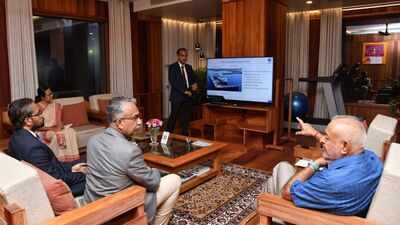
- India is exploring the deployment of Small Modular Reactors (SMRs) in the Andaman and Nicobar Islands to meet rising electricity demand and strengthen energy resilience.
- Scientists from the Bhabha Atomic Research Centre (BARC), under the Department of Atomic Energy (DAE), are assessing potential reactor sites across all three districts of the Union Territory.
- The proposal is linked to expanding civilian and strategic infrastructure, particularly the Great Nicobar Project.
- No nuclear reactor has yet been approved for construction; the exercise is currently at the site-assessment and feasibility stage.
Why Nuclear Power for the Islands?
- The islands depend substantially on diesel generator sets, with fuel transported from mainland India.
- Major upcoming infrastructure is expected to increase electricity demand considerably.
- SMRs could provide:
- Reliable baseload electricity.
- Reduced dependence on transported fossil fuels.
- Power for remote and isolated locations.
- Low-carbon electricity for civilian and strategic infrastructure.
Small Modular Reactors (SMRs)
- SMRs are compact nuclear reactors with smaller generating capacity and modular construction compared with conventional large nuclear power plants.
- Components can be manufactured as modules and subsequently assembled at the deployment site.
- Their smaller size makes them particularly relevant for:
- Remote regions.
- Smaller electricity grids.
- Industrial/captive power applications.
- Locations where large conventional nuclear plants may be unsuitable.
- India is developing indigenous SMR technologies as part of its broader nuclear-energy expansion strategy.
Great Nicobar Project
- The proposed SMR deployment is closely linked with the expected energy requirements of the Great Nicobar Island development programme.
- Major components include:
- International Container Transhipment Terminal (ICTT) at Galathea Bay.
- Greenfield international airport.
- New township.
- Associated power and infrastructure facilities.
- The proposed transhipment terminal is envisaged with a capacity of about 14.2 million TEUs.
- The project has economic as well as strategic, defence and national-security significance.
Strategic Importance of Andaman & Nicobar Islands
- The islands occupy a critical position in the eastern Indian Ocean, close to important Sea Lines of Communication linking the Indian and Pacific Oceans.
- Great Nicobar Island lies near the western approaches to the Strait of Malacca, one of the world's major maritime chokepoints.
- The islands enhance India's ability to:
- Monitor maritime activity in the eastern Indian Ocean.
- Secure important shipping routes.
- Strengthen its presence in the Indo-Pacific.
- Support India's Act East and maritime-security objectives.
- Their significance has increased amid the expanding economic and naval presence of China in the Indian Ocean Region.
Additional Info
- Andaman and Nicobar Command (ANC)
- India's only integrated tri-services command.
- Brings together elements of the Army, Navy and Air Force under a unified command.
- Its location enables surveillance of strategically important sea routes.
- INS Baaz
- Naval air station located at Campbell Bay, Great Nicobar Island.
- Commissioned in 2012.
- Located close to the Six Degree Channel and approaches to the Strait of Malacca.
- It is India's southernmost naval air station.
- Andaman & Nicobar Islands
- Union Territory of India.
- Capital: Sri Vijaya Puram.
- Three districts:
- South Andaman.
- North and Middle Andaman.
- Nicobar.
- Strait of Malacca
- Major maritime passage between the Malay Peninsula and Sumatra.
- Connects the Indian Ocean/Andaman Sea with the South China Sea and Pacific Ocean through adjoining straits.
- It is a critical route for trade and energy flows between the Middle East, Europe and East Asia.
- BARC
- India's premier multidisciplinary nuclear research institution.
- Functions under the Department of Atomic Energy.
- Plays a central role in indigenous nuclear reactor and nuclear-technology development.
Sources
National Biodiversity Authority Crosses ₹200-Crore ABS Disbursement Milestone
What’s the News?
- The National Biodiversity Authority (NBA) has crossed ₹200 crore in cumulative Access and Benefit-Sharing (ABS) disbursements, marking a major milestone in India’s biodiversity governance framework.
- In the latest round, ₹8.23 crore was sanctioned to 27 State Biodiversity Boards (SBBs) and 5 Union Territory Biodiversity Councils (UTBCs).
- The proceeds arose from the research and commercial utilisation of biological resources associated with:
- Bitter gourd (Momordica charantia)
- Okra (Abelmoschus esculentus)
- Chilli (Capsicum annuum)
- Onion (Allium cepa)
What is Access and Benefit-Sharing (ABS)?
- ABS ensures the fair and equitable sharing of benefits arising from the utilisation of biological resources and associated traditional knowledge.
- Benefits may be:
- Monetary: royalties, licence fees, upfront payments, research funding, etc.
- Non-monetary: technology transfer, research collaboration, training and participation in product development.
- In India, ABS is implemented principally through the Biological Diversity Act, 2002, as amended.
Latest ABS Distribution
- The ₹8.23-crore proceeds were realised from seed companies including:
- Nunhems India Pvt. Ltd.
- East West Seeds India Pvt. Ltd.
- Bayer Science and Innovation Pvt. Ltd.
- As the biological resources were procured through open markets/traders, specific farmers or source communities could not be identified.
- Therefore, funds were allocated among States/UTs based on the area under cultivation of the concerned crops, using Ministry of Agriculture and Farmers Welfare data.
Major Beneficiaries
- Madhya Pradesh: ₹1.17 crore — highest allocation.
- Maharashtra: ₹1.01 crore.
- Andhra Pradesh: ₹75.55 lakh.
- Karnataka: ₹65.23 lakh.
- Gujarat: ₹64.06 lakh.
- Odisha: ₹57.63 lakh.
- Maharashtra accounted for over 49% of India's onion cultivation area considered for the allocation, contributing substantially to its share.
Use of ABS Funds
Under Section 32(2) of the Biological Diversity Act, the recipient biodiversity boards/councils can use such funds for activities including:
- Preparation and updating of People’s Biodiversity Registers (PBRs).
- In-situ and ex-situ conservation of biological resources.
- Restoration of degraded ecosystems.
- Strengthening Biodiversity Heritage Sites.
- Capacity building of Biodiversity Management Committees (BMCs).
- Improvement of biodiversity-linked community livelihoods.
Additional Info
- National Biodiversity Authority
- A statutory body under the Ministry of Environment, Forest and Climate Change.
- Established under Section 8 of the Biological Diversity Act, 2002.
- Functions at the national level in matters relating to access to biological resources and fair and equitable benefit sharing.
- Three-tier Biodiversity Governance
- National level: National Biodiversity Authority.
- State level: State Biodiversity Boards.
- Local level: Biodiversity Management Committees under Section 41.
- BMCs are important for documenting local biodiversity through People’s Biodiversity Registers and facilitating ABS.
- Updated Legal Framework
- Biological Diversity Act, 2002 was amended through the Biological Diversity (Amendment) Act, 2023.
- Biological Diversity Rules, 2024 provide the updated procedural framework.
- The Biological Diversity (Access to Biological Resources and Knowledge Associated thereto and Fair and Equitable Sharing of Benefits) Regulations, 2025 replaced the earlier 2014 ABS regulations.
- International Linkages
- Convention on Biological Diversity (CBD): Conservation, sustainable use and fair/equitable benefit sharing are its three core objectives.
- Nagoya Protocol: International framework dealing specifically with Access and Benefit-Sharing; India ratified it in 2012.
- Kunming-Montreal Global Biodiversity Framework – Target 13: Seeks effective measures for fair and equitable sharing of benefits from genetic resources, digital sequence information and associated traditional knowledge.
Sources
India Commissions Small-Scale Spherical Tokamak for Fusion Research

What’s the News?
- The Institute for Plasma Research (IPR), Gandhinagar, has commissioned an indigenous Small-Scale Spherical Tokamak (SS-ST) for nuclear-fusion research.
- The compact machine enables scientists to study plasma generation, confinement and control in a spherical-tokamak configuration.
- All major components were designed and developed indigenously, with fabrication support from Indian industries.
- The development expands India’s experimental fusion infrastructure beyond its established ADITYA-U and SST-1 tokamaks.
What is a Spherical Tokamak?
- A tokamak is a device that uses strong magnetic fields to confine extremely hot, ionised gas called plasma for controlled nuclear-fusion experiments.
- A conventional tokamak has a doughnut-shaped (toroidal) plasma chamber.
- A spherical tokamak has a lower aspect ratio and a more compact, nearly spherical plasma geometry.
- Advantages being investigated include:
- Efficient plasma confinement in a smaller machine.
- Potential operation with comparatively lower magnetic-field requirements.
- Possibility of more compact and potentially cheaper future fusion reactors.
- Its major engineering challenge is the limited space in the central column for magnets and other components.
India’s Small-Scale Spherical Tokamak
- Developed by IPR, an aided institute of the Department of Atomic Energy (DAE).
- Important parameters/features include:
- Plasma major radius: about 0.28 m.
- Toroidal magnetic field: around 0.1 tesla at the plasma major radius.
- Designed plasma pulse duration: about 20 milliseconds.
- Vacuum achieved: below 2 × 10⁻⁷ mbar during initial experiments.
- Uses a 2.45-GHz Electron Cyclotron Resonance (ECR) system for plasma production/heating.
- Initial experiments successfully generated hydrogen plasma, demonstrating the functioning of the magnetic coils, gas-feed system, diagnostics and control systems.
Nuclear Fusion
- Fusion occurs when two light atomic nuclei combine to form a heavier nucleus and release energy.
- It is the process that powers the Sun and other stars.
- Fusion research commonly focuses on hydrogen isotopes such as deuterium and tritium.
- For fusion to occur, matter must be converted into plasma and maintained at extremely high temperatures while being sufficiently confined.
Fusion vs Fission
- Fusion: combines light nuclei.
- Fission: splits heavy nuclei such as uranium.
- Fusion offers the prospect of very high energy output with no carbon emissions during operation and comparatively less long-lived radioactive waste, but sustained, economically viable fusion power remains technologically difficult.
India’s Fusion Research Ecosystem
- ADITYA-U
- Located at IPR.
- Upgraded successor to ADITYA, India’s first indigenously developed magnetic-confinement fusion device.
- Used for plasma-control and operational studies relevant to future fusion systems.
- SST-1
- Stands for Steady State Superconducting Tokamak-1.
- India’s first superconducting tokamak.
- Designed for long-duration plasma research using superconducting magnets.
- Private-sector development
- Bengaluru-based Pranos Fusion has separately developed PRAGYA, described as India’s first privately developed low-aspect-ratio compact tokamak.
- PRAGYA is an experimental plasma-control testbed rather than a commercial electricity-generating fusion reactor.
Additional Info
- Institute for Plasma Research (IPR)
- Location: Gandhinagar, Gujarat.
- Functions under the Department of Atomic Energy.
- Conducts research in plasma physics, fusion technology, superconducting magnets, cryogenics and related technologies.
- ITER
- International Thermonuclear Experimental Reactor, being assembled at Saint-Paul-lès-Durance, France.
- Members: European Union, India, China, Japan, South Korea, Russia and the United States.
- India is responsible for roughly 9.1% of ITER construction contributions, largely through in-kind technological components.
- ITER aims to demonstrate the scientific and technological feasibility of large-scale magnetic-confinement fusion; it is not a commercial power plant.
Sources
India-China Hold First Corps Commander-Level Talks in Arunachal Pradesh
What’s the News?
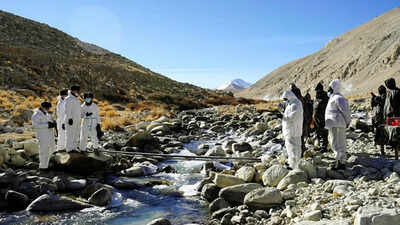
- India and China held their first Corps Commander-level military talks in Arunachal Pradesh, creating a senior military dialogue channel for the eastern sector of the Line of Actual Control (LAC).
- The meeting was held at the Wacha-Damai Border Meeting Point in the Kibithu sector on the Indian side of the LAC.
- The Indian delegation was led by Lt Gen Girish Kalia, Commander of the Army’s III Corps (Spear Corps).
- The two sides reviewed the situation along the LAC and focused on maintaining peace and tranquillity amid reports of recent tensions in the Taksing area of Upper Subansiri district.
Why is the Meeting Significant?
- Earlier Corps Commander-level negotiations were conducted primarily at the Chushul-Moldo Border Meeting Point in eastern Ladakh, particularly to manage the military standoff that began in 2020.
- The Arunachal meeting extends this senior military mechanism to the eastern sector, enabling local issues to be addressed directly by commanders responsible for the region.
- India and China have differing perceptions of the LAC at several locations, which can result in patrol confrontations and military face-offs.
- 23 rounds of Corps Commander-level talks had earlier been held at Chushul-Moldo to address the eastern Ladakh standoff.
India-China Border Dialogue Mechanisms
- Special Representatives (SR) Mechanism
- Established in 2003 to address the broader India-China boundary question.
- India’s SR: National Security Adviser Ajit Doval.
- China’s SR: Foreign Minister Wang Yi.
- The latest SR talks produced an eight-point consensus on improving border management.
- Working Mechanism for Consultation and Coordination (WMCC)
- A diplomatic mechanism for consultation and coordination on India-China border affairs.
- Established in 2012.
- Deals with border management and maintenance of peace rather than negotiating the final boundary settlement.
- Military-level mechanisms
- Corps Commander-level meetings.
- Border Personnel Meetings (BPMs).
- Local commander meetings.
- Military hotlines.
Recent Border Management Measures
- India and China agreed to:
- Establish two additional meeting points for military discussions.
- Create two additional military hotline channels in the Eastern and Middle sectors.
- Address ground-level situations promptly through military and diplomatic mechanisms.
- Improve understanding of the LAC in appropriate areas for better border management.
Additional Info
- III Corps (Spear Corps)
- Headquarters: Rangapahar, near Dimapur, Nagaland.
- Responsible for important operational areas along the LAC in Arunachal Pradesh.
- IV Corps
- Headquarters: Tezpur, Assam.
- Along with III Corps, it oversees sectors of the LAC in Arunachal Pradesh.
- Wacha-Damai Border Meeting Point
- Located in the Kibithu sector of Arunachal Pradesh.
- Wacha is regarded as India’s easternmost Border Personnel Meeting point with China.
- Line of Actual Control (LAC)
- The de facto military boundary between India and China; it is not a mutually agreed international boundary.
- Differences in perception of its alignment remain a major source of friction.
- 2020–24 Eastern Ladakh Standoff
- Bilateral ties deteriorated sharply after the 2020 military confrontation, including the Galwan Valley clash.
- Subsequent diplomatic and military negotiations resulted in disengagement at several friction points.
- India and China reached patrolling arrangements for Depsang Plains and Demchok in 2024, facilitating further disengagement and an improvement in bilateral engagement.
Sources
Google Introduces India-First AI Models for Agricultural Intelligence

What’s the News?
- Google DeepMind has introduced two India-first artificial intelligence models designed to provide field-level agricultural intelligence using satellite imagery, remote sensing and machine learning.
- Developed by its AnthroKrishi team, the models are:
- Agricultural Landscape Understanding (ALU)
- Agricultural Monitoring & Event Detection (AMED)
- They can support crop monitoring, irrigation planning, land-record management, farm credit, climate resilience and precision agriculture.
- Outputs are available through Application Programming Interfaces (APIs) and can also be visualised as layers in Google Earth.
ALU and AMED
- Agricultural Landscape Understanding (ALU)
- Uses high-resolution satellite imagery and AI-based image segmentation.
- Identifies individual field boundaries, trees, vegetation and water bodies, including farm ponds and wells.
- Assigns spatial identities and calculates the area of mapped features.
- Provides up to 15 years of historical landscape data.
- Landscape information is generally refreshed every 6–12 months.
- Agricultural Monitoring & Event Detection (AMED)
- Builds on field boundaries identified by ALU.
- Determines the likely crop being cultivated.
- Detects agricultural events such as sowing and harvesting.
- Provides both historical and in-season crop monitoring.
- Relevant monitoring information can be updated approximately every 15 days.
Applications in India
- Karnataka
- The State Water Resources Department is combining ALU and AMED with local weather and remote-sensing information.
- Supports water management across about 2.6 million hectares of irrigated land.
- Can improve river-basin planning and water productivity.
- Telangana
- ALU and AMED datasets have been integrated into the State's Agriculture Data Exchange (ADeX).
- ADeX supports digital-agriculture applications potentially benefiting over 5 million farmers.
- Applications include crop-stress detection, weather-based advisories and alerts for localised pest outbreaks.
- TerraStack
- An IIT Bombay-incubated startup using ALU and AMED APIs.
- Has integrated agricultural information covering more than 140 million hectares of farmland.
- Applications include:
- Land-record reconciliation.
- Farm-revenue estimation.
- Agricultural credit assessment.
- Biofuel procurement.
Climate-Smart Agriculture
- CarbonFarm uses the ALU API with Gemini to monitor low-carbon rice cultivation.
- AI-based monitoring helps measure:
- Water-use outcomes.
- Adoption of sustainable farming practices.
- Methane-emission reductions.
- Such verified information can facilitate farmers' access to carbon-credit and climate-finance programmes.
- CarbonFarm aims to support 2 million hectares of low-carbon rice cultivation by 2030.
Global Expansion
- Though initially developed around Indian agricultural conditions, ALU and AMED are being scaled internationally.
- Agricultural insights have expanded to African countries including:
- Kenya
- Uganda
- Ghana
- Rwanda
- Nigeria
- Zambia
- The models had also been opened to testers in Malaysia, Vietnam, Indonesia and Japan.
- This illustrates the potential of India-first digital solutions to become globally scalable agricultural technologies.
Additional Info
- Digital Agriculture Mission
- Government of India initiative with an outlay of ₹2,817 crore.
- Seeks to develop Digital Public Infrastructure (DPI) for agriculture using technologies such as AI, remote sensing and data analytics.
- Major components include:
- AgriStack
- Farmers' Registry.
- Geo-referenced Village Maps.
- Crop Sown Registry.
- Krishi Decision Support System (KDSS)
- Integrates satellite, weather, crop, soil and water information.
- Supports drought/flood monitoring, crop mapping, yield estimation and crop-insurance assessment.
- Soil Profile Mapping.
- AgriStack
- Precision Agriculture
- Farm-management approach that uses location-specific data and technology to optimise inputs such as water, fertilisers and pesticides.
- AI-based field-level intelligence can enable more targeted interventions than broad district-level agricultural datasets.
Sources
September 2026
30 September 202629 September 202628 September 202626 September 202625 September 202624 September 202623 September 202622 September 202621 September 202619 September 202618 September 202617 September 202616 September 202615 September 202612 September 202611 September 202610 September 202609 September 202608 September 202607 September 202605 September 202604 September 202603 September 202602 September 202601 September 2026
Archive
November 2026
- 27 November 2026
- 26 November 2026
- 25 November 2026
- 24 November 2026
- 23 November 2026
- 21 November 2026
- 20 November 2026
- 19 November 2026
- 18 November 2026
- 17 November 2026
- 16 November 2026
- 14 November 2026
- 13 November 2026
- 12 November 2026
- 11 November 2026
- 10 November 2026
- 09 November 2026
- 06 November 2026
- 05 November 2026
- 04 November 2026
- 03 November 2026
- 02 November 2026
October 2026
- 31 October 2026
- 30 October 2026
- 29 October 2026
- 28 October 2026
- 27 October 2026
- 26 October 2026
- 24 October 2026
- 23 October 2026
- 22 October 2026
- 21 October 2026
- 20 October 2026
- 19 October 2026
- 17 October 2026
- 16 October 2026
- 15 October 2026
- 14 October 2026
- 13 October 2026
- 12 October 2026
- 10 October 2026
- 09 October 2026
- 08 October 2026
- 07 October 2026
- 06 October 2026
- 05 October 2026
- 03 October 2026
- 02 October 2026
- 01 October 2026
September 2026
- 30 September 2026
- 29 September 2026
- 28 September 2026
- 26 September 2026
- 25 September 2026
- 24 September 2026
- 23 September 2026
- 22 September 2026
- 21 September 2026
- 19 September 2026
- 18 September 2026
- 17 September 2026
- 16 September 2026
- 15 September 2026
- 12 September 2026
- 11 September 2026
- 10 September 2026
- 09 September 2026
- 08 September 2026
- 07 September 2026
- 05 September 2026
- 04 September 2026
- 03 September 2026
- 02 September 2026
- 01 September 2026
August 2026
- 31 August 2026
- 29 August 2026
- 27 August 2026
- 26 August 2026
- 25 August 2026
- 24 August 2026
- 22 August 2026
- 21 August 2026
- 20 August 2026
- 19 August 2026
- 18 August 2026
- 17 August 2026
- 14 August 2026
- 13 August 2026
- 12 August 2026
- 11 August 2026
- 10 August 2026
- 08 August 2026
- 07 August 2026
- 06 August 2026
- 05 August 2026
- 04 August 2026
- 03 August 2026
- 01 August 2026
July 2026
- 31 July 2026
- 30 July 2026
- 29 July 2026
- 28 July 2026
- 27 July 2026
- 25 July 2026
- 23 July 2026
- 22 July 2026
- 21 July 2026
- 20 July 2026
- 18 July 2026
- 17 July 2026
- 15 July 2026
- 14 July 2026
- 13 July 2026
- 11 July 2026
- 10 July 2026
- 09 July 2026
- 08 July 2026
- 07 July 2026
- 06 July 2026
- 04 July 2026
- 03 July 2026
- 02 July 2026
- 01 July 2026
June 2026
May 2026
April 2026
March 2026
- 31 March 2026
- 30 March 2026
- 28 March 2026
- 27 March 2026
- 26 March 2026
- 25 March 2026
- 24 March 2026
- 23 March 2026
- 21 March 2026
- 20 March 2026
- 19 March 2026
- 18 March 2026
- 17 March 2026
- 16 March 2026
- 14 March 2026
- 13 March 2026
- 12 March 2026
- 11 March 2026
- 10 March 2026
- 09 March 2026
- 07 March 2026
- 06 March 2026
- 05 March 2026
- 03 March 2026
- 02 March 2026
February 2026
- 28 February 2026
- 27 February 2026
- 26 February 2026
- 25 February 2026
- 24 February 2026
- 23 February 2026
- 21 February 2026
- 20 February 2026
- 19 February 2026
- 18 February 2026
- 17 February 2026
- 16 February 2026
- 13 February 2026
- 12 February 2026
- 11 February 2026
- 10 February 2026
- 09 February 2026
- 07 February 2026
- 06 February 2026
- 05 February 2026
- 04 February 2026
- 03 February 2026
- 02 February 2026
January 2026
- 31 January 2026
- 30 January 2026
- 29 January 2026
- 28 January 2026
- 27 January 2026
- 26 January 2026
- 24 January 2026
- 23 January 2026
- 22 January 2026
- 21 January 2026
- 20 January 2026
- 19 January 2026
- 16 January 2026
- 15 January 2026
- 14 January 2026
- 13 January 2026
- 12 January 2026
- 10 January 2026
- 09 January 2026
- 08 January 2026
- 07 January 2026
- 06 January 2026
- 05 January 2026
- 03 January 2026
- 02 January 2026
- 01 January 2026
December 2025
- 31 December 2025
- 30 December 2025
- 29 December 2025
- 27 December 2025
- 26 December 2025
- 24 December 2025
- 23 December 2025
- 22 December 2025
- 20 December 2025
- 19 December 2025
- 18 December 2025
- 17 December 2025
- 16 December 2025
- 15 December 2025
- 13 December 2025
- 12 December 2025
- 11 December 2025
- 10 December 2025
- 09 December 2025
- 08 December 2025
- 05 December 2025
- 04 December 2025
- 03 December 2025
- 02 December 2025
November 2025
- 29 November 2025
- 28 November 2025
- 27 November 2025
- 26 November 2025
- 25 November 2025
- 24 November 2025
- 22 November 2025
- 21 November 2025
- 20 November 2025
- 19 November 2025
- 18 November 2025
- 17 November 2025
- 15 November 2025
- 14 November 2025
- 13 November 2025
- 12 November 2025
- 11 November 2025
- 10 November 2025
- 08 November 2025
- 07 November 2025
- 06 November 2025
- 05 November 2025
- 04 November 2025
- 03 November 2025
- 01 November 2025
October 2025
- 31 October 2025
- 30 October 2025
- 29 October 2025
- 28 October 2025
- 27 October 2025
- 25 October 2025
- 24 October 2025
- 23 October 2025
- 22 October 2025
- 21 October 2025
- 20 October 2025
- 18 October 2025
- 17 October 2025
- 16 October 2025
- 15 October 2025
- 14 October 2025
- 13 October 2025
- 11 October 2025
- 10 October 2025
- 09 October 2025
- 08 October 2025
- 07 October 2025
- 06 October 2025
- 04 October 2025
- 03 October 2025
- 02 October 2025
- 01 October 2025
September 2025
- 30 September 2025
- 29 September 2025
- 27 September 2025
- 26 September 2025
- 25 September 2025
- 24 September 2025
- 23 September 2025
- 22 September 2025
- 20 September 2025
- 19 September 2025
- 18 September 2025
- 17 September 2025
- 16 September 2025
- 15 September 2025
- 13 September 2025
- 12 September 2025
- 11 September 2025
- 10 September 2025
- 09 September 2025
- 08 September 2025
- 06 September 2025
- 05 September 2025
- 04 September 2025
- 03 September 2025
- 02 September 2025
- 01 September 2025
August 2025
- 30 August 2025
- 29 August 2025
- 28 August 2025
- 27 August 2025
- 26 August 2025
- 25 August 2025
- 23 August 2025
- 22 August 2025
- 21 August 2025
- 20 August 2025
- 19 August 2025
- 18 August 2025
- 16 August 2025
- 14 August 2025
- 13 August 2025
- 12 August 2025
- 11 August 2025
- 08 August 2025
- 07 August 2025
- 06 August 2025
- 05 August 2025
- 04 August 2025
- 02 August 2025
- 01 August 2025
July 2025
- 31 July 2025
- 30 July 2025
- 29 July 2025
- 28 July 2025
- 26 July 2025
- 25 July 2025
- 24 July 2025
- 23 July 2025
- 22 July 2025
- 21 July 2025
- 19 July 2025
- 18 July 2025
- 17 July 2025
- 16 July 2025
- 15 July 2025
- 12 July 2025
- 11 July 2025
- 10 July 2025
- 09 July 2025
- 07 July 2025
- 05 July 2025
- 04 July 2025
- 03 July 2025
- 02 July 2025
- 01 July 2025
June 2025
- 30 June 2025
- 28 June 2025
- 27 June 2025
- 26 June 2025
- 25 June 2025
- 24 June 2025
- 23 June 2025
- 21 June 2025
- 20 June 2025
- 19 June 2025
- 18 June 2025
- 17 June 2025
- 16 June 2025
- 14 June 2025
- 13 June 2025
- 12 June 2025
- 11 June 2025
- 10 June 2025
- 09 June 2025
- 07 June 2025
- 06 June 2025
- 05 June 2025
- 04 June 2025
- 03 June 2025
- 02 June 2025
May 2025
April 2025
- 30 April 2025
- 29 April 2025
- 28 April 2025
- 26 April 2025
- 25 April 2025
- 24 April 2025
- 23 April 2025
- 22 April 2025
- 21 April 2025
- 19 April 2025
- 18 April 2025
- 17 April 2025
- 16 April 2025
- 15 April 2025
- 14 April 2025
- 12 April 2025
- 11 April 2025
- 10 April 2025
- 09 April 2025
- 08 April 2025
- 07 April 2025
- 05 April 2025
- 04 April 2025
- 03 April 2025
- 02 April 2025
- 01 April 2025
March 2025
- 31 March 2025
- 29 March 2025
- 28 March 2025
- 27 March 2025
- 26 March 2025
- 25 March 2025
- 24 March 2025
- 22 March 2025
- 21 March 2025
- 20 March 2025
- 19 March 2025
- 18 March 2025
- 17 March 2025
- 15 March 2025
- 13 March 2025
- 12 March 2025
- 11 March 2025
- 10 March 2025
- 08 March 2025
- 07 March 2025
- 06 March 2025
- 05 March 2025
- 04 March 2025
- 03 March 2025
- 01 March 2025
February 2025
- 28 February 2025
- 27 February 2025
- 26 February 2025
- 25 February 2025
- 24 February 2025
- 22 February 2025
- 21 February 2025
- 20 February 2025
- 19 February 2025
- 18 February 2025
- 17 February 2025
- 15 February 2025
- 14 February 2025
- 13 February 2025
- 12 February 2025
- 11 February 2025
- 10 February 2025
- 08 February 2025
- 07 February 2025
- 06 February 2025
- 05 February 2025
- 04 February 2025
- 03 February 2025
- 01 February 2025
January 2025
- 31 January 2025
- 30 January 2025
- 29 January 2025
- 28 January 2025
- 27 January 2025
- 25 January 2025
- 24 January 2025
- 23 January 2025
- 22 January 2025
- 21 January 2025
- 20 January 2025
- 18 January 2025
- 17 January 2025
- 16 January 2025
- 15 January 2025
- 14 January 2025
- 13 January 2025
- 11 January 2025
- 10 January 2025
- 09 January 2025
- 08 January 2025
- 07 January 2025
- 06 January 2025
- 04 January 2025
- 03 January 2025
- 02 January 2025
- 01 January 2025