
Current Affairs
Stay updated with the latest national and international events.
08 August 2026
Odisha Secures ₹43,437 Crore Food-Processing Investment Proposals
What’s the News?
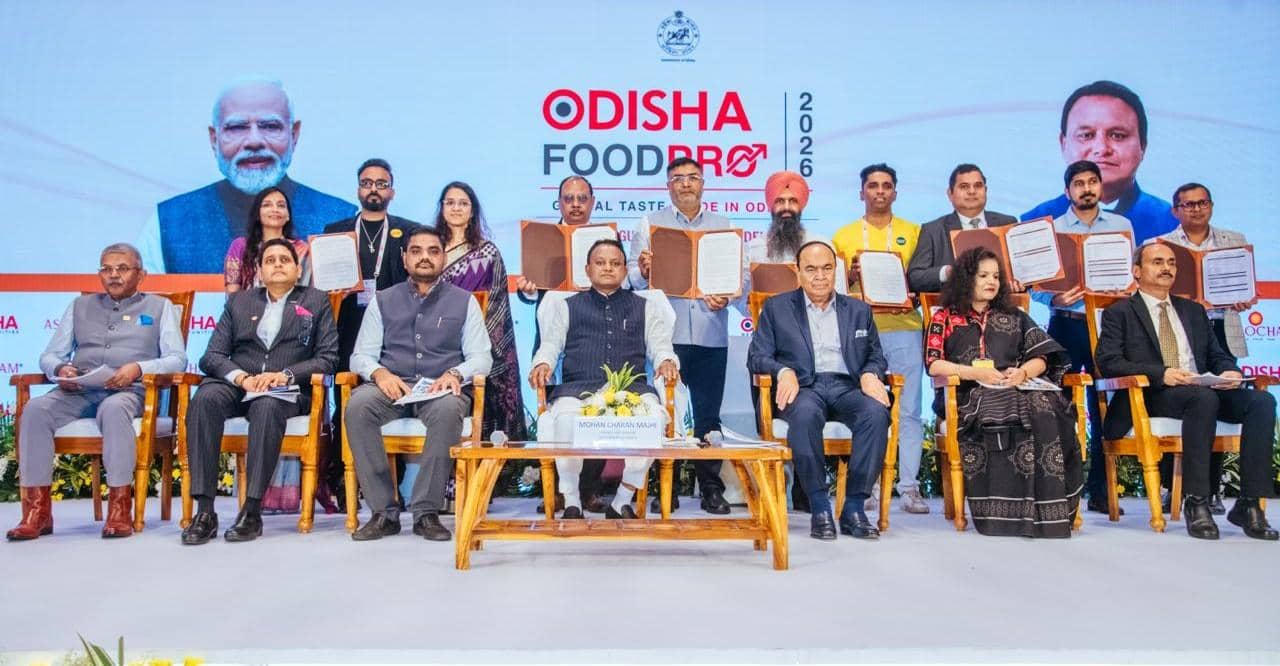
- Odisha secured investment proposals worth ₹43,437 crore in the food-processing sector at Odisha Food Pro 2026, its first sector-specific investment roadshow held outside the state, in New Delhi. The programme involved the Odisha government, industry representatives and ASSOCHAM.
- The proposals have an estimated potential to generate 43,316 employment opportunities.
- Chief Minister Mohan Charan Majhi projected food processing as a tool for raising farmer and fisher incomes, rural employment, value addition and export growth, rather than merely as an industrial activity.
Investment Proposals
- 27 Memoranda of Understanding (MoUs)
- Proposed investment: ₹41,748 crore
- Employment potential: 35,252
- 12 Investment Intent Forms (IIFs)
- Proposed investment: ₹1,689 crore
- Employment potential: 8,064
- Total: ₹43,437 crore with potential for 43,316 jobs.
MoUs and Investment Intent Forms indicate proposed/committed investment and should not be equated with investment actually realised.
Five-Pillar Food-Processing Roadmap
Odisha outlined a strategy based on five pillars:
- Specialised food-processing clusters
- Integrated cold-chain and warehousing infrastructure
- Food-quality and certification systems
- Integration of FPOs, MSMEs and women Self-Help Groups (SHGs) with organised industry
- Creation of a globally competitive skilled workforce
The broader objective is to process more of Odisha's agricultural and marine output within the state, thereby retaining greater value locally.
Why Odisha for Food Processing?
- Odisha has 10 agro-climatic zones and a 575-km coastline, along with significant fisheries resources.
- Major raw materials include rice, pulses, oilseeds, fruits, vegetables and spices, besides tribal products such as turmeric, tamarind and honey.
- Expanding ports, logistics connectivity and cold-chain infrastructure can facilitate both domestic marketing and exports.
- The state aims to expand its economy from about $113 billion to $500 billion by 2036 and further to $1.5 trillion by 2047, while targeting 10 million non-farm jobs by 2047.
Additional Info
- Food processing: Conversion of agricultural, livestock or fisheries produce into processed/value-added food products. It can reduce post-harvest losses, increase shelf life and improve price realisation for producers.
- Related Central Government initiatives:
- Pradhan Mantri Kisan SAMPADA Yojana (PMKSY): Supports food-processing infrastructure, including integrated cold chains and value-addition facilities. The cold-chain component aims to create an uninterrupted chain from farm gate to consumer.
- Production Linked Incentive Scheme for Food Processing Industry (PLISFPI):
- Outlay: ₹10,900 crore
- Period: 2021-22 to 2026-27
- Major segments include RTC/RTE foods, processed fruits & vegetables, marine products and mozzarella cheese.
- PM Formalisation of Micro Food Processing Enterprises (PMFME): A ₹10,000-crore scheme based substantially on the One District One Product (ODOP) approach, aimed at formalising and upgrading micro food-processing enterprises.
Sources
India Restricts New Renewable Energy Projects Near International Borders
What’s the News?
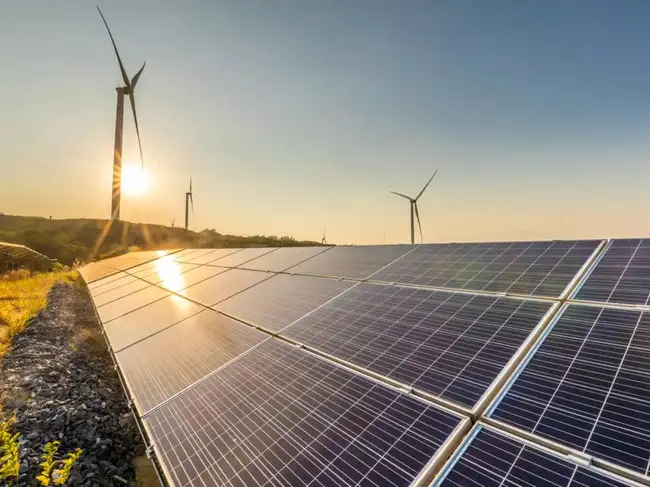
- The Ministry of Home Affairs (MHA) has issued national-security guidelines restricting the establishment of new solar, wind and hybrid renewable-energy projects near India’s International Border (IB), Line of Control (LoC) and Line of Actual Control (LAC).
- No new project activity is permitted within 1 km of these border lines.
- Areas extending up to 50 km have been classified as sensitive areas, bringing renewable-energy projects within a structured security-clearance framework.
- The objective is to balance renewable-energy expansion and ease of doing business with national-security requirements in strategically sensitive border regions.
Border Security Zones
- 0–1 km: New solar, wind and hybrid projects are prohibited.
- 1–50 km: Projects require security clearance from the MHA, assessed on a case-by-case basis.
- 1–20 km from the International Border: A separate No Objection Certificate (NOC) from the Ministry of Defence (MoD) is also required.
- Projects that had already received the required MHA security clearance or MoD NOC before the new guidelines do not need to reapply for those clearances.
Security Conditions
- Applications must be routed through the Ministry of New and Renewable Energy (MNRE) along with the concerned State government's in-principle land-allotment approval and project coordinates.
- Personnel from land-border countries, particularly Pakistan, China and Bangladesh, cannot be engaged without prior Central Government permission.
- Project land cannot be transferred to a foreign company without prior Central Government approval and MHA security clearance.
- Projects involving Foreign Direct Investment (FDI) require a separate application to the Department for Promotion of Industry and Internal Trade (DPIIT) under India's FDI policy.
- Security requirements include:
- Anti-drone systems, with their cost borne by the project developer.
- Security equipment operated by the CISF/State Police.
- A dedicated police post for monitoring construction.
- Pre-verification of project personnel.
- Roads sufficiently wide for use by Border Security/Armed Forces during emergencies.
Infrastructure Restrictions
Civil infrastructure used for project operation and maintenance is subject to height limits within sensitive areas:
- 1–8 km: Maximum 3 metres
- 8–20 km: Maximum 5 metres
- 20–50 km: Maximum 15 metres
- Hotels/accommodation associated with such projects must generally be located at least 5 km from the border.
Additional Info
- LoC (Line of Control):
- Military control line separating Indian- and Pakistan-controlled areas in the Jammu & Kashmir region.
- It is not an internationally recognised political boundary.
- LAC (Line of Actual Control):
- De facto line separating Indian- and Chinese-controlled territories.
- India and China do not have a commonly delineated LAC across the entire boundary, making border infrastructure particularly security-sensitive.
- India’s Renewable-Energy Context:
- India is working towards 500 GW of installed electricity capacity from non-fossil sources by 2030.
- Non-fossil installed capacity: 283.46 GW as of the end of FY 2025-26.
- Renewable energy: 274.68 GW
- Solar: 150.26 GW
- Wind: 56.09 GW
- Nuclear: 8.78 GW.
- The new framework therefore illustrates the policy interface between energy security, renewable-energy expansion and border/national security.
Sources
India Develops Indigenous Beam Catcher for FAIR Mega-Science Project
What’s the News?
- India has developed an indigenous Beam Catcher for the Facility for Antiproton and Ion Research (FAIR), an international mega-science particle accelerator project being built at Darmstadt, Germany.
- The first of three Beam Catcher units has reached the FAIR site for installation in the Super Fragment Separator (Super-FRS), which produces radioactive ion beams for scientific research.
- It was designed by CSIR-Central Mechanical Engineering Research Institute (CSIR-CMERI), Durgapur, under the supervision of Bose Institute, Kolkata, and manufactured by Trident Autocomponents Pvt. Ltd., Kanpur.
- The achievement highlights India's growing capability to supply high-precision equipment for international mega-science projects under the Make in India framework.
What is FAIR?
- FAIR: Facility for Antiproton and Ion Research.
- Location: Darmstadt, Germany, adjoining the GSI Helmholtz Centre for Heavy Ion Research.
- It is a large multipurpose particle-accelerator facility designed to generate high-intensity beams of ions and antiprotons.
- Research areas include:
- Nuclear and particle physics
- Nuclear astrophysics
- Atomic and plasma physics
- Properties of matter under extreme conditions.
- FAIR's central ring accelerator has a circumference of around 1,100 metres, and the facility is expected to support around 3,000 scientists worldwide.
India and FAIR
- India became a founding member of FAIR in 2010.
- Bose Institute, Kolkata is:
- India's designated shareholder in FAIR GmbH.
- Nodal institution for coordinating India's participation in FAIR.
- India's contribution is financed 50:50 by the Department of Science and Technology (DST) and Department of Atomic Energy (DAE).
What is a Beam Catcher?
A Beam Catcher is an advanced accelerator component that safely absorbs the residual high-energy particle beam after useful particles have interacted with a production target.
- At FAIR, it forms a key component of the Super Fragment Separator (Super-FRS).
- It absorbs remnants of primary heavy-ion beams with energies of 0.4–1.5 GeV per nucleon.
- Typical operating conditions:
- Particles per pulse/spill: ~5 × 10¹¹
- Energy deposited: ~29 kJ
- Pulse duration: 50–100 nanoseconds
- Peak energy density: ~300 J/gram
- Pulse interval: ~1.67 seconds.
- Such rapid energy deposition creates intense thermal shock waves, making heat management and structural durability major engineering challenges.
Design Features
- Absorbers consist of fine-grained graphite and hyper-pure copper.
- Operates inside a vacuum chamber at approximately 10⁻⁷ mbar.
- Absorbers can undergo precision motorised horizontal and vertical movement.
- They are water-cooled to withstand extreme heating.
- Iron shielding protects against unwanted radiation.
- A complete unit with shielding weighs about 40 tonnes.
Super Fragment Separator (Super-FRS)
- Super-FRS = Super Fragment Separator.
- It separates and identifies rare radioactive isotopes produced when high-energy heavy ions strike a target.
- These radioactive beams enable research on:
- Exotic atomic nuclei
- Nuclear structure
- Nuclear reactions
- Origin of chemical elements in stars and stellar explosions.
India's In-Kind Contributions to FAIR
Apart from Beam Catchers, India is supplying several critical accelerator components:
- 3 Beam Catcher units — designed by CSIR-CMERI, Durgapur.
- 58 Ultra-High Vacuum chambers — manufactured in Bengaluru.
- 932 km of specialised IT and diagnostic cables — manufactured in Chennai.
- 524 ultra-stable power converters — manufactured by Electronics Corporation of India Ltd. (ECIL), Hyderabad.
- Indian scientific groups are also developing detector systems for major FAIR experiments such as:
- NUSTAR — Nuclear Structure, Astrophysics and Reactions.
- CBM — Compressed Baryonic Matter.
Additional Info
- Antiproton
- Antiparticle of the proton.
- Has the same mass as a proton but opposite electric charge.
- FAIR will use antiproton and ion beams for fundamental research.
- Particle Accelerator
- Uses electric fields to accelerate charged particles and magnetic fields to steer/focus them.
- Enables study of matter at very small scales and extremely high energies.
- Mega-Science Projects
- Large-scale, technologically complex scientific facilities involving international collaboration.
- Other major projects involving India include CERN, ITER, LIGO-India, Square Kilometre Array (SKA) and Thirty Meter Telescope (TMT).
SECI Discovers ₹5.25/Unit Tariff for Firm Round-the-Clock Renewable Power

What’s the News?
- Solar Energy Corporation of India (SECI) has discovered a lowest tariff of ₹5.25 per unit (kWh) in its 1,000 MW Firm and Dispatchable Renewable Energy–Round-the-Clock (FDRE-RTC) tender through competitive reverse bidding.
- Santosh Kumar Sarangi, Secretary, Ministry of New and Renewable Energy (MNRE), highlighted the tariff as evidence that combinations of solar, wind and energy storage are becoming capable of supplying reliable renewable electricity at increasingly competitive prices.
- The tariff is significant because the tender seeks to make renewable power operationally comparable with firm conventional sources such as coal-based thermal and nuclear power, rather than merely supplying intermittent solar or wind electricity.
What is FDRE-RTC Power?
- RTC (Round-the-Clock) Renewable Energy: Renewable electricity structured to remain available across different periods of the day rather than only when the sun shines or wind blows.
- FDRE (Firm and Dispatchable Renewable Energy): Renewable power that can be scheduled and supplied reliably according to electricity demand.
- It generally combines:
- Solar power
- Wind power
- Energy Storage Systems (ESS) such as battery storage.
- Storage absorbs surplus renewable electricity and supplies it when renewable generation is insufficient, reducing the intermittency problem associated with solar and wind.
SECI-FDRE-RTC-V Tender
- Capacity: 1,000 MW
- Connectivity: Projects connected to the Inter-State Transmission System (ISTS)
- Project model: Renewable-energy projects integrated with Energy Storage Systems
- Developers will establish and operate projects and supply power to SECI, which can subsequently sell it to purchasing entities across India.
- The procurement is based on contracted power capacity in MW, rather than simply the total electricity generated.
Demand Fulfilment Ratio
Under the amended tender conditions, each electricity scheduling time block is 15 minutes. Developers must maintain:
- Peak Hours: Minimum 90% Demand Fulfilment Ratio (DFR) in every time block.
- Solar Hours: Minimum 50% and maximum 60% DFR.
- Remaining Hours: Minimum 70% DFR.
DFR = Power scheduled for injection ÷ Contracted capacity.
Thus, “round-the-clock” does not mean 100% of contracted capacity must be generated every minute; it refers to a prescribed firm supply profile across different periods of the day.
Why is ₹5.25/Unit Significant?
- Ordinary solar and wind tariffs mainly price variable generation; the ₹5.25 tariff incorporates the additional cost of making renewable power firm and dispatchable, including storage and hybridisation.
- It demonstrates the increasing commercial feasibility of using renewable energy for consumers requiring dependable electricity, including data centres and other continuous-load industries.
- Greater deployment of FDRE can:
- Reduce dependence on fossil-fuel generation for balancing renewable energy.
- Improve grid stability.
- Address solar and wind intermittency.
- Support higher penetration of renewable electricity in India's power system.
Additional Info
- Solar Energy Corporation of India (SECI)
- A Navratna Central Public Sector Undertaking under MNRE.
- Established in 2011 initially for implementation of the National Solar Mission.
- Functions as a Renewable Energy Implementing Agency (REIA).
- Conducts competitive bidding for solar, wind, hybrid, RTC and FDRE projects and also undertakes renewable-power trading.
- ISTS
- Inter-State Transmission System carries electricity across State boundaries through the national transmission network.
- ISTS-connected renewable projects allow power generated in one region to be supplied to buyers in other States.
- Energy Storage Systems
- Important for integrating variable renewable energy by shifting electricity from periods of surplus generation to periods of higher demand.
- India’s expanding renewable capacity makes storage increasingly important for grid balancing and uninterrupted power supply.
Sources
Parliament Clears MSME Development (Amendment) Bill, 2026

What’s the News?
- Parliament has passed the Micro, Small and Medium Enterprises Development (Amendment) Bill, 2026, after its approval by both the Rajya Sabha and Lok Sabha. It amends the MSMED Act, 2006.
- The Bill primarily seeks to address delayed payments to MSMEs, strengthen dispute resolution, mandate greater use of TReDS, formalise digital registration and decriminalise minor compliance violations.
- As reflected in the current parliamentary record, it has been passed by both Houses. The Bill provides that its provisions will come into force on a date notified by the Central Government after enactment.
Key Amendments
Faster Resolution of Delayed Payments
- Mediation: Must be completed within 90 days from the date fixed for first appearance.
- If mediation fails, referral to arbitration must occur within 30 days.
- Arbitral award: Must be delivered within 90 days after completion of pleadings.
- It also enables Online Dispute Resolution (ODR) for payment disputes.
- A mediated settlement or arbitral award can be recovered as an arrear of land revenue through the District Collector, Deputy Commissioner or another notified authority.
Relief During Court Challenges
- Under the existing MSMED Act, a buyer challenging an award must generally deposit 75% of the award amount before the court entertains the application.
- The amendment provides that if such a challenge remains pending for more than six months, the court must order payment of at least 50% of the awarded amount to the MSE supplier.
Mandatory TReDS for CPSEs
- All Central Public Sector Enterprises (CPSEs) must settle invoices for goods and services procured from MSMEs through the Trade Receivables Discounting System (TReDS).
- Central and State governments are also empowered to extend such requirements to other public-sector entities.
- Invoice discounting through TReDS increased from about ₹40,000 crore in 2022-23 to ₹3.47 lakh crore in 2025-26.
What is TReDS?
- An RBI-regulated electronic platform for financing MSME trade receivables.
- MSMEs can obtain early payment against invoices owed by buyers through financiers.
- It improves working-capital liquidity and reduces the impact of delayed payments.
MSME Classification & Registration
- The Bill incorporates the twin criteria of:
- Investment in plant/machinery or equipment
- Annual turnover
- Instead of keeping numerical thresholds in the Act itself, the Central Government may prescribe them through notification.
- MSME registration will be voluntary, digital and free, with statutory recognition for the digital registration framework, including the Udyam Registration Portal.
Current MSME Classification
The revised limits currently in force are:
- Micro: Investment ≤ ₹2.5 crore and turnover ≤ ₹10 crore
- Small: Investment ≤ ₹25 crore and turnover ≤ ₹100 crore
- Medium: Investment ≤ ₹125 crore and turnover ≤ ₹500 crore
The 2026 Bill does not itself prescribe these numerical limits; it gives the Central Government power to specify classification thresholds through notification.
Micro and Small Enterprises Facilitation Councils
- MSEFCs deal with disputes involving delayed payments to micro and small enterprises.
- The amendment gives States greater flexibility in determining their composition and establishing multiple MSEFCs for quicker disposal of cases.
- State governments are also empowered to frame rules concerning these councils.
Decriminalisation of Offences
- The Bill replaces several conviction-based offences with graded civil penalties.
- Furnishing false registration information:
- First instance → Warning
- Subsequent violations → ₹1,000–₹50,000 penalty
- Failure by buyers to disclose unpaid MSME dues:
- First violation → Warning
- Second → ₹10,000–₹50,000
- Subsequent → ₹50,000–₹1 lakh
- Minimum penalties will rise by 10% every three years.
Additional Info
- MSMED Act, 2006
- Principal legislation for promotion, development and competitiveness of MSMEs.
- Section 15: Payment to an MSE supplier cannot be delayed beyond 45 days where a written agreement exists.
- Section 16: Delayed payments attract compound interest with monthly rests at three times the RBI bank rate.
- Section 18: Provides reference of payment disputes to the MSEFC.
- Section 19: Requires the 75% pre-deposit for challenges to specified awards/orders.
Sources
August 2026
Archive
November 2026
- 28 November 2026
- 27 November 2026
- 26 November 2026
- 25 November 2026
- 24 November 2026
- 23 November 2026
- 21 November 2026
- 20 November 2026
- 19 November 2026
- 18 November 2026
- 17 November 2026
- 16 November 2026
- 14 November 2026
- 13 November 2026
- 12 November 2026
- 11 November 2026
- 10 November 2026
- 09 November 2026
- 06 November 2026
- 05 November 2026
- 04 November 2026
- 03 November 2026
- 02 November 2026
October 2026
- 31 October 2026
- 30 October 2026
- 29 October 2026
- 28 October 2026
- 27 October 2026
- 26 October 2026
- 24 October 2026
- 23 October 2026
- 22 October 2026
- 21 October 2026
- 20 October 2026
- 19 October 2026
- 17 October 2026
- 16 October 2026
- 15 October 2026
- 14 October 2026
- 13 October 2026
- 12 October 2026
- 10 October 2026
- 09 October 2026
- 08 October 2026
- 07 October 2026
- 06 October 2026
- 05 October 2026
- 03 October 2026
- 02 October 2026
- 01 October 2026
September 2026
- 30 September 2026
- 29 September 2026
- 28 September 2026
- 26 September 2026
- 25 September 2026
- 24 September 2026
- 23 September 2026
- 22 September 2026
- 21 September 2026
- 19 September 2026
- 18 September 2026
- 17 September 2026
- 16 September 2026
- 15 September 2026
- 12 September 2026
- 11 September 2026
- 10 September 2026
- 09 September 2026
- 08 September 2026
- 07 September 2026
- 05 September 2026
- 04 September 2026
- 03 September 2026
- 02 September 2026
- 01 September 2026
August 2026
- 31 August 2026
- 29 August 2026
- 27 August 2026
- 26 August 2026
- 25 August 2026
- 24 August 2026
- 22 August 2026
- 21 August 2026
- 20 August 2026
- 19 August 2026
- 18 August 2026
- 17 August 2026
- 14 August 2026
- 13 August 2026
- 12 August 2026
- 11 August 2026
- 10 August 2026
- 08 August 2026
- 07 August 2026
- 06 August 2026
- 05 August 2026
- 04 August 2026
- 03 August 2026
- 01 August 2026
July 2026
- 31 July 2026
- 30 July 2026
- 29 July 2026
- 28 July 2026
- 27 July 2026
- 25 July 2026
- 23 July 2026
- 22 July 2026
- 21 July 2026
- 20 July 2026
- 18 July 2026
- 17 July 2026
- 15 July 2026
- 14 July 2026
- 13 July 2026
- 11 July 2026
- 10 July 2026
- 09 July 2026
- 08 July 2026
- 07 July 2026
- 06 July 2026
- 04 July 2026
- 03 July 2026
- 02 July 2026
- 01 July 2026
June 2026
May 2026
April 2026
March 2026
- 31 March 2026
- 30 March 2026
- 28 March 2026
- 27 March 2026
- 26 March 2026
- 25 March 2026
- 24 March 2026
- 23 March 2026
- 21 March 2026
- 20 March 2026
- 19 March 2026
- 18 March 2026
- 17 March 2026
- 16 March 2026
- 14 March 2026
- 13 March 2026
- 12 March 2026
- 11 March 2026
- 10 March 2026
- 09 March 2026
- 07 March 2026
- 06 March 2026
- 05 March 2026
- 03 March 2026
- 02 March 2026
February 2026
- 28 February 2026
- 27 February 2026
- 26 February 2026
- 25 February 2026
- 24 February 2026
- 23 February 2026
- 21 February 2026
- 20 February 2026
- 19 February 2026
- 18 February 2026
- 17 February 2026
- 16 February 2026
- 13 February 2026
- 12 February 2026
- 11 February 2026
- 10 February 2026
- 09 February 2026
- 07 February 2026
- 06 February 2026
- 05 February 2026
- 04 February 2026
- 03 February 2026
- 02 February 2026
January 2026
- 31 January 2026
- 30 January 2026
- 29 January 2026
- 28 January 2026
- 27 January 2026
- 26 January 2026
- 24 January 2026
- 23 January 2026
- 22 January 2026
- 21 January 2026
- 20 January 2026
- 19 January 2026
- 16 January 2026
- 15 January 2026
- 14 January 2026
- 13 January 2026
- 12 January 2026
- 10 January 2026
- 09 January 2026
- 08 January 2026
- 07 January 2026
- 06 January 2026
- 05 January 2026
- 03 January 2026
- 02 January 2026
- 01 January 2026
December 2025
- 31 December 2025
- 30 December 2025
- 29 December 2025
- 27 December 2025
- 26 December 2025
- 24 December 2025
- 23 December 2025
- 22 December 2025
- 20 December 2025
- 19 December 2025
- 18 December 2025
- 17 December 2025
- 16 December 2025
- 15 December 2025
- 13 December 2025
- 12 December 2025
- 11 December 2025
- 10 December 2025
- 09 December 2025
- 08 December 2025
- 05 December 2025
- 04 December 2025
- 03 December 2025
- 02 December 2025
November 2025
- 29 November 2025
- 28 November 2025
- 27 November 2025
- 26 November 2025
- 25 November 2025
- 24 November 2025
- 22 November 2025
- 21 November 2025
- 20 November 2025
- 19 November 2025
- 18 November 2025
- 17 November 2025
- 15 November 2025
- 14 November 2025
- 13 November 2025
- 12 November 2025
- 11 November 2025
- 10 November 2025
- 08 November 2025
- 07 November 2025
- 06 November 2025
- 05 November 2025
- 04 November 2025
- 03 November 2025
- 01 November 2025
October 2025
- 31 October 2025
- 30 October 2025
- 29 October 2025
- 28 October 2025
- 27 October 2025
- 25 October 2025
- 24 October 2025
- 23 October 2025
- 22 October 2025
- 21 October 2025
- 20 October 2025
- 18 October 2025
- 17 October 2025
- 16 October 2025
- 15 October 2025
- 14 October 2025
- 13 October 2025
- 11 October 2025
- 10 October 2025
- 09 October 2025
- 08 October 2025
- 07 October 2025
- 06 October 2025
- 04 October 2025
- 03 October 2025
- 02 October 2025
- 01 October 2025
September 2025
- 30 September 2025
- 29 September 2025
- 27 September 2025
- 26 September 2025
- 25 September 2025
- 24 September 2025
- 23 September 2025
- 22 September 2025
- 20 September 2025
- 19 September 2025
- 18 September 2025
- 17 September 2025
- 16 September 2025
- 15 September 2025
- 13 September 2025
- 12 September 2025
- 11 September 2025
- 10 September 2025
- 09 September 2025
- 08 September 2025
- 06 September 2025
- 05 September 2025
- 04 September 2025
- 03 September 2025
- 02 September 2025
- 01 September 2025
August 2025
- 30 August 2025
- 29 August 2025
- 28 August 2025
- 27 August 2025
- 26 August 2025
- 25 August 2025
- 23 August 2025
- 22 August 2025
- 21 August 2025
- 20 August 2025
- 19 August 2025
- 18 August 2025
- 16 August 2025
- 14 August 2025
- 13 August 2025
- 12 August 2025
- 11 August 2025
- 08 August 2025
- 07 August 2025
- 06 August 2025
- 05 August 2025
- 04 August 2025
- 02 August 2025
- 01 August 2025
July 2025
- 31 July 2025
- 30 July 2025
- 29 July 2025
- 28 July 2025
- 26 July 2025
- 25 July 2025
- 24 July 2025
- 23 July 2025
- 22 July 2025
- 21 July 2025
- 19 July 2025
- 18 July 2025
- 17 July 2025
- 16 July 2025
- 15 July 2025
- 12 July 2025
- 11 July 2025
- 10 July 2025
- 09 July 2025
- 07 July 2025
- 05 July 2025
- 04 July 2025
- 03 July 2025
- 02 July 2025
- 01 July 2025
June 2025
- 30 June 2025
- 28 June 2025
- 27 June 2025
- 26 June 2025
- 25 June 2025
- 24 June 2025
- 23 June 2025
- 21 June 2025
- 20 June 2025
- 19 June 2025
- 18 June 2025
- 17 June 2025
- 16 June 2025
- 14 June 2025
- 13 June 2025
- 12 June 2025
- 11 June 2025
- 10 June 2025
- 09 June 2025
- 07 June 2025
- 06 June 2025
- 05 June 2025
- 04 June 2025
- 03 June 2025
- 02 June 2025
May 2025
April 2025
- 30 April 2025
- 29 April 2025
- 28 April 2025
- 26 April 2025
- 25 April 2025
- 24 April 2025
- 23 April 2025
- 22 April 2025
- 21 April 2025
- 19 April 2025
- 18 April 2025
- 17 April 2025
- 16 April 2025
- 15 April 2025
- 14 April 2025
- 12 April 2025
- 11 April 2025
- 10 April 2025
- 09 April 2025
- 08 April 2025
- 07 April 2025
- 05 April 2025
- 04 April 2025
- 03 April 2025
- 02 April 2025
- 01 April 2025
March 2025
- 31 March 2025
- 29 March 2025
- 28 March 2025
- 27 March 2025
- 26 March 2025
- 25 March 2025
- 24 March 2025
- 22 March 2025
- 21 March 2025
- 20 March 2025
- 19 March 2025
- 18 March 2025
- 17 March 2025
- 15 March 2025
- 13 March 2025
- 12 March 2025
- 11 March 2025
- 10 March 2025
- 08 March 2025
- 07 March 2025
- 06 March 2025
- 05 March 2025
- 04 March 2025
- 03 March 2025
- 01 March 2025
February 2025
- 28 February 2025
- 27 February 2025
- 26 February 2025
- 25 February 2025
- 24 February 2025
- 22 February 2025
- 21 February 2025
- 20 February 2025
- 19 February 2025
- 18 February 2025
- 17 February 2025
- 15 February 2025
- 14 February 2025
- 13 February 2025
- 12 February 2025
- 11 February 2025
- 10 February 2025
- 08 February 2025
- 07 February 2025
- 06 February 2025
- 05 February 2025
- 04 February 2025
- 03 February 2025
- 01 February 2025
January 2025
- 31 January 2025
- 30 January 2025
- 29 January 2025
- 28 January 2025
- 27 January 2025
- 25 January 2025
- 24 January 2025
- 23 January 2025
- 22 January 2025
- 21 January 2025
- 20 January 2025
- 18 January 2025
- 17 January 2025
- 16 January 2025
- 15 January 2025
- 14 January 2025
- 13 January 2025
- 11 January 2025
- 10 January 2025
- 09 January 2025
- 08 January 2025
- 07 January 2025
- 06 January 2025
- 04 January 2025
- 03 January 2025
- 02 January 2025
- 01 January 2025