
Current Affairs
Stay updated with the latest national and international events.
14 August 2026
80th Independence Day: Yuva Shakti and Viksit Bharat@2047
What’s the News?
- India celebrated its 80th Independence Day, highlighting the role of Yuva Shakti (youth power) in achieving the vision of Viksit Bharat by 2047.
- The celebrations also commemorated 150 years of “Vande Mataram”, with the National Song being rendered as part of the Red Fort Independence Day ceremony for the first time.
- Viksit Bharat @2047 was displayed as the central theme at Gyanpath, while the celebrations specifically highlighted “Yuva Shakti for Viksit Bharat@2047.”
- Around 5,000 special guests representing beneficiaries, workers, entrepreneurs, innovators and youth volunteers were invited to the Red Fort celebrations.
2026 Celebration Focus
- Viksit Bharat @2047: Transforming India into a developed nation by the centenary of Independence.
- Yuva Shakti: Positioning India's youth as a major driver of innovation, entrepreneurship, skills and nation-building.
- 150 Years of Vande Mataram: The celebrations highlighted the historical and national significance of India's National Song.
- Around 2,500 NCC cadets and MY Bharat volunteers participated at Gyanpath and formed the words “वंदे मातरम्”.
Independence Day Themes: Last Decade
| Year | Theme/Key Message commonly cited |
|---|---|
| 2015 | Towards True Freedom |
| 2016 | Yaad Karo Kurbani |
| 2017 | Yeh India Ka Time Hai |
| 2018 | One Country, One People |
| 2019 | Support Our Troops, Salute Our Troops |
| 2020 | Atmanirbhar Bharat |
| 2021 | Nation First, Always First |
| 2022 | Azadi Ka Amrit Mahotsav |
| 2023 | Nation First, Always First |
| 2024 | Viksit Bharat / Viksit Bharat @2047 |
| 2025 | Naya Bharat |
| 2026 | Yuva Shakti for Viksit Bharat@2047 |
Viksit Bharat @2047
- Goal: Make India a developed nation by 2047, when the country completes 100 years of Independence.
- The vision covers:
- Economic growth.
- Social progress.
- Environmental sustainability.
- Good governance.
- Youth participation is considered central to achieving the vision through education, skills, innovation, entrepreneurship and technological development.
- India has a significant demographic advantage, with nearly 65% of its population below 35 years of age.
Additional Info
- Independence Day
- India became independent from British colonial rule in 1947.
- The Indian Independence Act, 1947 provided the legal framework for the transfer of power and legislative sovereignty.
- 15 August 2026 = 80th Independence Day, while India completed 79 years since Independence.
- Vande Mataram
- Written by Bankim Chandra Chattopadhyay.
- Appeared in his novel Anandamath.
- It is India's National Song.
- The 2026 celebrations commemorated 150 years of Vande Mataram.
- Azadi Ka Amrit Mahotsav
- Government initiative commemorating 75 years of India's Independence.
- Began with a 75-week countdown to the 75th anniversary of Independence.
- Promoted people's participation through initiatives such as Har Ghar Tiranga.
- Notes:
- 2021: 75th Independence Day.
- 2022: 75 years of Independence completed; Azadi Ka Amrit Mahotsav was at its peak.
- 2026: 80th Independence Day; 79 years of Independence completed.
ISRO Steps Up Measures to Tackle Space Debris and Satellite Congestion
What’s the News?
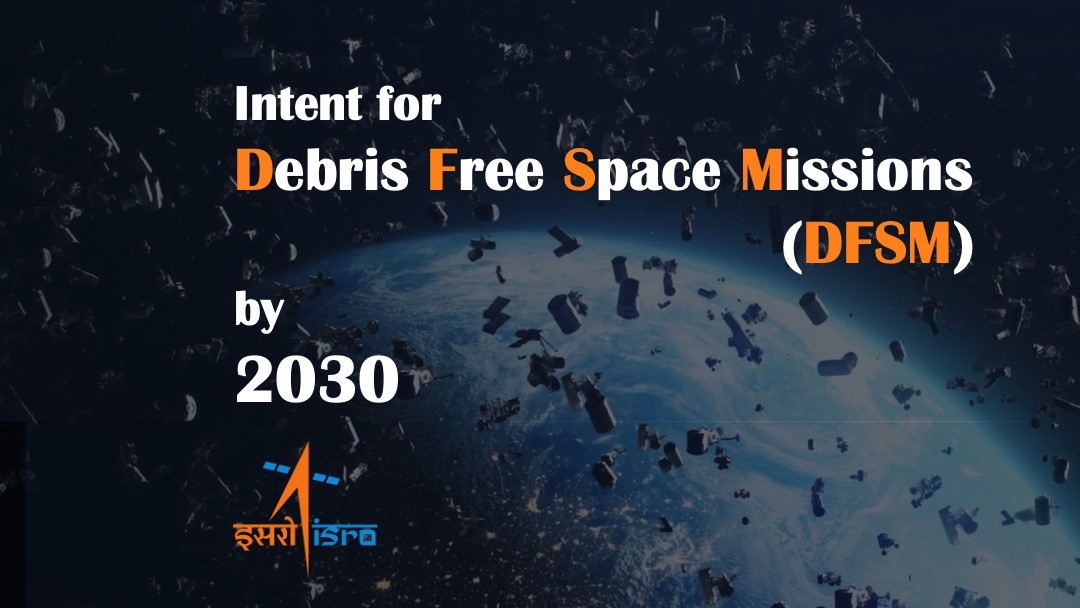
- ISRO is strengthening measures to tackle growing space debris and congestion in Low Earth Orbit (LEO), particularly due to the rapid expansion of large satellite and satellite-internet constellations.
- The measures centre on the Debris Free Space Mission (DFSM), post-mission disposal of satellites and rocket stages, Space Situational Awareness (SSA), collision avoidance and development of Active Debris Removal (ADR) technologies.
- Minister of State Dr Jitendra Singh informed Parliament that small, untrackable debris and failed satellites pose serious collision risks because they may neither be manoeuvrable nor avoidable by operational spacecraft.
- ISRO has also initiated on-orbit precursor demonstrations for ADR, while strengthening indigenous space-object monitoring capabilities.
Debris Free Space Mission (DFSM)
- Launched by: ISRO/Department of Space.
- Goal: Achieve debris-free space missions by all Indian space actors—governmental and non-governmental—by 2030.
- It follows the principle of preventing debris throughout the entire mission life cycle, rather than dealing with debris only after it is created.
Major Guidelines
- Avoid debris generation during:
- Satellite/launch-vehicle operations.
- Post-mission disposal.
- Prevent on-orbit collisions and accidental break-ups through:
- High-reliability mission design.
- Redundant systems.
- Failure-mode analysis.
- Avoid deliberate break-ups that generate long-lived debris.
- Post-Mission Disposal (PMD) success probability: More than 99%.
- At end-of-life, spacecraft and rocket stages should either:
- Undergo controlled atmospheric re-entry, or
- Be moved to an orbit where the remaining orbital lifetime is less than 5 years.
Space Debris
- Space debris refers to non-functional human-made objects in space, including:
- Defunct satellites.
- Spent rocket stages.
- Fragments produced by collisions or explosions.
- Low Earth Orbit (LEO) generally extends to about 2,000 km above Earth and hosts Earth-observation satellites, human space missions and large communication constellations.
- Large internet constellations may contain thousands of satellites, increasing the probability of conjunctions and collisions around populated orbital shells.
- Small, untrackable fragments are particularly dangerous because spacecraft cannot reliably perform collision-avoidance manoeuvres against them.
Active Debris Removal (ADR)
- ADR involves actively removing existing orbital debris rather than merely preventing creation of new debris.
- Possible approaches include:
- Capturing defunct spacecraft.
- De-orbiting debris into the atmosphere.
- Moving objects away from heavily used orbital regions.
- ISRO has begun precursor on-orbit demonstrations related to ADR technologies; a full operational debris-removal mission timeline has not yet been announced.
Mitigation vs Removal
- Space Debris Mitigation: Prevents or reduces creation of new debris.
- Active Debris Removal: Removes existing debris from orbit.
Space Situational Awareness (SSA)
- SSA involves detection, tracking and assessment of objects and hazards in space to enable safe space operations.
- It supports:
- Tracking of satellites and debris.
- Collision/conjunction assessment.
- Collision Avoidance Manoeuvres.
- Re-entry prediction.
- Monitoring of orbital break-ups.
- India is expanding indigenous space-object monitoring capabilities while promoting international data sharing.
IS4OM
- Full Form: ISRO System for Safe and Sustainable Space Operations Management.
- It is the nodal mechanism for implementing DFSM with support from other Department of Space entities.
- DFSM implementation is subject to annual progress assessment.
- IS4OM supports safe and sustainable operation of India's space assets, including monitoring potential collision and re-entry risks.
Human Spaceflight Safety
DFSM gives special attention to the orbital zone used for human space missions.
- The 400 km ± 30 km orbital band is treated as an important human-spaceflight region.
- Missions should minimise unnecessary orbital transfers through this band.
- Satellites should remain:
- Trackable
- Identifiable
- Manoeuvrable throughout relevant mission phases.
Policy Framework
- Indian Space Policy, 2023
- Requires adoption of internationally recognised space-debris mitigation practices, including proper end-of-life disposal of satellites.
- IN-SPACe Norms, Guidelines and Procedures
- Encourage Indian space actors to incorporate adequate Post-Mission Disposal measures.
- Space assets should either be actively disposed of or have a sufficiently short orbital lifetime through natural decay.
LVM3-M5: Example of Debris Mitigation
- The C25 upper stage of LVM3-M5, used for the CMS-03 communication satellite mission, re-entered Earth's atmosphere within about 9 months of launch.
- The stage had been passivated after satellite injection to minimise the risk of accidental explosion or break-up.
- Its orbital lifetime complied with:
- IADC guideline: Maximum 25-year post-mission orbital lifetime for objects ending their missions in the LEO region.
- India's DFSM guideline: A stricter 5-year orbital-lifetime recommendation for rocket stages passing through crowded LEO.
International Cooperation
- Inter-Agency Space Debris Coordination Committee (IADC)
- Established: 1993.
- Major international forum for coordination among space agencies on orbital-debris research and mitigation.
- ISRO has been a member since 1996.
- UN-COPUOS
- United Nations Committee on the Peaceful Uses of Outer Space.
- Addresses space-debris mitigation, safety of space operations and long-term sustainability of outer space.
- India also participates in:
- UN-STSC Working Group on Long-Term Sustainability.
- Expert Group on Space Situational Awareness.
- International Academy of Astronautics (IAA) Space Debris Working Group.
- ISO Working Group 7 on relevant space-debris issues.
Additional Info
- Kessler Syndrome
- A theoretical cascading process in which collisions between orbital objects generate additional debris.
- The newly generated debris increases the probability of further collisions, potentially making heavily used orbital regions progressively unsafe.
- Passivation
- Process of removing or neutralising stored energy in a spent spacecraft or rocket stage.
- May include depletion of residual fuel and batteries to reduce chances of accidental explosion and fragmentation.
- Why DFSM Matters
- Growing commercial and satellite-internet constellations are increasing orbital congestion.
- India's expanding government and private space ecosystem makes common debris-mitigation standards increasingly important.
- DFSM combines prevention, disposal, tracking, collision avoidance, regulation and international coordination into a long-term space-sustainability framework.
Sources
Revamped India Code Portal: AI-Powered Access to Indian Laws
What’s the News?
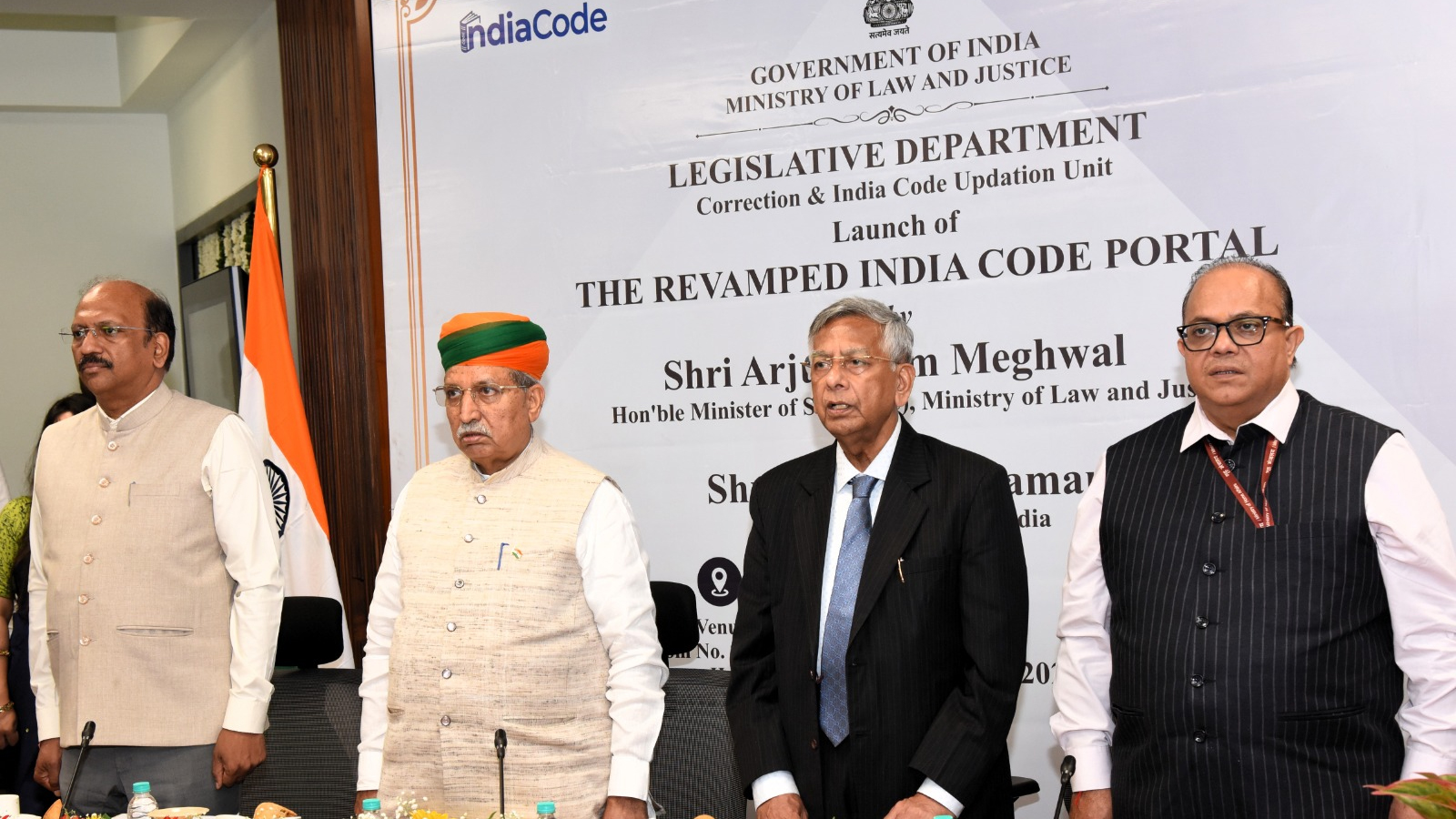
- The Ministry of Law and Justice has launched a revamped India Code Portal to make Indian laws simpler, faster and more citizen-centric to access.
- It was launched by Arjun Ram Meghwal, Union Minister of State (Independent Charge) for Law and Justice.
- The upgraded portal introduces AI-assisted search, semantic search, speech-based search and multilingual access.
- It aims to transform India Code from a repository of legislative documents into an interconnected digital gateway to law, improving access for citizens, lawyers, researchers, the judiciary and government departments.
India Code Portal
- Nodal Ministry: Ministry of Law and Justice.
- Administrative Department: Legislative Department.
- It serves as a unified digital repository of Indian legislation.
- It provides access to:
- Central Acts and subordinate legislation.
- State Acts and subordinate legislation.
- Union Territory legislation and regulations.
- Constitution and other legislative information.
- The portal is developed through coordinated efforts of the Legislative Department and National Informatics Centre (NIC).
Key Features of Revamped Portal
- AI-assisted Search & Interaction: Enables more intelligent discovery of relevant legal information.
- Semantic Search: Searches according to the meaning and context of a query rather than depending only on exact keywords.
- Speech-based Search: Allows users to search legislative information through voice input.
- Multilingual Access: Seeks to provide AI-assisted access to laws in all 22 languages of the Eighth Schedule of the Constitution.
- Legislative History: Provides easier access to amendments and evolution of legislation.
- Interlinking: Connects principal Acts with their relevant Rules and other subordinate legislation.
- e-Gazette Integration: Links legislative information with the government's electronic Gazette ecosystem.
- Other features include:
- Improved document viewing.
- QR-enabled access.
- Structured citizen-feedback mechanism.
Why is it Important?
- Access to Justice: Easier access to laws helps citizens understand their legal rights, duties and remedies.
- Transparency: Makes authentic legislative information more readily accessible.
- Digital Governance: Uses AI and digital technologies to improve delivery of legal and public services.
- Legal Research: Reduces the difficulty of locating Acts, amendments, Rules and related instruments scattered across different legal documents.
- Linguistic Inclusion: Access in Eighth Schedule languages can reduce language barriers in understanding legislation.
- The initiative seeks to make legislative information more searchable, interconnected, interoperable and citizen-centric.
Eighth Schedule
- The Eighth Schedule of the Constitution deals with recognised languages.
- Constitutional provisions connected with it include:
- Article 344(1): Constitution of a Commission and Committee of Parliament concerning progressive use of Hindi for official purposes.
- Article 351: Directive for development of the Hindi language.
- The Eighth Schedule originally contained 14 languages; it presently contains 22 languages.
- The revamped India Code Portal seeks AI-assisted multilingual access across all these 22 languages.
Subordinate Legislation
- Primary legislation: Laws enacted by Parliament or State Legislatures, such as Acts.
- Subordinate/Delegated legislation: Detailed legal instruments made by the Executive or another authorised authority under powers granted by a parent Act.
- It can include:
- Rules.
- Regulations.
- Notifications.
- Orders.
- Circulars.
- Statutory instruments.
- Linking an Act with its subordinate legislation enables users to understand both the statutory framework and its operational rules through one platform.
e-Gazette
- Gazette of India is the Government of India's authorised publication for official statutory orders, notifications, rules and other government instruments.
- e-Gazette provides such material electronically.
- Integration of India Code with the e-Gazette ecosystem improves connectivity between laws and officially published legal instruments.
Additional Info
- National Informatics Centre (NIC)
- Functions under the Ministry of Electronics and Information Technology (MeitY).
- Provides digital and ICT infrastructure and technology support to government institutions.
- Provided technical expertise and development support for the revamped India Code Portal.
Sources
Centre Delists 18 Monuments from Centrally Protected List
What’s the News?
- The Central Government has delisted 18 monuments from the list of centrally protected monuments after determining that they had ceased to be of national importance under the Ancient Monuments and Archaeological Sites and Remains (AMASR) Act, 1958.
- The information was provided in Parliament by Union Minister for Culture and Tourism Gajendra Singh Shekhawat.
- After the delistings and subsequent changes in the protected list, the Archaeological Survey of India (ASI) currently has 3,688 centrally protected monuments/sites under its jurisdiction.
- The government has also stated that no centrally protected monument is currently classified as missing.
How are Monuments Delisted?
- Section 35 of the AMASR Act, 1958 empowers the Central Government to declare, through a notification in the Official Gazette, that a monument or archaeological site has ceased to be of national importance.
- Once delisted:
- It ceases to enjoy its status as a centrally protected monument of national importance under the AMASR Act.
- ASI's statutory conservation and maintenance responsibility under that status ends.
- Delisting does not itself alter ownership of the land.
- Monuments that are not of national importance may fall within the jurisdiction of State Governments, subject to applicable State heritage laws.
18 Delisted Monuments
The 18 sites are spread across 6 States/UTs, with Uttar Pradesh accounting for half of them.
| State/UT | Number | Examples |
|---|---|---|
| Uttar Pradesh | 9 | Gunner Burkill's Tomb, Telia Nala Buddhist Ruins, ancient banyan grove at Ghazipur |
| Delhi | 3 | Nicholson Statue, Bara Khamba Cemetery, Inchla Wali Gumti |
| Haryana | 2 | Kos Minar No. 13 at Mujessar; Kos Minar at Shahabad |
| Rajasthan | 2 | 12th-century temple at Baran; inscription in fort at Nagar |
| Madhya Pradesh | 1 | Inscription in Fort of Bachhaun |
| Uttarakhand | 1 | Kutumbari area at Dwarahat |
Some Important Delisted Sites
- Bara Khamba Cemetery — Delhi
- Nicholson Statue and surrounding enclosure — Delhi
- Kos Minar No. 13 — Mujessar, Haryana
- 12th-century Temple — Baran, Rajasthan
- Ancient banyan grove containing traces of buildings — Ghazipur, Uttar Pradesh
- Remains of three small Linga temples, circa 1000 CE — Mirzapur
- Telia Nala Buddhist ruins — Varanasi.
AMASR Act, 1958
- Purpose: Preservation of ancient and historical monuments and archaeological sites and remains of national importance, regulation of archaeological excavations and protection of sculptures, carvings and similar objects.
- Section 4: Central Government can declare an ancient monument or archaeological site to be of national importance through notification.
- Section 35: Central Government can declare that such a monument/site has ceased to be of national importance.
- The Act is administered primarily through the Archaeological Survey of India under the Ministry of Culture.
Constitutional Provisions
- Article 49 — Directive Principles of State Policy
- Places an obligation on the State to protect monuments, places and objects of artistic or historic interest that are declared by Parliament to be of national importance from destruction, removal, disfigurement, spoliation or export.
- Union List — Entry 67
- Covers ancient and historical monuments, records and archaeological sites/remains declared by Parliament to be of national importance.
- State List — Entry 12
- Covers ancient and historical monuments and records other than those declared by Parliament to be of national importance.
Archaeological Survey of India (ASI)
- Established: 1861.
- Founder/First Director-General: Alexander Cunningham.
- Ministry: Ministry of Culture.
- Headquarters: New Delhi.
- Role: Archaeological research and protection, conservation and maintenance of centrally protected monuments and archaeological sites.
- Current protected sites: 3,688 centrally protected monuments/sites.
Heritage Conservation
- ASI follows the National Policy for Conservation, 2014 for conservation of centrally protected monuments.
- Modern conservation tools include:
- LiDAR mapping
- GIS
- Drone-based surveys.
- Under Adopt a Heritage 2.0, public/private entities may assist with visitor amenities, but conservation and preservation of centrally protected monuments remain with ASI.
Related Heritage Data
- India had retrieved 662 antiquities/artefacts from four countries up to June 2026:
- United States: 589
- Australia: 51
- United Kingdom: 21
- Netherlands: 1.
Sources
Partition Horrors Remembrance Day: Remembering the Human Cost of Partition

What’s the News?
- India observes 14 August as Partition Horrors Remembrance Day (Vibhajan Vibhishika Smriti Diwas) to commemorate those who suffered displacement, violence and loss during the Partition of India in 1947.
- Prime Minister Narendra Modi, marking the 2026 observance, paid tribute to the courage and resilience of people affected by Partition and highlighted how many rebuilt their lives and contributed to India's development.
- He emphasised harmony, brotherhood, solidarity and collective nation-building towards Viksit Bharat as key lessons from the remembrance.
- The observance has been held annually since it was announced by the Prime Minister in 2021.
Partition Horrors Remembrance Day
- Observed on: 14 August every year.
- Announced: 2021.
- Purpose:
- Remember people who lost their lives during Partition.
- Recognise millions who suffered displacement and loss of homes and livelihoods.
- Preserve the historical memory of Partition for future generations.
- Reinforce the values of social harmony, unity and human empowerment.
- The government describes the observance as a reminder of the dangers posed by social division, disharmony, hatred and violence.
Why 14 August?
- 14 August immediately precedes India's Independence Day on 15 August.
- The observance highlights that India's achievement of independence was accompanied by the enormous human suffering associated with the Partition of British India.
- Partition triggered mass migration across the newly created borders and severe communal violence, particularly affecting Punjab and Bengal.
Partition of India
- The Partition of British India in 1947 created two independent Dominions:
- India
- Pakistan.
- Major provinces affected included:
- Punjab: Divided into East Punjab and West Punjab.
- Bengal: Divided into West Bengal and East Bengal/East Pakistan; the latter eventually became Bangladesh.
- Partition produced one of the largest population movements of the 20th century, as Hindus, Muslims and Sikhs migrated across the newly drawn borders amid widespread violence.
Indian Independence Act, 1947
- Passed by the British Parliament.
- Provided for the establishment of two independent Dominions—India and Pakistan.
- Ended British constitutional authority over the territories becoming the two Dominions.
- Each Dominion received its own Constituent Assembly, with legislative authority over its territory.
Radcliffe Line
- The boundaries separating India and Pakistan were drawn under boundary commissions chaired by Sir Cyril Radcliffe.
- Radcliffe was tasked with drawing the borders within roughly six weeks.
- Two principal boundary commissions dealt with:
- Punjab
- Bengal
- The resulting boundary is commonly known as the Radcliffe Line.
2026 Message
Prime Minister Modi's message centred on three major ideas:
- Remembrance: Honour families uprooted and people who lost loved ones during Partition.
- Resilience: Recognise those who rebuilt their lives from almost nothing and contributed to national progress.
- National Unity: Strengthen harmony, brotherhood and solidarity while working collectively towards Viksit Bharat.
Additional Info
- Mountbatten Plan
- Also known as the 3 June Plan.
- Provided the political framework for Partition and transfer of power.
- Associated with Lord Louis Mountbatten, the last Viceroy of British India.
- Radcliffe Boundary Commission
- Chairman: Sir Cyril Radcliffe.
- Separate commissions were constituted for Punjab and Bengal.
- Their task was to demarcate boundaries between the territories forming India and Pakistan.
- Constituent Assembly of India
- First met in 1946.
- Became the sovereign constitution-making body of independent India.
- Adopted the Constitution of India in 1949.
Sources
Great Barrier Reef Coral Cover Rebounds to 35.1%
What’s the News?
- Hard coral cover in the northern Great Barrier Reef (GBR) has rebounded from 30.0% to 35.1%, a 16.7% relative increase, according to the Australian Institute of Marine Science (AIMS) 2025–26 assessment.
- The central region also improved from 28.6% to 31.6%, while the southern region remained broadly stable, declining marginally from 26.9% to 26.4%.
- A late-summer monsoon increased cloud cover and lowered sea temperatures, reducing heat stress and limiting the severity of coral bleaching.
- The rebound indicates initial recovery, not full restoration; AIMS warns that the reef remains threatened by warming oceans, cyclones and crown-of-thorns starfish outbreaks.
Coral Cover: Key Findings
| GBR Region | 2025 | 2026 | Change |
|---|---|---|---|
| Northern | 30.0% | 35.1% | +16.7% relative |
| Central | 28.6% | 31.6% | +10.2% relative |
| Southern | 26.9% | 26.4% | −2.0% relative |
- Northern GBR: Above its long-term average of 27.0%.
- Central GBR: Above its long-term average of 20.0%.
- Southern GBR: Below its long-term average of 29.3%.
- Of the reefs surveyed:
- 56%: No net change in coral cover.
- 28%: Increase.
- 16%: Decline.
The official AIMS annual coral-cover assessment used manta-tow surveys of 121 reefs. A separate detailed assessment covered permanent sites at 71 reefs; hence media references to “192 reefs” should not be treated as the sample size of the main coral-cover dataset.
Why Did Coral Cover Recover?
- Sea-surface temperatures remained around 0.7–1.2°C above average, but heat stress was lower than during the previous two summers.
- A late monsoon:
- Increased cloud cover.
- Reduced solar heating.
- Lowered sea temperatures.
- Limited the intensity and extent of bleaching.
- Many surviving corals consequently had favourable conditions for regrowth.
- Recovery was particularly associated with fast-growing corals, although such communities can also be highly vulnerable to future bleaching events.
Coral Bleaching
- Coral bleaching occurs when environmental stress—particularly unusually high ocean temperatures—causes corals to lose the symbiotic microscopic algae living within their tissues.
- These algae provide corals with much of their energy and colour.
- Bleached corals are not necessarily dead; they can recover if stressful conditions decline sufficiently quickly.
- Prolonged or intense thermal stress can, however, lead to coral mortality.
- AIMS has recorded six mass bleaching events between 2016 and 2025, showing the increasing frequency of thermal stress on the GBR.
Great Barrier Reef
- Location: Coral Sea, off the north-eastern coast of Queensland, Australia.
- It is the world's most extensive coral reef ecosystem.
- UNESCO World Heritage Site: Inscribed in 1981.
- World Heritage Area: approximately 348,000 sq km.
- It contains exceptional marine biodiversity, including hundreds of coral types and large numbers of fish and mollusc species.
Crown-of-Thorns Starfish
- Crown-of-thorns starfish (COTS) is a coral-eating marine predator capable of causing substantial coral mortality during population outbreaks.
- COTS were detected on 27 surveyed reefs, while feeding scars were found on 77 reefs.
- A fifth wave of COTS outbreaks is emerging in the northern Great Barrier Reef—the fifth such wave recorded since the 1960s.
- Along with bleaching and tropical cyclones, COTS represents a major recurring disturbance to coral ecosystems.
AIMS Long-Term Monitoring Program
- AIMS: Australian Institute of Marine Science.
- Its Long-Term Monitoring Program (LTMP) tracks changes in Great Barrier Reef coral communities.
- The 2026 assessment represents the 40th year of LTMP data.
- Major indicators include:
- Percentage hard coral cover.
- Coral community composition.
- Coral bleaching.
- Crown-of-thorns starfish abundance.
- Effects of cyclones and other disturbances.
India Connect: Coral Reefs
Major coral reef ecosystems in India occur in:
- Gulf of Kachchh — Gujarat
- Gulf of Mannar — Tamil Nadu
- Lakshadweep
- Andaman & Nicobar Islands
- Malvan — Maharashtra also contains coral reefs.
Coral Bleaching Alert System
- INCOIS undertakes coral reef mapping and reef-health monitoring in India.
- It operates a Coral Bleaching Alert System (CBAS) to provide early warning of conditions conducive to bleaching.
- INCOIS: Indian National Centre for Ocean Information Services, under the Ministry of Earth Sciences.
Additional Info
- Hard Coral Cover
- Percentage of the reef surface occupied by living reef-building hard corals.
- Used as an important indicator of coral abundance and changes in reef condition.
- Major Threats to Coral Reefs
- Marine heatwaves and climate change.
- Ocean acidification.
- Tropical cyclones.
- Crown-of-thorns starfish.
- Pollution and sedimentation.
- Destructive fishing and poorly managed coastal development.
- Key Takeaway
- The 35.1% figure represents a regional rebound in northern GBR coral cover, not 35.1% coral cover across the entire Great Barrier Reef.
- The recovery demonstrates ecological resilience but does not mean the threat from repeated marine heatwaves and bleaching has disappeared.
Sources
CENTCOM Launches Multinational Drone Task Force “Falcon Strike”

What’s the News?
- United States Central Command (CENTCOM) has initiated Task Force Falcon Strike, described as its first multi-domain, multinational attack-drone task force.
- The task force will integrate one-way attack drones and other unmanned systems operating above, on and below the sea with personnel from the United States and regional partners.
- U.S. Special Operations Command Central (SOCCENT) personnel will lead its multinational staff.
- CENTCOM has begun consulting and formally inviting regional partners; participating partner countries have not yet been publicly named.
- The objective is to develop an integrated multi-domain, multinational deterrent across West Asia/Middle East.
Task Force Falcon Strike
- Established by: U.S. Central Command (CENTCOM).
- Nature: Multinational + multi-domain attack-drone formation.
- Operational region: CENTCOM Area of Responsibility, particularly the Middle East.
- Command/Staff leadership: SOCCENT.
- Participants: United States + regional military partners.
- Systems envisaged:
- Air: One-way attack unmanned aerial systems.
- Surface: Unmanned surface attack vessels.
- Subsurface: Unmanned systems operating below the sea.
- The task force is intended to integrate these capabilities into a common operational framework rather than relying solely on conventional aircraft or individual drone units.
What are One-Way Attack Drones?
- One-Way Attack (OWA) drones are unmanned systems designed primarily to strike a target rather than return for recovery.
- They are also commonly described as:
- Loitering/attack drones in some configurations.
- Expendable attack UAVs.
- “Kamikaze drones” in non-technical usage.
- Their military advantages can include:
- Lower unit cost compared with many crewed strike platforms or sophisticated missiles.
- Reduced risk to pilots.
- Ability to attack from multiple directions.
- Potential for mass or saturation attacks.
- However, their increasing use also raises challenges relating to air defence, electronic warfare, counter-drone systems and escalation management.
Task Force Scorpion Strike
Falcon Strike builds directly on Task Force Scorpion Strike, which CENTCOM established around nine months earlier as the U.S. military's first dedicated one-way attack-drone squadron in the Middle East.
Milestones
- Conducted the first launch of an aerial attack drone from a U.S. Navy warship.
- One of the systems associated with Scorpion Strike operations was the Low-Cost Unmanned Combat Attack System (LUCAS).
- Its one-way aerial systems were subsequently employed during Operation Epic Fury.
- Unmanned attack vessels were also used during strikes on Iranian port facilities.
Scorpion Strike vs Falcon Strike
| Feature | Scorpion Strike | Falcon Strike |
|---|---|---|
| Character | U.S. dedicated attack-drone squadron | Multinational task force |
| Scope | Primarily U.S. capability | U.S. + regional partners |
| Domains | Developed operational OWA capabilities | Air + surface + subsurface |
| Objective | Field attack drones rapidly | Integrate regional drone capabilities |
| Significance | First dedicated U.S. OWA squadron in Middle East | First multinational, multi-domain attack-drone task force |
CENTCOM
- Full Form: United States Central Command.
- It is one of the U.S. military's geographic combatant commands.
- Its area of responsibility covers 21 countries across the Middle East, Central Asia and South Asia.
- Headquarters: MacDill Air Force Base, Tampa, Florida.
- Current Commander mentioned in the announcement: Admiral Brad Cooper.
SOCCENT
- Full Form: United States Special Operations Command Central.
- It is the special-operations component of CENTCOM.
- SOCCENT personnel will lead the staff of Falcon Strike, comprising both U.S. and regional representatives.
- It plans and conducts U.S. special operations across CENTCOM's 21-country Area of Responsibility.
Why Falcon Strike Matters
- Drone-centric Warfare: Reflects the growing battlefield importance of expendable and autonomous/uncrewed strike systems.
- Multi-domain Operations: Integrates attacks from the air, sea surface and subsurface rather than restricting drone warfare to UAVs.
- Regional Integration: Seeks interoperability between American and partner-country unmanned systems.
- Cost Considerations: Lower-cost unmanned weapons can complement inventories of expensive precision-guided weapons.
- Deterrence: CENTCOM explicitly envisages Falcon Strike developing into a unified multi-domain, multinational deterrent as regional states join.
Additional Info
- MQ-9 Reaper Context
- Some media coverage has linked Falcon Strike with recent losses of expensive MQ-9 Reaper remotely piloted aircraft.
- However, CENTCOM's official announcement does not state that MQ-9 losses caused the creation of Falcon Strike.
- Officially, Falcon Strike is presented as an expansion of Task Force Scorpion Strike's operational experience and as a means of integrating capabilities developed by U.S. regional allies and partners.
- Multi-domain
- In Falcon Strike's specific context, it refers to unmanned systems operating:
- Above the sea — aerial systems
- On the sea — surface systems
- Below the sea — subsurface systems
- Therefore, describing the announced configuration simply as “air, land and sea” would be imprecise.
Sources
August 2026
Archive
November 2026
- 28 November 2026
- 27 November 2026
- 26 November 2026
- 25 November 2026
- 24 November 2026
- 23 November 2026
- 21 November 2026
- 20 November 2026
- 19 November 2026
- 18 November 2026
- 17 November 2026
- 16 November 2026
- 14 November 2026
- 13 November 2026
- 12 November 2026
- 11 November 2026
- 10 November 2026
- 09 November 2026
- 06 November 2026
- 05 November 2026
- 04 November 2026
- 03 November 2026
- 02 November 2026
October 2026
- 31 October 2026
- 30 October 2026
- 29 October 2026
- 28 October 2026
- 27 October 2026
- 26 October 2026
- 24 October 2026
- 23 October 2026
- 22 October 2026
- 21 October 2026
- 20 October 2026
- 19 October 2026
- 17 October 2026
- 16 October 2026
- 15 October 2026
- 14 October 2026
- 13 October 2026
- 12 October 2026
- 10 October 2026
- 09 October 2026
- 08 October 2026
- 07 October 2026
- 06 October 2026
- 05 October 2026
- 03 October 2026
- 02 October 2026
- 01 October 2026
September 2026
- 30 September 2026
- 29 September 2026
- 28 September 2026
- 26 September 2026
- 25 September 2026
- 24 September 2026
- 23 September 2026
- 22 September 2026
- 21 September 2026
- 19 September 2026
- 18 September 2026
- 17 September 2026
- 16 September 2026
- 15 September 2026
- 12 September 2026
- 11 September 2026
- 10 September 2026
- 09 September 2026
- 08 September 2026
- 07 September 2026
- 05 September 2026
- 04 September 2026
- 03 September 2026
- 02 September 2026
- 01 September 2026
August 2026
- 31 August 2026
- 29 August 2026
- 27 August 2026
- 26 August 2026
- 25 August 2026
- 24 August 2026
- 22 August 2026
- 21 August 2026
- 20 August 2026
- 19 August 2026
- 18 August 2026
- 17 August 2026
- 14 August 2026
- 13 August 2026
- 12 August 2026
- 11 August 2026
- 10 August 2026
- 08 August 2026
- 07 August 2026
- 06 August 2026
- 05 August 2026
- 04 August 2026
- 03 August 2026
- 01 August 2026
July 2026
- 31 July 2026
- 30 July 2026
- 29 July 2026
- 28 July 2026
- 27 July 2026
- 25 July 2026
- 23 July 2026
- 22 July 2026
- 21 July 2026
- 20 July 2026
- 18 July 2026
- 17 July 2026
- 15 July 2026
- 14 July 2026
- 13 July 2026
- 11 July 2026
- 10 July 2026
- 09 July 2026
- 08 July 2026
- 07 July 2026
- 06 July 2026
- 04 July 2026
- 03 July 2026
- 02 July 2026
- 01 July 2026
June 2026
May 2026
April 2026
March 2026
- 31 March 2026
- 30 March 2026
- 28 March 2026
- 27 March 2026
- 26 March 2026
- 25 March 2026
- 24 March 2026
- 23 March 2026
- 21 March 2026
- 20 March 2026
- 19 March 2026
- 18 March 2026
- 17 March 2026
- 16 March 2026
- 14 March 2026
- 13 March 2026
- 12 March 2026
- 11 March 2026
- 10 March 2026
- 09 March 2026
- 07 March 2026
- 06 March 2026
- 05 March 2026
- 03 March 2026
- 02 March 2026
February 2026
- 28 February 2026
- 27 February 2026
- 26 February 2026
- 25 February 2026
- 24 February 2026
- 23 February 2026
- 21 February 2026
- 20 February 2026
- 19 February 2026
- 18 February 2026
- 17 February 2026
- 16 February 2026
- 13 February 2026
- 12 February 2026
- 11 February 2026
- 10 February 2026
- 09 February 2026
- 07 February 2026
- 06 February 2026
- 05 February 2026
- 04 February 2026
- 03 February 2026
- 02 February 2026
January 2026
- 31 January 2026
- 30 January 2026
- 29 January 2026
- 28 January 2026
- 27 January 2026
- 26 January 2026
- 24 January 2026
- 23 January 2026
- 22 January 2026
- 21 January 2026
- 20 January 2026
- 19 January 2026
- 16 January 2026
- 15 January 2026
- 14 January 2026
- 13 January 2026
- 12 January 2026
- 10 January 2026
- 09 January 2026
- 08 January 2026
- 07 January 2026
- 06 January 2026
- 05 January 2026
- 03 January 2026
- 02 January 2026
- 01 January 2026
December 2025
- 31 December 2025
- 30 December 2025
- 29 December 2025
- 27 December 2025
- 26 December 2025
- 24 December 2025
- 23 December 2025
- 22 December 2025
- 20 December 2025
- 19 December 2025
- 18 December 2025
- 17 December 2025
- 16 December 2025
- 15 December 2025
- 13 December 2025
- 12 December 2025
- 11 December 2025
- 10 December 2025
- 09 December 2025
- 08 December 2025
- 05 December 2025
- 04 December 2025
- 03 December 2025
- 02 December 2025
November 2025
- 29 November 2025
- 28 November 2025
- 27 November 2025
- 26 November 2025
- 25 November 2025
- 24 November 2025
- 22 November 2025
- 21 November 2025
- 20 November 2025
- 19 November 2025
- 18 November 2025
- 17 November 2025
- 15 November 2025
- 14 November 2025
- 13 November 2025
- 12 November 2025
- 11 November 2025
- 10 November 2025
- 08 November 2025
- 07 November 2025
- 06 November 2025
- 05 November 2025
- 04 November 2025
- 03 November 2025
- 01 November 2025
October 2025
- 31 October 2025
- 30 October 2025
- 29 October 2025
- 28 October 2025
- 27 October 2025
- 25 October 2025
- 24 October 2025
- 23 October 2025
- 22 October 2025
- 21 October 2025
- 20 October 2025
- 18 October 2025
- 17 October 2025
- 16 October 2025
- 15 October 2025
- 14 October 2025
- 13 October 2025
- 11 October 2025
- 10 October 2025
- 09 October 2025
- 08 October 2025
- 07 October 2025
- 06 October 2025
- 04 October 2025
- 03 October 2025
- 02 October 2025
- 01 October 2025
September 2025
- 30 September 2025
- 29 September 2025
- 27 September 2025
- 26 September 2025
- 25 September 2025
- 24 September 2025
- 23 September 2025
- 22 September 2025
- 20 September 2025
- 19 September 2025
- 18 September 2025
- 17 September 2025
- 16 September 2025
- 15 September 2025
- 13 September 2025
- 12 September 2025
- 11 September 2025
- 10 September 2025
- 09 September 2025
- 08 September 2025
- 06 September 2025
- 05 September 2025
- 04 September 2025
- 03 September 2025
- 02 September 2025
- 01 September 2025
August 2025
- 30 August 2025
- 29 August 2025
- 28 August 2025
- 27 August 2025
- 26 August 2025
- 25 August 2025
- 23 August 2025
- 22 August 2025
- 21 August 2025
- 20 August 2025
- 19 August 2025
- 18 August 2025
- 16 August 2025
- 14 August 2025
- 13 August 2025
- 12 August 2025
- 11 August 2025
- 08 August 2025
- 07 August 2025
- 06 August 2025
- 05 August 2025
- 04 August 2025
- 02 August 2025
- 01 August 2025
July 2025
- 31 July 2025
- 30 July 2025
- 29 July 2025
- 28 July 2025
- 26 July 2025
- 25 July 2025
- 24 July 2025
- 23 July 2025
- 22 July 2025
- 21 July 2025
- 19 July 2025
- 18 July 2025
- 17 July 2025
- 16 July 2025
- 15 July 2025
- 12 July 2025
- 11 July 2025
- 10 July 2025
- 09 July 2025
- 07 July 2025
- 05 July 2025
- 04 July 2025
- 03 July 2025
- 02 July 2025
- 01 July 2025
June 2025
- 30 June 2025
- 28 June 2025
- 27 June 2025
- 26 June 2025
- 25 June 2025
- 24 June 2025
- 23 June 2025
- 21 June 2025
- 20 June 2025
- 19 June 2025
- 18 June 2025
- 17 June 2025
- 16 June 2025
- 14 June 2025
- 13 June 2025
- 12 June 2025
- 11 June 2025
- 10 June 2025
- 09 June 2025
- 07 June 2025
- 06 June 2025
- 05 June 2025
- 04 June 2025
- 03 June 2025
- 02 June 2025
May 2025
April 2025
- 30 April 2025
- 29 April 2025
- 28 April 2025
- 26 April 2025
- 25 April 2025
- 24 April 2025
- 23 April 2025
- 22 April 2025
- 21 April 2025
- 19 April 2025
- 18 April 2025
- 17 April 2025
- 16 April 2025
- 15 April 2025
- 14 April 2025
- 12 April 2025
- 11 April 2025
- 10 April 2025
- 09 April 2025
- 08 April 2025
- 07 April 2025
- 05 April 2025
- 04 April 2025
- 03 April 2025
- 02 April 2025
- 01 April 2025
March 2025
- 31 March 2025
- 29 March 2025
- 28 March 2025
- 27 March 2025
- 26 March 2025
- 25 March 2025
- 24 March 2025
- 22 March 2025
- 21 March 2025
- 20 March 2025
- 19 March 2025
- 18 March 2025
- 17 March 2025
- 15 March 2025
- 13 March 2025
- 12 March 2025
- 11 March 2025
- 10 March 2025
- 08 March 2025
- 07 March 2025
- 06 March 2025
- 05 March 2025
- 04 March 2025
- 03 March 2025
- 01 March 2025
February 2025
- 28 February 2025
- 27 February 2025
- 26 February 2025
- 25 February 2025
- 24 February 2025
- 22 February 2025
- 21 February 2025
- 20 February 2025
- 19 February 2025
- 18 February 2025
- 17 February 2025
- 15 February 2025
- 14 February 2025
- 13 February 2025
- 12 February 2025
- 11 February 2025
- 10 February 2025
- 08 February 2025
- 07 February 2025
- 06 February 2025
- 05 February 2025
- 04 February 2025
- 03 February 2025
- 01 February 2025
January 2025
- 31 January 2025
- 30 January 2025
- 29 January 2025
- 28 January 2025
- 27 January 2025
- 25 January 2025
- 24 January 2025
- 23 January 2025
- 22 January 2025
- 21 January 2025
- 20 January 2025
- 18 January 2025
- 17 January 2025
- 16 January 2025
- 15 January 2025
- 14 January 2025
- 13 January 2025
- 11 January 2025
- 10 January 2025
- 09 January 2025
- 08 January 2025
- 07 January 2025
- 06 January 2025
- 04 January 2025
- 03 January 2025
- 02 January 2025
- 01 January 2025