
Current Affairs
Stay updated with the latest national and international events.
21 May 2026
India Launches Chenab Hydropower Projects Amid Indus Treaty Freeze
What's the News?
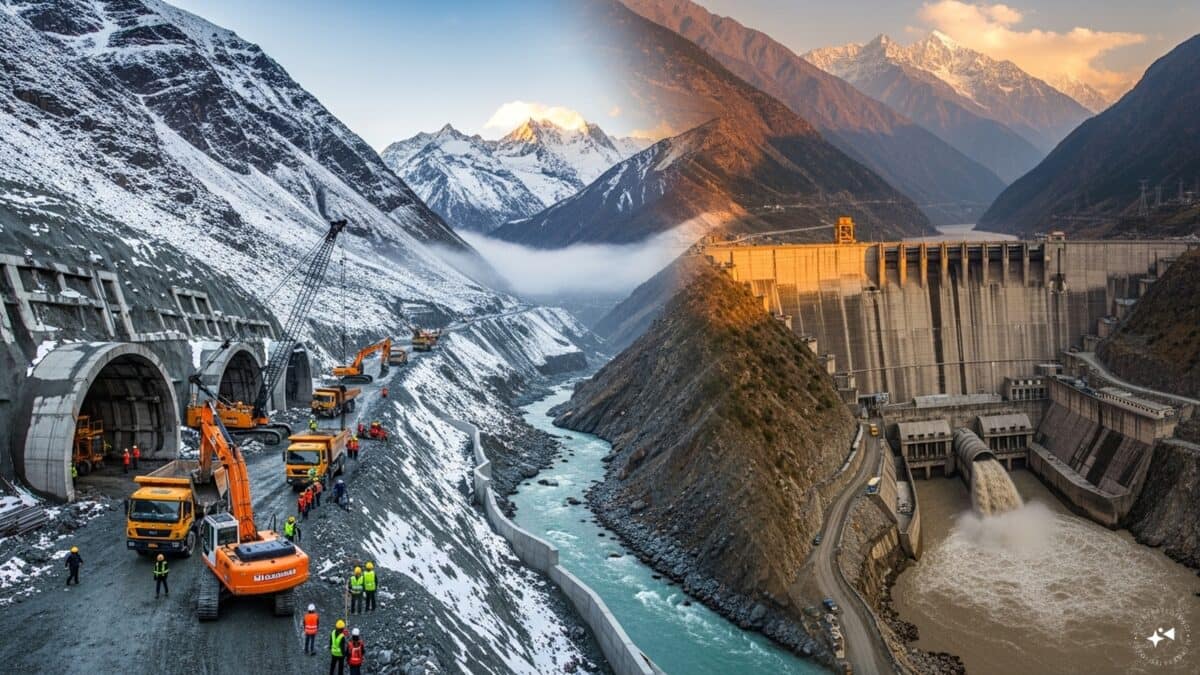
- India has initiated two strategic hydropower infrastructure projects on the Chenab River system worth approximately ₹2,600 crore.
- The National Hydroelectric Power Corporation (NHPC) will execute the projects: an inter-basin water diversion tunnel in Himachal Pradesh and a sediment management tunnel at the Salal Dam in Jammu & Kashmir.
- This development marks a significant shift in water resource utilisation following India's decision to place the Indus Waters Treaty framework "in abeyance".
Project Details & Strategic Objectives
- Chenab-Beas Link Tunnel Project (Himachal Pradesh)
- Cost: ₹2,352 crore.
- Key Feature: Construction of an 8.7-km tunnel to divert surplus water from the Chandra River (Chenab tributary) to the Beas river system.
- Infrastructure: Includes a 19-metre-high barrage in the Lahaul valley.
- Objective: Optimise water usage from western rivers for irrigation and power generation, enhancing energy security in northern India.
- Salal Dam Sediment-Bypass Tunnel (Jammu & Kashmir)
- Cost: ₹268 crore.
- Key Feature: A diversion-cum-sediment bypass mechanism to flush accumulated silt from the reservoir.
- Objective: Restore operational flexibility, improve turbine efficiency, and extend the lifespan of the hydroelectric infrastructure.
Indus Waters Treaty & Geopolitical Context
- Treaty Framework (1960)
- Brokered by the World Bank, it allocates the three Eastern Rivers (Ravi, Beas, Sutlej) to India and the three Western Rivers (Indus, Jhelum, Chenab) to Pakistan.
- India retains rights for non-consumptive uses and run-of-the-river hydropower projects on western rivers without significant storage.
- Current Status
- India suspended treaty engagements following the Pahalgam terror attack, citing security concerns and Pakistan's persistent objections to Indian projects.
- India recently rejected a supplemental award by the Court of Arbitration regarding pondage levels for the Kishanganga and Ratle projects.
- Strategic Significance
- Accelerates infrastructure development in the Himalayan border region.
- Demonstrates India's intent to maximise hydropower potential within its sovereign rights, reducing reliance on thermal power.
Additional Info
- Other Fast-Tracked Chenab Projects
- Pakal Dul: 1,000 MW capacity.
- Kiru: 624 MW capacity.
- Kwar: 540 MW capacity.
- Ratle: 850 MW capacity.
- Sawalkote: 1,856 MW capacity (Estimated cost: ₹5,129 crore).
- Dulhasti Stage-II: 260 MW capacity (Estimated cost: ₹3,277.45 crore).
- Technical Terms
- Run-of-the-River Project: Generates power using the natural flow of the river without large storage reservoirs, minimizing environmental impact and treaty violations.
- Sediment-Bypass Tunnel: Engineering structure designed to divert silt-laden water away from dams to prevent reservoir capacity loss.
- Relevant Organizations
- NHPC Ltd: Premier hydropower development organization under the Ministry of Power.
- Central Water Commission (CWC): Apex technical body for water resource development in India.
Sources
India Joins WTO Challenge Against UK Steel Safeguard Measures
What's the News?
- India, alongside six other nations including China, Japan, and Brazil, has formally raised concerns at the World Trade Organization (WTO) against the UK's revised steel safeguard measures.
- The UK plans to reduce tariff-free steel import quotas by 60% from July 2026, with imports beyond the quota facing a 50% tariff (up from 25%).
- The issue was discussed during the WTO Council for Trade in Goods meeting, with India urging the UK to adopt "least trade-restrictive" solutions.
Details of the Dispute
- UK's Revised Safeguard Regime
- Applies to 15 categories of steel products that can be manufactured domestically in the UK.
- Original safeguards (2018) mirrored EU measures responding to global steel overcapacity and US Section 232 tariffs.
- Extended multiple times based on recommendations from the UK's Trade Remedies Authority.
- WTO rules prohibit indefinite safeguards; current measures expire June 2026.
- India's Trade Exposure
- India's iron and steel exports to the UK stood at USD 893.4 million in 2025-26.
- Steel constitutes a significant portion of India's USD 13.4 billion total merchandise exports to the UK.
- Indian exporters face heightened uncertainty amid tighter quota access and punitive tariffs.
- Multilateral Opposition
- Countries flagging concerns: Brazil, Japan, South Korea, Switzerland, Australia, Turkiye, China, and Russia.
- Japan and South Korea initiated the WTO discussions; India joined as a third-party complainant.
Implications for India-UK Trade Relations
- CETA Implementation Delay
- The dispute has become a sticking point in operationalising the India-UK Comprehensive Economic and Trade Agreement (CETA), signed in July 2025.
- Both sides are exploring a "creative solution" to resolve the steel impasse without renegotiating the entire pact.
- Strategic Considerations
- UK cites protection of domestic steelmaking capacity and national security concerns as justification.
- India emphasises adherence to WTO multilateral rules and non-discriminatory trade practices.
- Outcome may set precedent for future safeguard disputes involving emerging economies.
Additional Info
- WTO Safeguard Mechanism
- Permitted under GATT Article XIX and the Agreement on Safeguards.
- Allows temporary import restrictions when domestic industry faces "serious injury" from import surges.
- Must be non-discriminatory (applied to all trading partners equally) and time-bound.
- Key Technical Terms
- Tariff-Rate Quota (TRQ): Two-tier tariff system where imports within a quota face lower duties; excess imports face higher tariffs.
- Section 232 (US): US trade law allowing tariffs on imports deemed threatening to national security; triggered global steel safeguard responses in 2018.
- Trade Remedies Authority (UK): Independent body investigating and recommending trade defence measures like anti-dumping duties and safeguards.
- Relevant Organizations & Agreements
- WTO Council for Trade in Goods: Oversees implementation of goods-related agreements, including tariffs, subsidies, and import regulations.
- Ministry of Commerce & Industry (India): Leads India's trade negotiations and WTO dispute engagements.
- Directorate General of Trade Remedies (DGTR): India's apex body for investigating trade defence cases.
Sources
NCDEX Launches India's First Weather Derivative Contract
What's the News?
- The National Commodities and Derivatives Exchange (NCDEX) has launched RAINMUMBAI, India's first SEBI-approved exchange-traded weather derivative contract.
- The product enables market participants to hedge financial risks arising from monsoon rainfall variability using a cash-settled futures instrument linked to Mumbai's rainfall data.
- Developed in collaboration with IIT Bombay and based on official data from the India Meteorological Department (IMD), the contract transforms weather uncertainty into a measurable, tradable risk within a regulated framework.
RAINMUMBAI: Contract Structure & Features
- Underlying Index: Measures deviation of actual rainfall from the Long Period Average (LPA) for Mumbai during monsoon months (June–September).
- Settlement Mechanism: Purely cash-settled based on observed IMD rainfall data; no physical delivery or loss assessment required.
- Key Specifications:
- Tick Size: 1 mm
- Lot Multiplier: ₹50 per mm
- Maximum Order Size: 50 lots
- Daily Price Limit: Initial 6%, enhanced 3%, aggregate 9%
- Data Source: IMD's surface rainfall and Automatic Weather Stations at Santacruz and Colaba observatories.
- Target Users: Farmers, construction firms, power utilities, logistics operators, banks with agricultural loan portfolios, and FMCG distributors.
Additional Info
- Regulatory & Institutional Framework
- SEBI: Regulates exchange-traded derivatives under the Securities Contracts (Regulation) Act, 1956.
- NCDEX: Leading agricultural commodity derivatives exchange; operates under SEBI oversight.
- India Meteorological Department (IMD): Apex agency under the Ministry of Earth Sciences for weather forecasting and climatological data.
- Key Technical Concepts
- Weather Derivatives: Financial contracts whose payoff is linked to weather variables (rainfall, temperature); used to hedge revenue risks from climate variability.
- Parametric Settlement: Payouts triggered when a predefined index threshold is crossed, eliminating subjective loss assessment.
- Long Period Average (LPA): 30-year climatological benchmark (1991–2020) used to normalise rainfall data for anomaly detection.
- Global Context & Future Scope
- Weather derivatives are widely used in the US, Europe, and Japan by agriculture, energy, and tourism sectors.
- NCDEX plans to expand the framework to other geographies (e.g., agricultural belts) and variables (e.g., temperature-based indices for heatwave risk).
- Potential integration with PMFBY (Pradhan Mantri Fasal Bima Yojana) could strengthen India's agricultural risk ecosystem.
Sources
India Abstains on UNGA Resolution Endorsing ICJ Climate Advisory Opinion
What's the News?
- India abstained from voting on a United Nations General Assembly (UNGA) resolution endorsing the International Court of Justice (ICJ) advisory opinion on states' climate obligations.
- The resolution was adopted with 141 votes in favour, 8 against, and 28 abstentions, including India, Turkey, Qatar, and Nigeria.
- India voiced concerns that the text undermines the UNFCCC framework by treating a non-binding advisory opinion as quasi-binding and omitting critical references to climate finance.
India's Core Objections & Rationale
- Preservation of UNFCCC Architecture
- India emphasised that climate obligations must be negotiated exclusively under the United Nations Framework Convention on Climate Change (UNFCCC) process.
- The resolution risks elevating the ICJ's advisory opinion to a binding status, creating a "dangerous precedent" for imposing unagreed obligations on developing nations.
- Protection of National Policy Space
- The text prescribes specific mitigation pathways and external benchmarks, potentially inviting judicial scrutiny of Nationally Determined Contributions (NDCs).
- India argued this disrupts the bottom-up architecture of the Paris Agreement, which respects national circumstances and sovereign policy choices.
- Omission of Climate Finance
- The resolution lacks the term "climate finance" despite the 2024 climate finance goal falling short of developing countries' needs.
- India highlighted the absence of language affirming developed nations' responsibility to lead on mitigation and provide adequate, predictable finance, technology transfer, and capacity building.
ICJ Advisory Opinion & Global Climate Governance
- ICJ Advisory Opinion (July 2025)
- Issued unanimously at the request of Vanuatu and co-sponsored by Small Island Developing States (SIDS).
- Clarified states' obligations under international law regarding climate change but remains non-binding in nature.
- UNFCCC Principle: Common but Differentiated Responsibilities (CBDR)
- Recognises that developed countries, as historical emitters, bear greater responsibility for emissions reductions and financial support.
- India's stance aligns with protecting this equity-based principle in multilateral climate negotiations.
- Voting Pattern Highlights
- Against: United States, Russia, Saudi Arabia, Iran, Israel, Belarus, Liberia, Yemen.
- Abstentions: India, Turkey, Qatar, Nigeria, and others balancing climate vulnerability with developmental priorities.
Additional Info
- Relevant Legal & Policy Frameworks
- Paris Agreement (2015)
- Operates on a nationally determined approach; NDCs are self-set, not externally imposed.
- Article 14: Establishes the Global Stocktake as a facilitative, non-prescriptive mechanism.
- UNFCCC (1992)
- Foundational treaty for global climate cooperation; entered into force in 1994.
- Hosts annual Conference of Parties (COP) negotiations.
- Paris Agreement (2015)
- Technical Terms
- Advisory Opinion: Non-binding legal interpretation issued by the ICJ upon request of UN bodies; persuasive but not enforceable.
- Nationally Determined Contributions (NDCs): Country-specific climate action plans under the Paris Agreement.
- Parametric vs. Judicial Scrutiny: India favours peer-review mechanisms under UNFCCC over court-led assessments of climate pledges.
Sources
May 2026
Archive
November 2026
- 28 November 2026
- 27 November 2026
- 26 November 2026
- 25 November 2026
- 24 November 2026
- 23 November 2026
- 21 November 2026
- 20 November 2026
- 19 November 2026
- 18 November 2026
- 17 November 2026
- 16 November 2026
- 14 November 2026
- 13 November 2026
- 12 November 2026
- 11 November 2026
- 10 November 2026
- 09 November 2026
- 06 November 2026
- 05 November 2026
- 04 November 2026
- 03 November 2026
- 02 November 2026
October 2026
- 31 October 2026
- 30 October 2026
- 29 October 2026
- 28 October 2026
- 27 October 2026
- 26 October 2026
- 24 October 2026
- 23 October 2026
- 22 October 2026
- 21 October 2026
- 20 October 2026
- 19 October 2026
- 17 October 2026
- 16 October 2026
- 15 October 2026
- 14 October 2026
- 13 October 2026
- 12 October 2026
- 10 October 2026
- 09 October 2026
- 08 October 2026
- 07 October 2026
- 06 October 2026
- 05 October 2026
- 03 October 2026
- 02 October 2026
- 01 October 2026
September 2026
- 30 September 2026
- 29 September 2026
- 28 September 2026
- 26 September 2026
- 25 September 2026
- 24 September 2026
- 23 September 2026
- 22 September 2026
- 21 September 2026
- 19 September 2026
- 18 September 2026
- 17 September 2026
- 16 September 2026
- 15 September 2026
- 12 September 2026
- 11 September 2026
- 10 September 2026
- 09 September 2026
- 08 September 2026
- 07 September 2026
- 05 September 2026
- 04 September 2026
- 03 September 2026
- 02 September 2026
- 01 September 2026
August 2026
- 31 August 2026
- 29 August 2026
- 27 August 2026
- 26 August 2026
- 25 August 2026
- 24 August 2026
- 22 August 2026
- 21 August 2026
- 20 August 2026
- 19 August 2026
- 18 August 2026
- 17 August 2026
- 14 August 2026
- 13 August 2026
- 12 August 2026
- 11 August 2026
- 10 August 2026
- 08 August 2026
- 07 August 2026
- 06 August 2026
- 05 August 2026
- 04 August 2026
- 03 August 2026
- 01 August 2026
July 2026
- 31 July 2026
- 30 July 2026
- 29 July 2026
- 28 July 2026
- 27 July 2026
- 25 July 2026
- 23 July 2026
- 22 July 2026
- 21 July 2026
- 20 July 2026
- 18 July 2026
- 17 July 2026
- 15 July 2026
- 14 July 2026
- 13 July 2026
- 11 July 2026
- 10 July 2026
- 09 July 2026
- 08 July 2026
- 07 July 2026
- 06 July 2026
- 04 July 2026
- 03 July 2026
- 02 July 2026
- 01 July 2026
June 2026
May 2026
April 2026
March 2026
- 31 March 2026
- 30 March 2026
- 28 March 2026
- 27 March 2026
- 26 March 2026
- 25 March 2026
- 24 March 2026
- 23 March 2026
- 21 March 2026
- 20 March 2026
- 19 March 2026
- 18 March 2026
- 17 March 2026
- 16 March 2026
- 14 March 2026
- 13 March 2026
- 12 March 2026
- 11 March 2026
- 10 March 2026
- 09 March 2026
- 07 March 2026
- 06 March 2026
- 05 March 2026
- 03 March 2026
- 02 March 2026
February 2026
- 28 February 2026
- 27 February 2026
- 26 February 2026
- 25 February 2026
- 24 February 2026
- 23 February 2026
- 21 February 2026
- 20 February 2026
- 19 February 2026
- 18 February 2026
- 17 February 2026
- 16 February 2026
- 13 February 2026
- 12 February 2026
- 11 February 2026
- 10 February 2026
- 09 February 2026
- 07 February 2026
- 06 February 2026
- 05 February 2026
- 04 February 2026
- 03 February 2026
- 02 February 2026
January 2026
- 31 January 2026
- 30 January 2026
- 29 January 2026
- 28 January 2026
- 27 January 2026
- 26 January 2026
- 24 January 2026
- 23 January 2026
- 22 January 2026
- 21 January 2026
- 20 January 2026
- 19 January 2026
- 16 January 2026
- 15 January 2026
- 14 January 2026
- 13 January 2026
- 12 January 2026
- 10 January 2026
- 09 January 2026
- 08 January 2026
- 07 January 2026
- 06 January 2026
- 05 January 2026
- 03 January 2026
- 02 January 2026
- 01 January 2026
December 2025
- 31 December 2025
- 30 December 2025
- 29 December 2025
- 27 December 2025
- 26 December 2025
- 24 December 2025
- 23 December 2025
- 22 December 2025
- 20 December 2025
- 19 December 2025
- 18 December 2025
- 17 December 2025
- 16 December 2025
- 15 December 2025
- 13 December 2025
- 12 December 2025
- 11 December 2025
- 10 December 2025
- 09 December 2025
- 08 December 2025
- 05 December 2025
- 04 December 2025
- 03 December 2025
- 02 December 2025
November 2025
- 29 November 2025
- 28 November 2025
- 27 November 2025
- 26 November 2025
- 25 November 2025
- 24 November 2025
- 22 November 2025
- 21 November 2025
- 20 November 2025
- 19 November 2025
- 18 November 2025
- 17 November 2025
- 15 November 2025
- 14 November 2025
- 13 November 2025
- 12 November 2025
- 11 November 2025
- 10 November 2025
- 08 November 2025
- 07 November 2025
- 06 November 2025
- 05 November 2025
- 04 November 2025
- 03 November 2025
- 01 November 2025
October 2025
- 31 October 2025
- 30 October 2025
- 29 October 2025
- 28 October 2025
- 27 October 2025
- 25 October 2025
- 24 October 2025
- 23 October 2025
- 22 October 2025
- 21 October 2025
- 20 October 2025
- 18 October 2025
- 17 October 2025
- 16 October 2025
- 15 October 2025
- 14 October 2025
- 13 October 2025
- 11 October 2025
- 10 October 2025
- 09 October 2025
- 08 October 2025
- 07 October 2025
- 06 October 2025
- 04 October 2025
- 03 October 2025
- 02 October 2025
- 01 October 2025
September 2025
- 30 September 2025
- 29 September 2025
- 27 September 2025
- 26 September 2025
- 25 September 2025
- 24 September 2025
- 23 September 2025
- 22 September 2025
- 20 September 2025
- 19 September 2025
- 18 September 2025
- 17 September 2025
- 16 September 2025
- 15 September 2025
- 13 September 2025
- 12 September 2025
- 11 September 2025
- 10 September 2025
- 09 September 2025
- 08 September 2025
- 06 September 2025
- 05 September 2025
- 04 September 2025
- 03 September 2025
- 02 September 2025
- 01 September 2025
August 2025
- 30 August 2025
- 29 August 2025
- 28 August 2025
- 27 August 2025
- 26 August 2025
- 25 August 2025
- 23 August 2025
- 22 August 2025
- 21 August 2025
- 20 August 2025
- 19 August 2025
- 18 August 2025
- 16 August 2025
- 14 August 2025
- 13 August 2025
- 12 August 2025
- 11 August 2025
- 08 August 2025
- 07 August 2025
- 06 August 2025
- 05 August 2025
- 04 August 2025
- 02 August 2025
- 01 August 2025
July 2025
- 31 July 2025
- 30 July 2025
- 29 July 2025
- 28 July 2025
- 26 July 2025
- 25 July 2025
- 24 July 2025
- 23 July 2025
- 22 July 2025
- 21 July 2025
- 19 July 2025
- 18 July 2025
- 17 July 2025
- 16 July 2025
- 15 July 2025
- 12 July 2025
- 11 July 2025
- 10 July 2025
- 09 July 2025
- 07 July 2025
- 05 July 2025
- 04 July 2025
- 03 July 2025
- 02 July 2025
- 01 July 2025
June 2025
- 30 June 2025
- 28 June 2025
- 27 June 2025
- 26 June 2025
- 25 June 2025
- 24 June 2025
- 23 June 2025
- 21 June 2025
- 20 June 2025
- 19 June 2025
- 18 June 2025
- 17 June 2025
- 16 June 2025
- 14 June 2025
- 13 June 2025
- 12 June 2025
- 11 June 2025
- 10 June 2025
- 09 June 2025
- 07 June 2025
- 06 June 2025
- 05 June 2025
- 04 June 2025
- 03 June 2025
- 02 June 2025
May 2025
April 2025
- 30 April 2025
- 29 April 2025
- 28 April 2025
- 26 April 2025
- 25 April 2025
- 24 April 2025
- 23 April 2025
- 22 April 2025
- 21 April 2025
- 19 April 2025
- 18 April 2025
- 17 April 2025
- 16 April 2025
- 15 April 2025
- 14 April 2025
- 12 April 2025
- 11 April 2025
- 10 April 2025
- 09 April 2025
- 08 April 2025
- 07 April 2025
- 05 April 2025
- 04 April 2025
- 03 April 2025
- 02 April 2025
- 01 April 2025
March 2025
- 31 March 2025
- 29 March 2025
- 28 March 2025
- 27 March 2025
- 26 March 2025
- 25 March 2025
- 24 March 2025
- 22 March 2025
- 21 March 2025
- 20 March 2025
- 19 March 2025
- 18 March 2025
- 17 March 2025
- 15 March 2025
- 13 March 2025
- 12 March 2025
- 11 March 2025
- 10 March 2025
- 08 March 2025
- 07 March 2025
- 06 March 2025
- 05 March 2025
- 04 March 2025
- 03 March 2025
- 01 March 2025
February 2025
- 28 February 2025
- 27 February 2025
- 26 February 2025
- 25 February 2025
- 24 February 2025
- 22 February 2025
- 21 February 2025
- 20 February 2025
- 19 February 2025
- 18 February 2025
- 17 February 2025
- 15 February 2025
- 14 February 2025
- 13 February 2025
- 12 February 2025
- 11 February 2025
- 10 February 2025
- 08 February 2025
- 07 February 2025
- 06 February 2025
- 05 February 2025
- 04 February 2025
- 03 February 2025
- 01 February 2025
January 2025
- 31 January 2025
- 30 January 2025
- 29 January 2025
- 28 January 2025
- 27 January 2025
- 25 January 2025
- 24 January 2025
- 23 January 2025
- 22 January 2025
- 21 January 2025
- 20 January 2025
- 18 January 2025
- 17 January 2025
- 16 January 2025
- 15 January 2025
- 14 January 2025
- 13 January 2025
- 11 January 2025
- 10 January 2025
- 09 January 2025
- 08 January 2025
- 07 January 2025
- 06 January 2025
- 04 January 2025
- 03 January 2025
- 02 January 2025
- 01 January 2025