
Current Affairs
Stay updated with the latest national and international events.
28 September 2026
KAZIND-2026: India–Kazakhstan Joint Military Exercise Begins in Kazakhstan
What’s the News?
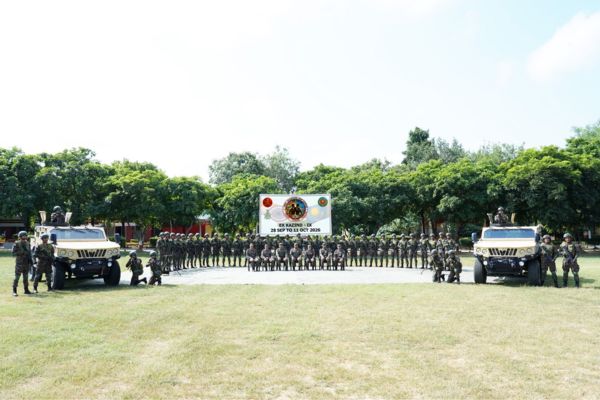
- The 9th edition of Exercise KAZIND, the India–Kazakhstan Joint Military Exercise, is being conducted at Oskemen, Kazakhstan.
- India has deployed a 60-member Armed Forces contingent, drawn mainly from a battalion of the Garhwal Rifles, along with personnel from other arms and services and the Indian Air Force.
- Kazakhstan is fielding a contingent of matching strength, primarily from its Land Forces.
- The exercise aims to improve interoperability and joint capability for counter-terrorism operations in a sub-conventional environment under a United Nations mandate.
Exercise KAZIND
- Type: Bilateral joint military exercise between India and Kazakhstan.
- Current edition: 9th.
- Venue: Oskemen, Kazakhstan.
- Primary focus: Joint counter-terrorism operations in semi-urban and mountainous terrain.
- It facilitates exchange of operational experience, common tactical procedures and coordinated planning between the armed forces of the two countries.
Training Components
The exercise includes:
- Joint responses to terrorist actions.
- Raids, search-and-destroy and cordon-and-search operations.
- Securing helipads and landing sites.
- Special Heliborne Operations.
- Air mobility operations.
- Integrated employment of Unmanned Aerial Systems (UAS) and Counter-UAS systems.
- Establishment of a Joint Command Post and an Intelligence and Surveillance Centre.
- A final validation exercise involving a simulated terrorist threat.
Evolution of KAZIND
- India–Kazakhstan joint military training began in 2016 as Exercise Prabal Dostyk, meaning Robust Friendship.
- After the second edition, the exercise was upgraded to the company level and renamed Exercise KAZIND.
- It has developed into an annual bilateral military engagement aimed at increasing interoperability and sharing best practices in counter-terrorism operations.
- The 8th edition was held at the Surya Foreign Training Node, Auli, Uttarakhand, with 120 Indian personnel participating.
Additional Info
- Kazakhstan
- Region: Central Asia
- Capital: Astana
- It is a member of the Shanghai Cooperation Organisation (SCO).
- India and Kazakhstan cooperate in areas including defence, energy, connectivity and multilateral forums.
- Garhwal Rifles
- An infantry regiment of the Indian Army.
- Personnel from a Garhwal Rifles battalion form the principal Indian Army component in KAZIND-2026.
Sources
Tarang Shakti 2026: IAF Hosts Seven Foreign Air Forces at Jodhpur
What’s the News?
- The Indian Air Force (IAF) has commenced the operational phase of Exercise Tarang Shakti 2026 at Air Force Station Jodhpur, Rajasthan.
- The multilateral air exercise is being conducted under the theme “Power in Partnership”.
- Seven Friendly Foreign Countries (FFCs) — Australia, USA, UAE, France, Germany, Sri Lanka and Bangladesh — are participating, while several other countries are attending as observers.
- It is the second edition of Tarang Shakti, following the inaugural exercise in 2024.
Exercise Tarang Shakti 2026
- Organiser: Indian Air Force
- Venue: Air Force Station Jodhpur, Rajasthan
- Nature: Multilateral air exercise
- Theme: Power in Partnership
- Objectives:
- Enhance interoperability among participating air forces.
- Conduct advanced joint air operations and exchange operational expertise.
- Improve aerospace safety, mission planning and understanding of different operational procedures.
- Strengthen professional interaction among aircrew, planners and support personnel.
Aircraft Participating
The exercise brings together a diverse combination of fighter, transport and aerial-refuelling aircraft, including:
- F-35 Lightning II – fifth-generation stealth fighter.
- Rafale and F-16 fighter aircraft.
- A400M, C-130 and C-130J transport aircraft.
- MRTT and KC-30A aerial-refuelling aircraft.
- Indian platforms include aircraft such as Su-30MKI, Rafale and Tejas.
A notable feature is the operational participation of US F-35 stealth fighters, enabling exposure to fifth-generation air-combat capabilities.
Training Areas
- Large-force air operations involving aircraft with different technological and operational backgrounds.
- Offensive and defensive counter-air operations.
- Beyond Visual Range (BVR) air combat.
- Air-to-air refuelling and tactical airlift operations.
- Joint mission planning and coordinated employment of combat and support aircraft.
- Exchange of operational procedures and combat experience among partner air forces.
Beyond Flying Operations
Tarang Shakti also includes:
- Professional seminars and interaction among participating air forces.
- Visits to India's aerospace and defence industry ecosystem.
- Sekhon Marathon, heritage tours and yoga sessions.
- Engagement with India's indigenous aerospace capabilities and defence manufacturing sector.
Additional Info
- Tarang Shakti 2024
- It was the first-ever multinational air exercise hosted by India.
- It focused on interoperability and operational coordination among Friendly Foreign Countries.
- The exercise also provided a platform to showcase indigenous defence systems, particularly the LCA Tejas.
- Strategic relevance
- Tarang Shakti allows the IAF to train with Western, Russian-origin and indigenous aircraft within the same multinational environment.
- It strengthens defence cooperation and improves familiarity with the capabilities and operating philosophies of partner air forces.
- It also provides international exposure to India's growing indigenous aerospace and defence manufacturing capabilities.
NMDC Commissions ₹5,427 Crore Integrated Iron Ore Project in Chhattisgarh
What’s the News?
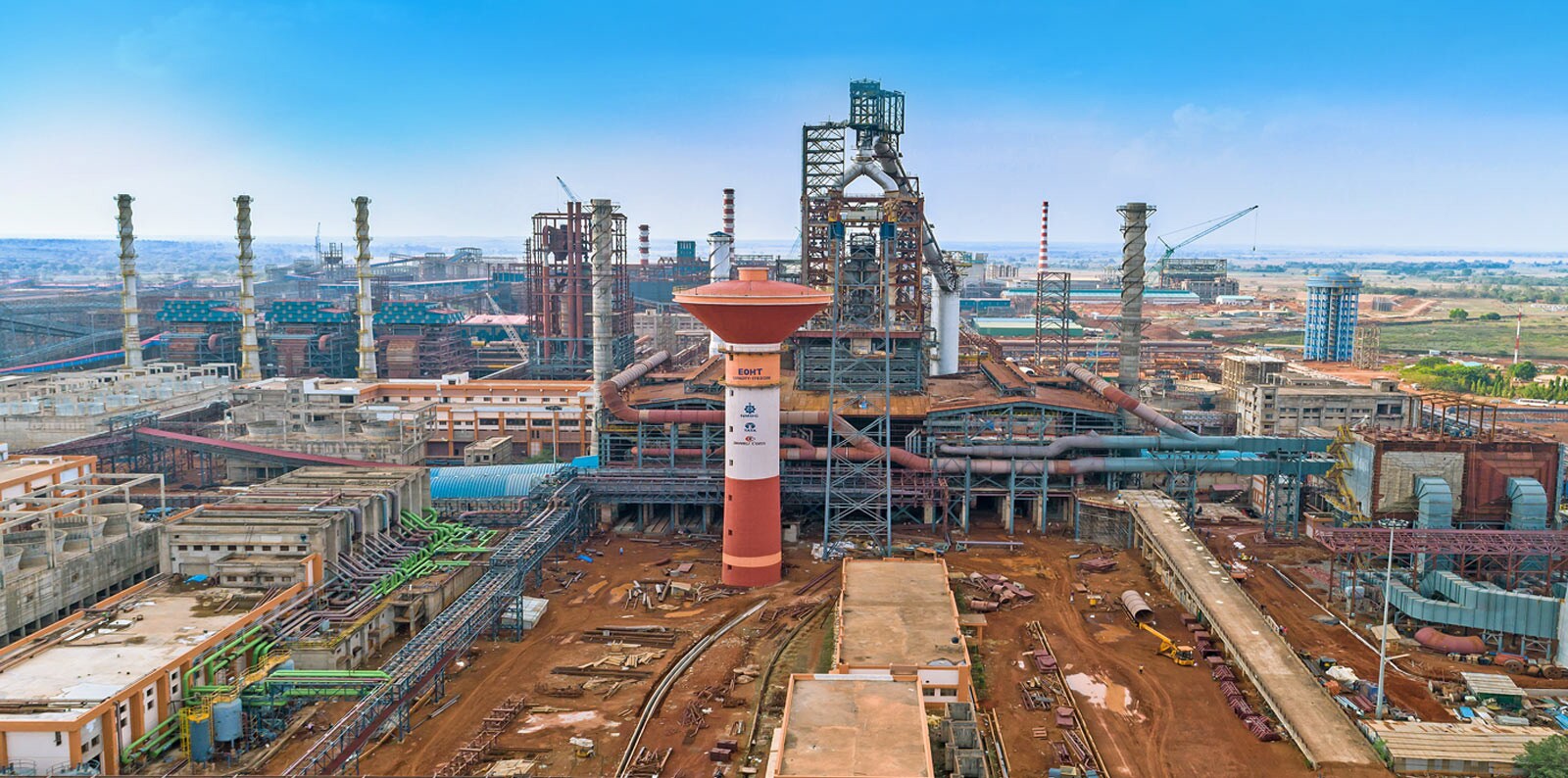
- NMDC Ltd. has commissioned a ₹5,427 crore integrated iron ore processing, slurry pipeline and pellet-making project in the Bastar region of Chhattisgarh.
- The project links NMDC’s Bacheli iron ore operations with Nagarnar, strengthening the value chain from ore processing to pellet production.
- It comprises an iron ore processing plant at Bacheli, a 15 million tonnes per annum (MTPA) slurry pipeline, and a 2 MTPA pellet plant at Nagarnar.
Components
- Iron Ore Processing Plant – Bacheli
- Located in Dantewada district.
- Processes iron ore fines and slimes from NMDC’s Bailadila mines into iron ore concentrate.
- Slurry Pipeline
- Length: 135 km.
- Capacity: 15 MTPA.
- Connects Bacheli with Nagarnar.
- Passes through 61 villages in Bastar and Dantewada districts.
- Provides an alternative to road transport and reduces dependence on rail-based ore evacuation.
- Pellet Plant – Nagarnar
- Capacity: 2 MTPA.
- Converts processed iron ore concentrate into pellets for use in steelmaking.
- Uses Straight Grate Induration Technology for heating and hardening iron ore pellets.
Why is the Project Significant?
- Expands NMDC’s operations beyond mining into beneficiation, slurry transportation and pelletisation.
- Enables better utilisation of iron ore fines and slimes, which can otherwise have relatively limited direct use in conventional steelmaking.
- Produces value-added iron ore pellets, improving resource efficiency.
- The slurry pipeline creates a dedicated bulk-mineral transport route and reduces pressure on road and railway logistics.
- It forms part of NMDC’s long-term strategy to increase its iron ore production capacity to 100 million tonnes.
Iron Ore Beneficiation and Pelletisation
- Beneficiation
- Process of improving the quality of mined ore by separating useful iron-bearing material from impurities.
- Produces a higher-grade iron ore concentrate.
- Iron Ore Fines
- Small-sized particles produced during mining, crushing and screening of iron ore.
- Slimes
- Very fine iron ore particles generally generated during ore washing and beneficiation.
- Pelletisation
- Fine iron ore concentrate is formed into small spherical pellets.
- Pellets provide a relatively uniform feedstock for iron and steel production.
- Induration
- Green pellets are subjected to controlled heating to obtain sufficient mechanical strength for handling and metallurgical use.
Additional Info
- NMDC Ltd.
- A Central Public Sector Enterprise (CPSE) under the Ministry of Steel.
- Established in 1958.
- It is India's largest iron ore producer.
- Its major iron ore operations include the Bailadila mines in Chhattisgarh and mines in Karnataka.
- Bailadila Iron Ore Region
- Located mainly in Dantewada district, Chhattisgarh.
- Known for significant deposits of high-grade iron ore.
- Bacheli is one of NMDC’s major mining complexes in the Bailadila region.
- Nagarnar
- Located in Bastar district, Chhattisgarh.
- It is an important centre for iron and steel processing, including the 3 MTPA Nagarnar integrated steel plant.
Sources
India’s First LNG-Powered Train Flagged Off from Sabarmati
What’s the News?
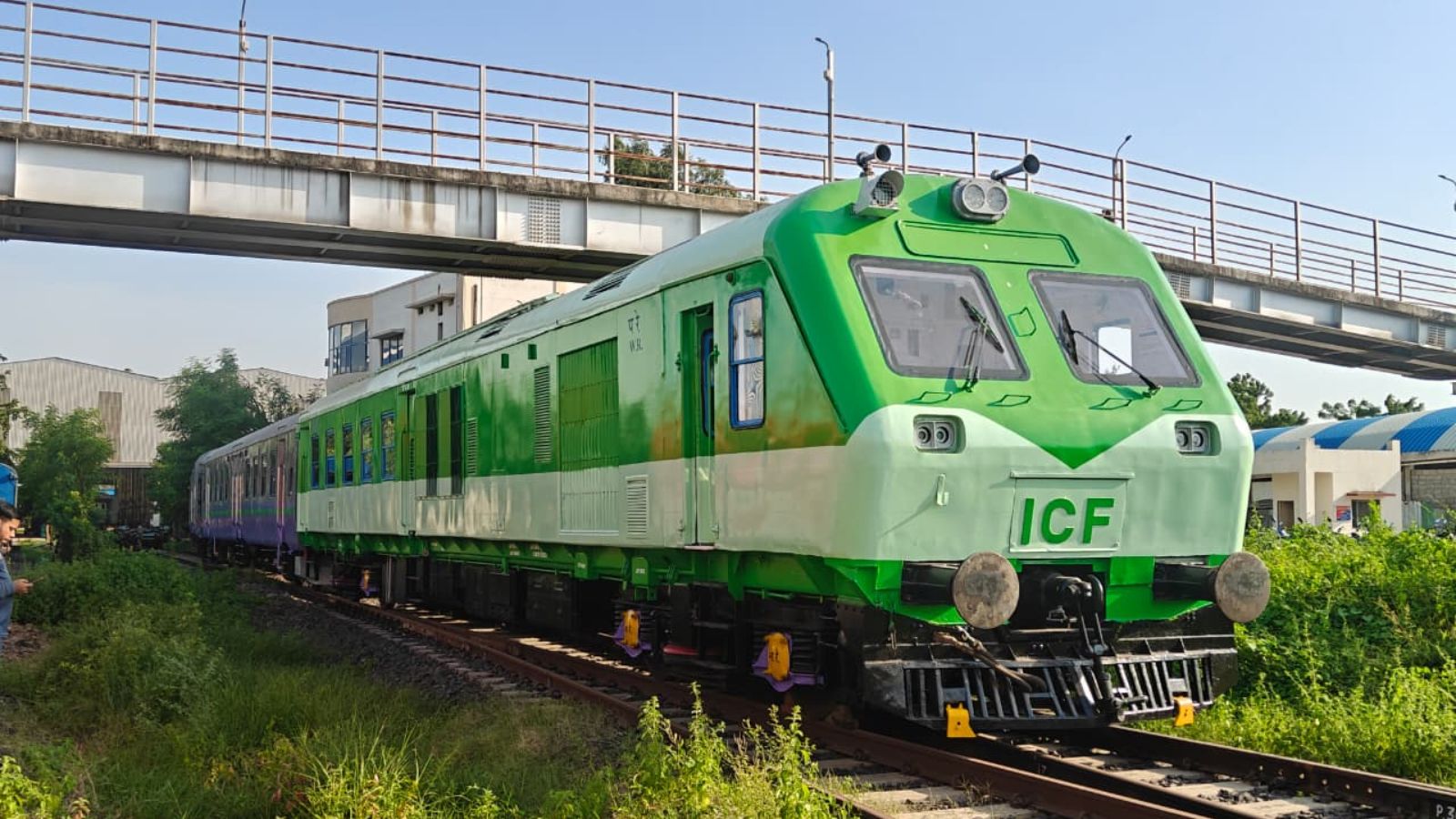
- Indian Railways has introduced India’s first LNG-diesel dual-fuel train, flagged off by Union Home and Cooperation Minister Amit Shah from Sabarmati Railway Station, Ahmedabad, Gujarat.
- The train is a Diesel Electric Multiple Unit (DEMU) whose existing diesel system has been modified to use Liquefied Natural Gas (LNG) along with diesel.
- The initiative is aimed at reducing diesel consumption, fuel costs and emissions while expanding the use of alternative fuels in railway operations.
LNG-Diesel Dual-Fuel Train
- Two Driving Power Cars (DPCs) have been converted at the Sabarmati Integrated Coaching Depot.
- Power: 1,400 HP per DPC.
- LNG can substitute approximately 40% of diesel consumption in the modified system.
- The converted DPCs completed more than 2,000 km of field trials before introduction.
- The dual-fuel configuration allows continued operation using diesel when LNG is unavailable, while maintaining the required engine power and operational reliability.
Fuel Capacity and Savings
- Each DPC carries an LNG tank of about 2,200 litres.
- It can store roughly 950–1,000 kg of usable LNG.
- One DPC can operate for about 444 km on a full LNG load, according to the project details reported by Indian Railways.
- Estimated annual fuel-cost saving:
- ₹11.9 lakh per DPC
- ₹23.9 lakh for an 8-coach rake
- LNG substitution is expected to reduce emissions of carbon dioxide (CO₂), nitrogen oxides (NOx) and particulate matter (PM) compared with diesel-only operation.
Route and Configuration
- The inaugural service operated between Sabarmati and Mahesana Junction in Gujarat.
- It is an 8-coach, non-AC chair-car DEMU.
- Its permanent regular route had not been finalised at the time of launch.
What is LNG?
- LNG – Liquefied Natural Gas is natural gas, composed primarily of methane, cooled to around −162°C so that it becomes liquid.
- Liquefaction reduces its volume substantially, making natural gas easier to store and transport.
- LNG remains a fossil fuel, but its combustion generally produces lower particulate and certain pollutant emissions than conventional diesel.
- In this train, LNG does not completely replace diesel; it is used as part of a dual-fuel internal-combustion system.
LNG Train vs Hydrogen Train
- LNG Train
- Uses an internal-combustion engine.
- Runs on a combination of LNG and diesel.
- LNG substitutes around 40% of diesel in the present configuration.
- Hydrogen Train
- Uses hydrogen in a fuel-cell system to generate electricity through a reaction between hydrogen and oxygen.
- Its direct fuel-cell by-product is primarily water vapour.
- Indian Railways introduced its first hydrogen-powered train before the LNG train.
Indian Railways and Green Transition
- The LNG initiative forms part of Indian Railways’ broader shift towards electrification and alternative fuels.
- Indian Railways has set a target of achieving net-zero carbon emissions by 2030.
- LNG and hydrogen technologies complement the larger programme of railway electrification by exploring cleaner propulsion options for operations where conventional diesel traction may otherwise remain necessary.
Additional Info
- DEMU
- Stands for Diesel Electric Multiple Unit.
- Power equipment is incorporated within the train formation rather than relying solely on a separate locomotive.
- Driving Power Car (DPC)
- A powered coach containing the propulsion equipment and driving cab in a multiple-unit train.
- The LNG project modifies the fuel system of existing DPCs rather than creating an entirely new LNG-only propulsion platform.
- Related Railway Initiatives at Sabarmati
- A WAG-12 electric locomotive maintenance shed was also inaugurated.
- Railway works associated with the programme included the indigenous Kavach Automatic Train Protection system, automatic signalling and railway-line capacity expansion.
Sources
Government Launches Digital Livestock Insurance Portal
What’s the News?
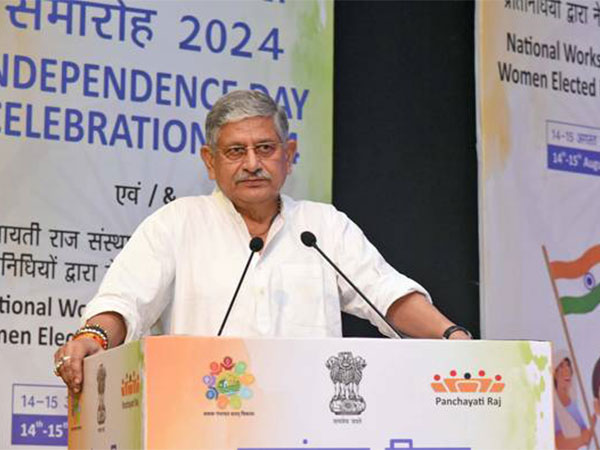
- The Department of Animal Husbandry & Dairying (DAHD) has launched a Livestock Insurance Portal as a unified digital platform for livestock insurance across India.
- The portal operates under the Livestock Insurance activity of the National Livestock Mission (NLM).
- It was launched by Union Minister for Fisheries, Animal Husbandry & Dairying Rajiv Ranjan Singh (Lalan Singh) in New Delhi.
- It digitises the complete insurance cycle, including policy issuance, premium management, beneficiary verification, claim processing and real-time monitoring.
Livestock Insurance Portal
- The portal brings together:
- Livestock farmers
- State Governments
- Insurance companies
- Implementing agencies
- It provides a single technology-enabled interface instead of fragmented insurance processes.
- Major functions include:
- Online insurance enrolment.
- Policy issuance and management.
- Premium management.
- Beneficiary verification.
- Processing and tracking of claims.
- Real-time monitoring and reporting.
- Data-based monitoring of scheme implementation.
- It is available in 11 regional languages in addition to Hindi and English, improving accessibility for livestock farmers.
Livestock Insurance under National Livestock Mission
- Livestock Insurance is implemented under the National Livestock Mission, a Centrally Sponsored Scheme of the Ministry of Fisheries, Animal Husbandry & Dairying.
- Its objective is to protect livestock owners against financial losses arising from the death of insured animals and promote wider adoption of livestock insurance.
- Eligible livestock includes:
- Indigenous and crossbred milch animals.
- Cattle and buffaloes.
- Sheep and goats.
- Pigs and rabbits.
- Horses, donkeys, mules, camels and ponies.
- Yak and Mithun, among other livestock.
Premium Subsidy and Coverage
- The beneficiary's contribution has been reduced to 15% of the insurance premium, compared with the earlier range of 20–50%.
- The remaining 85% is supported by the Central and State Governments:
- 60:40 – Centre and State for most states.
- 90:10 – Centre and State for Himalayan and North-Eastern states.
- 100% Central support – Union Territories.
- Subsidised insurance is available for up to 10 cattle units per beneficiary household for most eligible livestock.
- For pigs and rabbits, the limit is 5 cattle units.
- 1 cattle unit = 1 large animal or 10 small animals for the applicable categories.
Why is the Portal Significant?
- Enables faster and more transparent claim settlement.
- Allows real-time tracking of insurance policies and claims.
- Reduces administrative complexity for farmers and insurers.
- Improves coordination between the Centre, States, insurers and implementing agencies.
- Creates a centralised database that can support data-driven livestock policy and monitoring.
- More than 30 lakh animals had already been insured during the year when the portal was launched.
Additional Info
- RFID-based identification
- Radio Frequency Identification (RFID) has been approved as an additional method for identifying insured animals.
- RFID can provide unique electronic identification, improving traceability and verification during claim settlement.
- National Livestock Mission
- Implemented by the Department of Animal Husbandry & Dairying under the Ministry of Fisheries, Animal Husbandry & Dairying.
- Focus areas include entrepreneurship development, breed improvement, feed and fodder development and livestock insurance.
- The realigned NLM has an approved outlay of ₹2,300 crore.
Sources
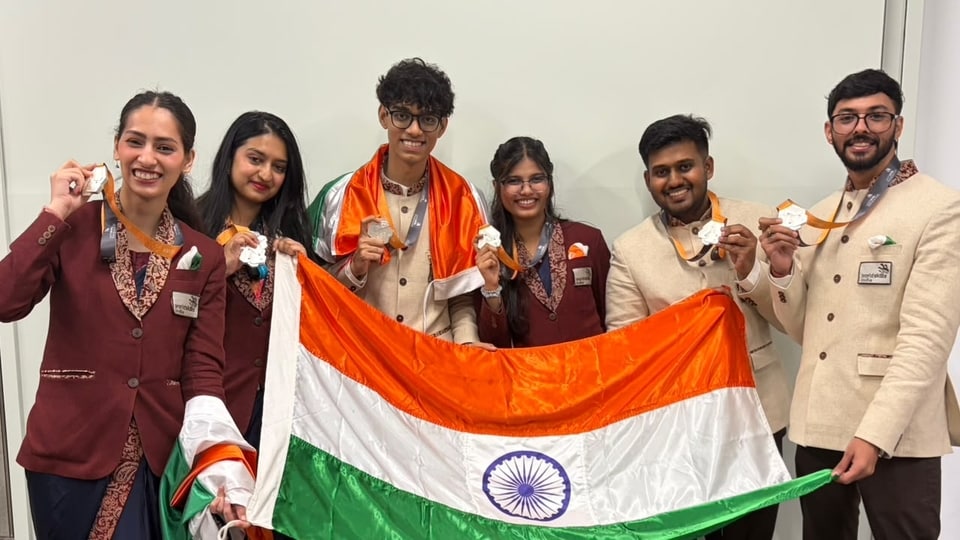
India Ranks 10th at WorldSkills Shanghai 2026
What’s the News?
- India secured 10th position at the 48th WorldSkills Competition – Shanghai 2026, its first finish within the global top 10.
- Team India won 6 Silver Medals and 20 Medallions for Excellence.
- India improved from 13th position at WorldSkills Lyon 2024, where it had won 4 Bronze Medals and 12 Medallions for Excellence.
- India fielded its largest-ever contingent of 70 competitors, participating across 63 skill categories.
India’s Silver Medal Winners
| Competitor | Skill |
|---|---|
| Smriti Nambiar | Bakery |
| Mohammed Salam | Dental Prosthetics |
| Kovid Ajay Gangrade | Digital Interactive Media Design |
| Parth Vohra | Industrial Design Technology |
| Mehrunissa Begum | Logistics and Freight Forwarding |
| Saniya Joshi | Retail Sales |
- Smriti Nambiar was also recognised as Best of Nation for India.
- Three Silver Medals came in categories in which India participated for the first time — Dental Prosthetics, Digital Interactive Media Design and Retail Sales.
WorldSkills Shanghai 2026
- Edition: 48th WorldSkills Competition
- Host city: Shanghai, China
- Participants: More than 1,400 young competitors.
- Participation: Around 70 countries and regions.
- The competition covered areas such as:
- Advanced manufacturing and engineering
- Information and communication technology
- Creative arts and fashion
- Transportation and logistics
- Construction and building technology
- Social and personal services
- India competed in 11 new and emerging skill categories, including areas such as Unmanned Aerial Systems and Intelligent Security Technology.
What is the WorldSkills Competition?
- The WorldSkills Competition is a global competition that benchmarks excellence in Technical and Vocational Education and Training (TVET) and occupational skills.
- WorldSkills traces its origins to 1950 and conducts its international competition on a biennial basis.
- Competitors demonstrate practical abilities against internationally defined occupational standards.
- WorldSkills currently has 90 member countries and regions, collectively covering around two-thirds of the global population.
Medallion for Excellence
- A Medallion for Excellence is awarded to a competitor who:
- Scores 700 points or more on the WorldSkills scale, but
- Does not receive a Gold, Silver or Bronze Medal.
- It therefore recognises performance that meets the competition's international standard of excellence even when the competitor does not finish in the medal positions.
India and WorldSkills
- India joined WorldSkills International in 2007.
- India's official WorldSkills member organisation is the National Skill Development Corporation (NSDC).
- Participation is linked with India's broader skills ecosystem under the Ministry of Skill Development and Entrepreneurship (MSDE).
- IndiaSkills, organised through the Indian skilling ecosystem, identifies and prepares competitors for international competitions such as WorldSkills.
Additional Info
- National Skill Development Corporation (NSDC)
- Established in 2008.
- Functions under the Ministry of Skill Development and Entrepreneurship.
- Operates through a Public-Private Partnership (PPP) model.
- Government holds 49%, while the private sector holds 51% of its share capital.
- It is a strategic implementation and knowledge partner of the Skill India Mission.
- TVET
- Stands for Technical and Vocational Education and Training.
- Focuses on occupational knowledge, practical competencies and industry-relevant skills required for employment and entrepreneurship.
Sources
Lalit Kala Akademi Announces 20 Awards at 65th National Exhibition of Art
What’s the News?
- Lalit Kala Akademi, India’s National Academy of Art, has announced 20 Lalit Kala Akademi Awards at the 65th National Exhibition of Art (NEA).
- The Akademi received 6,175 artworks from 2,495 artists representing 27 States and Union Territories.
- A First-Tier Jury selected 270 artworks for exhibition, while a Second-Tier Jury chose 20 artworks by 20 artists for the awards.
- The selected works cover painting, sculpture, drawing, printmaking and mixed media, reflecting a wide range of contemporary visual-art practices.
65th National Exhibition of Art
- Organiser: Lalit Kala Akademi
- Venue: Lalit Kala Akademi Art Gallery, Rabindra Bhawan, New Delhi.
- Artworks received: 6,175
- Participating artists: 2,495
- States/UTs represented: 27
- Works selected for exhibition: 270
- Award-winning works/artists: 20
- The exhibition also facilitates the display and sale of artworks, giving participating artists greater visibility and direct economic opportunities.
Awardees
| Artist | Awarded Artwork | Category |
|---|---|---|
| Chandra Shekhar Sain | My Entire World – I | Sculpture |
| Gopal Chandra Naskar | The Tune of The Srimad Bhagavad Gita | Painting |
| Kishor Kumar Narkhadiwala | Paryavaran | Painting |
| Mrinal Dey | Hopeless Settlement | Painting |
| Nidhi Chopra | Tangible Dreams | Sculpture |
| Nimai Singh Sarungbam | Mudra – I | Sculpture |
| Pankaj Kumar Sharma | Haloed Traveler – II | Drawing |
| Pooja Rajpoot | Prakriti Shoshan | Sculpture |
| Praveen Kumar | Where The Walls Remember | Painting |
| Pritam Madhukar Deuskar | Of Time and The City | Printmaking |
| Rajendra Prasad | Sujata With Buddha | Painting |
| Ramesh Vithal Thorat | Untitled – II | Painting |
| Raviram Ramakrishnan | Fisherwoman | Sculpture |
| Sanjay Kumar | When Memories Come Back – 7 | Painting |
| Sanjay Kumar Sahani | Youth | Painting |
| Sanjib Kumar Gogoi | Aakar Nirankar – II | Painting |
| Santa Deb | Attraction of Simplicity | Sculpture |
| Siddharth Shahjirao Shingade | Trees | Painting |
| Usharanjan Mandal | Wheel of A Crowded City | Any Other Medium |
| Vijendra Sharma | Life 2025 | Painting |
National Exhibition of Art
- It is the principal annual national exhibition organised by Lalit Kala Akademi for contemporary visual arts.
- The National Exhibition of Art began in 1955.
- In its inaugural edition, 280 works from 1,200 entries were selected for display and 10 awards of ₹1,000 each were given.
- Over the decades, the exhibition has been hosted in different Indian art centres, including Kolkata, Mumbai, Chennai, Jaipur, Amritsar, Lucknow, Guwahati, Patna and Hyderabad.
Additional Info
- Lalit Kala Akademi
- Also known as the National Academy of Art.
- Established by the Government of India in 1954.
- It was inaugurated by the then Union Education Minister Maulana Abul Kalam Azad.
- Registered under the Societies Registration Act, 1860 in 1957.
- It is an autonomous body fully funded by the Ministry of Culture.
- It is the Government of India’s apex cultural body concerned with visual arts.
- Major Functions
- Promotes modern and contemporary Indian visual arts.
- Organises national and international exhibitions, art camps and workshops.
- Supports artists through scholarships, grants and professional platforms.
- Maintains art collections, archives and publications related to Indian visual arts.
India Wins Silver at 46th Chess Olympiad in Samarkand
What’s the News?
- India won the Silver Medal in the Open section of the 46th FIDE Chess Olympiad held in Samarkand, Uzbekistan.
- Host Uzbekistan won Gold, while Germany secured Bronze.
- India also won Bronze in the Women’s section, where China won Gold and Kazakhstan Silver.
- With strong combined performances in both sections, India retained the Nona Gaprindashvili Cup for the third consecutive Chess Olympiad.
India’s Performance
- Open Section
- India: Silver – 18 match points
- Uzbekistan: Gold – 20 match points
- Germany: Bronze – 18 match points
- India and Germany finished level on match points, with India securing second place through the applicable tie-break criteria.
- India drew 2–2 with Hungary in the final round.
- Arjun Erigaisi defeated Peter Leko, while World Champion D Gukesh lost to Gleb Dudin.
- Women’s Section
- India: Bronze – 17 match points
- China: Gold – 20 match points
- Kazakhstan: Silver – 18 match points
- India secured Bronze following a 2–2 draw with Georgia in the final round.
Indian Teams
- Open Team
- Arjun Erigaisi
- R Praggnanandhaa
- Nihal Sarin
- D Gukesh
- Vidit Gujrathi
- Women’s Team
- Koneru Humpy
- Divya Deshmukh
- R Vaishali
- Vantika Agrawal
- Savitha Shri B
India entered the Open section as the defending champion and the Women’s section as both the defending champion and top seed.
46th Chess Olympiad
- Host: Samarkand, Uzbekistan
- Organiser: International Chess Federation (FIDE)
- Format: 11-round Swiss system
- Participation: Record 400 teams across Open and Women’s sections.
- More than 1,500 players participated.
- Each country can register five players; four play in each match and one acts as reserve.
- A match win gives 2 match points, a draw 1, and a loss 0.
- The Open champion receives the historic Hamilton-Russell Cup.
Nona Gaprindashvili Cup
- Awarded to the country with the best combined performance in the Open and Women’s sections of the Chess Olympiad.
- Introduced by FIDE in 1997.
- Named after Nona Gaprindashvili of Georgia, the first woman to be awarded the Grandmaster (GM) title.
- India has now won the trophy in three consecutive editions:
- Chennai 2022
- Budapest 2024
- Samarkand 2026
Additional Info
- Individual Indian Medals
- D Gukesh: Silver medal for his performance on Board 4 in the Open section.
- Savitha Shri B: Gold medal on the reserve/fifth board in the Women’s section.
- Chess Olympiad
- The first official Chess Olympiad was held in London in 1927.
- It is conducted biennially by FIDE.
- It consists of separate Open and Women’s team competitions.
- The next Chess Olympiad will be hosted by the United Arab Emirates in 2028.
Sources
Bhagat Singh’s 119th Birth Anniversary Commemorated
What’s the News?
- The 119th birth anniversary of Shaheed Bhagat Singh was commemorated on 28 September 2026, remembering his role in India’s revolutionary freedom movement.
- Prime Minister Narendra Modi paid tribute to Bhagat Singh, highlighting his courage, sacrifice and influence on India’s youth.
- Bhagat Singh is remembered for his association with the Hindustan Socialist Republican Association (HSRA), revolutionary activities against British rule, political writings and advocacy of socialism and social equality.
Bhagat Singh
- Born: 1907
- Birthplace: Banga village, Lyallpur district, Punjab Province, British India, now in Pakistan.
- Parents: Kishan Singh and Vidyavati.
- Studied at National College, Lahore, founded by Lala Lajpat Rai.
- His political thought increasingly emphasised anti-imperialism, socialism, secularism, equality and opposition to economic exploitation.
Revolutionary Organisations
- Naujawan Bharat Sabha
- Established in Lahore in 1926 by Bhagat Singh and his revolutionary associates.
- Sought to mobilise students, workers and peasants against British colonial rule.
- Promoted nationalist, revolutionary and egalitarian ideas.
- Hindustan Socialist Republican Association (HSRA)
- Evolved from the Hindustan Republican Association (HRA).
- Bhagat Singh was among the founder-members of its reorganised socialist form in 1928.
- Other prominent revolutionaries included Chandrashekhar Azad, Sukhdev Thapar and Shivaram Rajguru.
Major Revolutionary Activities
- Saunders Killing
- Lala Lajpat Rai was injured during a police lathi charge while protesting against the Simon Commission and later died.
- Revolutionaries planned to target police officer James A. Scott in retaliation.
- In a case of mistaken identity, John P. Saunders, an Assistant Superintendent of Police, was killed by Bhagat Singh and his associates in 1928.
- Central Legislative Assembly Bombing
- Bhagat Singh and Batukeshwar Dutt threw bombs in the Central Legislative Assembly, Delhi, in 1929.
- The action protested against the Public Safety Bill and Trade Disputes Bill.
- The bombs were intended primarily as a political demonstration rather than to cause mass casualties.
- Both remained at the site, raised revolutionary slogans, distributed leaflets and surrendered to use the subsequent trial to publicise their political ideas.
Prison Hunger Strike
- Bhagat Singh and other revolutionaries undertook a prolonged hunger strike in prison against discriminatory and harsh treatment of Indian political prisoners.
- Their demands included improved prison conditions and recognition of political prisoners as a distinct category.
- Fellow revolutionary Jatindra Nath Das died after a 63-day hunger strike, drawing nationwide attention to prison conditions under colonial rule.
Lahore Conspiracy Case
- Bhagat Singh was subsequently tried in the Lahore Conspiracy Case, principally in connection with the killing of Saunders and associated revolutionary activities.
- Bhagat Singh, Sukhdev Thapar and Shivaram Rajguru were executed at Lahore Central Jail on 23 March 1931.
- Bhagat Singh was 23 years old at the time of his execution.
Political Thought and Writings
- Bhagat Singh was also a prolific reader and political writer whose ideas developed beyond armed resistance to include questions of socialism, class exploitation, rationalism and social transformation.
- His best-known essay, “Why I Am an Atheist”, was written while he was imprisoned in 1930.
- He also wrote for publications such as Kirti, Pratap and Vir-Arjun, sometimes using pseudonyms.
Additional Info
- Shaheed Diwas
- 23 March is observed as Shaheed Diwas in remembrance of the martyrdom of Bhagat Singh, Rajguru and Sukhdev.
- Inquilab Zindabad
- Meaning “Long Live the Revolution”, the slogan became closely associated with Bhagat Singh and the revolutionary movement.
- Bhagat Singh’s prison writings show that his conception of revolution extended beyond political independence to broader social and economic transformation.
September 2026
30 September 202629 September 202628 September 202626 September 202625 September 202624 September 202623 September 202622 September 202621 September 202619 September 202618 September 202617 September 202616 September 202615 September 202612 September 202611 September 202610 September 202609 September 202608 September 202607 September 202605 September 202604 September 202603 September 202602 September 202601 September 2026
Archive
November 2026
- 28 November 2026
- 27 November 2026
- 26 November 2026
- 25 November 2026
- 24 November 2026
- 23 November 2026
- 21 November 2026
- 20 November 2026
- 19 November 2026
- 18 November 2026
- 17 November 2026
- 16 November 2026
- 14 November 2026
- 13 November 2026
- 12 November 2026
- 11 November 2026
- 10 November 2026
- 09 November 2026
- 06 November 2026
- 05 November 2026
- 04 November 2026
- 03 November 2026
- 02 November 2026
October 2026
- 31 October 2026
- 30 October 2026
- 29 October 2026
- 28 October 2026
- 27 October 2026
- 26 October 2026
- 24 October 2026
- 23 October 2026
- 22 October 2026
- 21 October 2026
- 20 October 2026
- 19 October 2026
- 17 October 2026
- 16 October 2026
- 15 October 2026
- 14 October 2026
- 13 October 2026
- 12 October 2026
- 10 October 2026
- 09 October 2026
- 08 October 2026
- 07 October 2026
- 06 October 2026
- 05 October 2026
- 03 October 2026
- 02 October 2026
- 01 October 2026
September 2026
- 30 September 2026
- 29 September 2026
- 28 September 2026
- 26 September 2026
- 25 September 2026
- 24 September 2026
- 23 September 2026
- 22 September 2026
- 21 September 2026
- 19 September 2026
- 18 September 2026
- 17 September 2026
- 16 September 2026
- 15 September 2026
- 12 September 2026
- 11 September 2026
- 10 September 2026
- 09 September 2026
- 08 September 2026
- 07 September 2026
- 05 September 2026
- 04 September 2026
- 03 September 2026
- 02 September 2026
- 01 September 2026
August 2026
- 31 August 2026
- 29 August 2026
- 27 August 2026
- 26 August 2026
- 25 August 2026
- 24 August 2026
- 22 August 2026
- 21 August 2026
- 20 August 2026
- 19 August 2026
- 18 August 2026
- 17 August 2026
- 14 August 2026
- 13 August 2026
- 12 August 2026
- 11 August 2026
- 10 August 2026
- 08 August 2026
- 07 August 2026
- 06 August 2026
- 05 August 2026
- 04 August 2026
- 03 August 2026
- 01 August 2026
July 2026
- 31 July 2026
- 30 July 2026
- 29 July 2026
- 28 July 2026
- 27 July 2026
- 25 July 2026
- 23 July 2026
- 22 July 2026
- 21 July 2026
- 20 July 2026
- 18 July 2026
- 17 July 2026
- 15 July 2026
- 14 July 2026
- 13 July 2026
- 11 July 2026
- 10 July 2026
- 09 July 2026
- 08 July 2026
- 07 July 2026
- 06 July 2026
- 04 July 2026
- 03 July 2026
- 02 July 2026
- 01 July 2026
June 2026
May 2026
April 2026
March 2026
- 31 March 2026
- 30 March 2026
- 28 March 2026
- 27 March 2026
- 26 March 2026
- 25 March 2026
- 24 March 2026
- 23 March 2026
- 21 March 2026
- 20 March 2026
- 19 March 2026
- 18 March 2026
- 17 March 2026
- 16 March 2026
- 14 March 2026
- 13 March 2026
- 12 March 2026
- 11 March 2026
- 10 March 2026
- 09 March 2026
- 07 March 2026
- 06 March 2026
- 05 March 2026
- 03 March 2026
- 02 March 2026
February 2026
- 28 February 2026
- 27 February 2026
- 26 February 2026
- 25 February 2026
- 24 February 2026
- 23 February 2026
- 21 February 2026
- 20 February 2026
- 19 February 2026
- 18 February 2026
- 17 February 2026
- 16 February 2026
- 13 February 2026
- 12 February 2026
- 11 February 2026
- 10 February 2026
- 09 February 2026
- 07 February 2026
- 06 February 2026
- 05 February 2026
- 04 February 2026
- 03 February 2026
- 02 February 2026
January 2026
- 31 January 2026
- 30 January 2026
- 29 January 2026
- 28 January 2026
- 27 January 2026
- 26 January 2026
- 24 January 2026
- 23 January 2026
- 22 January 2026
- 21 January 2026
- 20 January 2026
- 19 January 2026
- 16 January 2026
- 15 January 2026
- 14 January 2026
- 13 January 2026
- 12 January 2026
- 10 January 2026
- 09 January 2026
- 08 January 2026
- 07 January 2026
- 06 January 2026
- 05 January 2026
- 03 January 2026
- 02 January 2026
- 01 January 2026
December 2025
- 31 December 2025
- 30 December 2025
- 29 December 2025
- 27 December 2025
- 26 December 2025
- 24 December 2025
- 23 December 2025
- 22 December 2025
- 20 December 2025
- 19 December 2025
- 18 December 2025
- 17 December 2025
- 16 December 2025
- 15 December 2025
- 13 December 2025
- 12 December 2025
- 11 December 2025
- 10 December 2025
- 09 December 2025
- 08 December 2025
- 05 December 2025
- 04 December 2025
- 03 December 2025
- 02 December 2025
November 2025
- 29 November 2025
- 28 November 2025
- 27 November 2025
- 26 November 2025
- 25 November 2025
- 24 November 2025
- 22 November 2025
- 21 November 2025
- 20 November 2025
- 19 November 2025
- 18 November 2025
- 17 November 2025
- 15 November 2025
- 14 November 2025
- 13 November 2025
- 12 November 2025
- 11 November 2025
- 10 November 2025
- 08 November 2025
- 07 November 2025
- 06 November 2025
- 05 November 2025
- 04 November 2025
- 03 November 2025
- 01 November 2025
October 2025
- 31 October 2025
- 30 October 2025
- 29 October 2025
- 28 October 2025
- 27 October 2025
- 25 October 2025
- 24 October 2025
- 23 October 2025
- 22 October 2025
- 21 October 2025
- 20 October 2025
- 18 October 2025
- 17 October 2025
- 16 October 2025
- 15 October 2025
- 14 October 2025
- 13 October 2025
- 11 October 2025
- 10 October 2025
- 09 October 2025
- 08 October 2025
- 07 October 2025
- 06 October 2025
- 04 October 2025
- 03 October 2025
- 02 October 2025
- 01 October 2025
September 2025
- 30 September 2025
- 29 September 2025
- 27 September 2025
- 26 September 2025
- 25 September 2025
- 24 September 2025
- 23 September 2025
- 22 September 2025
- 20 September 2025
- 19 September 2025
- 18 September 2025
- 17 September 2025
- 16 September 2025
- 15 September 2025
- 13 September 2025
- 12 September 2025
- 11 September 2025
- 10 September 2025
- 09 September 2025
- 08 September 2025
- 06 September 2025
- 05 September 2025
- 04 September 2025
- 03 September 2025
- 02 September 2025
- 01 September 2025
August 2025
- 30 August 2025
- 29 August 2025
- 28 August 2025
- 27 August 2025
- 26 August 2025
- 25 August 2025
- 23 August 2025
- 22 August 2025
- 21 August 2025
- 20 August 2025
- 19 August 2025
- 18 August 2025
- 16 August 2025
- 14 August 2025
- 13 August 2025
- 12 August 2025
- 11 August 2025
- 08 August 2025
- 07 August 2025
- 06 August 2025
- 05 August 2025
- 04 August 2025
- 02 August 2025
- 01 August 2025
July 2025
- 31 July 2025
- 30 July 2025
- 29 July 2025
- 28 July 2025
- 26 July 2025
- 25 July 2025
- 24 July 2025
- 23 July 2025
- 22 July 2025
- 21 July 2025
- 19 July 2025
- 18 July 2025
- 17 July 2025
- 16 July 2025
- 15 July 2025
- 12 July 2025
- 11 July 2025
- 10 July 2025
- 09 July 2025
- 07 July 2025
- 05 July 2025
- 04 July 2025
- 03 July 2025
- 02 July 2025
- 01 July 2025
June 2025
- 30 June 2025
- 28 June 2025
- 27 June 2025
- 26 June 2025
- 25 June 2025
- 24 June 2025
- 23 June 2025
- 21 June 2025
- 20 June 2025
- 19 June 2025
- 18 June 2025
- 17 June 2025
- 16 June 2025
- 14 June 2025
- 13 June 2025
- 12 June 2025
- 11 June 2025
- 10 June 2025
- 09 June 2025
- 07 June 2025
- 06 June 2025
- 05 June 2025
- 04 June 2025
- 03 June 2025
- 02 June 2025
May 2025
April 2025
- 30 April 2025
- 29 April 2025
- 28 April 2025
- 26 April 2025
- 25 April 2025
- 24 April 2025
- 23 April 2025
- 22 April 2025
- 21 April 2025
- 19 April 2025
- 18 April 2025
- 17 April 2025
- 16 April 2025
- 15 April 2025
- 14 April 2025
- 12 April 2025
- 11 April 2025
- 10 April 2025
- 09 April 2025
- 08 April 2025
- 07 April 2025
- 05 April 2025
- 04 April 2025
- 03 April 2025
- 02 April 2025
- 01 April 2025
March 2025
- 31 March 2025
- 29 March 2025
- 28 March 2025
- 27 March 2025
- 26 March 2025
- 25 March 2025
- 24 March 2025
- 22 March 2025
- 21 March 2025
- 20 March 2025
- 19 March 2025
- 18 March 2025
- 17 March 2025
- 15 March 2025
- 13 March 2025
- 12 March 2025
- 11 March 2025
- 10 March 2025
- 08 March 2025
- 07 March 2025
- 06 March 2025
- 05 March 2025
- 04 March 2025
- 03 March 2025
- 01 March 2025
February 2025
- 28 February 2025
- 27 February 2025
- 26 February 2025
- 25 February 2025
- 24 February 2025
- 22 February 2025
- 21 February 2025
- 20 February 2025
- 19 February 2025
- 18 February 2025
- 17 February 2025
- 15 February 2025
- 14 February 2025
- 13 February 2025
- 12 February 2025
- 11 February 2025
- 10 February 2025
- 08 February 2025
- 07 February 2025
- 06 February 2025
- 05 February 2025
- 04 February 2025
- 03 February 2025
- 01 February 2025
January 2025
- 31 January 2025
- 30 January 2025
- 29 January 2025
- 28 January 2025
- 27 January 2025
- 25 January 2025
- 24 January 2025
- 23 January 2025
- 22 January 2025
- 21 January 2025
- 20 January 2025
- 18 January 2025
- 17 January 2025
- 16 January 2025
- 15 January 2025
- 14 January 2025
- 13 January 2025
- 11 January 2025
- 10 January 2025
- 09 January 2025
- 08 January 2025
- 07 January 2025
- 06 January 2025
- 04 January 2025
- 03 January 2025
- 02 January 2025
- 01 January 2025