
Current Affairs
Stay updated with the latest national and international events.
29 September 2026
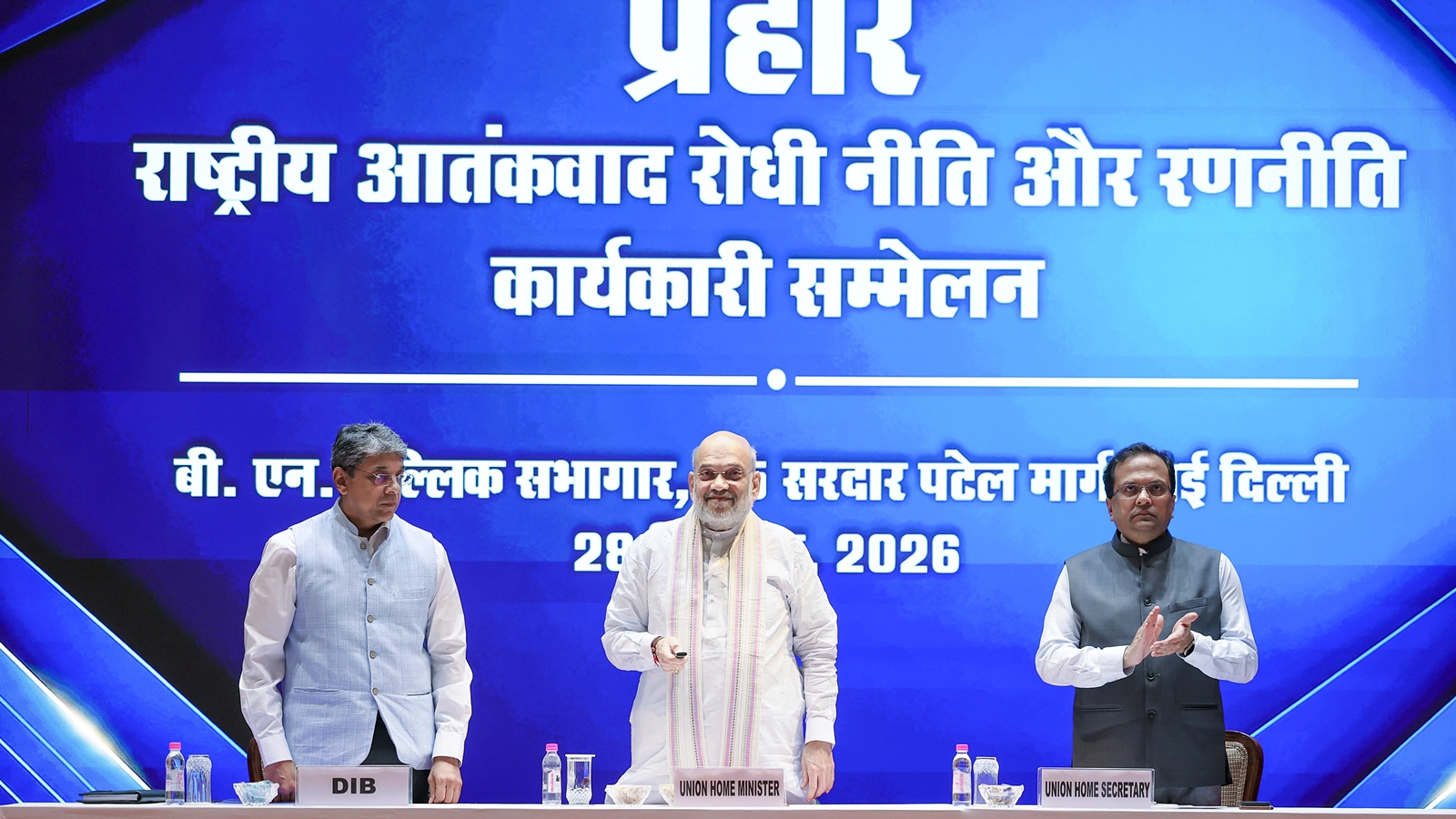
PRAHAAR: India’s National Counter-Terrorism Policy and Strategy
What’s the News?
- Union Home Minister Amit Shah inaugurated a national conference on “PRAHAAR – CT Policy and Strategy” in New Delhi, focusing on institutionalising India’s counter-terrorism framework.
- PRAHAAR is India’s first comprehensive National Counter-Terrorism Policy and Strategy, designed around coordinated whole-of-government and whole-of-society approaches.
- The government has proposed developing a strong institutional mechanism under PRAHAAR for the next 10 years, with implementation extending to the police-station (thana) level.
- A new Extradition Portal was also launched to improve coordination for bringing fugitives located abroad back to India.
What is PRAHAAR?
PRAHAAR provides a unified national framework for preventing, responding to and recovering from terrorism and radicalisation. It emphasises proactive intelligence, inter-agency coordination, institutional capacity and community participation.
Its name corresponds to its seven pillars:
- P – Prevention: Prevent terrorist attacks and protect Indian citizens and interests.
- R – Response: Ensure swift and proportionate response to terrorist threats.
- A – Aggregating Internal Capacities: Integrate capacities of different agencies through a whole-of-government approach.
- H – Human Rights: Counter terrorism while following human rights and the Rule of Law.
- A – Attenuating Conditions for Terrorism: Address conditions conducive to terrorism, including radicalisation.
- A – Aligning International Efforts: Coordinate and shape international counter-terrorism efforts.
- R – Recovery and Resilience: Strengthen society’s ability to recover from terrorist incidents through a whole-of-society approach.
Implementation Framework
- Proactive approach: Continuous analysis of terrorist incidents and emerging threats.
- Local implementation: PRAHAAR principles are intended to reach down to the police-station level.
- Automated response: The government has called for institutionalising an automated counter-terrorism response at different levels.
- Inter-agency coordination: Central agencies, state police, Anti-Terrorism Squads (ATS), intelligence organisations and security forces are expected to operate through coordinated mechanisms.
- The conference involved DGPs of 15 states, ATS chiefs from all states and Union Territories, CAPF/CPO heads and senior Union government officials.
Extradition Portal
- The new portal seeks to coordinate and expedite extradition and fugitive-repatriation efforts.
- State police forces have been asked to create dedicated teams for tracking fugitives abroad, working with Central agencies.
- During 2019–2026, India brought back 288 fugitive criminals from 36 countries.
Counter-Terror Coordination
Improved coordination among agencies was cited in action against the Shahzad Bhatti network, allegedly involved in cross-border trafficking of weapons, explosives and narcotics:
- 40+ modules busted.
- 100+ FIRs registered.
- 350 individuals arrested.
- Operations extended across 15 states.
Additional Info
- Unlawful Activities (Prevention) Act, 1967 (UAPA)
- India’s principal legislation dealing with unlawful activities and terrorism.
- Enables the Central Government to designate specified organisations and individuals as terrorists, subject to statutory provisions.
- National Investigation Agency (NIA)
- Established under the NIA Act, 2008.
- Investigates specified scheduled offences, including terrorism-related cases with national and transnational implications.
- Multi Agency Centre (MAC)
- Functions as a mechanism for intelligence sharing and coordination among security and intelligence agencies.
- PRAHAAR places emphasis on timely intelligence sharing and coordinated response.
- National Security Guard (NSG)
- A specialised Central force used for counter-terrorism and certain specialised security operations.
- Extradition
- Refers to the formal process through which one country surrenders a person to another country for prosecution or enforcement of a sentence, subject to applicable treaties, domestic law and other legal arrangements.
Sources
ASCI Issues Guidelines for Labelling AI-Generated Content in Advertising
What’s the News?
- The Advertising Standards Council of India (ASCI) has released the Guidelines for Responsible Labelling of Synthetically Generated Content (SGC) in Advertising.
- The guidelines specify when AI-generated or AI-altered advertising content must be disclosed to consumers, when disclosure is unnecessary, and which practices remain prohibited.
- The framework focuses on whether synthetic content can materially influence consumer decision-making, rather than merely whether AI was used during production.
- The guidelines will come into effect three months after publication, following stakeholder consultations on the draft framework released earlier.
What is Synthetically Generated Content?
SGC refers to advertising content created or materially altered using Artificial Intelligence or similar technologies, including synthetic images, video, audio, voices, persons, events and settings.
The key test is consumer impact: disclosure becomes necessary when synthetic content could affect how consumers understand the advertised product or service.
When is AI Labelling Mandatory?
Labelling is required when SGC materially influences consumer decisions and non-disclosure could mislead consumers. It includes:
- Synthetic influencers or ambassadors.
- Replication of a real person's likeness or voice, even when done with consent for personalised messaging.
- Fabricated events, situations or settings relevant to understanding a product or service.
- Synthetic demonstrations of products that do not currently exist.
- AI-generated sound effects materially related to a product's core feature, such as the sound quality of headphones.
- Paid or sponsored AI-generated product recommendations, which must specifically disclose “Sponsored by [Brand]”.
Permitted disclosures include labels such as “Audio/Video created using AI” and “Audio/Video enhanced using AI”, or equivalent platform labels that clearly communicate the synthetic nature of the content.
When is Labelling Not Required?
Disclosure is generally unnecessary where AI use has no material impact on informed consumer choice, such as:
- Colour correction and lighting adjustments.
- Noise reduction and minor blemish removal.
- Decorative or ambient elements.
- Obviously fantastical effects.
- AI-assisted generation of advertising copy.
- Accessibility functions such as subtitles, translations and accurate audio descriptions.
What Remains Prohibited?
An AI disclosure does not make an otherwise misleading advertisement permissible. Prohibited practices include:
- Fabricated endorsements or testimonials.
- Misleading exaggeration of product performance or features.
- Presenting non-existent locations or settings as real in a misleading manner.
- Unauthorised use of copyrighted material.
- Deepfakes or use of an individual's likeness without consent.
- Any advertisement that is illegal or otherwise violates the ASCI Code.
About ASCI
- Advertising Standards Council of India (ASCI) was established in 1985.
- It is a voluntary, self-regulatory organisation of India's advertising industry, rather than a statutory government regulator.
- Its self-regulatory code seeks to ensure truthful and honest advertisements, prevent misleading claims, protect consumers and maintain fairness in advertising competition.
Related Regulatory Framework
- Consumer Protection Act, 2019
- Provides the statutory framework for protecting consumers against unfair trade practices and misleading advertisements.
- Established the Central Consumer Protection Authority (CCPA).
- CCPA Guidelines for Prevention of Misleading Advertisements and Endorsements for Misleading Advertisements, 2022
- Prescribe conditions for valid advertisements and responsibilities of manufacturers, advertisers, agencies and endorsers.
- Disclaimers cannot be used to conceal material information or correct an inherently misleading claim.
- The ASCI framework complements India's broader approach towards transparency, consent, consumer protection and responsible use of AI-generated media.
Sources
Indian Railways Approves ₹223 Crore for Kavach 4.0 in Varanasi Division

What’s the News?
- Indian Railways has approved ₹223 crore for deploying Kavach Version 4.0 across 614.75 route kilometres of the Varanasi Division of North Eastern Railway (NER).
- The project will cover the identified balance sections of the division and strengthen train-protection infrastructure.
- Kavach is India's indigenously developed Automatic Train Protection (ATP) system, designed to reduce risks arising from overspeeding, signal violations and human error.
What is Kavach?
Kavach is an indigenous railway safety system that continuously monitors train movement and assists the loco pilot in safe operation.
Its major functions include:
- Preventing Signal Passing at Danger (SPAD).
- Automatically applying brakes if the loco pilot fails to control the train within prescribed speed limits.
- Reducing the risk of train collisions.
- Supporting safer operation during adverse weather and low-visibility conditions.
- Monitoring train movement in coordination with railway signalling infrastructure.
What is Kavach 4.0?
Kavach Version 4.0 is the latest major specification of the system, approved by the Research Designs and Standards Organisation (RDSO) in 2024.
Major improvements include:
- Higher location accuracy for precise train positioning.
- Better information on signal aspects in large railway yards.
- Station-to-station Kavach communication through Optical Fibre Cable (OFC).
- Direct interface with existing Electronic Interlocking systems.
- Design improvements suited to the diverse operational requirements of the Indian Railways network.
Kavach Deployment
- Kavach Version 3.2 had earlier been deployed over 1,465 route km on South Central Railway.
- By the end of July 2026, Kavach 4.0 had been commissioned over 2,633 route km, including:
- Delhi–Mumbai route: 1,423 route km.
- Delhi–Howrah route: 1,210 route km.
- Kavach 4.0 was also commissioned over 108 route km of the Malkajgiri–Kamareddi section in the Hyderabad Division of South Central Railway as an upgrade from Version 3.2.
Additional Info
- RDSO
- Full form: Research Designs and Standards Organisation.
- Functions as the principal research and standards-setting organisation of Indian Railways.
- Headquarters: Lucknow, Uttar Pradesh.
- Safety Integrity Level-4 (SIL-4)
- Kavach requires SIL-4 safety certification.
- SIL-4 represents the highest safety-integrity level used for highly safety-critical systems.
- National ATP System
- Kavach was adopted by Indian Railways as the National Automatic Train Protection system in 2020.
- Route Kilometre (RKM)
- Measures the length of a railway route irrespective of the number of parallel tracks.
- Thus, 100 km of double-track railway still represents 100 route km, not 200 route km.
Sources
India Issues First PRAMAAN Certificates under Forest Certification Scheme
What’s the News?
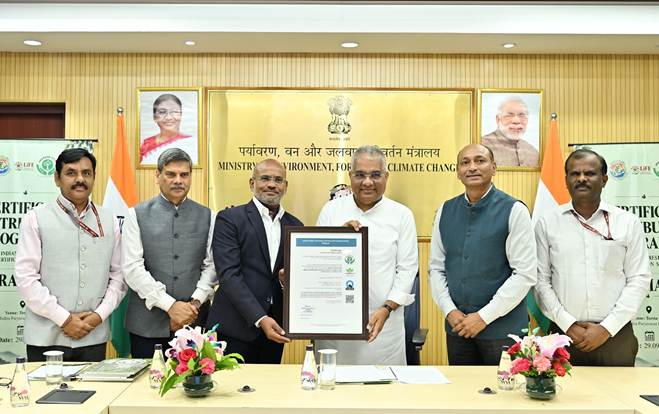
- Union Environment Minister Bhupender Yadav handed over India’s first PRAMAAN certificates under the Indian Forest and Wood Certification Scheme (IFWCS).
- The certificates were awarded to the Andhra Pradesh Forest Development Corporation (APFDC) for plantations covering about 33,000 hectares and to a bamboo farmer associated with the Odisha Bamboo Development Agency (OBDA).
- The development marks the transition of India’s national forest-certification framework from policy formulation to field-level certification of sustainably managed forest and agroforestry resources.
What is PRAMAAN?
PRAMAAN stands for Programme for Recognition and Accreditation of Sustainable Management Practices for Agroforestry and Natural Forestry Resources.
- It is the certification framework under the Indian Forest and Wood Certification Scheme (IFWCS).
- IFWCS was launched by the Ministry of Environment, Forest and Climate Change (MoEFCC) in December 2023.
- It is a voluntary, market-based, third-party certification scheme aimed at promoting:
- Sustainable forest management.
- Sustainable agroforestry.
- Responsible practices in wood-based industries.
- Traceability and market credibility of forest and tree-based products.
First Certificates
Andhra Pradesh
- Recipient: Andhra Pradesh Forest Development Corporation.
- Coverage: Around 33,000 hectares of plantations.
- The certification includes eucalyptus plantations managed by APFDC and demonstrates compliance with sustainable forest-management standards.
Odisha
- A bamboo farmer from Mayurbhanj district, associated with the Odisha Bamboo Development Agency, received the other certificate.
- The certification covers 14.03 hectares across four plots in Gobardhansul and Ranibhol.
- It falls under Trees Outside Forest Management and Chain of Custody (TOFM-CoC) certification.
- Certified bamboo species include:
- Bambusa vulgaris
- Bambusa nutans
- Dendrocalamus strictus
Certification Categories under IFWCS
The scheme provides three principal types of certification:
- Forest Management (FM) Certification
- Covers recorded forests and forest plantations managed according to prescribed sustainable-management standards.
- Trees Outside Forest (TOF) Management Certification
- Covers trees grown outside recorded forests, including farm forestry and agroforestry.
- Chain of Custody (CoC) Certification
- Tracks certified forest and tree-based material through processing, manufacturing and trade, providing traceability of its sustainable origin.
Institutional Framework
- MoEFCC: Nodal Union Ministry for the scheme.
- Indian Institute of Forest Management (IIFM), Bhopal: Operating agency for IFWCS-PRAMAAN.
- Indian Forest and Wood Certification Council: Guides and monitors implementation of the scheme.
- National Accreditation Board for Certification Bodies (NABCB):
- Functions under the Quality Council of India (QCI).
- Accredits certification bodies that conduct independent audits under the scheme.
Additional Info
- National Working Plan Code, 2023
- Provides the framework for preparation of forest working plans in India.
- Incorporates the Indian Forest Management Standard (IFMS) for monitoring sustainable forest management.
- International Market Linkage
- PRAMAAN is intended to improve access of certified Indian forest and agroforestry products to domestic and international markets.
- Its Chain of Custody framework incorporates due-diligence and traceability requirements relevant to the European Union Deforestation Regulation (EUDR).
Sources
Centre Plans Stricter Social Media Account Rules for Children Below 18

What’s the News?
- The Union Government has told the Supreme Court that it plans to strengthen the Information Technology (Intermediary Guidelines and Digital Media Ethics Code) Rules, 2021 to prevent persons below 18 years from independently opening social-media accounts.
- The proposed framework would place a statutory obligation on social-media intermediaries to enforce the age restriction instead of relying primarily on platforms’ own terms and voluntary safeguards.
- The matter arose from a petition by Just Rights for Children Alliance, which raised concerns over online grooming, sexual exploitation, cyberbullying, behavioural profiling, misuse of personal data and exposure to age-inappropriate material.
- Important: A blanket statutory prohibition has not yet been notified. The Centre has indicated its intention to amend the rules following the Supreme Court proceedings.
What is Being Proposed?
The proposed changes would require social-media platforms to design their registration systems in conformity with Indian laws applicable to minors.
- Independent social-media account creation would be restricted to persons 18 years or above.
- Platforms could be required to introduce mechanisms to prevent minors from bypassing the age threshold.
- Educational websites could continue allowing children to register with appropriate parental consent.
- The restriction concerns independent creation of social-media accounts; it is not a general prohibition on internet access by children.
Supreme Court Proceedings
The case was heard by a Bench comprising:
- Chief Justice of India Surya Kant
- Justice Joymalya Bagchi
- Justice V. Mohana
Solicitor General Tushar Mehta, representing the Centre, stated that a statutory framework could be introduced requiring intermediaries to comply with Indian law relating to minors. The Court also emphasised that platforms operating in India must configure their systems according to Indian legal requirements, rather than merely importing age-related policies used in other jurisdictions.
IT Rules, 2021
The Information Technology (Intermediary Guidelines and Digital Media Ethics Code) Rules, 2021 are framed under the Information Technology Act, 2000.
- They prescribe due-diligence obligations for intermediaries.
- Social-media intermediaries must publish rules, privacy policies and user agreements and comply with prescribed grievance and content-governance requirements.
- The updated Rules define a “child” as a person below 18 years.
- The proposed amendment would add a more specific obligation concerning registration of minors on social-media platforms.
Why Contract Law is Relevant
Opening a social-media account normally involves accepting the platform's Terms of Service/User Agreement, creating a contractual relationship.
- Section 11 of the Indian Contract Act, 1872: A person must have attained the age of majority to be competent to contract.
- Majority Act, 1875: A person ordinarily attains majority on completing 18 years.
- Indian contract law has long recognised that an agreement entered into by a minor lacks ordinary contractual enforceability.
This contractual-capacity issue formed an important part of the discussion before the Supreme Court.
Link with Digital Personal Data Protection Framework
The Digital Personal Data Protection (DPDP) Act, 2023 separately regulates the processing of children's personal data.
- It treats a person below 18 years as a child.
- Its child-data framework provides for verifiable parental consent before processing children's personal data, subject to specified exemptions.
- The DPDP Rules, 2025 prescribe mechanisms for verifying that the person providing consent is the child's parent or lawful guardian.
- Relevant substantive child-data provisions of the DPDP Act have a deferred commencement and are distinct from the proposed IT Rules restriction on opening social-media accounts.
Additional Info
- Social Media Intermediary
- An intermediary that primarily enables online interaction between users and allows them to create, upload, share, disseminate or access information.
- MeitY
- Ministry of Electronics and Information Technology.
- Administers the intermediary due-diligence provisions under the IT Rules.
- Distinction
- DPDP framework: primarily concerns the processing of children's personal data.
- Proposed IT Rules amendment: concerns whether persons below 18 can independently register social-media accounts.
Sources
Gujarat Restructures Porbandar Forest Division for Asiatic Lion Rehabilitation
What’s the News?
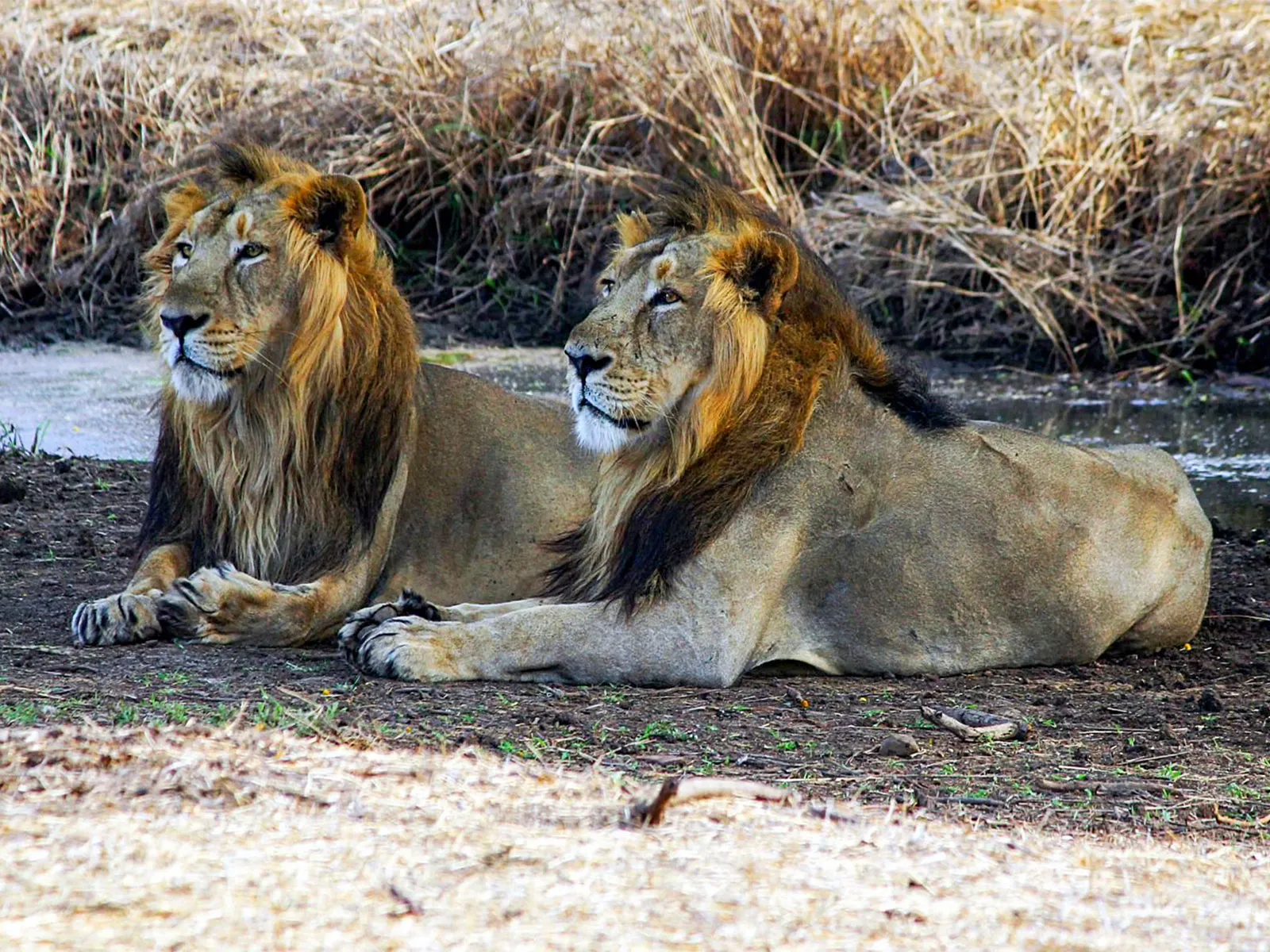
- The Gujarat Government has reorganised the Porbandar Forest Division to strengthen forest administration and facilitate Asiatic lion rehabilitation in the Barda landscape.
- The restructuring changes forest-range boundaries, village and beat jurisdictions and transfers certain forest areas between divisions.
- The move supports the development of Barda Wildlife Sanctuary as a second habitat for Asiatic lions, reducing excessive dependence on the Greater Gir landscape.
Porbandar Forest Division Reorganisation
Administrative changes include:
- Porbandar Range
- Area: 6,840.84 hectares
- Coverage: 80 villages
- Beats include Porbandar City, Gosabara, Mokar, Visavada, Kantela, Madhavpur and Satiya.
- Ranavav Range
- Area: 13,051.25 hectares
- Coverage: 27 villages
- Includes Godana, Bileshwar, Savdivadar and Ranavav beats.
- Bhanvad Range
- 305.94 hectares from the Jamnagar Forest Division's RFW Bhatia Range have been transferred to the Bhanvad Range under Porbandar Forest Division.
- The transferred area includes forests associated with villages such as Kandarda Jogana, Sajdiyala, Juna and Jambusar.
- Kutiyana, Porbandar Social Forestry and Ranavav Social Forestry ranges have also been brought under the administrative control of the Porbandar Forest Division.
- Provision has been made for two Assistant Conservators of Forests to strengthen administration.
Barda Wildlife Sanctuary
- Located across Porbandar and Devbhumi Dwarka districts of Gujarat.
- Area: 192.31 sq. km.
- It is being developed as a second home for Asiatic lions outside their principal Greater Gir landscape.
- Lions historically occurred in Barda until 1879. A male lion naturally recolonised the sanctuary in 2023, after about 143 years.
- The population subsequently increased to 17 lions — 6 adults and 11 cubs.
Habitat and Prey-Base Development
A viable second lion habitat requires sufficient natural prey. Therefore:
- The Gujarat Forest Department has undertaken translocation of spotted deer (chital) and sambar from the Gir Protected Area to Barda.
- Habitat improvement, grassland management, veterinary care, disease surveillance and wildlife-corridor management are also part of the conservation strategy.
- Around ₹180 crore worth of wildlife-conservation initiatives have been associated with strengthening the Barda landscape and related lion-conservation measures.
Project Lion
- Project Lion was announced in 2020 for the long-term conservation of the Asiatic lion.
- It follows a landscape-level conservation approach, rather than restricting conservation measures to Gir National Park alone.
- Key objectives include:
- Securing and restoring lion habitats.
- Developing wildlife corridors and satellite populations.
- Strengthening disease surveillance and veterinary facilities.
- Increasing community participation and livelihood opportunities.
- Improving scientific monitoring and conservation technology.
- The Union Environment Ministry has approved a 10-year lion-conservation project with an outlay of ₹2,927.71 crore.
Additional Info
- Asiatic Lion
- Scientific name: Panthera leo persica.
- India's wild Asiatic lion population is confined to Gujarat's Saurashtra landscape.
- Population increased from 674 in 2020 to 891 in 2025, an increase of about 32%.
- Their distribution has expanded to roughly 35,000 sq. km across the wider Saurashtra landscape.
- The Asiatic lion is included in CITES Appendix I, providing the highest level of international trade protection under CITES.
- Why a second habitat matters
- A geographically dispersed lion population reduces risks associated with concentrating most animals in one landscape.
- Major threats include disease outbreaks, natural disasters, habitat pressures and human-wildlife conflict.
- Gujarat has also established lion gene-pool centres at Rampara in Morbi and Satvirda in Porbandar district.
Sources
World Heart Day 2026: “Don’t Miss a Beat”

What’s the News?
- World Heart Day 2026 was observed on 29 September to raise awareness about cardiovascular diseases (CVDs), their warning signs, prevention and treatment.
- The 2026 theme/campaign is “Don’t Miss a Beat”, led by the World Heart Federation (WHF).
- The campaign stresses that heart disease can “hide in plain sight” and focuses on recognising symptoms early, protecting heart health and encouraging stronger government action on CVDs.
Theme 2026: “Don’t Miss a Beat”
The campaign is centred on three broad actions:
- See the Signs: Recognise CVD symptoms that may otherwise be overlooked, including symptoms among women and people with uncontrolled hypertension.
- Protect Your Heart: Reduce preventable or manageable risk factors through healthy diet, physical activity, tobacco avoidance and management of blood pressure, diabetes and cholesterol.
- Demand Action: Encourage governments to make equitable cardiovascular healthcare a policy priority. Fewer than 20 countries currently have a standalone national plan specifically addressing CVD.
Cardiovascular Diseases
CVDs are disorders of the heart and blood vessels and include:
- Coronary heart disease.
- Cerebrovascular disease or stroke.
- Rheumatic heart disease.
- Congenital heart disease.
- Other cardiac and vascular conditions.
CVD remains the leading cause of death globally, accounting for more than 20 million deaths annually. Heart attacks and strokes constitute the majority of CVD deaths.
Major Risk Factors
Important modifiable CVD risk factors include:
- High blood pressure.
- Tobacco use.
- Unhealthy diet and excessive salt intake.
- Physical inactivity.
- Diabetes/high blood glucose.
- High blood lipids/cholesterol.
- Obesity.
- Harmful alcohol consumption.
- Air pollution.
Many cardiovascular deaths are associated with risk factors that can be prevented or effectively managed.
World Heart Day: Background
- The concept was proposed by cardiologist Dr Antoni Bayés de Luna, then President of the World Heart Federation.
- The first official World Heart Day campaign was held in 2000 with the theme “Let it Beat”.
- It was initially observed on the last Sunday of September.
- From 2011 onwards, 29 September became the fixed annual date.
- The observance is coordinated by the World Heart Federation, working with governments, health organisations and its global network.
India’s Response to CVDs
National Programme for Prevention and Control of Non-Communicable Diseases (NP-NCD)
- Implemented under the National Health Mission (NHM).
- It is the expanded form of the erstwhile NPCDCS — National Programme for Prevention and Control of Cancer, Diabetes, Cardiovascular Diseases and Stroke.
- Focuses on health promotion, screening, early diagnosis, treatment, referral and follow-up.
- Population-based screening targets persons aged 30 years and above for major NCDs, including hypertension and diabetes.
Other measures include:
- Ayushman Arogya Mandirs: Comprehensive primary healthcare, including NCD screening and management.
- PM-JAY: Financial protection for eligible secondary and tertiary healthcare.
- Pradhan Mantri Bhartiya Janaushadhi Pariyojana: Affordable generic medicines.
- AMRIT pharmacies: Affordable medicines and implants, including those required for cardiovascular treatment.
Additional Info
- World Heart Federation (WHF)
- Global organisation dedicated to cardiovascular health.
- Headquarters: Geneva, Switzerland.
- Works through a network of 200+ member organisations worldwide.
- 2026 campaign indicators
- CVD causes over 20 million deaths annually.
- Around 1 in 5 people are projected to die prematurely from heart disease.
- Around 50% of babies born with congenital heart disease are not diagnosed at birth.
- Fewer than 20 countries have a dedicated national CVD plan.
Sources
September 2026
Archive
November 2026
- 27 November 2026
- 26 November 2026
- 25 November 2026
- 24 November 2026
- 23 November 2026
- 21 November 2026
- 20 November 2026
- 19 November 2026
- 18 November 2026
- 17 November 2026
- 16 November 2026
- 14 November 2026
- 13 November 2026
- 12 November 2026
- 11 November 2026
- 10 November 2026
- 09 November 2026
- 06 November 2026
- 05 November 2026
- 04 November 2026
- 03 November 2026
- 02 November 2026
October 2026
- 31 October 2026
- 30 October 2026
- 29 October 2026
- 28 October 2026
- 27 October 2026
- 26 October 2026
- 24 October 2026
- 23 October 2026
- 22 October 2026
- 21 October 2026
- 20 October 2026
- 19 October 2026
- 17 October 2026
- 16 October 2026
- 15 October 2026
- 14 October 2026
- 13 October 2026
- 12 October 2026
- 10 October 2026
- 09 October 2026
- 08 October 2026
- 07 October 2026
- 06 October 2026
- 05 October 2026
- 03 October 2026
- 02 October 2026
- 01 October 2026
September 2026
- 30 September 2026
- 29 September 2026
- 28 September 2026
- 26 September 2026
- 25 September 2026
- 24 September 2026
- 23 September 2026
- 22 September 2026
- 21 September 2026
- 19 September 2026
- 18 September 2026
- 17 September 2026
- 16 September 2026
- 15 September 2026
- 12 September 2026
- 11 September 2026
- 10 September 2026
- 09 September 2026
- 08 September 2026
- 07 September 2026
- 05 September 2026
- 04 September 2026
- 03 September 2026
- 02 September 2026
- 01 September 2026
August 2026
- 31 August 2026
- 29 August 2026
- 27 August 2026
- 26 August 2026
- 25 August 2026
- 24 August 2026
- 22 August 2026
- 21 August 2026
- 20 August 2026
- 19 August 2026
- 18 August 2026
- 17 August 2026
- 14 August 2026
- 13 August 2026
- 12 August 2026
- 11 August 2026
- 10 August 2026
- 08 August 2026
- 07 August 2026
- 06 August 2026
- 05 August 2026
- 04 August 2026
- 03 August 2026
- 01 August 2026
July 2026
- 31 July 2026
- 30 July 2026
- 29 July 2026
- 28 July 2026
- 27 July 2026
- 25 July 2026
- 23 July 2026
- 22 July 2026
- 21 July 2026
- 20 July 2026
- 18 July 2026
- 17 July 2026
- 15 July 2026
- 14 July 2026
- 13 July 2026
- 11 July 2026
- 10 July 2026
- 09 July 2026
- 08 July 2026
- 07 July 2026
- 06 July 2026
- 04 July 2026
- 03 July 2026
- 02 July 2026
- 01 July 2026
June 2026
May 2026
April 2026
March 2026
- 31 March 2026
- 30 March 2026
- 28 March 2026
- 27 March 2026
- 26 March 2026
- 25 March 2026
- 24 March 2026
- 23 March 2026
- 21 March 2026
- 20 March 2026
- 19 March 2026
- 18 March 2026
- 17 March 2026
- 16 March 2026
- 14 March 2026
- 13 March 2026
- 12 March 2026
- 11 March 2026
- 10 March 2026
- 09 March 2026
- 07 March 2026
- 06 March 2026
- 05 March 2026
- 03 March 2026
- 02 March 2026
February 2026
- 28 February 2026
- 27 February 2026
- 26 February 2026
- 25 February 2026
- 24 February 2026
- 23 February 2026
- 21 February 2026
- 20 February 2026
- 19 February 2026
- 18 February 2026
- 17 February 2026
- 16 February 2026
- 13 February 2026
- 12 February 2026
- 11 February 2026
- 10 February 2026
- 09 February 2026
- 07 February 2026
- 06 February 2026
- 05 February 2026
- 04 February 2026
- 03 February 2026
- 02 February 2026
January 2026
- 31 January 2026
- 30 January 2026
- 29 January 2026
- 28 January 2026
- 27 January 2026
- 26 January 2026
- 24 January 2026
- 23 January 2026
- 22 January 2026
- 21 January 2026
- 20 January 2026
- 19 January 2026
- 16 January 2026
- 15 January 2026
- 14 January 2026
- 13 January 2026
- 12 January 2026
- 10 January 2026
- 09 January 2026
- 08 January 2026
- 07 January 2026
- 06 January 2026
- 05 January 2026
- 03 January 2026
- 02 January 2026
- 01 January 2026
December 2025
- 31 December 2025
- 30 December 2025
- 29 December 2025
- 27 December 2025
- 26 December 2025
- 24 December 2025
- 23 December 2025
- 22 December 2025
- 20 December 2025
- 19 December 2025
- 18 December 2025
- 17 December 2025
- 16 December 2025
- 15 December 2025
- 13 December 2025
- 12 December 2025
- 11 December 2025
- 10 December 2025
- 09 December 2025
- 08 December 2025
- 05 December 2025
- 04 December 2025
- 03 December 2025
- 02 December 2025
November 2025
- 29 November 2025
- 28 November 2025
- 27 November 2025
- 26 November 2025
- 25 November 2025
- 24 November 2025
- 22 November 2025
- 21 November 2025
- 20 November 2025
- 19 November 2025
- 18 November 2025
- 17 November 2025
- 15 November 2025
- 14 November 2025
- 13 November 2025
- 12 November 2025
- 11 November 2025
- 10 November 2025
- 08 November 2025
- 07 November 2025
- 06 November 2025
- 05 November 2025
- 04 November 2025
- 03 November 2025
- 01 November 2025
October 2025
- 31 October 2025
- 30 October 2025
- 29 October 2025
- 28 October 2025
- 27 October 2025
- 25 October 2025
- 24 October 2025
- 23 October 2025
- 22 October 2025
- 21 October 2025
- 20 October 2025
- 18 October 2025
- 17 October 2025
- 16 October 2025
- 15 October 2025
- 14 October 2025
- 13 October 2025
- 11 October 2025
- 10 October 2025
- 09 October 2025
- 08 October 2025
- 07 October 2025
- 06 October 2025
- 04 October 2025
- 03 October 2025
- 02 October 2025
- 01 October 2025
September 2025
- 30 September 2025
- 29 September 2025
- 27 September 2025
- 26 September 2025
- 25 September 2025
- 24 September 2025
- 23 September 2025
- 22 September 2025
- 20 September 2025
- 19 September 2025
- 18 September 2025
- 17 September 2025
- 16 September 2025
- 15 September 2025
- 13 September 2025
- 12 September 2025
- 11 September 2025
- 10 September 2025
- 09 September 2025
- 08 September 2025
- 06 September 2025
- 05 September 2025
- 04 September 2025
- 03 September 2025
- 02 September 2025
- 01 September 2025
August 2025
- 30 August 2025
- 29 August 2025
- 28 August 2025
- 27 August 2025
- 26 August 2025
- 25 August 2025
- 23 August 2025
- 22 August 2025
- 21 August 2025
- 20 August 2025
- 19 August 2025
- 18 August 2025
- 16 August 2025
- 14 August 2025
- 13 August 2025
- 12 August 2025
- 11 August 2025
- 08 August 2025
- 07 August 2025
- 06 August 2025
- 05 August 2025
- 04 August 2025
- 02 August 2025
- 01 August 2025
July 2025
- 31 July 2025
- 30 July 2025
- 29 July 2025
- 28 July 2025
- 26 July 2025
- 25 July 2025
- 24 July 2025
- 23 July 2025
- 22 July 2025
- 21 July 2025
- 19 July 2025
- 18 July 2025
- 17 July 2025
- 16 July 2025
- 15 July 2025
- 12 July 2025
- 11 July 2025
- 10 July 2025
- 09 July 2025
- 07 July 2025
- 05 July 2025
- 04 July 2025
- 03 July 2025
- 02 July 2025
- 01 July 2025
June 2025
- 30 June 2025
- 28 June 2025
- 27 June 2025
- 26 June 2025
- 25 June 2025
- 24 June 2025
- 23 June 2025
- 21 June 2025
- 20 June 2025
- 19 June 2025
- 18 June 2025
- 17 June 2025
- 16 June 2025
- 14 June 2025
- 13 June 2025
- 12 June 2025
- 11 June 2025
- 10 June 2025
- 09 June 2025
- 07 June 2025
- 06 June 2025
- 05 June 2025
- 04 June 2025
- 03 June 2025
- 02 June 2025
May 2025
April 2025
- 30 April 2025
- 29 April 2025
- 28 April 2025
- 26 April 2025
- 25 April 2025
- 24 April 2025
- 23 April 2025
- 22 April 2025
- 21 April 2025
- 19 April 2025
- 18 April 2025
- 17 April 2025
- 16 April 2025
- 15 April 2025
- 14 April 2025
- 12 April 2025
- 11 April 2025
- 10 April 2025
- 09 April 2025
- 08 April 2025
- 07 April 2025
- 05 April 2025
- 04 April 2025
- 03 April 2025
- 02 April 2025
- 01 April 2025
March 2025
- 31 March 2025
- 29 March 2025
- 28 March 2025
- 27 March 2025
- 26 March 2025
- 25 March 2025
- 24 March 2025
- 22 March 2025
- 21 March 2025
- 20 March 2025
- 19 March 2025
- 18 March 2025
- 17 March 2025
- 15 March 2025
- 13 March 2025
- 12 March 2025
- 11 March 2025
- 10 March 2025
- 08 March 2025
- 07 March 2025
- 06 March 2025
- 05 March 2025
- 04 March 2025
- 03 March 2025
- 01 March 2025
February 2025
- 28 February 2025
- 27 February 2025
- 26 February 2025
- 25 February 2025
- 24 February 2025
- 22 February 2025
- 21 February 2025
- 20 February 2025
- 19 February 2025
- 18 February 2025
- 17 February 2025
- 15 February 2025
- 14 February 2025
- 13 February 2025
- 12 February 2025
- 11 February 2025
- 10 February 2025
- 08 February 2025
- 07 February 2025
- 06 February 2025
- 05 February 2025
- 04 February 2025
- 03 February 2025
- 01 February 2025
January 2025
- 31 January 2025
- 30 January 2025
- 29 January 2025
- 28 January 2025
- 27 January 2025
- 25 January 2025
- 24 January 2025
- 23 January 2025
- 22 January 2025
- 21 January 2025
- 20 January 2025
- 18 January 2025
- 17 January 2025
- 16 January 2025
- 15 January 2025
- 14 January 2025
- 13 January 2025
- 11 January 2025
- 10 January 2025
- 09 January 2025
- 08 January 2025
- 07 January 2025
- 06 January 2025
- 04 January 2025
- 03 January 2025
- 02 January 2025
- 01 January 2025