
Current Affairs
Stay updated with the latest national and international events.
30 April 2026
MoSPI Releases "Women and Men in India 2025" Report
What’s the News?
- The Ministry of Statistics and Programme Implementation (MoSPI) has released the 27th edition of its annual publication, "Women and Men in India 2025: Selected Indicators and Data".
- The report was unveiled at the National Deliberative Summit on "Data for Development" in Bhubaneswar, Odisha.
- It provides a comprehensive compilation of gender-disaggregated data across key socio-economic domains, including population, health, education, economic participation, decision-making, and violence against women.
Highlights of the Report
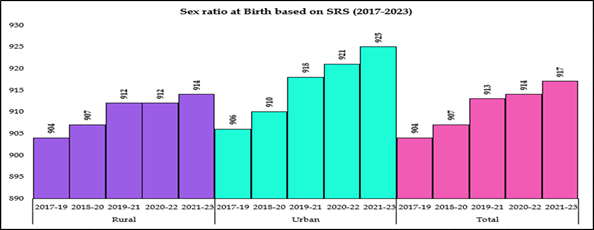
- Sex Ratio at Birth (SRB): Improved from 904 (2017-19) to 917 (2021-23), indicating better survival of the female child.
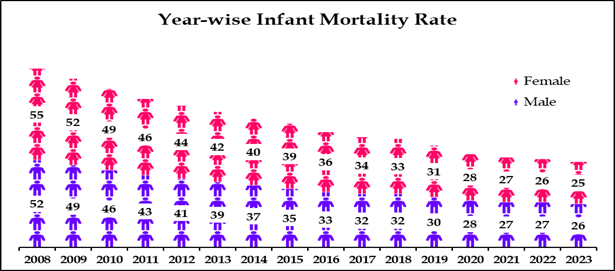
- Infant Mortality Rate (IMR): Both female and male IMR have recorded a sustained decline between 2008 and 2023.
- Education:
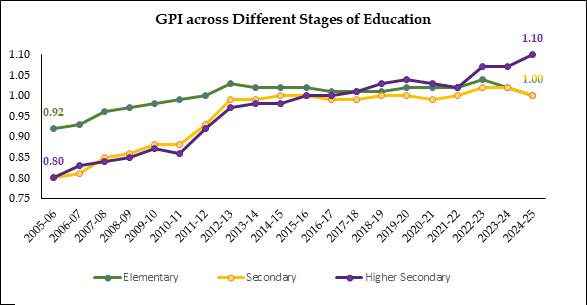
- Gender parity has been achieved across all levels of school education, from Primary to Higher Secondary.
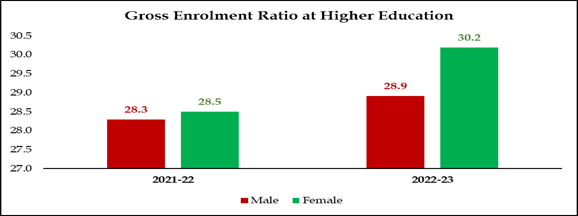
- Gross Enrolment Ratio (GER) in Higher Education for females rose from 28.5 to 30.2 (2021-22 to 2022-23), surpassing the male GER of 28.9.
- Economic Participation:
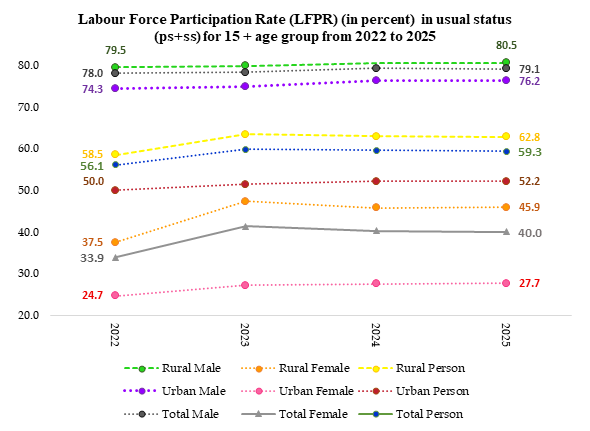
- Labour Force Participation Rate (LFPR) for ages 15+ has increased for both genders.
- Rural female LFPR saw a significant rise from 37.5% to 45.9% between 2022 and 2025.
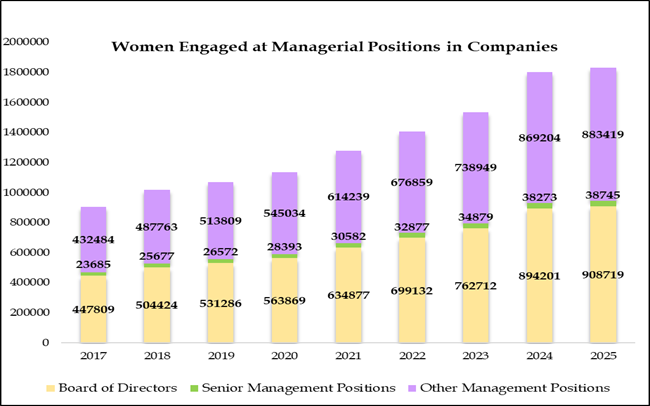
- Women in managerial positions grew by 102.54% between 2017 and 2025, outpacing the 73.80% growth for men.
- Health & Demography:
- Maternal Mortality Ratio (MMR) reduced from 254 (2004-06) to 88 per 1,00,000 live births (2021-23).
- Adolescent (15-19 years) Fertility Rate has shown a sustained downward trend.
- Mean age at marriage for women increased to 24.3 years in 2023.
Challenges and Areas of Concern
- Sex Ratio at Birth: Although improved, the SRB of 917 is still below the natural norm of 952, indicating that son preference and sex-selective practices persist.
- Urban-Rural & State Disparities: The report provides data disaggregated by rural-urban and state/UT categories, which reveal continued inter-state variation in key indicators.
- Violence Against Women: The report covers data on violence against women, a domain where under-reporting and social stigma remain significant hurdles.
- SDG 5 Score: Despite progress, India's SDG India Index score for Goal 5 remained static at 48 (2020-21 to 2023-24), highlighting slow overall progress.
Additional Info
- About MoSPI:
- Formed in 1999, the Ministry of Statistics and Programme Implementation is the nodal body for the Indian Statistical System.
- The publication "Women and Men in India" has been institutionalized since 1995.
- Related Initiatives:
- Beti Bachao Beti Padhao (BBBP): Launched in 2015 to address the declining Child Sex Ratio and promote girl child education.
- POSHAN Abhiyaan: Aims to improve nutritional outcomes for children, pregnant women, and lactating mothers.
- Skill India Mission: Focuses on enhancing employability, with increasing female participation in new-age skills.
- SDG 5 (Gender Equality): NITI Aayog's index shows India's score improved from 36 (2018) to 49 (2023-24) but remains in the "Aspirant" category.
- Constitutional & Legal Framework:
- Article 14: Right to Equality.
- Article 15(3): Enables the State to make special provisions for women and children.
- Article 51A(e): Fundamental Duty to renounce practices derogatory to the dignity of women.
- The Maternity Benefit (Amendment) Act, 2017: Enhanced paid maternity leave to 26 weeks.
Sources
MoPR Releases Panchayat Advancement Index 2.0
What’s the News?
- The Ministry of Panchayati Raj (MoPR) released the Panchayat Advancement Index (PAI) 2.0 report for FY 2023–24.
- The index evaluates the performance of over 2.5 lakh Gram Panchayats across India on a range of development metrics.
- The report reveals a clear North-South divide, with smaller states generally outperforming larger ones. Tripura leads the nation, while large states like Uttar Pradesh, Bihar, and Rajasthan lag behind.
Findings and Rankings
- National Participation: The exercise saw 97.3% participation, with 2,59,867 Gram Panchayats submitting validated data, a significant increase from 80.79% in PAI 1.0. West Bengal did not participate.
- Overall Categorisation:
- Achiever (Score 90–100): No panchayat achieved this top category.
- Front Runner (Score 75–90): 3,635 panchayats.
- Performer (Score 60–75): 1,18,824 panchayats.
- Aspirant (Score 40–60): 1,23,719 panchayats.
- Beginner (Below 40): 13,689 panchayats.
- Top Performers:
- Tripura: Leads the nation with 80% of its 1,176 Gram Panchayats achieving 'Front Runner' status.
- Kerala: 10% of its Gram Panchayats are 'Front Runners'.
- Odisha: 8% of its Gram Panchayats are 'Front Runners'.
- Laggard States: Very few panchayats achieved 'Front Runner' status in several larger states, indicating significant scope for improvement in rural governance.
- Uttar Pradesh: Only 51 out of 57,678.
- Rajasthan: Only 8 out of 11,037.
- Bihar: Only 2 out of 8,053.
- Punjab: Only 1 out of 13,233.
About the Panchayat Advancement Index (PAI)
- Framework: PAI is a data-driven, multi-dimensional framework designed to serve as a "report card" for grassroots governance, assessing the performance and progress of Gram Panchayats.
- Thematic Alignment: The assessment is based on 150 indicators (reduced from 516 in PAI 1.0 for better usability) and 230 data points, aligned with the Localisation of Sustainable Development Goals (LSDGs) across nine key themes:
- Poverty Free & Enhanced Livelihoods
- Healthy Panchayat
- Child Friendly Panchayat
- Water Sufficient Panchayat
- Clean and Green Panchayat
- Self-Sufficient Infrastructure
- Socially Just and Secured Panchayat
- Panchayat with Good Governance
- Women & Child Friendly Panchayat
- Data Validation: Introduced a single data entry form, Gram Sabha validation, and real-time dashboards for enhanced transparency.
- Transparency: MoPR has directed all panchayats to display their scorecards publicly and include PAI score discussions as a regular agenda item in Gram Sabha meetings.
Significance for Governance
- Evidence-Driven Planning: Provides granular data for preparing Gram Panchayat Development Plans (GPDPs), enabling targeted interventions.
- Competitive Federalism: Fosters a spirit of healthy competition among panchayats and states by creating a benchmark for performance. This is in line with the vision of "Viksit Gram Panchayats".
- Strengthening Local Bodies: Encourages transparency, accountability, and participatory governance, thereby strengthening Panchayati Raj Institutions (PRIs).
- Linking to Global Goals: The framework has been presented to the United Nations as part of India's efforts to achieve the Sustainable Development Goals (SDGs) through local action.
Additional Info
- Constitutional Backing for PRIs:
- Article 243: Defines the constitution and composition of Panchayats.
- Article 243B: Mandates a three-tier Panchayati Raj system (village, intermediate, and district level) in all states.
- Article 243G: Empowers State Legislatures to endow Panchayats with the powers and authority necessary to function as institutions of self-government, including the preparation of plans for economic development and social justice.
- Eleventh Schedule: Lists 29 subject matters (e.g., agriculture, health, education, drinking water) that may be devolved to Panchayats, forming the functional core of their responsibilities.
- Related Initiatives:
- e-Gram Swaraj: A portal for PRIs for planning, budgeting, and accounting to ensure transparency.
- Rashtriya Gram Swaraj Abhiyan (RGSA): A scheme aimed at strengthening the capacity of PRIs.
- SDG India Index: NITI Aayog's tool to track progress on SDGs, which the PAI complements by providing grassroots-level data.
Sources
NSO 80th Round Health Survey
What’s the News?
- The National Statistical Office (NSO) released findings from its 80th Round Survey on Household Social Consumption: Health, capturing data from over 1.39 lakh households across rural and urban India.
- The report points to a notable improvement in healthcare access, a sharp expansion in government health insurance coverage, and a significant shift toward proactive health-seeking behaviour.
- Key positive trends include increased institutional deliveries, reduced Out-of-Pocket Expenditure (OOPE) in public facilities, and greater public trust in government healthcare infrastructure.
Findings at a Glance
| Indicator | Key Data / Trend | Inference |
|---|---|---|
| Health-Seeking Behaviour (PPRA) | Rural: 6.8% → 12.2%; Urban: 9.1% → 14.9% (since 2017-18) | Near doubling indicates greater awareness and willingness to seek formal medical care. |
| Government Health Insurance Coverage | Rural: 12.9% → 45.5%; Urban: 8.9% → 31.8% | More than threefold expansion, largely driven by Ayushman Bharat PM-JAY. |
| Public Healthcare Utilisation (Rural OPD) | Increased from 28% (2014) to 35% (2025) | Reflects growing trust and improved accessibility of public primary care. |
| Institutional Deliveries | Rural: 95.6%; Urban: 97.8% | Strong maternal healthcare outcomes due to targeted schemes. |
| Out-of-Pocket Expenditure (OOPE) | Median ₹11,285 per hospitalisation; Public facilities: ~₹1,100; OPD in public: often zero | Greater financial protection, especially for the poor; reduced risk of medical poverty. |
| Epidemiological Transition | Decline in infectious diseases; Rise in NCDs (Diabetes, Cardiovascular Diseases) | Shift toward lifestyle diseases requiring long-term, preventive care. |
Underlying Drivers
- Expansion of Primary Care Network: Over 1.84 lakh Ayushman Arogya Mandirs (AAMs) provide comprehensive primary healthcare closer to communities, including preventive, promotive, and curative services.
- Free Drugs and Diagnostics: Initiatives such as the Free Drugs Service Initiative (FDSI) and Free Diagnostics Initiative (FDI) ensure essential medicines and tests at no cost in public facilities.
- Affordable Medicines and Reliable Implants for Treatment (AMRIT): Over 220 pharmacies across 29 States/UTs offer more than 6,500 drugs at up to 50% discount, improving affordability.
- Maternal Care Schemes: Janani Suraksha Yojana, Janani Shishu Suraksha Karyakram, and Pradhan Mantri Surakshit Matritva Abhiyan have collectively boosted institutional deliveries and safe motherhood.
- Budgetary Push: Sustained increase in public investment in health has enabled infrastructure expansion across primary, secondary, and tertiary levels.
Additional Info
- About NSO:
- The NSO, under the Ministry of Statistics and Programme Implementation (MoSPI), is the nodal statistical agency responsible for large-scale sample surveys.
- The 80th Round specifically focused on "Household Social Consumption: Health".
- chemes and Acronyms:
- PM-JAY (Ayushman Bharat Pradhan Mantri Jan Arogya Yojana): World's largest government-funded health assurance scheme, providing ₹5 lakh per family per year for secondary and tertiary care.
- FDSI & FDI: Launched in 2015 under the National Health Mission to provide essential medicines and diagnostics free of cost.
- AMRIT: Provides discounted drugs and implants for cancer and cardiovascular diseases.
- VHSNCs: Village Health, Sanitation and Nutrition Committees act as community platforms for intersectoral convergence in health.
Sources
SEBI Operationalises Past Risk and Return Verification Agency (PaRRVA)

What’s the News?
- The Securities and Exchange Board of India (SEBI) has fully operationalised the Past Risk and Return Verification Agency (PaRRVA), a first-of-its-kind regulatory framework.
- The framework aims to independently validate the past performance claims made by regulated entities, curbing misleading advertisements and protecting investors. Following a successful pilot phase, PaRRVA will commence regular operations from May 4, 2026.
- CARE Ratings Limited has been recognized as the official PaRRVA, and the National Stock Exchange (NSE) will act as the PaRRVA Data Centre (PDC).
About the PaRRVA Framework
- Objective: To create a standardised, transparent, and reliable mechanism for verifying and disclosing the past risk and return metrics of financial market intermediaries. This directly addresses the problem of unverified and often inflated performance claims.
- Genesis:
- The framework was initially specified by SEBI through a circular on April 4, 2025.
- A pilot phase was launched on December 8, 2025. After its successful completion, the agency is now fully operational.
- Scope of Verification: PaRRVA will verify performance data related to:
- Investment Advisory Services
- Research Services (provided by Research Analysts)
- Algorithmic Trading offerings
- Design of the System:
- PaRRVA (Verification Body): A SEBI-registered Credit Rating Agency (CRA) — in this instance, CARE Ratings Limited — functions as the verification agency.
- PaRRVA Data Centre (PDC): A recognised stock exchange — the National Stock Exchange of India Limited (NSE) — serves as the data repository and processing centre.
- Oversight Committee: An independent committee supervises the framework, ensuring adherence to the prescribed methodology and data privacy norms.
Regulatory Mandate & Timeline
- Mandatory Enrolment: Regulated entities (IAs, RAs, algo providers) must enrol with PaRRVA within three months of its operationalisation to continue communicating any certified past performance.
- Prohibition: After the three-month window, communication of past performance without PaRRVA verification will be prohibited.
- Exclusive Use: After a period of two years, only PaRRVA-verified performance metrics may be disclosed, completely disallowing any pre-operational or non-verified data.
- Advertisement Integration: Regulated entities are explicitly permitted to use PaRRVA-verified performance data in their advertisements, provided it aligns with SEBI’s applicable regulatory provisions. This creates a "level playing field" where genuine performers can showcase their audited track record.
Additional Info
- About SEBI:
- The Securities and Exchange Board of India is the statutory regulatory body for the securities and commodity market in India, established on April 12, 1992, under the SEBI Act, 1992.
- Its core functions are protective, developmental, and regulatory in nature.
- Related Regulatory Provisions:
- The PaRRVA framework is operationalised under the SEBI (Credit Rating Agencies) Regulations, 1999 (Regulation 12A) and the SEBI (Intermediaries) Regulations, 2008 (Regulation 16E).
- A prior interim arrangement allowed IAs/RAs to communicate past performance data certified by a member of ICAI/ICMAI only on a specific client request and a one-to-one basis, with a mandatory disclaimer that it was not PaRRVA-verified.
- Context of Investor Protection:
- This initiative aligns with SEBI’s objective of ease of doing business for genuine intermediaries while simultaneously strengthening the investor protection framework, a key pillar of the Indian securities market.
Sources
EPFO to Launch E-PRAAPTI Portal
What’s the News?
- The Employees' Provident Fund Organisation (EPFO) is set to launch a dedicated digital platform called E-PRAAPTI.
- E-PRAAPTI stands for EPF Aadhaar-Based Access Portal for Tracking Inoperative Accounts.
- The portal is designed to help members identify, track, and link their old or inoperative EPF accounts with their Universal Account Number (UAN).
- This initiative was announced by the Union Labour and Employment Minister.
E-PRAAPTI Portal: Overview & Features
- Purpose: To bridge the gap between legacy EPF accounts (opened before the UAN system) and the current digital ecosystem, enabling members to access and claim long-pending deposits.
- Aadhaar-Based Authentication: The portal uses Aadhaar for secure identity verification, allowing members to access old accounts that are not linked to a UAN.
- Phased Rollout:
- Phase 1: Members need their old Member ID to track their accounts. This ensures a secure and efficient rollout.
- Phase 2: The scope will expand to include members who cannot recall or access their old Member IDs.
- Profile Updating & Linking: Members can update their profiles and seamlessly link their old accounts with their active UAN for activation.
- Reduced Manual Intervention: The platform minimizes physical documentation and the need for employer intervention or visits to EPF offices.
- System Migration: The existing EPFO portal will undergo a brief migration period of 1–2 days for the implementation.
Additional Info
- About EPFO:
- It is a statutory body established under the Employees' Provident Funds and Miscellaneous Provisions Act, 1952.
- It functions under the administrative control of the Ministry of Labour and Employment.
- It manages social security schemes like the Employees' Provident Fund (EPF), Employees' Pension Scheme (EPS), and Employees' Deposit Linked Insurance (EDLI).
- Definitions:
- Universal Account Number (UAN): A 12-digit unique number allotted to EPFO members. It acts as an umbrella for multiple Member IDs assigned by different employers, facilitating portability.
- Inoperative EPF Account: An account where contributions have not been received for 36 consecutive months after leaving a job, post-retirement, or permanent migration abroad. Such accounts stop earning interest.
- Constitutional & Legal Framework:
- The EPFO operates under Entry 24 of the Concurrent List (List III) of the Seventh Schedule, which covers "Welfare of labour including conditions of work, provident funds, employers' liability, workmen's compensation, invalidity and old age pensions and maternity benefits."
- Directive Principles of State Policy under Article 43 mandates the State to secure a living wage, decent standard of life, and social and cultural opportunities for all workers.
Sources
April 2026
Archive
November 2026
- 28 November 2026
- 27 November 2026
- 26 November 2026
- 25 November 2026
- 24 November 2026
- 23 November 2026
- 21 November 2026
- 20 November 2026
- 19 November 2026
- 18 November 2026
- 17 November 2026
- 16 November 2026
- 14 November 2026
- 13 November 2026
- 12 November 2026
- 11 November 2026
- 10 November 2026
- 09 November 2026
- 06 November 2026
- 05 November 2026
- 04 November 2026
- 03 November 2026
- 02 November 2026
October 2026
- 31 October 2026
- 30 October 2026
- 29 October 2026
- 28 October 2026
- 27 October 2026
- 26 October 2026
- 24 October 2026
- 23 October 2026
- 22 October 2026
- 21 October 2026
- 20 October 2026
- 19 October 2026
- 17 October 2026
- 16 October 2026
- 15 October 2026
- 14 October 2026
- 13 October 2026
- 12 October 2026
- 10 October 2026
- 09 October 2026
- 08 October 2026
- 07 October 2026
- 06 October 2026
- 05 October 2026
- 03 October 2026
- 02 October 2026
- 01 October 2026
September 2026
- 30 September 2026
- 29 September 2026
- 28 September 2026
- 26 September 2026
- 25 September 2026
- 24 September 2026
- 23 September 2026
- 22 September 2026
- 21 September 2026
- 19 September 2026
- 18 September 2026
- 17 September 2026
- 16 September 2026
- 15 September 2026
- 12 September 2026
- 11 September 2026
- 10 September 2026
- 09 September 2026
- 08 September 2026
- 07 September 2026
- 05 September 2026
- 04 September 2026
- 03 September 2026
- 02 September 2026
- 01 September 2026
August 2026
- 31 August 2026
- 29 August 2026
- 27 August 2026
- 26 August 2026
- 25 August 2026
- 24 August 2026
- 22 August 2026
- 21 August 2026
- 20 August 2026
- 19 August 2026
- 18 August 2026
- 17 August 2026
- 14 August 2026
- 13 August 2026
- 12 August 2026
- 11 August 2026
- 10 August 2026
- 08 August 2026
- 07 August 2026
- 06 August 2026
- 05 August 2026
- 04 August 2026
- 03 August 2026
- 01 August 2026
July 2026
- 31 July 2026
- 30 July 2026
- 29 July 2026
- 28 July 2026
- 27 July 2026
- 25 July 2026
- 23 July 2026
- 22 July 2026
- 21 July 2026
- 20 July 2026
- 18 July 2026
- 17 July 2026
- 15 July 2026
- 14 July 2026
- 13 July 2026
- 11 July 2026
- 10 July 2026
- 09 July 2026
- 08 July 2026
- 07 July 2026
- 06 July 2026
- 04 July 2026
- 03 July 2026
- 02 July 2026
- 01 July 2026
June 2026
May 2026
April 2026
March 2026
- 31 March 2026
- 30 March 2026
- 28 March 2026
- 27 March 2026
- 26 March 2026
- 25 March 2026
- 24 March 2026
- 23 March 2026
- 21 March 2026
- 20 March 2026
- 19 March 2026
- 18 March 2026
- 17 March 2026
- 16 March 2026
- 14 March 2026
- 13 March 2026
- 12 March 2026
- 11 March 2026
- 10 March 2026
- 09 March 2026
- 07 March 2026
- 06 March 2026
- 05 March 2026
- 03 March 2026
- 02 March 2026
February 2026
- 28 February 2026
- 27 February 2026
- 26 February 2026
- 25 February 2026
- 24 February 2026
- 23 February 2026
- 21 February 2026
- 20 February 2026
- 19 February 2026
- 18 February 2026
- 17 February 2026
- 16 February 2026
- 13 February 2026
- 12 February 2026
- 11 February 2026
- 10 February 2026
- 09 February 2026
- 07 February 2026
- 06 February 2026
- 05 February 2026
- 04 February 2026
- 03 February 2026
- 02 February 2026
January 2026
- 31 January 2026
- 30 January 2026
- 29 January 2026
- 28 January 2026
- 27 January 2026
- 26 January 2026
- 24 January 2026
- 23 January 2026
- 22 January 2026
- 21 January 2026
- 20 January 2026
- 19 January 2026
- 16 January 2026
- 15 January 2026
- 14 January 2026
- 13 January 2026
- 12 January 2026
- 10 January 2026
- 09 January 2026
- 08 January 2026
- 07 January 2026
- 06 January 2026
- 05 January 2026
- 03 January 2026
- 02 January 2026
- 01 January 2026
December 2025
- 31 December 2025
- 30 December 2025
- 29 December 2025
- 27 December 2025
- 26 December 2025
- 24 December 2025
- 23 December 2025
- 22 December 2025
- 20 December 2025
- 19 December 2025
- 18 December 2025
- 17 December 2025
- 16 December 2025
- 15 December 2025
- 13 December 2025
- 12 December 2025
- 11 December 2025
- 10 December 2025
- 09 December 2025
- 08 December 2025
- 05 December 2025
- 04 December 2025
- 03 December 2025
- 02 December 2025
November 2025
- 29 November 2025
- 28 November 2025
- 27 November 2025
- 26 November 2025
- 25 November 2025
- 24 November 2025
- 22 November 2025
- 21 November 2025
- 20 November 2025
- 19 November 2025
- 18 November 2025
- 17 November 2025
- 15 November 2025
- 14 November 2025
- 13 November 2025
- 12 November 2025
- 11 November 2025
- 10 November 2025
- 08 November 2025
- 07 November 2025
- 06 November 2025
- 05 November 2025
- 04 November 2025
- 03 November 2025
- 01 November 2025
October 2025
- 31 October 2025
- 30 October 2025
- 29 October 2025
- 28 October 2025
- 27 October 2025
- 25 October 2025
- 24 October 2025
- 23 October 2025
- 22 October 2025
- 21 October 2025
- 20 October 2025
- 18 October 2025
- 17 October 2025
- 16 October 2025
- 15 October 2025
- 14 October 2025
- 13 October 2025
- 11 October 2025
- 10 October 2025
- 09 October 2025
- 08 October 2025
- 07 October 2025
- 06 October 2025
- 04 October 2025
- 03 October 2025
- 02 October 2025
- 01 October 2025
September 2025
- 30 September 2025
- 29 September 2025
- 27 September 2025
- 26 September 2025
- 25 September 2025
- 24 September 2025
- 23 September 2025
- 22 September 2025
- 20 September 2025
- 19 September 2025
- 18 September 2025
- 17 September 2025
- 16 September 2025
- 15 September 2025
- 13 September 2025
- 12 September 2025
- 11 September 2025
- 10 September 2025
- 09 September 2025
- 08 September 2025
- 06 September 2025
- 05 September 2025
- 04 September 2025
- 03 September 2025
- 02 September 2025
- 01 September 2025
August 2025
- 30 August 2025
- 29 August 2025
- 28 August 2025
- 27 August 2025
- 26 August 2025
- 25 August 2025
- 23 August 2025
- 22 August 2025
- 21 August 2025
- 20 August 2025
- 19 August 2025
- 18 August 2025
- 16 August 2025
- 14 August 2025
- 13 August 2025
- 12 August 2025
- 11 August 2025
- 08 August 2025
- 07 August 2025
- 06 August 2025
- 05 August 2025
- 04 August 2025
- 02 August 2025
- 01 August 2025
July 2025
- 31 July 2025
- 30 July 2025
- 29 July 2025
- 28 July 2025
- 26 July 2025
- 25 July 2025
- 24 July 2025
- 23 July 2025
- 22 July 2025
- 21 July 2025
- 19 July 2025
- 18 July 2025
- 17 July 2025
- 16 July 2025
- 15 July 2025
- 12 July 2025
- 11 July 2025
- 10 July 2025
- 09 July 2025
- 07 July 2025
- 05 July 2025
- 04 July 2025
- 03 July 2025
- 02 July 2025
- 01 July 2025
June 2025
- 30 June 2025
- 28 June 2025
- 27 June 2025
- 26 June 2025
- 25 June 2025
- 24 June 2025
- 23 June 2025
- 21 June 2025
- 20 June 2025
- 19 June 2025
- 18 June 2025
- 17 June 2025
- 16 June 2025
- 14 June 2025
- 13 June 2025
- 12 June 2025
- 11 June 2025
- 10 June 2025
- 09 June 2025
- 07 June 2025
- 06 June 2025
- 05 June 2025
- 04 June 2025
- 03 June 2025
- 02 June 2025
May 2025
April 2025
- 30 April 2025
- 29 April 2025
- 28 April 2025
- 26 April 2025
- 25 April 2025
- 24 April 2025
- 23 April 2025
- 22 April 2025
- 21 April 2025
- 19 April 2025
- 18 April 2025
- 17 April 2025
- 16 April 2025
- 15 April 2025
- 14 April 2025
- 12 April 2025
- 11 April 2025
- 10 April 2025
- 09 April 2025
- 08 April 2025
- 07 April 2025
- 05 April 2025
- 04 April 2025
- 03 April 2025
- 02 April 2025
- 01 April 2025
March 2025
- 31 March 2025
- 29 March 2025
- 28 March 2025
- 27 March 2025
- 26 March 2025
- 25 March 2025
- 24 March 2025
- 22 March 2025
- 21 March 2025
- 20 March 2025
- 19 March 2025
- 18 March 2025
- 17 March 2025
- 15 March 2025
- 13 March 2025
- 12 March 2025
- 11 March 2025
- 10 March 2025
- 08 March 2025
- 07 March 2025
- 06 March 2025
- 05 March 2025
- 04 March 2025
- 03 March 2025
- 01 March 2025
February 2025
- 28 February 2025
- 27 February 2025
- 26 February 2025
- 25 February 2025
- 24 February 2025
- 22 February 2025
- 21 February 2025
- 20 February 2025
- 19 February 2025
- 18 February 2025
- 17 February 2025
- 15 February 2025
- 14 February 2025
- 13 February 2025
- 12 February 2025
- 11 February 2025
- 10 February 2025
- 08 February 2025
- 07 February 2025
- 06 February 2025
- 05 February 2025
- 04 February 2025
- 03 February 2025
- 01 February 2025
January 2025
- 31 January 2025
- 30 January 2025
- 29 January 2025
- 28 January 2025
- 27 January 2025
- 25 January 2025
- 24 January 2025
- 23 January 2025
- 22 January 2025
- 21 January 2025
- 20 January 2025
- 18 January 2025
- 17 January 2025
- 16 January 2025
- 15 January 2025
- 14 January 2025
- 13 January 2025
- 11 January 2025
- 10 January 2025
- 09 January 2025
- 08 January 2025
- 07 January 2025
- 06 January 2025
- 04 January 2025
- 03 January 2025
- 02 January 2025
- 01 January 2025