
Current Affairs
Stay updated with the latest national and international events.
30 July 2025
World Day Against Trafficking in Persons 2025: Combating Organized Crime
What’s New?
- World Day Against Trafficking in Persons 2025, observed on July 30, 2025, adopted the theme “Leave No One Behind”, focusing on strengthening law enforcement and victim-centered approaches to dismantle organized trafficking networks. The United Nations Office on Drugs and Crime (UNODC) emphasized the role of technology and cross-border cooperation in tackling this crime.
- Globally, over 200,000 victims were detected between 2020–2023, with 74% of cases linked to organized crime, per the 2024 UNODC Global Report. Women and girls remain the most detected victims (49% women, 23% girls), primarily for sexual exploitation (59%) and forced labor (34%).
- India launched awareness campaigns and training programs for law enforcement, aligning with the UN’s call for proactive investigations and victim support.

What is World Day Against Trafficking in Persons?
- Established by the UN General Assembly in 2013 via resolution A/RES/68/192, observed annually on July 30 to raise awareness about human trafficking, promote victim rights, and combat organized crime. It stems from the 2010 Global Plan of Action to Combat Trafficking in Persons, urging coordinated global measures.
- Objectives:
- Awareness: Educate communities on trafficking risks through campaigns like #EndHumanTrafficking and the Blue Heart symbol, representing solidarity with victims.
- Prevention: Strengthen law enforcement, cross-border cooperation, and technology use (e.g., digital forensics) to disrupt trafficking networks.
- Victim support: Ensure justice, protection, and rehabilitation for survivors, especially women, children, and migrants.
- Global scale: Trafficking generates $236 billion annually, victimizing 28 million people, with 141 countries reporting cases. Children (one-third of victims) face forced labor, child marriage, or recruitment as soldiers.
India’s Efforts and Global Context
- India’s initiatives:
- Anti-Human Trafficking Units (AHTUs): Over 350 units across states, supported by the Ministry of Home Affairs, focus on rescue and rehabilitation, with 2,000 traffickers arrested in 2024.
- Schemes: The Women Helpline (181) and Childline (1098) provide 24/7 support, while the Beti Bachao Beti Padhao campaign addresses gender-based trafficking.
- Legal framework: The Trafficking of Persons (Prevention, Protection and Rehabilitation) Bill, 2018 (pending) and Immoral Traffic (Prevention) Act, 1956 govern anti-trafficking measures.
- Global efforts:
- UNODC: Oversees the UN Convention against Transnational Organized Crime (UNTOC) and its Trafficking in Persons Protocol, assisting countries with legal frameworks.
- Inter-Agency Coordination Group Against Trafficking (ICAT): Formed in 2007, includes ILO, IOM, UNICEF, UN Women, and others, coordinating global responses.
- UN Voluntary Trust Fund: Supports victim rehabilitation, with events like the July 30, 2025, virtual concert raising funds.
- Challenges: Conflict zones, migration flows, and digital platforms exacerbate trafficking, with less than 0.5% of victims identified globally due to weak enforcement.
Additional Info
- UNTOC (2000): The Palermo Protocol (Trafficking in Persons Protocol) defines trafficking as exploitation through force, fraud, or coercion, adopted by India in 2011.
- Sustainable Development Goals (SDGs): Goals 5.2, 8.7, and 16.2 target ending trafficking, child labor, and violence against women by 2030.
- India’s trafficking landscape: High prevalence in states like West Bengal, Bihar, and Uttar Pradesh, driven by poverty, migration, and gender inequality. Online scams and forced labor in textile and construction sectors are rising concerns.
Simplified Summary
- Theme 2025: “Leave No One Behind”, focusing on law enforcement and victim support to combat human trafficking.
- India’s Role: AHTUs, helplines, and awareness campaigns address trafficking, with 2,000 arrests in 2024.
- Global Impact: 28 million victims, $236 billion industry, with 74% of cases linked to organized crime. Women and girls are primary targets.
- Action: Strengthen laws, use technology, and support survivors to achieve SDG targets by 2030.
Exam Focus Points
- Definition: World Day Against Trafficking in Persons (July 30) promotes awareness and action against human trafficking, a $236 billion crime.
- Theme 2025: “Leave No One Behind”, emphasizing law enforcement and victim-centered justice.
- India’s Efforts: AHTUs, Women Helpline, and pending 2018 Bill tackle trafficking, focusing on vulnerable groups.
- Static Linkages: UNTOC, ICAT, SDGs, and UNODC’s Global Report.
- Challenges: Addressing online trafficking, conflict-driven exploitation, and low victim identification rates.
NISAR Satellite Launch: A Landmark in Indo-US Space Collaboration

What’s New?
- On July 30, 2025, the NASA-ISRO Synthetic Aperture Radar (NISAR) satellite was successfully launched from the Satish Dhawan Space Centre in Sriharikota, Andhra Pradesh, aboard the GSLV-F16 rocket at 17:40 IST (12:10 GMT), marking a historic milestone in Indo-US space cooperation.
- The $1.5 billion mission, the costliest Earth observation satellite to date, combines NASA’s L-band and ISRO’s S-band radar systems, enabling centimeter-level tracking of Earth’s surface changes, with data freely accessible within 1–2 days (near real-time for emergencies).
- Union Minister Dr. Jitendra Singh described it as “India’s scientific handshake with the world,” aligning with PM Narendra Modi’s Vishwa Bandhu vision, emphasizing global data sharing for disaster management, agriculture, and climate monitoring.
What is the NISAR Mission?
- NISAR (NASA-ISRO Synthetic Aperture Radar) is the first joint Earth observation satellite developed by ISRO and NASA, weighing 2,392 kg and placed in a sun-synchronous polar orbit for a 3-year mission. It scans Earth’s land and ice surfaces every 12 days, orbiting every 97 minutes.
- Key features:
- Dual-band radar: NASA’s L-band (penetrates vegetation) and ISRO’s S-band (monitors soil/surface changes) use SweepSAR technology with a 12-meter unfurlable antenna for high-resolution, all-weather imaging.
- Applications: Tracks earthquakes, landslides, glacial melt, sea-level rise, crop growth, and land subsidence, generating 85 terabytes of data daily to support disaster response, climate models, and urban planning.
- Open-data policy: Data is globally accessible, benefiting developing nations and enabling real-time emergency responses.
- Significance: The mission, a decade in development, marks ISRO’s first use of a GSLV rocket for a sun-synchronous orbit, showcasing India’s growing space technology prowess.
Strategic Importance
- Indo-US collaboration: NISAR symbolizes a decade-long partnership, strengthening bilateral ties post PM Modi’s February 2025 US visit, where 2025 was hailed as a pioneering year for civil space cooperation.
- Global impact: Provides unprecedented radar data for climate change mitigation, disaster preparedness, and sustainable resource management, benefiting global research and policymaking.
- India’s space diplomacy: ISRO’s 433 foreign satellite launches for 34 countries and collaborations with France, Japan, and others position India as a global space leader, with NISAR paving the way for private sector involvement (e.g., Bellatrix Aerospace, Indian Space Association).
- Economic potential: Supports agriculture (crop yield forecasts), infrastructure (dam/bridge monitoring), and aviation/shipping (fog-penetrating radar), driving economic resilience.
Additional Info
- Indian Space Research Organisation (ISRO): Founded in 1969, ISRO operates under the Department of Space, with the Satish Dhawan Space Centre as its primary launch site. It has a 100% success rate for GSLV launches in recent years.
- NASA: The US National Aeronautics and Space Administration, established in 1958, contributes the L-band SAR and Jet Propulsion Laboratory (JPL) expertise to NISAR.
- GSLV-F16: A Geosynchronous Satellite Launch Vehicle with a 4-tonne capacity, used for the first time to place a satellite in sun-synchronous orbit, a technical milestone for ISRO.
- Vishwa Bandhu: India’s foreign policy vision of being a global partner, reflected in NISAR’s open-data approach and international collaboration.
Simplified Summary
- Launch: NISAR, a $1.5 billion Indo-US satellite, launched on July 30, 2025, from Sriharikota using GSLV-F16, scanning Earth every 12 days.
- Purpose: Tracks climate change, disasters, and ecosystems with dual-band radar, offering open-source data for global use.
- Impact: Enhances India’s space leadership, strengthens Indo-US ties, and supports agriculture, disaster response, and infrastructure.
- Vision: Aligns with Vishwa Bandhu, promoting global welfare through scientific collaboration.
Exam Focus Points
- Definition: NISAR is a NASA-ISRO Earth observation satellite using dual-band SAR to monitor climate and disasters with centimeter accuracy.
- Key Event: Launched July 30, 2025, from Sriharikota, a milestone in Indo-US space cooperation.
- Strategic Context: Bolsters India’s space diplomacy, supports global research, and aligns with Vishwa Bandhu.
- Static Linkages: ISRO, NASA, GSLV-F16, Satish Dhawan Space Centre, and UN SDGs (climate action).
- Challenges: Managing 85 terabytes/day data, ensuring real-time access, and scaling private sector involvement.
India’s Skilled Workforce Fuels Remittance Leadership and GCC Growth
What’s New?
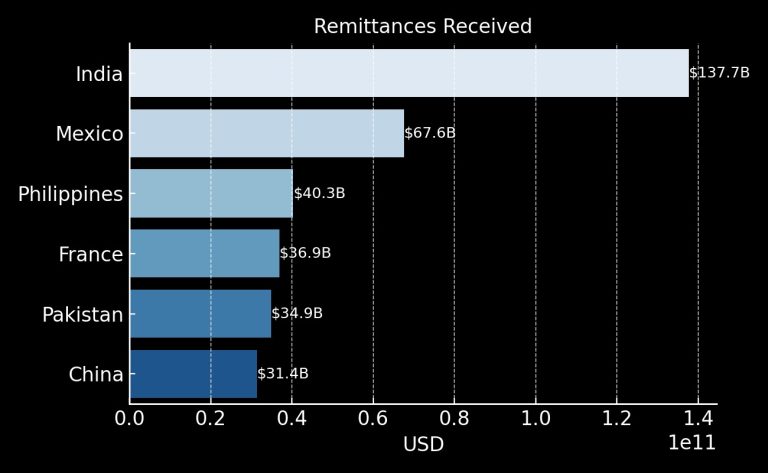
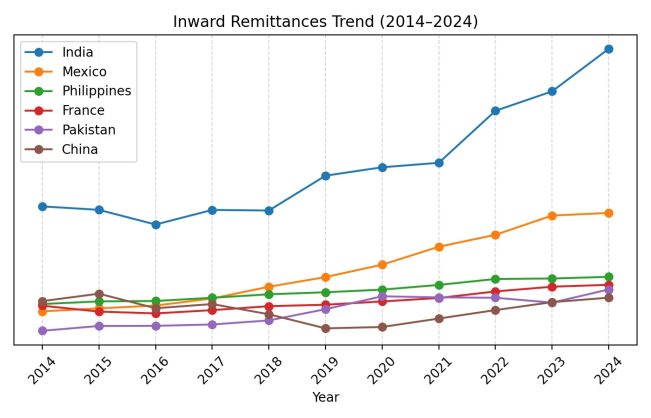
- On July 30, 2025, a report by the Association of Chartered Certified Accountants (ACCA) highlighted India’s position as the world’s leading remittance recipient, receiving $135 billion in 2024, driven by its skilled workforce in Gulf Cooperation Council (GCC) countries, the US, and other regions, per World Bank data. India’s remittances are projected to reach $160 billion by 2027.
- The report, released during a New Delhi event, also projected that Global Capability Centres (GCCs) in India will contribute 2% of India’s GDP (approximately $103 billion) and create 2.8 million jobs by 2030, with 1,700 GCCs in 2023–24 expected to grow to 2,200.
- Md. Sajid Khan, ACCA India Director, emphasized India’s young, educated workforce, stable business environment, and digital transformation as key drivers, with 20,000 global leadership roles projected to be based in India by 2030.
What are Remittances and GCCs?
- Remittances: Funds sent by migrant workers to their home country, with India’s 10 million-strong diaspora in GCC countries (e.g., UAE, Saudi Arabia), the US, UK, and Canada contributing significantly. In 2024, India’s remittances surpassed Mexico ($70 billion) and China ($50 billion), accounting for 3.7% of GDP.
- Global Capability Centres (GCCs): Also known as Global In-house Centres (GICs) or Captive Centres, these are MNC-owned hubs leveraging India’s talent for innovation, R&D, and global operations. In FY24, GCCs generated $64.6 billion in export revenue, a 40% increase from $46 billion in FY23.
- Key highlights:
- Cities: Bengaluru leads with 487 GCCs (29% of India’s total), followed by Hyderabad (273), NCR (272), Mumbai (12%), Pune (11%), and Chennai (10%).
- Sectors: Growth in finance, technology, healthcare, and manufacturing, with finance roles shifting to business partnering, data analytics, and cost transformation.
- Tier-II expansion: Cities like Coimbatore, Ahmedabad, and Jaipur are emerging as GCC hubs, driven by infrastructure and cost advantages.
Strategic Importance
- Remittance impact: Supports household incomes, rural economies, and foreign exchange reserves, with UAE (18%), US (15%), and Saudi Arabia (11%) as top sources. Remittances bolster India’s economic stability, funding education, healthcare, and MSMEs.
- GCC growth: Evolved from back-office hubs to innovation centers, GCCs drive services exports and high-skill jobs, with 53% of global GCCs (1,700 of 3,200) based in India. The NASSCOM estimate projects 1,900 GCCs by 2030, creating 3 million jobs (slightly higher than ACCA’s estimate).
- Policy support: FDI reforms, Digital India, and Skill India initiatives, along with state-level incentives, attract MNCs. The Union Budget 2025 emphasized digital infrastructure and skilling to sustain GCC growth.
- Challenges: Addressing skill gaps, improving rural connectivity, and managing visa restrictions in countries like the US to maintain remittance flows.
Additional Info
- World Bank: Tracks global remittances, noting India’s 8.2% growth in 2024, driven by IT professionals, healthcare workers, and construction labor in GCC countries.
- ACCA: The Association of Chartered Certified Accountants, founded in 1904, supports global finance professionals, with its report highlighting India’s digital and skilling edge.
- NASSCOM: India’s IT industry body, projecting $100 billion in GCC export revenue by 2030, reinforcing India’s role as the “world’s front office”.
- Skilled workforce: India’s 1.25 million STEM graduates annually and English proficiency make it a hub for MNCs like Microsoft, Goldman Sachs, and Siemens.
Simplified Summary
- Remittances: India led globally with $135 billion in 2024, projected to hit $160 billion by 2027, driven by 10 million migrant workers in GCC countries and the US.
- GCCs: Expected to contribute 2% of GDP ($103 billion) and create 2.8 million jobs by 2030, with 1,700 GCCs in 2024 growing to 2,200.
- Drivers: Skilled workforce, digital infrastructure, and government policies fuel growth, with Bengaluru and Hyderabad leading.
- Impact: Enhances economic stability, exports, and high-skill employment, aligning with Digital India and Skill India.
Exam Focus Points
- Definition: India’s remittances ($135 billion, 2024) and GCCs (2% GDP, 2.8 million jobs by 2030) drive economic growth, per ACCA report.
- Key Event: July 30, 2025, report launched in New Delhi, highlighting skilled workforce and policy support.
- Strategic Context: Strengthens services exports, job creation, and global leadership in GCCs, with 53% of global centres in India.
- Static Linkages: World Bank, ACCA, NASSCOM, Digital India, and Skill India.
- Challenges: Bridging skill gaps, expanding tier-II city infrastructure, and sustaining remittance flows amid global restrictions.
India Reaffirms Support for Two-State Solution and Gaza Ceasefire
What’s New?
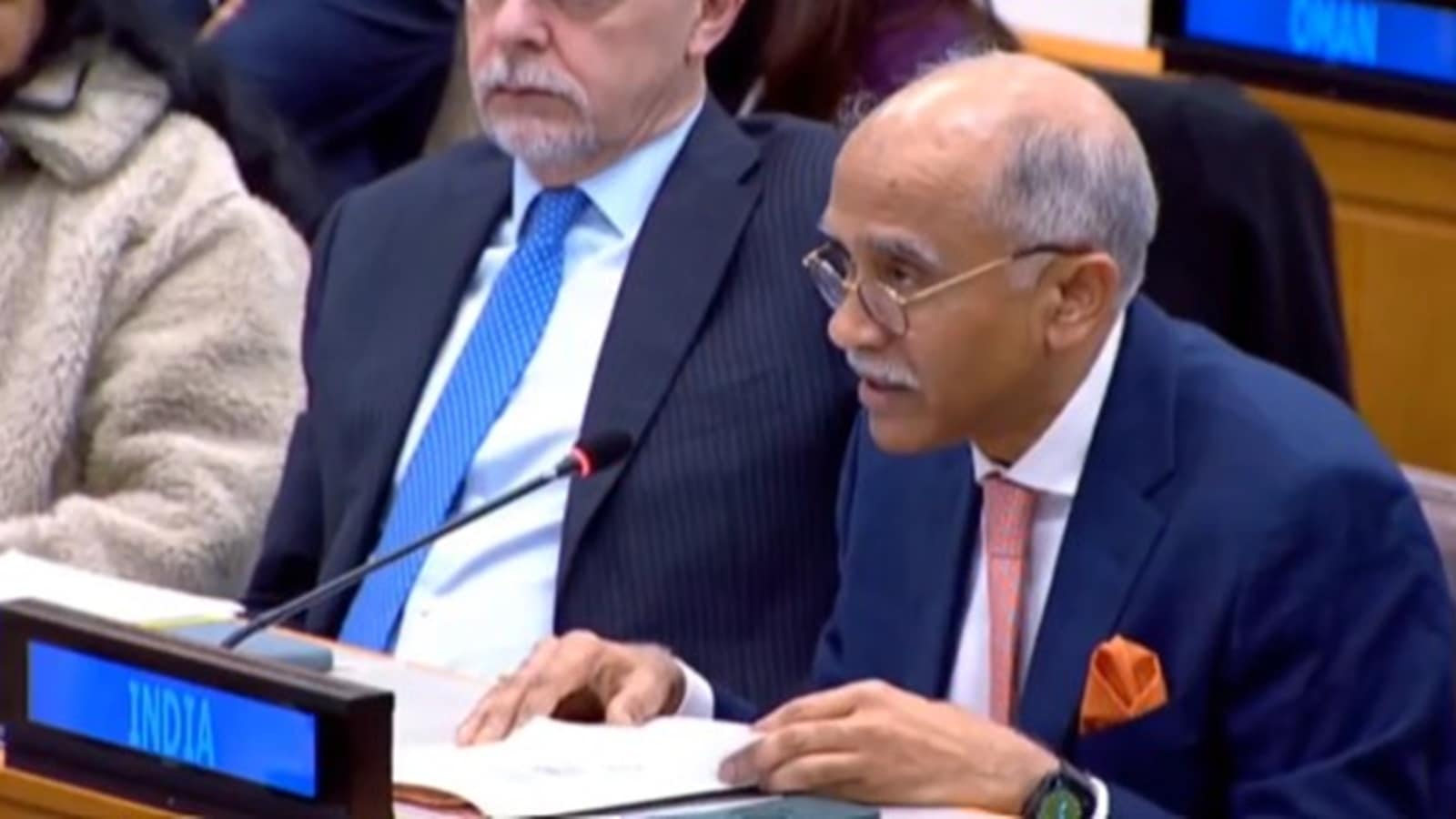
- On July 30, 2025, India reiterated its strong support for a two-state solution to the Israel-Palestinian conflict at a UN High-Level International Conference on “The Peaceful Settlement of the Question of Palestine and the Implementation of the Two-State Solution,” co-chaired by France and Saudi Arabia in New York.
- Ambassador Parvathaneni Harish, India’s Permanent Representative to the UN, called for an immediate ceasefire in Gaza, unimpeded humanitarian aid, and the release of all hostages, emphasizing that “intermittent pauses are not enough” to address the crisis, where 95% of hospitals are damaged and 650,000 children have lacked schooling for over 20 months.
- India committed $160 million to Palestinian development projects, including $40 million currently active through partnerships with UNRWA, to support education, healthcare, and economic rebuilding.
Context of India’s Stance
- India’s position: India has consistently backed a sovereign, viable, and independent Palestinian state within mutually agreed borders, coexisting peacefully with Israel, while condemning terrorism, including the October 7, 2023, Hamas attack that killed 1,200 and took 250 hostages.
- Humanitarian crisis: The UN and WHO report 62,000 deaths in Gaza, including 50,000 children killed or injured, with 875 deaths near aid checkpoints, exacerbating famine risks and unemployment (46%). India stressed sustained aid to address shortages of food, fuel, and medical services.
- Conference significance: The July 28–30, 2025, conference produced the New York Declaration, signed by 25 countries, demanding an end to the Gaza war and hostage release. India hopes it will lead to “concrete steps” for a Palestinian state.
Strategic and Diplomatic Implications
- India’s balancing act: India maintains strong ties with both Israel (defence, technology) and Palestine (historical support since recognizing the State of Palestine in 1988), navigating tensions while protecting economic interests like the India-Middle East-Europe Corridor (IMEC), stalled due to the conflict.
- Global divide: The US supports Israel’s military actions, while France, UK, Canada, and others push for a ceasefire and two-state solution, creating a Western rift. India aligns with the latter, urging dialogue and diplomacy.
- Regional stability: India warned of regional instability, with Gaza’s blockade (since 2007) and Israeli restrictions on aid (e.g., 700 aid trucks stalled) worsening the crisis. The UN and Global South (e.g., Colombia) advocate for accountability.
Additional Info
- India’s contributions: Beyond $160 million in aid, India supports UNRWA projects and trains Palestinian diplomats, reinforcing its role as the first non-Arab state to recognize Palestine.
- UNTOC and ICAT: The UN Convention against Transnational Organized Crime and Inter-Agency Coordination Group Against Trafficking inform India’s broader humanitarian framework, though not directly linked to Gaza.
- Israel’s response: Israel rejected claims of aid blockages, alleging Hamas propaganda and citing 4,500 aid trucks entering Gaza, but UN bottlenecks remain a key issue.
Simplified Summary
- Stance: India reiterated a two-state solution, ceasefire, and aid for Gaza at the UN conference (July 28–30, 2025), committing $160 million to Palestinian aid.
- Crisis: 62,000 deaths, 95% hospital damage, and 650,000 children out of school highlight Gaza’s humanitarian emergency.
- India’s Role: Balances Israel ties with Palestinian support, pushing for dialogue and peace.
- Global Action: 25 countries signed the New York Declaration, demanding an end to the war and hostage release.
Exam Focus Points
- Definition: India supports a two-state solution for a sovereign Palestine alongside Israel, urging ceasefire and aid for Gaza.
- Key Event: July 30, 2025, India’s UN statement at the France-Saudi Arabia conference emphasized practical solutions.
- Strategic Context: Balances India-Palestine ties (since 1988) with Israel relations, amid a Western rift and IMEC delays.
- Static Linkages: UNRWA, UNTOC, New York Declaration, and Ministry of External Affairs.
- Challenges: Ensuring aid delivery, overcoming Israel’s blockade, and advancing peace talks amid Hamas-Israel tensions.
India Leads with Highest Number of Slum Clusters in Flood-Prone Areas
What’s New?
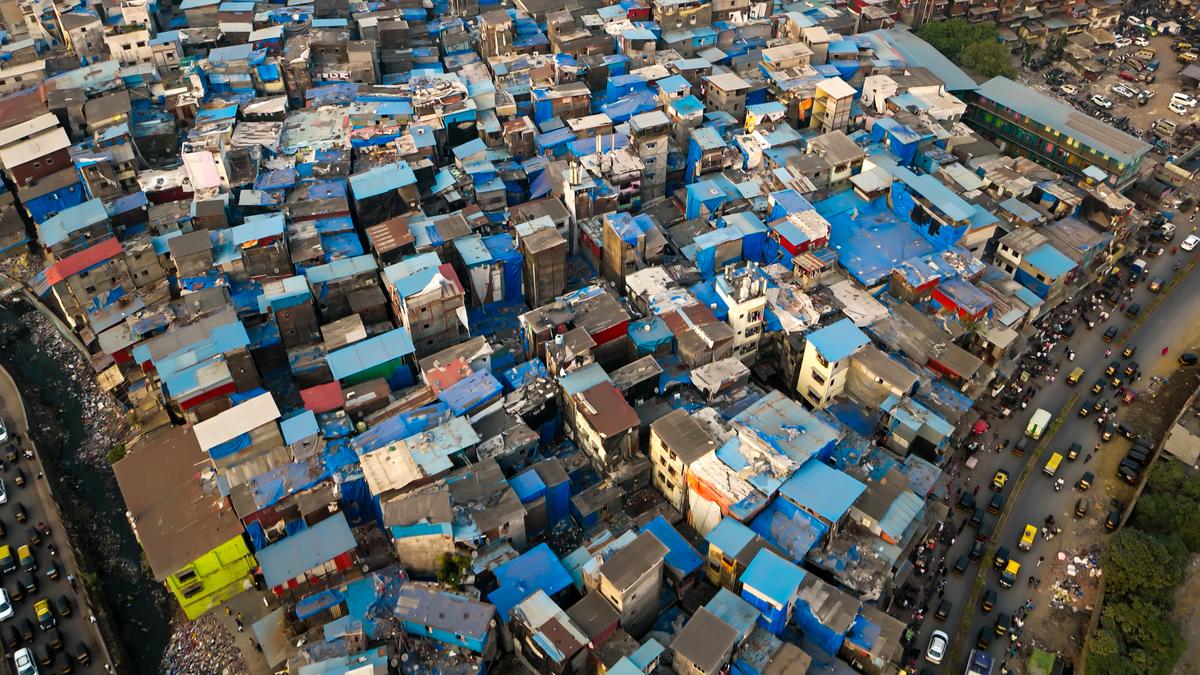
- A July 2025 study published in Nature Cities revealed that India has the world’s highest number of slum clusters in flood-prone areas, with over 158 million slum dwellers (more than Russia’s population) living in vulnerable settlements, primarily in the Ganga river delta.
- The study, analyzing satellite imagery of informal settlements across 129 low- and middle-income countries, found that 33% of global slum clusters (908,077 households, 445 million people) are in floodplains, with India leading in absolute numbers, followed by Indonesia, Bangladesh, and Pakistan.
- Union Minister Hardeep Singh Puri emphasized ongoing efforts like the Pradhan Mantri Awas Yojana (PMAY), which has sanctioned 1.18 crore houses since 2015, including 6 lakh slum households, to provide pucca houses and reduce flood vulnerability.
What is the Issue?
- Flood exposure: Slum dwellers are 32% more likely to settle in floodplains due to lower land costs, as seen in cities like Mumbai, Bengaluru, and Kolkata. The Ganga delta hosts the highest concentration, exacerbated by monsoon flooding and poor drainage.
- Key findings:
- Mumbai’s Dharavi, Asia’s largest slum (1 million residents, 2.1 sq km), is highly flood-prone due to its low-lying marshy location and proximity to railway lines, making it a cheap but risky settlement.
- Kolkata’s Basanti slum (one-third of the city’s population) faces recurrent flooding, worsened by unhygienic conditions and infrastructure decay, as seen post-Cyclone Amphan (2020).
- Bengaluru has 570 slums (20% of its population), with settlements like Rajendra Nagar vulnerable due to encroachment on natural drains and poor urban planning.
- Causes:
- Urbanization: Rapid city expansion pushes slums into floodplains, as gated communities gentrify safer areas, displacing low-income groups.
- Infrastructure gaps: Stormwater drains designed for 12–20 mm rainfall are overwhelmed by monsoon intensities (e.g., Mumbai: 868 mm in July), worsened by encroachments and solid waste dumping.
- Climate change: Rising sea levels (1.7 mm/year) and extreme weather increase flood risks in coastal slums like Chennai’s Nochikuppam, hit by the 2004 tsunami and 2015 floods.
Strategic Importance
- Humanitarian impact: 600 million Indians are at risk of coastal or inland flooding, with slum dwellers facing loss of life, livelihoods, and disease outbreaks (e.g., cholera) due to poor sanitation.
- Government initiatives:
- PMAY (Urban): Aims to provide housing for all by 2029, with 1.18 crore houses sanctioned, focusing on in-situ rehabilitation and slum redevelopment.
- Delhi’s efforts: Rs 700 crore allocated in the 2025 budget for slum rehabilitation, ensuring relocation without eviction panic.
- Community solutions: Proposals include sanitation training, waste management, and drainage systems to enhance resilience, alongside participatory flood risk mapping (e.g., Mumbai’s ALM approach).
- Global context: The Global South houses 445 million slum dwellers in flood-prone areas, with India’s challenges mirrored in Jakarta, Rio de Janeiro, and Rwanda. The UN SDG 11 (sustainable cities) urges equitable flood adaptation.
Additional Info
- Slum population: India’s 6.5 crore slum dwellers (2011 Census) have grown, with Maharashtra (1.18 crore) leading. 1 in 6 urban residents live in slums with unsanitary conditions.
- NDMA: The National Disaster Management Authority issued Urban Flooding Guidelines post-Mumbai 2005 floods, advocating widened natural drains and improved infrastructure, but implementation lags.
- Climate Risk Index: India ranks among the top 10 countries for climate risks, with coastal slums facing sea-level rise and cyclonic storms.
Simplified Summary
- Issue: India has 158 million slum dwellers in flood-prone areas, the highest globally, concentrated in the Ganga delta, per a July 2025 Nature Cities study.
- Causes: Low-cost floodplains, poor drainage, and urbanization drive slum settlements in risky areas like Mumbai, Kolkata, and Bengaluru.
- Solutions: PMAY (1.18 crore houses), Delhi’s Rs 700 crore budget, and community-driven drainage aim to reduce vulnerability.
- Impact: Enhances resilience, supports SDG 11, and mitigates flood-related losses (e.g., 190 lakh houses damaged, 25,000 lives lost from 2001–2015).
Exam Focus Points
- Definition: India leads with 158 million slum dwellers in flood-prone areas, driven by urbanization and poor infrastructure.
- Key Event: July 2025 Nature Cities study highlighted India’s flood risk, urging equitable adaptation.
- Strategic Context: Aligns with PMAY, NDMA guidelines, and SDG 11 for sustainable urban development.
- Static Linkages: Ganga delta, Dharavi, NDMA, and Climate Risk Index.
- Challenges: Scaling in-situ rehabilitation, clearing drain encroachments, and addressing climate-driven flooding.
Global Hunger Declines, but Rises in Africa and Western Asia: UN Report

What’s New?
- On July 28, 2025, the State of Food Security and Nutrition in the World (SOFI 2025) report, released by five UN agencies during the Second UN Food Systems Summit Stocktake (UNFSS+4) in Addis Ababa, revealed that global hunger affected 8.2% of the population (approximately 673 million people) in 2024, down from 8.5% in 2023 and 8.7% in 2022, a reduction of 15 million from 2023 and 22 million from 2022.
- Despite global progress, hunger rose in Africa (affecting 20.4%, or 307 million people) and Western Asia (12.7%, or 39 million people), driven by conflict, climate shocks, and food inflation. The report projects 512 million people could face chronic undernourishment by 2030, with 60% in Africa.
- India contributed significantly to global hunger reduction, with Southern Asia’s prevalence of undernourishment falling from 12.2% in 2023 to 11% in 2024, or 323 million people, due to improved access to healthy diets.
What Does the SOFI 2025 Report Highlight?
- Global trends:
- Hunger remains above pre-pandemic levels (7.5% in 2019), with food inflation (2021–2023) slowing recovery. Low-income countries saw 72% of their population (544.7 million) unable to afford a healthy diet in 2024.
- Southern Asia and Latin America showed progress, with Latin America’s hunger rate dropping to 5.1% (34 million people) from 6.1% in 2020.
- Regional challenges:
- Africa: Hunger surpassed 20% in 2024, worsened by population growth, low agricultural productivity, and conflicts (e.g., Sudan, Gaza). Climate shocks like droughts further strained food systems.
- Western Asia: Conflicts, including Israel’s blockade of Gaza (imposed March 2025, partially lifted May 2025), led to alarming malnutrition levels, with only a trickle of aid allowed, risking mass starvation.
- Nutrition indicators:
- Child stunting fell from 26.4% in 2012 to 23.2% in 2024; exclusive breastfeeding (under 6 months) rose from 37% in 2012 to 47.8% in 2023.
- Child wasting (6.6% in 2024) and overweight (5.5% in 2024) remained stable; adult obesity rose to 15.8% in 2022; anaemia in women (15–49 years) increased to 30.7% in 2023.
- New SDG indicator: One-third of children (6–23 months) and two-thirds of women (15–49 years) met minimum dietary diversity.
Strategic Importance
- Global response: The FAO, IFAD, UNICEF, WFP, and WHO called for urgent action, emphasizing rural investments, social protection, and nutrition education (e.g., breastfeeding promotion) to address hunger in vulnerable regions.
- India’s role: Improved food access and agricultural policies (e.g., PM Garib Kalyan Anna Yojana) reduced undernourishment, positioning India as a key driver in Southern Asia’s progress.
- Challenges: Funding shortages (noted by WFP’s Cindy McCain) and acute crises (e.g., Gaza, Sudan) hinder progress toward SDG 2 (Zero Hunger). UN Secretary-General António Guterres linked hunger to instability, urging global cooperation.
Additional Info
- UN Agencies: The FAO, IFAD, UNICEF, WFP, and WHO jointly produce the SOFI report, launched at UNFSS+4 to assess SDG 2 progress.
- India’s context: Programs like Mid-Day Meal Scheme and POSHAN Abhiyaan have improved nutrition access, though rural poverty and climate risks (e.g., monsoon variability) persist.
- Gaza crisis: The WHO flagged alarming malnutrition due to Israel’s blockade, with UN aid organizations warning of famine risks.
Simplified Summary
- Global Hunger: Fell to 8.2% (673 million people) in 2024, down 15 million from 2023, but above pre-COVID levels (7.5% in 2019).
- Regional Divide: Africa (307 million, 20.4%) and Western Asia (39 million, 12.7%) saw rising hunger due to conflict and climate shocks, while Southern Asia (11%) and Latin America (5.1%) improved.
- India’s Contribution: Reduced undernourishment to 11% in Southern Asia, driven by food security programs.
- Action Needed: Rural investments, nutrition programs, and conflict resolution are critical to meet SDG 2 by 2030.
Exam Focus Points
- Definition: SOFI 2025 reports global hunger at 8.2% (673 million) in 2024, declining but uneven, with rises in Africa and Western Asia.
- Key Event: Launched July 28, 2025, at UNFSS+4 in Addis Ababa, highlighting food inflation impacts.
- Strategic Context: India’s food security schemes drive progress, but Africa’s conflicts and Gaza’s blockade hinder SDG 2.
- Static Linkages: FAO, WFP, UNICEF, IFAD, WHO, and SDG 2 (Zero Hunger).
- Challenges: Reversing Africa’s hunger trajectory, addressing Gaza’s aid restrictions, and securing funding for nutrition programs.
Kaziranga’s First Grassland Bird Census: A Technological Leap for Conservation
What’s New?
- On July 27, 2025, Prime Minister Narendra Modi highlighted the first-ever Grassland Bird Census in Kaziranga National Park, Assam, during his 124th Mann Ki Baat radio address, praising its use of AI-powered acoustic monitoring to identify 43 grassland bird species, including 1 Critically Endangered, 2 Endangered, and 6 Vulnerable species, as per the IUCN Red List.
- Conducted from March 18 to May 25, 2025, across 185 grassland sites in Eastern Assam Wildlife Division, Biswanath Division, and Nagaon Division, the census revealed a breeding colony of the Endangered Finn’s Weaver in Kohora Range, a key indicator of grassland ecosystem health.
- Assam Chief Minister Himanta Biswa Sarma and Kaziranga Field Director Dr. Sonali Ghosh lauded the survey as a model for biodiversity conservation, with findings released on July 11, 2025, in the presence of Assam’s Environment Minister Chandra Mohan Patowary.
What is the Grassland Bird Census?
- Overview: The census, initiated by doctoral student Chiranjib Bora with an INSPIRE fellowship from the Department of Science & Technology, targeted grassland birds in Kaziranga National Park, a UNESCO World Heritage Site covering 1,100 sq km, with 70% grasslands. It focused on 10 priority species, including Bengal Florican, Swamp Francolin, Finn’s Weaver, and Black-breasted Parrotbill, many endemic to the Brahmaputra floodplains.
- Methodology:
- Passive Acoustic Monitoring: Sound recorders placed on tall trees captured bird calls during the breeding season (March–May), when birds are most vocal. AI algorithms analyzed recordings to identify species without disturbing their habitat.
- Point Count Surveys: Traditional visual counts complemented acoustic data, covering 185 sites for comprehensive mapping.
- Collaboration: Involved Indian ornithologists (e.g., Dr. Asad R. Rahmani, Dr. Anwaruddin Choudhury) and organizations like Aaranyak, Wildlife Institute of India (WII), and WWF-India.
- Findings: Recorded 43 species, including Critically Endangered Bengal Florican, Endangered Finn’s Weaver (85+ nests in Kohora Range), and Vulnerable Black-breasted Parrotbill, highlighting Kaziranga’s role as a biodiversity hotspot.
Strategic Importance
- Ecological significance: Grassland birds are indicators of ecosystem health, akin to BMI for humans, per Dr. Sonali Ghosh. Their presence signals robust floodplain ecosystems, vital for rhinos, tigers, and other wildlife.
- Conservation challenges:
- Habitat loss: Assam has lost 70% of its grasslands over four decades due to overgrazing, agricultural conversion, and ecological succession (natural transition to forests).
- Unique species: Grassland birds are small, camouflaged, and live in declining habitats, making them harder to monitor than wetland birds.
- Technological innovation: The use of AI and acoustic tools sets a replicable model for non-invasive biodiversity monitoring, potentially applicable to other protected areas like Manas or Dudhwa.
- Policy alignment: Supports India’s National Biodiversity Action Plan and UN SDG 15 (Life on Land), reinforcing Kaziranga’s role in global conservation.
Additional Info
- Kaziranga National Park: Established in 1905, it spans Golaghat, Nagaon, and Sonitpur districts, famed for one-horned rhinos, Royal Bengal tigers, and elephants. Its grasslands are critical for endemic species.
- Finn’s Weaver: Locally called tukura chorai, this Endangered bird builds intricate nests atop trees, with its Kohora Range colony a key discovery.
- IUCN Red List: Provides conservation status for species, with Critically Endangered (e.g., Bengal Florican) facing an extremely high extinction risk.
Simplified Summary
- Event: Kaziranga’s first Grassland Bird Census (March 18–May 25, 2025) recorded 43 species, including Finn’s Weaver, using AI-powered acoustic tools, praised by PM Modi on July 27, 2025.
- Significance: Highlights grassland biodiversity, with 70% habitat loss in Assam threatening endemic species.
- Technology: Passive acoustic monitoring and AI enabled non-invasive species detection, setting a conservation model.
- Impact: Strengthens ecological monitoring and supports SDG 15, with 43 species indicating a healthy ecosystem.
Exam Focus Points
- Definition: Kaziranga’s Grassland Bird Census (2025) used AI and acoustic tools to record 43 species, spotlighting biodiversity conservation.
- Key Event: Conducted March 18–May 25, 2025, praised by PM Modi in Mann Ki Baat on July 27, 2025.
- Strategic Context: Addresses 70% grassland loss in Assam, supports SDG 15, and sets a model for non-invasive monitoring.
- Static Linkages: Kaziranga National Park, IUCN Red List, Brahmaputra floodplains, and National Biodiversity Action Plan.
- Challenges: Combating habitat loss, scaling AI tools, and protecting grasslands outside protected areas.
India Notifies Environment Protection Rules to Tackle Chemically Contaminated Sites
What’s New?
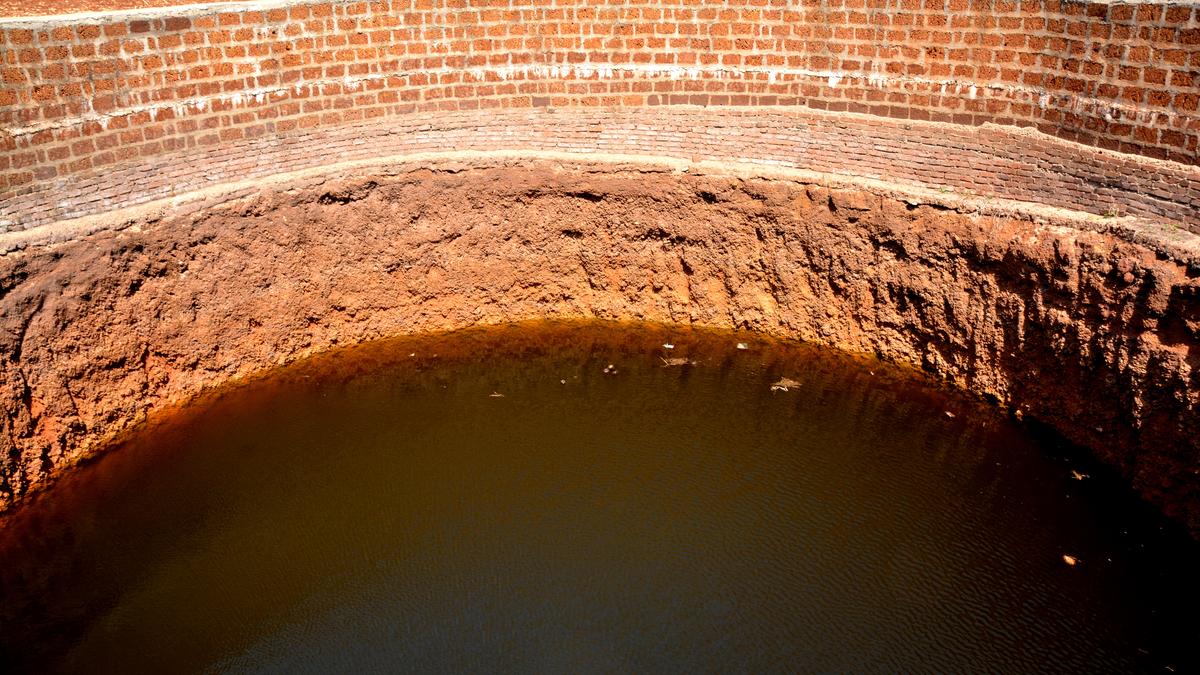
- On July 24, 2025, the Ministry of Environment, Forest and Climate Change (MoEFCC) notified the Environment Protection (Management of Contaminated Sites) Rules, 2025 under the Environment (Protection) Act, 1986, establishing India’s first legal framework to identify, assess, and remediate chemically contaminated sites.
- The rules target 103 known contaminated sites across India, including landfills, dumps, chemical waste storage, and spill sites, with only seven sites currently under remediation. A senior MoEFCC official emphasized that the rules codify existing processes, ensuring time-bound action to mitigate risks to human health and the environment.
- Key mechanisms: District administrations will submit half-yearly reports on suspected sites, with State Pollution Control Boards (SPCBs) or reference organizations conducting preliminary assessments within 90 days. The Central Pollution Control Board (CPCB) oversees implementation, aligning with the “Polluter Pays” principle.
What are the Environment Protection Rules, 2025?
- Objective: Establish a legally binding mechanism to manage hazardous chemical waste sites, protecting soil, groundwater, surface water, and sediments from long-term pollution caused by industrial dumping, spills, or improper waste handling.
- Key provisions:
- Identification: District authorities report suspected sites, with SPCBs or reference organizations (e.g., scientific experts) verifying contamination within 90 days.
- Remediation: Polluters bear cleanup costs; if unavailable or unable to pay, Centre and State split costs under a prescribed formula. Technologies include soil washing, bioremediation, or thermal treatment.
- Liability: Criminal penalties under the Bharatiya Nyaya Sanhita, 2023, apply for severe damage or loss of life due to contamination.
- Exclusions: Rules avoid overlap with existing laws like the E-Waste (Management) Rules, 2016, or Hazardous Waste Management Rules, ensuring specialized agencies handle specific waste streams.
- Significance: Fills a policy gap, replacing fragmented enforcement with a structured framework, reducing delays in cleanup (previously 9–33 years for environmental cases).
Strategic Importance
- Environmental health: Contaminated sites, like groundwater wells near Humnabad Industrial Area, pose risks of cancer, respiratory issues, and ecosystem damage. The rules prioritize public safety and biodiversity protection.
- India’s context: With 103 sites identified by the CPCB, states like Tamil Nadu, Gujarat, and Maharashtra face high contamination from textile, chemical, and petrochemical industries. Only 7 sites (e.g., Bhopal’s Union Carbide site) are under remediation, highlighting urgency.
- Global alignment: Supports UN SDG 12 (responsible consumption and production) and Stockholm Convention on persistent organic pollutants, positioning India as a leader in environmental governance.
- Challenges: Identifying historical polluters, funding remediation for defunct companies, and building technical capacity for advanced cleanup technologies.
Additional Info
- Environment (Protection) Act, 1986: Provides the legal backbone for environmental regulations, empowering the MoEFCC to set standards and enforce compliance.
- CPCB: Established under the Water (Prevention and Control of Pollution) Act, 1974, it coordinates with SPCBs to monitor and regulate pollution, including contaminated sites.
- Bharatiya Nyaya Sanhita, 2023: Replaces the Indian Penal Code, introducing stricter penalties for environmental crimes causing severe harm.
- Context: India’s rapid industrialization and urbanization have increased contamination risks, with e-waste (1.5 million tonnes in 2015) and chemical dumping posing ongoing threats.
Simplified Summary
- Rules: Environment Protection (Management of Contaminated Sites) Rules, 2025, notified on July 24, 2025, to clean up 103 chemically contaminated sites.
- Process: District reports, 90-day assessments by SPCBs, and polluter-funded remediation, with Centre-State cost-sharing if needed.
- Impact: Reduces health risks, supports SDG 12, and strengthens India’s environmental governance.
- Action: Aligns with CPCB’s mandate and Bharatiya Nyaya Sanhita for stricter enforcement.
Exam Focus Points
- Definition: Environment Protection Rules, 2025 provide a legal framework to remediate chemically contaminated sites, enforcing the “Polluter Pays” principle.
- Key Event: Notified July 24, 2025, addressing 103 sites with 90-day assessments and cost-sharing mechanisms.
- Strategic Context: Tackles health and ecological risks, aligning with UN SDG 12 and Stockholm Convention.
- Static Linkages: MoEFCC, CPCB, Environment (Protection) Act, 1986, and Bharatiya Nyaya Sanhita, 2023.
- Challenges: Identifying polluters, funding defunct sites, and scaling remediation technology.
July 2025
31 July 202530 July 202529 July 202528 July 202526 July 202525 July 202524 July 202523 July 202522 July 202521 July 202519 July 202518 July 202517 July 202516 July 202515 July 202512 July 202511 July 202510 July 202509 July 202507 July 202505 July 202504 July 202503 July 202502 July 202501 July 2025
Archive
November 2026
- 27 November 2026
- 26 November 2026
- 25 November 2026
- 24 November 2026
- 23 November 2026
- 21 November 2026
- 20 November 2026
- 19 November 2026
- 18 November 2026
- 17 November 2026
- 16 November 2026
- 14 November 2026
- 13 November 2026
- 12 November 2026
- 11 November 2026
- 10 November 2026
- 09 November 2026
- 06 November 2026
- 05 November 2026
- 04 November 2026
- 03 November 2026
- 02 November 2026
October 2026
- 31 October 2026
- 30 October 2026
- 29 October 2026
- 28 October 2026
- 27 October 2026
- 26 October 2026
- 24 October 2026
- 23 October 2026
- 22 October 2026
- 21 October 2026
- 20 October 2026
- 19 October 2026
- 17 October 2026
- 16 October 2026
- 15 October 2026
- 14 October 2026
- 13 October 2026
- 12 October 2026
- 10 October 2026
- 09 October 2026
- 08 October 2026
- 07 October 2026
- 06 October 2026
- 05 October 2026
- 03 October 2026
- 02 October 2026
- 01 October 2026
September 2026
- 30 September 2026
- 29 September 2026
- 28 September 2026
- 26 September 2026
- 25 September 2026
- 24 September 2026
- 23 September 2026
- 22 September 2026
- 21 September 2026
- 19 September 2026
- 18 September 2026
- 17 September 2026
- 16 September 2026
- 15 September 2026
- 12 September 2026
- 11 September 2026
- 10 September 2026
- 09 September 2026
- 08 September 2026
- 07 September 2026
- 05 September 2026
- 04 September 2026
- 03 September 2026
- 02 September 2026
- 01 September 2026
August 2026
- 31 August 2026
- 29 August 2026
- 27 August 2026
- 26 August 2026
- 25 August 2026
- 24 August 2026
- 22 August 2026
- 21 August 2026
- 20 August 2026
- 19 August 2026
- 18 August 2026
- 17 August 2026
- 14 August 2026
- 13 August 2026
- 12 August 2026
- 11 August 2026
- 10 August 2026
- 08 August 2026
- 07 August 2026
- 06 August 2026
- 05 August 2026
- 04 August 2026
- 03 August 2026
- 01 August 2026
July 2026
- 31 July 2026
- 30 July 2026
- 29 July 2026
- 28 July 2026
- 27 July 2026
- 25 July 2026
- 23 July 2026
- 22 July 2026
- 21 July 2026
- 20 July 2026
- 18 July 2026
- 17 July 2026
- 15 July 2026
- 14 July 2026
- 13 July 2026
- 11 July 2026
- 10 July 2026
- 09 July 2026
- 08 July 2026
- 07 July 2026
- 06 July 2026
- 04 July 2026
- 03 July 2026
- 02 July 2026
- 01 July 2026
June 2026
May 2026
April 2026
March 2026
- 31 March 2026
- 30 March 2026
- 28 March 2026
- 27 March 2026
- 26 March 2026
- 25 March 2026
- 24 March 2026
- 23 March 2026
- 21 March 2026
- 20 March 2026
- 19 March 2026
- 18 March 2026
- 17 March 2026
- 16 March 2026
- 14 March 2026
- 13 March 2026
- 12 March 2026
- 11 March 2026
- 10 March 2026
- 09 March 2026
- 07 March 2026
- 06 March 2026
- 05 March 2026
- 03 March 2026
- 02 March 2026
February 2026
- 28 February 2026
- 27 February 2026
- 26 February 2026
- 25 February 2026
- 24 February 2026
- 23 February 2026
- 21 February 2026
- 20 February 2026
- 19 February 2026
- 18 February 2026
- 17 February 2026
- 16 February 2026
- 13 February 2026
- 12 February 2026
- 11 February 2026
- 10 February 2026
- 09 February 2026
- 07 February 2026
- 06 February 2026
- 05 February 2026
- 04 February 2026
- 03 February 2026
- 02 February 2026
January 2026
- 31 January 2026
- 30 January 2026
- 29 January 2026
- 28 January 2026
- 27 January 2026
- 26 January 2026
- 24 January 2026
- 23 January 2026
- 22 January 2026
- 21 January 2026
- 20 January 2026
- 19 January 2026
- 16 January 2026
- 15 January 2026
- 14 January 2026
- 13 January 2026
- 12 January 2026
- 10 January 2026
- 09 January 2026
- 08 January 2026
- 07 January 2026
- 06 January 2026
- 05 January 2026
- 03 January 2026
- 02 January 2026
- 01 January 2026
December 2025
- 31 December 2025
- 30 December 2025
- 29 December 2025
- 27 December 2025
- 26 December 2025
- 24 December 2025
- 23 December 2025
- 22 December 2025
- 20 December 2025
- 19 December 2025
- 18 December 2025
- 17 December 2025
- 16 December 2025
- 15 December 2025
- 13 December 2025
- 12 December 2025
- 11 December 2025
- 10 December 2025
- 09 December 2025
- 08 December 2025
- 05 December 2025
- 04 December 2025
- 03 December 2025
- 02 December 2025
November 2025
- 29 November 2025
- 28 November 2025
- 27 November 2025
- 26 November 2025
- 25 November 2025
- 24 November 2025
- 22 November 2025
- 21 November 2025
- 20 November 2025
- 19 November 2025
- 18 November 2025
- 17 November 2025
- 15 November 2025
- 14 November 2025
- 13 November 2025
- 12 November 2025
- 11 November 2025
- 10 November 2025
- 08 November 2025
- 07 November 2025
- 06 November 2025
- 05 November 2025
- 04 November 2025
- 03 November 2025
- 01 November 2025
October 2025
- 31 October 2025
- 30 October 2025
- 29 October 2025
- 28 October 2025
- 27 October 2025
- 25 October 2025
- 24 October 2025
- 23 October 2025
- 22 October 2025
- 21 October 2025
- 20 October 2025
- 18 October 2025
- 17 October 2025
- 16 October 2025
- 15 October 2025
- 14 October 2025
- 13 October 2025
- 11 October 2025
- 10 October 2025
- 09 October 2025
- 08 October 2025
- 07 October 2025
- 06 October 2025
- 04 October 2025
- 03 October 2025
- 02 October 2025
- 01 October 2025
September 2025
- 30 September 2025
- 29 September 2025
- 27 September 2025
- 26 September 2025
- 25 September 2025
- 24 September 2025
- 23 September 2025
- 22 September 2025
- 20 September 2025
- 19 September 2025
- 18 September 2025
- 17 September 2025
- 16 September 2025
- 15 September 2025
- 13 September 2025
- 12 September 2025
- 11 September 2025
- 10 September 2025
- 09 September 2025
- 08 September 2025
- 06 September 2025
- 05 September 2025
- 04 September 2025
- 03 September 2025
- 02 September 2025
- 01 September 2025
August 2025
- 30 August 2025
- 29 August 2025
- 28 August 2025
- 27 August 2025
- 26 August 2025
- 25 August 2025
- 23 August 2025
- 22 August 2025
- 21 August 2025
- 20 August 2025
- 19 August 2025
- 18 August 2025
- 16 August 2025
- 14 August 2025
- 13 August 2025
- 12 August 2025
- 11 August 2025
- 08 August 2025
- 07 August 2025
- 06 August 2025
- 05 August 2025
- 04 August 2025
- 02 August 2025
- 01 August 2025
July 2025
- 31 July 2025
- 30 July 2025
- 29 July 2025
- 28 July 2025
- 26 July 2025
- 25 July 2025
- 24 July 2025
- 23 July 2025
- 22 July 2025
- 21 July 2025
- 19 July 2025
- 18 July 2025
- 17 July 2025
- 16 July 2025
- 15 July 2025
- 12 July 2025
- 11 July 2025
- 10 July 2025
- 09 July 2025
- 07 July 2025
- 05 July 2025
- 04 July 2025
- 03 July 2025
- 02 July 2025
- 01 July 2025
June 2025
- 30 June 2025
- 28 June 2025
- 27 June 2025
- 26 June 2025
- 25 June 2025
- 24 June 2025
- 23 June 2025
- 21 June 2025
- 20 June 2025
- 19 June 2025
- 18 June 2025
- 17 June 2025
- 16 June 2025
- 14 June 2025
- 13 June 2025
- 12 June 2025
- 11 June 2025
- 10 June 2025
- 09 June 2025
- 07 June 2025
- 06 June 2025
- 05 June 2025
- 04 June 2025
- 03 June 2025
- 02 June 2025
May 2025
April 2025
- 30 April 2025
- 29 April 2025
- 28 April 2025
- 26 April 2025
- 25 April 2025
- 24 April 2025
- 23 April 2025
- 22 April 2025
- 21 April 2025
- 19 April 2025
- 18 April 2025
- 17 April 2025
- 16 April 2025
- 15 April 2025
- 14 April 2025
- 12 April 2025
- 11 April 2025
- 10 April 2025
- 09 April 2025
- 08 April 2025
- 07 April 2025
- 05 April 2025
- 04 April 2025
- 03 April 2025
- 02 April 2025
- 01 April 2025
March 2025
- 31 March 2025
- 29 March 2025
- 28 March 2025
- 27 March 2025
- 26 March 2025
- 25 March 2025
- 24 March 2025
- 22 March 2025
- 21 March 2025
- 20 March 2025
- 19 March 2025
- 18 March 2025
- 17 March 2025
- 15 March 2025
- 13 March 2025
- 12 March 2025
- 11 March 2025
- 10 March 2025
- 08 March 2025
- 07 March 2025
- 06 March 2025
- 05 March 2025
- 04 March 2025
- 03 March 2025
- 01 March 2025
February 2025
- 28 February 2025
- 27 February 2025
- 26 February 2025
- 25 February 2025
- 24 February 2025
- 22 February 2025
- 21 February 2025
- 20 February 2025
- 19 February 2025
- 18 February 2025
- 17 February 2025
- 15 February 2025
- 14 February 2025
- 13 February 2025
- 12 February 2025
- 11 February 2025
- 10 February 2025
- 08 February 2025
- 07 February 2025
- 06 February 2025
- 05 February 2025
- 04 February 2025
- 03 February 2025
- 01 February 2025
January 2025
- 31 January 2025
- 30 January 2025
- 29 January 2025
- 28 January 2025
- 27 January 2025
- 25 January 2025
- 24 January 2025
- 23 January 2025
- 22 January 2025
- 21 January 2025
- 20 January 2025
- 18 January 2025
- 17 January 2025
- 16 January 2025
- 15 January 2025
- 14 January 2025
- 13 January 2025
- 11 January 2025
- 10 January 2025
- 09 January 2025
- 08 January 2025
- 07 January 2025
- 06 January 2025
- 04 January 2025
- 03 January 2025
- 02 January 2025
- 01 January 2025