
Current Affairs
Stay updated with the latest national and international events.
30 September 2026
Jharkhand’s Mandar Folk Drum Receives GI Tag
What’s the News?
- Mandar, a traditional folk percussion instrument of Jharkhand, has been registered as a Geographical Indication (GI).
- The registration was granted by the Geographical Indications Registry, Chennai.
- The GI application was filed in 2021 by Raidih Mandar Producer Company Limited, Gumla district, under Application No. 777.
- The traditional craft is particularly associated with Jarjatta village in Raidih block of Gumla district.
Mandar
- Mandar is a double-headed, barrel-shaped percussion instrument central to Jharkhand’s tribal and folk traditions.
- Construction:
- Body is traditionally made from red clay.
- Both ends are covered with hide and are of unequal sizes.
- The smaller side produces a relatively higher pitch, while the broader side produces a deeper bass sound.
- The smaller drum-head is traditionally treated with a black tuning paste called Kiran.
- It is generally carried from the shoulder, allowing musicians to play it while participating in group dances.
- It is used during Sarhul, Karma, Jhumar, weddings and other community celebrations and is associated particularly with communities of the Chotanagpur region, including the Oraon community.
GI Registration
- GI name: Mandar of Jharkhand
- Application No.: 777
- Applicant: Raidih Mandar Producer Company Limited
- Geographical area: Jharkhand
- Major production centre: Jarjatta village, Raidih block, Gumla district
- Category: Handicraft; registered under Class 15, relating to musical instruments.
- The official GI database currently lists the application status as Registered.
Geographical Indications in India
- A Geographical Indication identifies goods whose quality, reputation or other characteristics are essentially attributable to their geographical origin.
- GI protection in India is governed by the Geographical Indications of Goods (Registration and Protection) Act, 1999.
- The Geographical Indications Registry is located in Chennai and functions under the Controller General of Patents, Designs and Trade Marks (CGPDTM).
- CGPDTM functions under the Department for Promotion of Industry and Internal Trade (DPIIT), Ministry of Commerce and Industry.
- GI registration is valid for 10 years and can be renewed for successive periods of 10 years.
- Registration enables the registered proprietor and authorised users to seek legal remedies against infringement; authorised users have the exclusive right to use the GI for the registered goods.
Additional Info
- Historical documentation of Mandar
- References to the instrument and related traditions occur in ethnographic and archival works dating to the early 20th century.
- The GI application cited works associated with Sarat Chandra Roy, Tarak Chandra Das and W.G. Archer, along with archival records.
- Other GI-linked products of Jharkhand
- Sohrai-Khovar painting – associated with Hazaribagh.
- Kuchai Silk – associated with Seraikela-Kharsawan.
- Bhagaiya Silk – associated with Godda.
- Other recently recognised traditional products include tribal jewellery and bamboo crafts of Jharkhand.
- International framework
- Geographical Indications are covered under Articles 22–24 of the WTO Agreement on Trade-Related Aspects of Intellectual Property Rights (TRIPS).
- India enacted its GI legislation as part of its framework for protecting geographical indications and complying with international intellectual-property obligations.
CAQM Revises GRAP Schedule for Air Pollution Control in NCR

What’s the News?
- The Commission for Air Quality Management (CAQM) has approved a revised Graded Response Action Plan (GRAP) for the National Capital Region (NCR).
- The revised framework contains 48 pollution-control actions across four stages, with several restrictions shifted to earlier stages to enable quicker intervention.
- The decision was taken at a Full Commission meeting chaired by CAQM Chairperson Rajesh Verma.
- Major changes concern vehicle emissions, diesel generator sets, construction dust, municipal solid waste and transport-related pollution.
Revised GRAP Framework
| GRAP Stage | Delhi AQI Range | Air Quality | Number of Actions |
|---|---|---|---|
| Stage I | 201–300 | Poor | 25 |
| Stage II | 301–400 | Very Poor | 8 |
| Stage III | 401–450 | Severe | 10 |
| Stage IV | Above 450 | Severe+ | 5 |
- Several overlapping measures concerning dust control, municipal solid waste and transport have been consolidated under Stage I.
- Restrictions concerning diesel generator (DG) sets and entry of BS-IV and below buses from NCR and adjoining states have been shifted from Stage II to Stage I.
Vehicle Restrictions
- Under Stage III, restrictions on BS-III petrol and BS-IV diesel light motor vehicles (LMVs) have been extended to Sonipat.
- These restrictions already covered the high-vehicle-density districts of:
- Gurugram
- Faridabad
- Ghaziabad
- Gautam Budh Nagar
- Stage III also restricts the entry into Delhi of diesel BS-IV and below light and medium goods vehicles registered outside Delhi.
- The earlier exemption for older goods vehicles carrying essential commodities has been withdrawn:
- Light and medium goods vehicles — Stage III
- Heavy goods vehicles/trucks — Stage IV.
Construction & Dust Control
- CAQM has expanded web portal-based monitoring of dust-control measures at eligible Construction and Demolition (C&D) sites beyond municipal limits in the NCR.
- The applicable plot-size threshold remains 500 sq m or more.
- This aims to improve monitoring of construction dust in rapidly urbanising areas outside municipal boundaries.
- The Citizens’ Charter for every GRAP stage has also been revised with additional dos and don’ts.
CAQM
- Full form: Commission for Air Quality Management in National Capital Region and Adjoining Areas.
- It is a statutory body established under the Commission for Air Quality Management in National Capital Region and Adjoining Areas Act, 2021.
- Its jurisdiction covers the NCR and adjoining areas insofar as their pollution affects air quality in the NCR.
- Its mandate includes:
- Coordination among states and agencies.
- Research and identification of air-pollution sources.
- Issuing directions and coordinating pollution-control measures.
- Monitoring implementation of measures such as GRAP.
Graded Response Action Plan
- GRAP is an emergency, stage-based pollution-control framework for Delhi-NCR.
- Measures become progressively stricter as the Air Quality Index (AQI) deteriorates.
- Implementation is overseen by CAQM through its Sub-Committee for Operationalisation of GRAP.
- GRAP was originally introduced for Delhi-NCR in 2017 and has subsequently been revised several times to strengthen preventive action.
Additional Info
- Enforcement: More than 1,800 violating units had received closure orders during CAQM's enforcement review.
- Bharat Stage norms
- Bharat Stage or BS emission standards regulate pollutants emitted by motor vehicles.
- BS-VI became the nationwide standard in 2020; India moved directly from BS-IV to BS-VI.
- AQI
- India's National AQI classifies air quality from Good to Severe.
- GRAP stages are linked to deterioration in Delhi's average AQI rather than individual pollutant concentrations.
Sources
UIDAI Unveils Five New Aadhaar Initiatives

What’s the News?
- The Unique Identification Authority of India (UIDAI) unveiled five initiatives at the Aadhaar Samvaad stakeholders’ conference in Kolkata, coinciding with the 17th Aadhaar Day.
- The initiatives aim to improve Aadhaar authentication, accessibility, resident services, security and digital governance.
- More than 600 policymakers, industry representatives, technocrats and professionals participated in the conference.
Five Initiatives
1. Face Authentication for ePDS
- Introduces consent-based and contactless face authentication for the Electronic Public Distribution System (ePDS).
- Jointly developed by:
- UIDAI
- Department of Food and Public Distribution (DFPD)
- National Informatics Centre (NIC)
- Provides an additional authentication option where fingerprint authentication is difficult.
- States and Union Territories can integrate it into their ePDS systems for delivery of subsidised foodgrains.
2. SWIK Portal 2.0
- Streamlines approval for Aadhaar authentication under the Aadhaar Authentication for Good Governance framework.
- Eligible non-government entities can submit proposals for permissible Aadhaar authentication use cases directly to the concerned Ministry/Department.
- It provides a structured digital workflow for processing such proposals.
3. Sub-AUA/Sub-KUA (LITE) Framework
- Designed for government and eligible non-government entities with low-volume authentication requirements.
- Such entities can use the infrastructure of an existing AUA/KUA, avoiding the need to establish separate authentication infrastructure.
- It enables faster and lower-cost onboarding while retaining UIDAI's security, privacy and regulatory requirements.
- AUA: Authentication User Agency.
- KUA: KYC User Agency.
4. Token Management System
- A new system for residents visiting UIDAI State and Regional Offices for applicable services.
- It is intended to streamline visitor handling and improve delivery of in-person Aadhaar services.
5. Revamped UIDAI Website & Career Portal
- The redesigned website organises services around four resident requirements:
- Understanding Aadhaar
- Accessing a service
- Finding a document
- Seeking assistance
- Accessibility features include screen-reader compatibility, adjustable font size, better colour contrast and keyboard navigation.
- Integration with BHASHINI enables support for 13 languages, with expansion to 23 languages planned.
- A new UIDAI Career Portal allows online applications for deputation opportunities.
UIDAI
- Unique Identification Authority of India (UIDAI) is a statutory authority under the Ministry of Electronics and Information Technology (MeitY).
- It was established under Section 11 of the Aadhaar (Targeted Delivery of Financial and Other Subsidies, Benefits and Services) Act, 2016.
- UIDAI is responsible for:
- Aadhaar enrolment and authentication.
- Issuing Aadhaar numbers.
- Managing the Aadhaar lifecycle.
- Protecting identity information and authentication records.
- Aadhaar is a 12-digit unique identification number issued to residents of India.
- UIDAI's dashboard reports more than 145 crore Aadhaar enrolments.
Additional Info
- Aadhaar Day
- Observed on 29 September.
- It commemorates the issuance of India's first Aadhaar number in 2010.
- Aadhaar Face Authentication
- It is a 1:1 biometric match between the live facial image and the facial biometric stored against the Aadhaar number.
- It is consent-based and differs from general facial recognition, which may involve one-to-many matching.
- BHASHINI
- Government of India's language-technology platform aimed at reducing digital language barriers and enabling access to digital services in Indian languages.
Sources
Bank of India Launches Programmable Digital Rupee

What’s the News?
- Bank of India (BoI) has launched user-level programmability with auto-issuance on its Central Bank Digital Currency (CBDC) platform.
- The facility allows users to schedule recurring transfers of Digital Rupee (e₹) to a beneficiary's CBDC wallet by specifying the amount, frequency and permitted purpose of use.
- The CBDC platform has been developed by Montran India in line with the framework applicable to the RBI's digital rupee ecosystem.
Programmable Digital Rupee
- A programmable CBDC allows conditions to be attached to digital currency so that the money can be used for a specified purpose.
- RBI's programmability framework allows conditions based on parameters such as:
- Expiry date
- Geographical location
- Merchant Category Code (MCC)
- Merchant Virtual Payment Address (VPA)
- Potential applications include Direct Benefit Transfers (DBT), targeted subsidies, loans and purpose-specific employee allowances.
Auto-Issuance Feature
- A user can create a standing instruction specifying:
- Fixed amount
- Payment frequency
- Beneficiary's CBDC wallet
- Permitted purpose of expenditure
- The specified e₹ is then automatically credited at the scheduled interval, eliminating the need to manually initiate every recurring payment.
- For example, a parent may schedule a monthly transfer to a student's e₹ wallet and restrict its use to tuition, meals or other education-related expenses.
- Important distinction: “Auto-issuance” here refers to automated distribution/credit through the CBDC platform. The RBI remains the issuer of the Digital Rupee.
Digital Rupee (e₹)
- e₹ is India's Central Bank Digital Currency, issued by the Reserve Bank of India (RBI).
- It is:
- Digital form of India's sovereign currency.
- Legal tender.
- A direct liability of the RBI.
- Stored in a digital CBDC wallet.
- Non-interest bearing, similar to physical cash.
- It can be used for Person-to-Person (P2P) and Person-to-Merchant (P2M) transactions.
Two Forms of e₹
- e₹-R (Retail CBDC): Intended for use by the general public for retail transactions.
- e₹-W (Wholesale CBDC): Intended mainly for financial institutions and wholesale financial-market transactions.
- RBI began pilots of both forms in 2022.
e₹ vs UPI
| Digital Rupee (e₹) | UPI |
|---|---|
| It is money itself in digital form. | It is a payment mechanism. |
| Issued by the RBI. | Transfers money held in bank accounts. |
| Stored separately in a CBDC wallet. | Generally linked to bank accounts. |
| It is a liability of the RBI. | Bank deposits are liabilities of commercial banks. |
| CBDC wallet-to-wallet transactions can provide direct settlement. | Transactions operate through the banking/payment-system infrastructure. |
RBI specifically distinguishes e₹ as a digital form of the rupee, while UPI is a means of payment.
Additional Info
- Legal framework
- The Finance Act, 2022 amended the Reserve Bank of India Act, 1934 to expressly recognise bank notes issued in digital form.
- Section 2(aiv): Defines a bank note as one issued by RBI in physical or digital form.
- Section 22: Gives RBI the sole right to issue bank notes.
- Section 22A: Provides specific treatment for bank notes issued in digital form.
- Programmable CBDC pilots
- RBI has tested programmability for farmer-related benefits, Kisan Credit Card-linked lending and employee fuel/meal allowances.
- Under Odisha's Subhadra Yojana, e₹ had been used as a payment channel for around 88,000 beneficiaries in an earlier RBI-reported implementation.
- e₹ in circulation
- Value at end-March 2026: ₹771.7 crore
- Previous year: ₹1,016.5 crore
- Decline: approximately 24.1%.
Sources
11th BIMSTEC Counter-Terrorism Meeting Held in New Delhi
What’s the News?
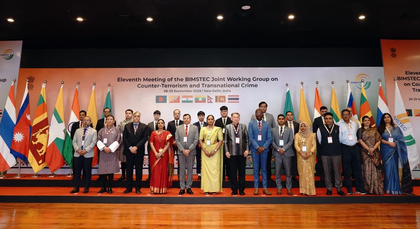
- India hosted the 11th Meeting of the BIMSTEC Joint Working Group on Counter Terrorism and Transnational Crime (JWG-CTTC) in New Delhi.
- Delegations from all seven BIMSTEC member states participated.
- The meeting was chaired by Dr Suhel Ajaz Khan, Additional Secretary (Counter Terrorism), Ministry of External Affairs.
- Members discussed traditional, emerging and non-traditional security threats and measures to strengthen regional cooperation against terrorism and transnational crime.
JWG-CTTC
- The Joint Working Group on Counter Terrorism and Transnational Crime (JWG-CTTC) is BIMSTEC's principal mechanism for cooperation against terrorism and cross-border organised crime.
- It coordinates cooperation at both policy and operational levels.
- Counter-Terrorism and Transnational Crime became a BIMSTEC priority area in 2005.
- The JWG supervises specialised sub-groups dealing with different dimensions of terrorism and organised crime.
Five Areas Reviewed
The meeting examined reports from five specialised sub-groups:
- Human Trafficking
- Cooperation against trafficking networks and protection of victims.
- Illicit Drugs & Precursors
- Prevention of trafficking in narcotic drugs, psychotropic substances and precursor chemicals.
- Anti-Money Laundering & Terror Financing
- Cooperation to combat money laundering and financing of terrorism.
- Legal & Law Enforcement Issues
- Strengthening cooperation among law-enforcement agencies and developing common legal instruments.
- Counter-Radicalisation & Terrorism
- Cooperation against radicalisation and terrorist activities.
- BIMSTEC's institutional framework actually contains six CTTC sub-groups, the additional one being the Sub-Group on Intelligence Sharing; reports from five sub-groups were specifically discussed at the 11th meeting.
BIMSTEC
- Full form: Bay of Bengal Initiative for Multi-Sectoral Technical and Economic Cooperation.
- Established: 1997 through the Bangkok Declaration.
- Members (7):
- Bangladesh
- Bhutan
- India
- Myanmar
- Nepal
- Sri Lanka
- Thailand
- Secretariat: Dhaka, Bangladesh.
- BIMSTEC connects countries of South Asia and Southeast Asia around the Bay of Bengal.
Seven Cooperation Sectors
| Lead Country | Sector |
|---|---|
| Bangladesh | Trade, Investment & Development |
| Bhutan | Environment & Climate Change |
| India | Security |
| Myanmar | Agriculture & Food Security |
| Nepal | People-to-People Contact |
| Sri Lanka | Science, Technology & Innovation |
| Thailand | Connectivity |
India's Security Sector covers three principal sub-sectors: Counter-Terrorism and Transnational Crime, Disaster Management and Energy.
BIMSTEC Security Framework
- India is the lead country for BIMSTEC's Security Sector, giving it a coordinating role in regional CTTC cooperation.
- The BIMSTEC Convention on Cooperation in Combating International Terrorism, Transnational Organised Crime and Illicit Drug Trafficking:
- Signed in 2009.
- Entered into force in 2021 after ratification by all members.
- Provides for cooperation in prevention, investigation, prosecution and suppression of terrorism, organised crime and illicit drug trafficking.
- The BIMSTEC Convention on Mutual Legal Assistance in Criminal Matters was signed at the 5th BIMSTEC Summit in 2022 to facilitate cooperation in criminal investigations and related proceedings.
Additional Info
- BIMSTEC Charter
- Signed at the 5th BIMSTEC Summit in Colombo in 2022.
- Entered into force on 20 May 2024.
- Gave BIMSTEC a formal legal personality and strengthened its institutional framework.
- Recent Security Cooperation
- The 5th Meeting of BIMSTEC National Security Chiefs was also hosted by India in New Delhi in 2026.
- It addressed terrorism, organised crime and security challenges involving the cyber, maritime and energy domains, along with disaster management and emerging threats.
Sources
UN Adopts First Declaration on Sea-Level Rise
What’s the News?
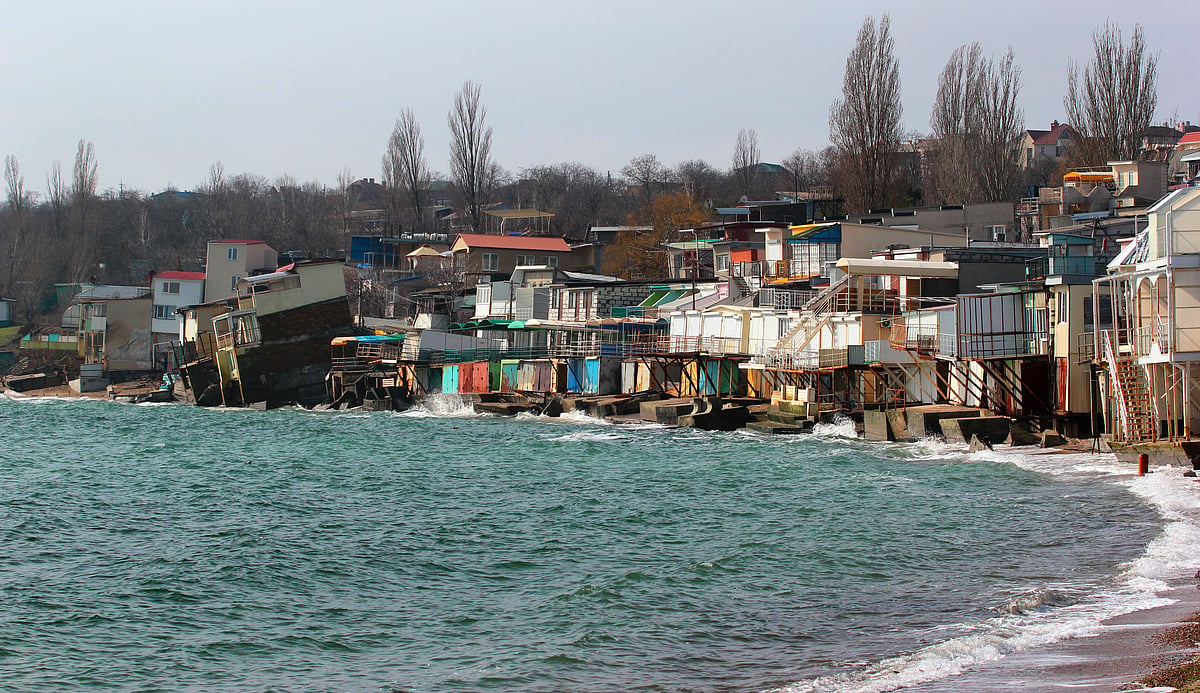
- The United Nations General Assembly (UNGA) has adopted its first Political Declaration on Sea-Level Rise, addressing the growing risks faced by Small Island Developing States (SIDS) and low-lying coastal countries.
- The declaration addresses the continuity of statehood, stability of maritime zones, protection of affected populations, climate adaptation, early-warning systems and international financial support.
- It recognises sea-level rise as a developmental, economic, humanitarian and security challenge, not merely an environmental issue.
Statehood & Maritime Rights
- A country threatened by climate-induced sea-level rise does not automatically lose its statehood merely because its land territory becomes partly or completely submerged.
- This is particularly important for low-lying island countries such as Tuvalu, Kiribati and the Marshall Islands.
- The declaration also supports the stability of maritime zones already established in accordance with international law, despite physical changes to coastlines caused by rising seas.
- Such protection is significant because maritime zones determine sovereign rights over fisheries, seabed resources and other marine resources.
Commitments
- Strengthen multi-hazard early-warning systems and climate-information services.
- Integrate sea-level-rise projections and risk assessments into development and infrastructure planning.
- Increase financial, technical and policy support for developing countries, particularly SIDS and Least Developed Countries.
- Protect and restore natural coastal buffers such as:
- Mangroves
- Seagrass meadows
- Kelp forests
- Strengthen resilient infrastructure, including ports, transport networks, water systems, energy facilities and health infrastructure.
- Improve data collection through satellites, tide gauges, ocean observations and climate monitoring systems.
Sea-Level Rise
- Sea-level rise is the long-term increase in the average level of the world's oceans.
- Major causes include:
- Thermal expansion of seawater as oceans warm.
- Melting of mountain glaciers.
- Loss of ice from the Greenland and Antarctic ice sheets.
- Global mean sea-level rise has accelerated from about 2.1 mm per year during 1993–2002 to around 4.7 mm per year during 2015–2024.
- Around 770 million people live less than 5 metres above the high-tide line, highlighting the scale of global exposure.
UNCLOS & Maritime Zones
- United Nations Convention on the Law of the Sea (UNCLOS) provides the principal international legal framework governing oceans and maritime rights.
- Major maritime zones include:
- Territorial Sea: Up to 12 nautical miles from the baseline.
- Contiguous Zone: Up to 24 nautical miles.
- Exclusive Economic Zone (EEZ): Up to 200 nautical miles.
- Sea-level rise can physically shift coastlines and conventional baselines, creating questions about the continued extent of maritime entitlements.
- The declaration strengthens political support for preserving established maritime zones despite such physical changes.
Additional Info
- Small Island Developing States (SIDS)
- Group of island countries facing particular economic, environmental and climate vulnerabilities.
- Sea-level rise threatens their territory, freshwater, infrastructure, livelihoods, culture and sovereignty.
- AOSIS
- Alliance of Small Island States.
- An intergovernmental coalition representing small island and low-lying coastal developing states in international climate negotiations.
- It has consistently advocated the continuity of statehood and preservation of maritime zones despite climate-induced sea-level rise.
- India
- Sea-level rise is relevant to India because of its extensive coastline, densely populated coastal cities, islands and major delta systems.
- Important adaptation measures include coastal-zone management, mangrove conservation, resilient infrastructure, early-warning systems and disaster-risk reduction.
Sources
US Orders Federal Use of ‘Super Intelligence’ and Unveils Voluntary AI Safety Accord

What’s the News?
- US President Donald Trump signed an executive order directing federal executive agencies to use “Super Intelligence (SI)” instead of “Artificial Intelligence (AI)” in official correspondence, websites, reports, policy documents and other non-statutory material.
- Separately, leaders of six major technology companies signed a voluntary White House Accord on Super Intelligence, formally titled the Joint Commitment on Frontier Responsibilities.
- The accord establishes a four-layer framework covering internal safety controls, dedicated oversight teams, external audits and board-level supervision of frontier AI systems.
- The executive order and the industry accord are separate instruments: the terminology order applies to the executive branch, while the corporate safety accord is voluntary and not legally binding.
Executive Order on “Super Intelligence”
- Federal executive departments and agencies have been directed, to the extent permitted by law, to replace AI/Artificial Intelligence with SI/Super Intelligence in:
- Official correspondence
- Public communications
- Government websites
- Reports
- Policy documents
- Other non-statutory documents
- Previously issued regulations, contracts, grants, presidential actions and historical documents need not be altered.
- The Assistant to the President for Science and Technology (APST) must propose legislative language for a federal definition of “Super Intelligence” and recommend whether existing statutory references to AI should be modified.
What Does “Super Intelligence” Mean Here?
- For implementation of the executive order, “Super Intelligence” presently covers the same technologies and systems included in the existing statutory US definition of artificial intelligence.
- Therefore, the order primarily changes federal terminology rather than immediately establishing a new legal category of technology.
- This usage differs from the conventional technical concept of artificial superintelligence (ASI), which generally refers to a hypothetical system whose intellectual capabilities broadly surpass those of humans.
- A new federal statutory definition would require further presidential action consistent with law or legislation by Congress.
White House Accord on Super Intelligence
Six major AI companies joined the Joint Commitment on Frontier Responsibilities:
- Google – Sundar Pichai
- Meta – Mark Zuckerberg
- Nvidia – Jensen Huang
- Anthropic – Dario Amodei
- OpenAI – Greg Brockman
- xAI – Elon Musk.
Four-Layer Safety Framework
- Internal Controls
- Companies are to monitor model capabilities and alignment during training and deployment.
- Areas include cybersecurity, biosecurity and chemical threats.
- Controls should also address unintended hacking or access to technical systems.
- Internal Oversight Team
- Dedicated teams are to verify that monitoring and safety controls operate as intended.
- Identified shortcomings are expected to be addressed.
- Independent External Assessment
- Companies are to engage independent auditors or evaluators to assess their safeguards.
- Board-Level Oversight
- An independent committee of the company's board is to receive reports from safety teams and auditors and oversee remediation of identified problems.
Nature of the Accord
- The commitment is voluntary rather than statutory regulation.
- It contains no direct legal penalties or government enforcement mechanism for failure to follow the commitments.
- Companies are expected to work with external evaluators and periodically cooperate on common safety standards and best practices.
- The accord acknowledges that some measures could potentially be incorporated into future legislation or formal regulation.
Additional Info
- Frontier AI
- Refers broadly to highly capable general-purpose AI models at or near the leading edge of existing technological capabilities.
- Policy concerns commonly include cybersecurity misuse, biological or chemical risks, model autonomy, system reliability and alignment.
- Executive Order
- A directive issued by the President of the United States to manage operations of the federal executive branch.
- It cannot override legislation enacted by Congress and must operate within constitutional and statutory authority.
- In this case, the order explicitly states that implementation must remain consistent with applicable law.
- AI Governance
- Major regulatory approaches globally include:
- Binding legislation and risk-based regulation
- Government technical standards
- Independent safety testing
- Corporate self-regulation
- Voluntary industry commitments
- The new US accord primarily adopts the voluntary industry-commitment approach, while leaving open the possibility of future formal rules.
- Major regulatory approaches globally include:
Sources
September 2026
30 September 202629 September 202628 September 202626 September 202625 September 202624 September 202623 September 202622 September 202621 September 202619 September 202618 September 202617 September 202616 September 202615 September 202612 September 202611 September 202610 September 202609 September 202608 September 202607 September 202605 September 202604 September 202603 September 202602 September 202601 September 2026
Archive
November 2026
- 28 November 2026
- 27 November 2026
- 26 November 2026
- 25 November 2026
- 24 November 2026
- 23 November 2026
- 21 November 2026
- 20 November 2026
- 19 November 2026
- 18 November 2026
- 17 November 2026
- 16 November 2026
- 14 November 2026
- 13 November 2026
- 12 November 2026
- 11 November 2026
- 10 November 2026
- 09 November 2026
- 06 November 2026
- 05 November 2026
- 04 November 2026
- 03 November 2026
- 02 November 2026
October 2026
- 31 October 2026
- 30 October 2026
- 29 October 2026
- 28 October 2026
- 27 October 2026
- 26 October 2026
- 24 October 2026
- 23 October 2026
- 22 October 2026
- 21 October 2026
- 20 October 2026
- 19 October 2026
- 17 October 2026
- 16 October 2026
- 15 October 2026
- 14 October 2026
- 13 October 2026
- 12 October 2026
- 10 October 2026
- 09 October 2026
- 08 October 2026
- 07 October 2026
- 06 October 2026
- 05 October 2026
- 03 October 2026
- 02 October 2026
- 01 October 2026
September 2026
- 30 September 2026
- 29 September 2026
- 28 September 2026
- 26 September 2026
- 25 September 2026
- 24 September 2026
- 23 September 2026
- 22 September 2026
- 21 September 2026
- 19 September 2026
- 18 September 2026
- 17 September 2026
- 16 September 2026
- 15 September 2026
- 12 September 2026
- 11 September 2026
- 10 September 2026
- 09 September 2026
- 08 September 2026
- 07 September 2026
- 05 September 2026
- 04 September 2026
- 03 September 2026
- 02 September 2026
- 01 September 2026
August 2026
- 31 August 2026
- 29 August 2026
- 27 August 2026
- 26 August 2026
- 25 August 2026
- 24 August 2026
- 22 August 2026
- 21 August 2026
- 20 August 2026
- 19 August 2026
- 18 August 2026
- 17 August 2026
- 14 August 2026
- 13 August 2026
- 12 August 2026
- 11 August 2026
- 10 August 2026
- 08 August 2026
- 07 August 2026
- 06 August 2026
- 05 August 2026
- 04 August 2026
- 03 August 2026
- 01 August 2026
July 2026
- 31 July 2026
- 30 July 2026
- 29 July 2026
- 28 July 2026
- 27 July 2026
- 25 July 2026
- 23 July 2026
- 22 July 2026
- 21 July 2026
- 20 July 2026
- 18 July 2026
- 17 July 2026
- 15 July 2026
- 14 July 2026
- 13 July 2026
- 11 July 2026
- 10 July 2026
- 09 July 2026
- 08 July 2026
- 07 July 2026
- 06 July 2026
- 04 July 2026
- 03 July 2026
- 02 July 2026
- 01 July 2026
June 2026
May 2026
April 2026
March 2026
- 31 March 2026
- 30 March 2026
- 28 March 2026
- 27 March 2026
- 26 March 2026
- 25 March 2026
- 24 March 2026
- 23 March 2026
- 21 March 2026
- 20 March 2026
- 19 March 2026
- 18 March 2026
- 17 March 2026
- 16 March 2026
- 14 March 2026
- 13 March 2026
- 12 March 2026
- 11 March 2026
- 10 March 2026
- 09 March 2026
- 07 March 2026
- 06 March 2026
- 05 March 2026
- 03 March 2026
- 02 March 2026
February 2026
- 28 February 2026
- 27 February 2026
- 26 February 2026
- 25 February 2026
- 24 February 2026
- 23 February 2026
- 21 February 2026
- 20 February 2026
- 19 February 2026
- 18 February 2026
- 17 February 2026
- 16 February 2026
- 13 February 2026
- 12 February 2026
- 11 February 2026
- 10 February 2026
- 09 February 2026
- 07 February 2026
- 06 February 2026
- 05 February 2026
- 04 February 2026
- 03 February 2026
- 02 February 2026
January 2026
- 31 January 2026
- 30 January 2026
- 29 January 2026
- 28 January 2026
- 27 January 2026
- 26 January 2026
- 24 January 2026
- 23 January 2026
- 22 January 2026
- 21 January 2026
- 20 January 2026
- 19 January 2026
- 16 January 2026
- 15 January 2026
- 14 January 2026
- 13 January 2026
- 12 January 2026
- 10 January 2026
- 09 January 2026
- 08 January 2026
- 07 January 2026
- 06 January 2026
- 05 January 2026
- 03 January 2026
- 02 January 2026
- 01 January 2026
December 2025
- 31 December 2025
- 30 December 2025
- 29 December 2025
- 27 December 2025
- 26 December 2025
- 24 December 2025
- 23 December 2025
- 22 December 2025
- 20 December 2025
- 19 December 2025
- 18 December 2025
- 17 December 2025
- 16 December 2025
- 15 December 2025
- 13 December 2025
- 12 December 2025
- 11 December 2025
- 10 December 2025
- 09 December 2025
- 08 December 2025
- 05 December 2025
- 04 December 2025
- 03 December 2025
- 02 December 2025
November 2025
- 29 November 2025
- 28 November 2025
- 27 November 2025
- 26 November 2025
- 25 November 2025
- 24 November 2025
- 22 November 2025
- 21 November 2025
- 20 November 2025
- 19 November 2025
- 18 November 2025
- 17 November 2025
- 15 November 2025
- 14 November 2025
- 13 November 2025
- 12 November 2025
- 11 November 2025
- 10 November 2025
- 08 November 2025
- 07 November 2025
- 06 November 2025
- 05 November 2025
- 04 November 2025
- 03 November 2025
- 01 November 2025
October 2025
- 31 October 2025
- 30 October 2025
- 29 October 2025
- 28 October 2025
- 27 October 2025
- 25 October 2025
- 24 October 2025
- 23 October 2025
- 22 October 2025
- 21 October 2025
- 20 October 2025
- 18 October 2025
- 17 October 2025
- 16 October 2025
- 15 October 2025
- 14 October 2025
- 13 October 2025
- 11 October 2025
- 10 October 2025
- 09 October 2025
- 08 October 2025
- 07 October 2025
- 06 October 2025
- 04 October 2025
- 03 October 2025
- 02 October 2025
- 01 October 2025
September 2025
- 30 September 2025
- 29 September 2025
- 27 September 2025
- 26 September 2025
- 25 September 2025
- 24 September 2025
- 23 September 2025
- 22 September 2025
- 20 September 2025
- 19 September 2025
- 18 September 2025
- 17 September 2025
- 16 September 2025
- 15 September 2025
- 13 September 2025
- 12 September 2025
- 11 September 2025
- 10 September 2025
- 09 September 2025
- 08 September 2025
- 06 September 2025
- 05 September 2025
- 04 September 2025
- 03 September 2025
- 02 September 2025
- 01 September 2025
August 2025
- 30 August 2025
- 29 August 2025
- 28 August 2025
- 27 August 2025
- 26 August 2025
- 25 August 2025
- 23 August 2025
- 22 August 2025
- 21 August 2025
- 20 August 2025
- 19 August 2025
- 18 August 2025
- 16 August 2025
- 14 August 2025
- 13 August 2025
- 12 August 2025
- 11 August 2025
- 08 August 2025
- 07 August 2025
- 06 August 2025
- 05 August 2025
- 04 August 2025
- 02 August 2025
- 01 August 2025
July 2025
- 31 July 2025
- 30 July 2025
- 29 July 2025
- 28 July 2025
- 26 July 2025
- 25 July 2025
- 24 July 2025
- 23 July 2025
- 22 July 2025
- 21 July 2025
- 19 July 2025
- 18 July 2025
- 17 July 2025
- 16 July 2025
- 15 July 2025
- 12 July 2025
- 11 July 2025
- 10 July 2025
- 09 July 2025
- 07 July 2025
- 05 July 2025
- 04 July 2025
- 03 July 2025
- 02 July 2025
- 01 July 2025
June 2025
- 30 June 2025
- 28 June 2025
- 27 June 2025
- 26 June 2025
- 25 June 2025
- 24 June 2025
- 23 June 2025
- 21 June 2025
- 20 June 2025
- 19 June 2025
- 18 June 2025
- 17 June 2025
- 16 June 2025
- 14 June 2025
- 13 June 2025
- 12 June 2025
- 11 June 2025
- 10 June 2025
- 09 June 2025
- 07 June 2025
- 06 June 2025
- 05 June 2025
- 04 June 2025
- 03 June 2025
- 02 June 2025
May 2025
April 2025
- 30 April 2025
- 29 April 2025
- 28 April 2025
- 26 April 2025
- 25 April 2025
- 24 April 2025
- 23 April 2025
- 22 April 2025
- 21 April 2025
- 19 April 2025
- 18 April 2025
- 17 April 2025
- 16 April 2025
- 15 April 2025
- 14 April 2025
- 12 April 2025
- 11 April 2025
- 10 April 2025
- 09 April 2025
- 08 April 2025
- 07 April 2025
- 05 April 2025
- 04 April 2025
- 03 April 2025
- 02 April 2025
- 01 April 2025
March 2025
- 31 March 2025
- 29 March 2025
- 28 March 2025
- 27 March 2025
- 26 March 2025
- 25 March 2025
- 24 March 2025
- 22 March 2025
- 21 March 2025
- 20 March 2025
- 19 March 2025
- 18 March 2025
- 17 March 2025
- 15 March 2025
- 13 March 2025
- 12 March 2025
- 11 March 2025
- 10 March 2025
- 08 March 2025
- 07 March 2025
- 06 March 2025
- 05 March 2025
- 04 March 2025
- 03 March 2025
- 01 March 2025
February 2025
- 28 February 2025
- 27 February 2025
- 26 February 2025
- 25 February 2025
- 24 February 2025
- 22 February 2025
- 21 February 2025
- 20 February 2025
- 19 February 2025
- 18 February 2025
- 17 February 2025
- 15 February 2025
- 14 February 2025
- 13 February 2025
- 12 February 2025
- 11 February 2025
- 10 February 2025
- 08 February 2025
- 07 February 2025
- 06 February 2025
- 05 February 2025
- 04 February 2025
- 03 February 2025
- 01 February 2025
January 2025
- 31 January 2025
- 30 January 2025
- 29 January 2025
- 28 January 2025
- 27 January 2025
- 25 January 2025
- 24 January 2025
- 23 January 2025
- 22 January 2025
- 21 January 2025
- 20 January 2025
- 18 January 2025
- 17 January 2025
- 16 January 2025
- 15 January 2025
- 14 January 2025
- 13 January 2025
- 11 January 2025
- 10 January 2025
- 09 January 2025
- 08 January 2025
- 07 January 2025
- 06 January 2025
- 04 January 2025
- 03 January 2025
- 02 January 2025
- 01 January 2025